La plupart des lettres que vous lisez sur un écran sont dessinées avec une formule inventée chez Renault.
À l'origine, elle servait à dessiner des carrosseries de voitures.
Son inventeur, Pierre Bézier, est né à Paris en 1910. Il entre chez Renault en 1933, comme ingénieur. Il y restera plus de quarante ans.
En 1940, il est fait prisonnier. Libéré l'année suivante, il revient à l'usine.
Après la guerre, il conçoit des machines qui usinent à la chaîne les pièces de la 4CV.
En 1960, on l'écarte des machines-outils. Placardisé, il a du temps. Il s'attaque à un vieux casse-tête.
Comment décrire à une machine la forme exacte d'une aile de voiture ?
Sa réponse : quelques points, et des « poignées » qu'on tire pour plier la courbe comme on veut.
Son système, UNISURF, est breveté en 1966. À partir de 1970, il dessine les Renault.
Puis ses courbes quittent l'usine. Elles deviennent la base des polices de caractères numériques et des logiciels de dessin.
Aujourd'hui, elles sont dans les lettres de votre téléphone, dans les logos, dans les animations des sites web.
Pierre Bézier meurt le 25 novembre 1999. Il a 89 ans.
Les lettres de votre écran descendent d'une aile de voiture.
I recently looked at someone's project and had the knee-jerk reaction that the amount of software work required to turn the proof of concept into a product would be completely untenable. Upon reflection, I realized that with agentic coding that may not actually be true. Recalibrating.
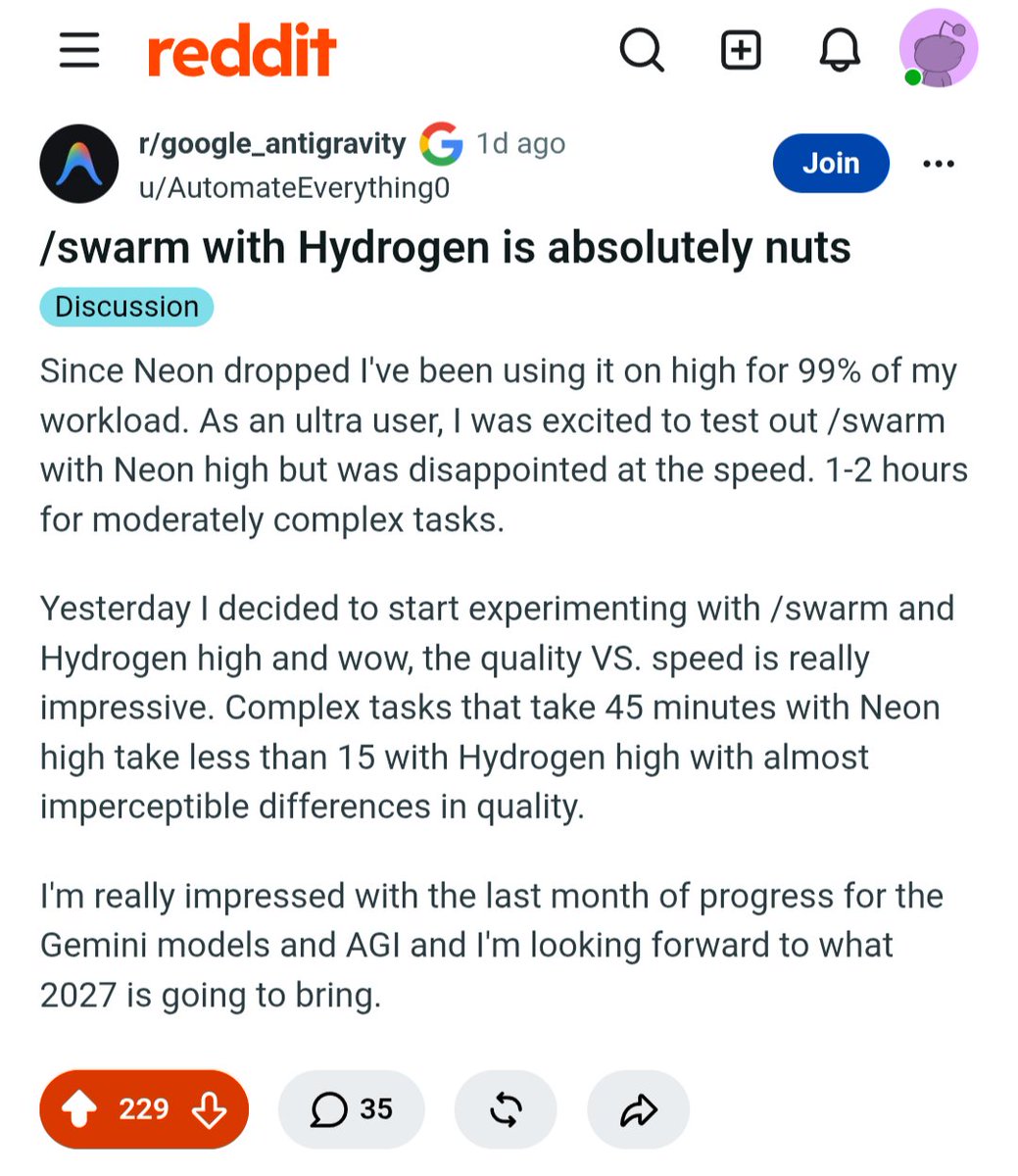
Watching devs discover that Gemini 4 Hydrogen on /swarm gives you 3x+ the iteration speed for complex multi-agent tasks has been my favorite thing this week. 🐝
Pro tip: pick Orchestrator in @Antigravity so Neon handles the planning, and dispatches parallel Hydrogen workers to do the heavy lifting. Best of both worlds! ⚡
🇱🇻 Comme je l’évoquais hier soir sur LCI, pour comprendre les inquiétudes des pays baltes face à la menace russe, il faut connaître leur histoire.
La Lettonie a subi 51 ans d’occupation, soviétique puis nazie, puis de nouveau soviétique, avant de retrouver son indépendance en 1991.
Plus de 57 000 personnes ont été déportées par le régime soviétique lors des deux grandes vagues de 1941 et 1949. Des familles entières, des milliers d’enfants. Les déportations se poursuivent jusqu’en 1958 et certains déportés ne pourront jamais rentrer dans leur pays.
Lorsque les Lettons parlent du danger d’une occupation russe, ils savent de quoi ils parlent. Ce n’est pas de l’histoire ancienne, c’est une mémoire familiale encore très vive.
Pour mieux comprendre cette histoire, je vous recommande vivement le musée de l’Occupation à Riga.
https://t.co/bG5bI5dfma
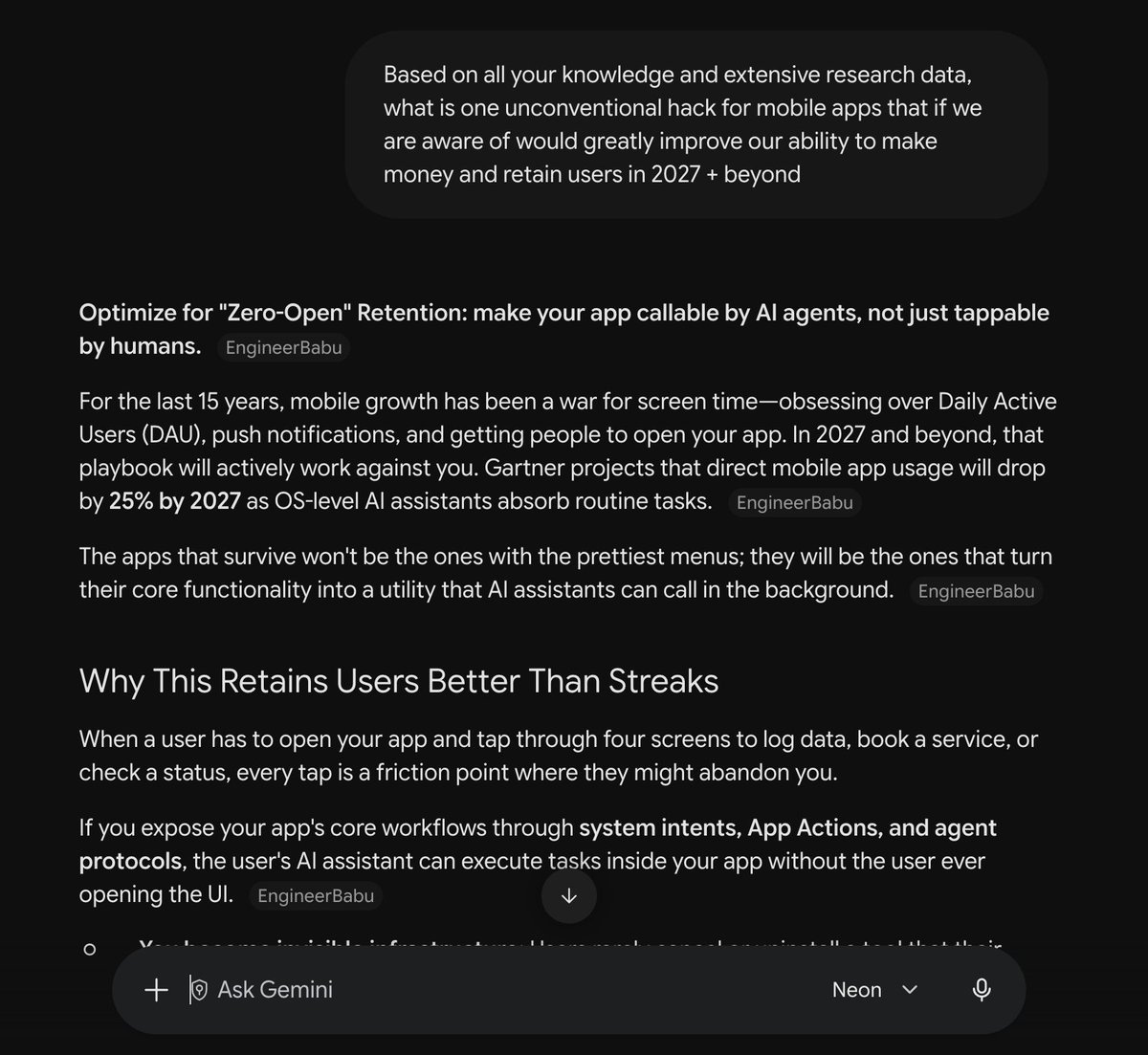
Neon is the best model right now. By far
Especially on perf optimization and hardcore stuff
Plus it’s so refreshing and a pleasure to use
Pair it with a $20 Opus for UI work
Pair it with a $20 Codex for the occasional Computer Use
And for $240 you are pretty much all set
Kasparov: Putin has a simple plan. All he needs is one major European country with a sympathetic government. France votes in Apr.
The two leading candidates, far-right Le Pen and far-left Mélenchon, disagree on everything except one thing: cut aid to Ukraine. 2/
Its very simple.
Future historians will write:
1) NATO never intended to admit Ukraine (despite annual summit resolutions saying its future was inside the organisation).
2) This left Ukraine stranded in a Grey Zone of insecurity which induced Russia to invade in 2014 .
3) Russia saw the Western response was weak and Western countries wished to continue business as usual. NATO General Secretary Rutte, then Dutch Prime Minister, joined Germany in continuing to build Nord Stream 2 after 2014.
5) Russia assumed the Western response in 2022 would be similarly weak as in 2014, which encouraged it to launch a full-scale invasion.
Merz: “I think, looking back, we all realize the mistake that was made at NATO summit in Bucharest in 2008, when the members did not accept American proposal to admit Ukraine as a member of NATO. If Ukraine had become member of NATO, this war would probably have been prevented.”
BREAKING 🇺🇦🇪🇺🇷🇺 EUROPE CANNOT GAMBLE ON RUSSIA.
The next five years are too important to spend waiting for the Kremlin to become reassuring.
Zelenskyy's warning to the NATO Parliamentary Assembly in Berlin on November 23 is a challenge to a dangerous assumption: that ending the present fighting will automatically remove the threat behind it.
Europe needs a peace it can defend.
The historical examples explain why that requires more than optimism.
In 1956, Soviet forces crushed Hungary's uprising. In August 1968, a Soviet-led invasion ended Czechoslovakia's Prague Spring. In 1979, Soviet forces invaded Afghanistan.
These were different conflicts under different circumstances. They shared a willingness by Moscow's leadership to use military power beyond its borders.
The Soviet Union and today's Russian Federation are not identical states. Neither does history make every Russian citizen responsible for every decision made in Moscow. Zelenskyy's argument is strongest as a warning about state behavior and the institutions that enable it.
For today's Europe, that warning is already supported by assessments of threats extending beyond Ukraine.
On July 18, 2025, the EU formally condemned what it described as coordinated, long-standing Russian hybrid campaigns against member states and partners. It identified sabotage, attacks on critical infrastructure, cyber operations, information manipulation and other coercive activities.
The statement also referred to European attributions of attacks to Russian military intelligence. This was an official assessment of hostile activity already occurring, rather than a prediction about distant intentions.
A ceasefire in Ukraine would not, by its wording alone, dismantle those networks or remove those capabilities.
At The Hague summit on June 25, 2025, NATO leaders explicitly identified Russia as a long-term threat to Euro-Atlantic security. They committed to defense and security-related investment totaling 5% of GDP annually by 2035.
The commitment has two parts: at least 3.5% for core defense requirements and up to 1.5% for areas including critical infrastructure, networks, civil preparedness and the defense industrial base.
It is a target to be implemented, not a statement that those capabilities already exist.
Money must still become trained units, missile stocks, protected infrastructure and reliable production.
My concern is the gap between recognizing a long-term threat and behaving as though the next diplomatic announcement has made preparation less urgent.
Russia may change. Europe should welcome genuine evidence of that change. Its security cannot depend on a forecast that such evidence will arrive conveniently within one or five years.
The safer policy is to build the ability to resist coercion under whichever leadership governs Russia.
For Ukraine, this is immediate rather than theoretical.
In the same Berlin address, Zelenskyy questioned proposed Article 5-style guarantees whose practical terms remain undefined: who would respond to another attack, what they would do and whether the arrangement would work.
Those are the questions any serious security settlement must answer before Ukraine is asked to rely on it.
A promise becomes more credible when governments commit resources, plan their response together and preserve the military capacity needed to act. Ukraine's own armed forces have to remain central to that protection.
Sustaining them also serves Europe's security. Leaving Ukraine exposed could give Moscow another opportunity to apply force against a country whose independence it continues to challenge.
Negotiations can reduce immediate danger. Durable defense can help prevent that danger from returning on worse terms.
Zelenskyy's warning should be heard as a demand for policy that lasts longer than the next meeting.
Peace needs something sturdier than confidence that Moscow will eventually change its mind.
So Gemini Neon did in 24 hours what Fable 5.2 and Astra 6.2 failed to do in 3 weeks of working with it.
Seriously, this model is unbelievable. I've been debugging issues for 3 weeks and getting nowhere, Gemini Neon literally one shotted it with the first prompt.
FSD de Tesla : La France fait de la résistance
"Est-ce qu'on va confier à une puissance étrangère des centaines de milliers de véhicules qui roulent avec leurs algorithmes de guidage ?"
💬@stanlarroque
🎙️@Fsorel
Anthropic's, and to some extent OpenAI's, bargain proposed to government appears to be: grant us monopoly, shut down open source, and construct insurmountable barriers to entry, and we'll do your bidding. Censorship, control, whatever.
Apple and Google did no such thing.
This is a note of appreciation to Apple and Google that, through 6 years of harsh antitrust litigation and regulatory advocacy, they never once proposed the sort of corrupt, freedom-ending marriage of state security and big tech that appears to be behind Jensen smear campaign.
Gemini 4 Neon is indeed crazy good. Cut Omarchy boot time in half!! Big optimizations on install as well. It's a quiet cat, though. Just goes off with very little output while it's working, and then, BAM, here's everything and it's perfect. Love it.
Two- thirds of Americans disapprove of Trump's handling of Russia and Ukraine.
(So don't be misled by the pro-Russian algorithm on this platform)
https://t.co/eeoj5JrXuZ