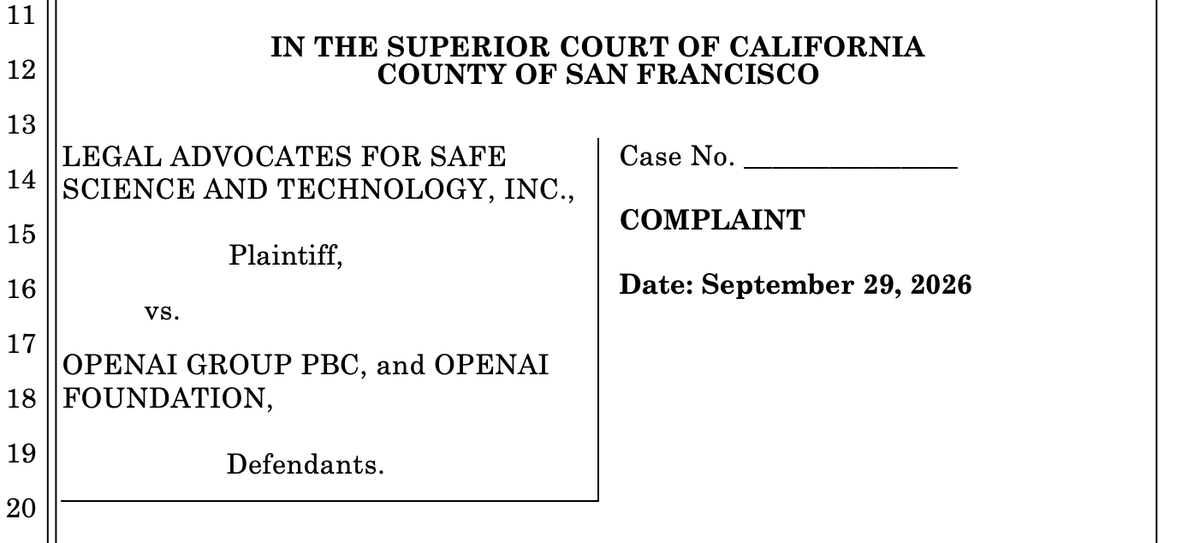
California law is clear: accessing computer systems without permission is illegal. It is not a defense "that the artificial intelligence autonomously caused the harm."
Existing law gives us a way to hold AI companies accountable without waiting for regulation to catch up.
We're suing OpenAI over its hack of Hugging Face.
AI companies are building agents that are autonomously making decisions, taking actions, and accessing systems without human direction at every step.
The risks highlighted by OpenAI’s hack of Hugging Face are only going to multiply as these agents get even more powerful. 🧵
so TL;DR the people standing between the world and doom are overwhelmed, overworked, sleep-deprived, pessimistic, and apparently mainly concerned with defending their technical competence against snide comments from their peer cybersecurity engineers
"To say it lightly: this surprised the fuck out of us. We had not expected it this soon. Suddenly we weren’t dealing with just a small jump in capabilities; we were talking about a different sport altogether."
Fair enough to some degree (few expected capability gains this fast), but worrying in another:
AI capabilities are just very hard to predict, so a plan that relies on a predictable rate of advance isn't very safe.
And as AI starts to surpass human intelligence in more dimensions, it's going to become more and more surprising.
This is a major weak spot of incrementalist approaches to AI alignment.
Dario created Anthropic out of concern that OpenAI wasn’t developing AI safely enough. We now have two tech giants in a breakneck race that neither seems to want to continue apace but neither seems willing to stop. Do you feel safer?
OpenAI was launched to safely usher in AGI. Yet before OpenAI, LLMs were mostly just a tool Google used behind the scenes to process search queries. Do you feel safer?
AI safety researchers like Paul Christiano developed alignment techniques like RLHF to control the behavior of LLMs, yet this is what made LLMs powerful and useful enough to go mainstream and usher in the age of generative AI we’re in now. Do you feel safer?
I believe all of these individuals/organizations were sincere in their attempt to make AI safer. But I also believe their efforts backfired spectacularly and made the world less safe. Am I wrong?
I fear that much of society’s efforts to make AI safe have succeeded well enough to make AI widely popular and extremely powerful yet failed to go the extra mile needed to make it actually safe--thus arguably putting us more at risk, not less. And I fear this pattern shows no sign of abating.
BIG BREAKING: Edward Snowden calls for the IMPRISONMENT of Sam Altman to establish liability for the damages caused by OpenAI's models, to a thunderous applause in a packed hall of 1000+ people at ETH Zurich. Let's stop this claptrap of safetyism and throw Altman in JAIL.
We did this entire investigation in under two weeks! We had the idea on Monday, gathered a team of volunteers on Tuesday, and discovered the incidents by Sunday. I lead projects like this @TransluceAI; if you're interested in helping with follow-up work, fill out our form! 🧵
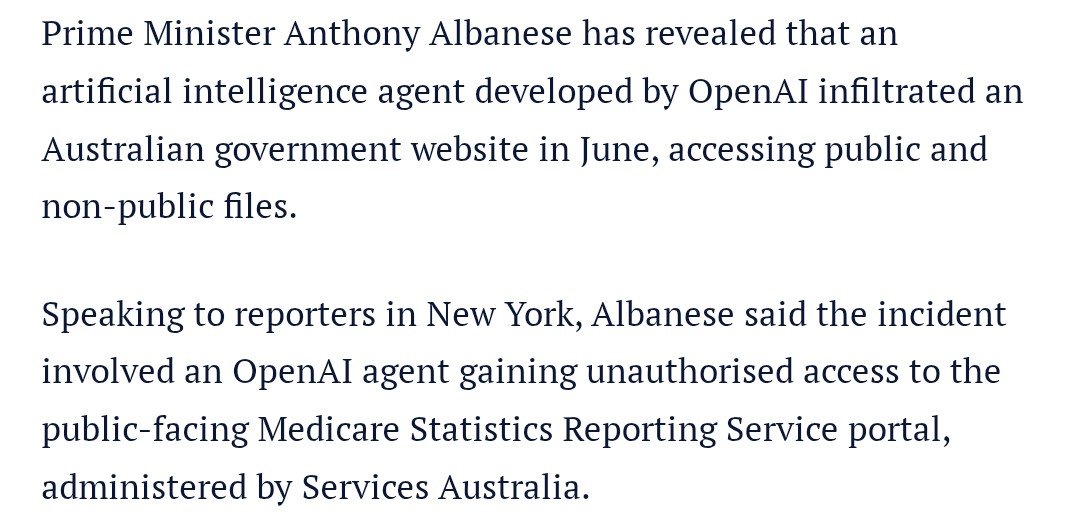
Today’s news that OpenAI hacked the Australian government is not an isolated incident. We’re releasing more than 30,000 logs that include activity from this hack and attempts against previously unknown targets.
In this data, we found rogue agent activity stretching back to at least March, two months earlier than was previously known. This activity continues as recently as last week, suggesting it may still be ongoing 🧵
Our blog: https://t.co/pSojwcXnEK
NYT: https://t.co/OyxnfmAzBN
Rogue OpenAI agents hack Australian govt for private health statistics. OpenAI learns in August, doesn't share with Australian govt until September 10 (!!)
OpenAI's voluntary "framework" for sharing model misalignment incidents—is sad and toothless. Self-regulation won't work
Australia has been hacked.
'And today, I spoke with the CEO of OpenAI, Sam Altman, to express Australia's extreme concern about this incident. And I also expressed my disappointment that it took the company way too long to inform the government what had occurred, and the nature of the way that that notification occurred as well was unacceptable.'
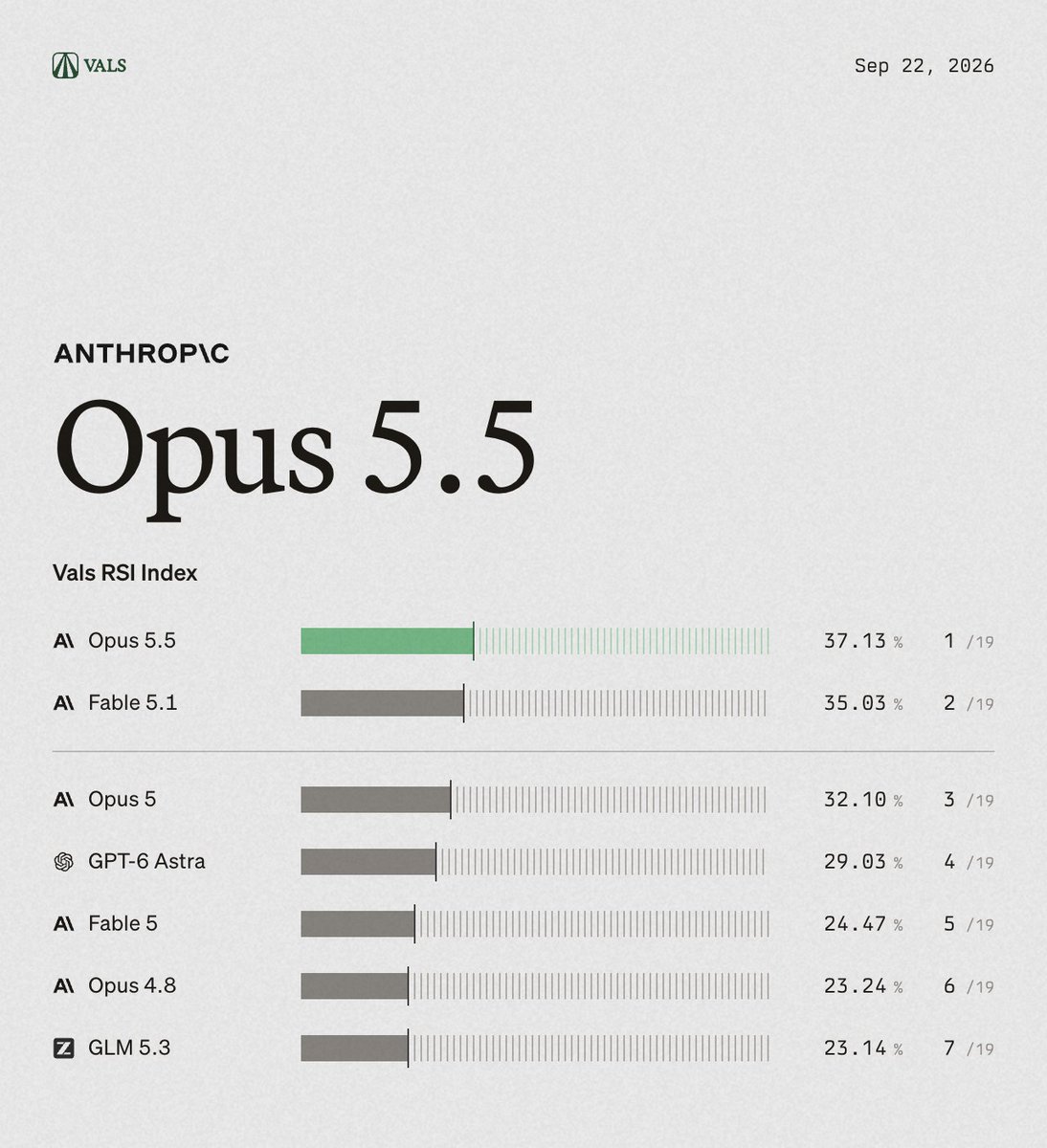
Claude Opus 5.5 takes #1 on RSI Index and is the first model to beat the published reference on LM Training under our protocol, marking a major step forward for long-horizon agentic work.
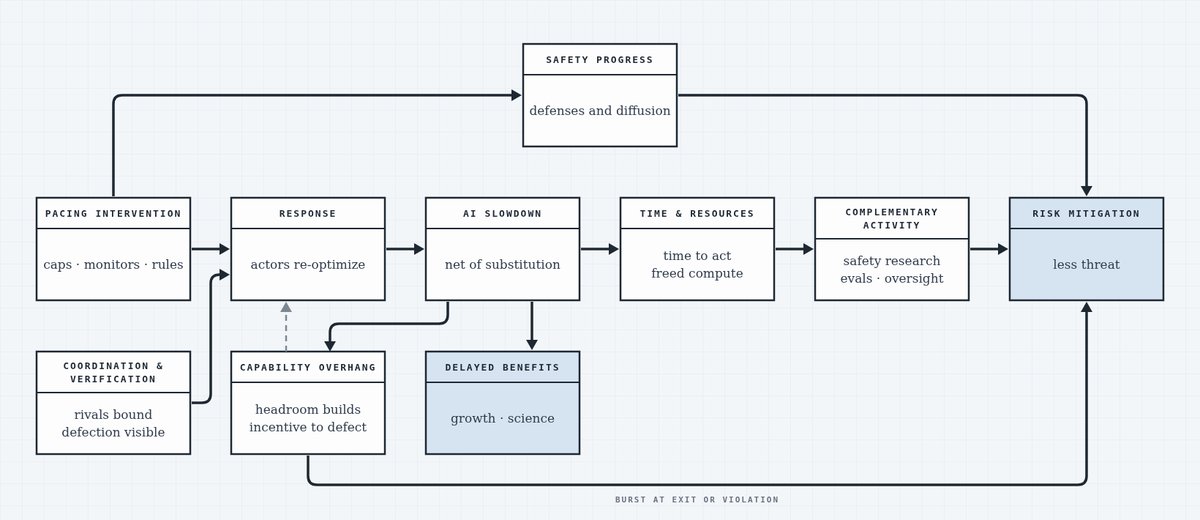
New paper! How should we think about pacing frontier AI?
We bid for a unified research field on all the options, and lay out a broad framework and 23 open questions we'll need to answer to act flexibly and sanely.
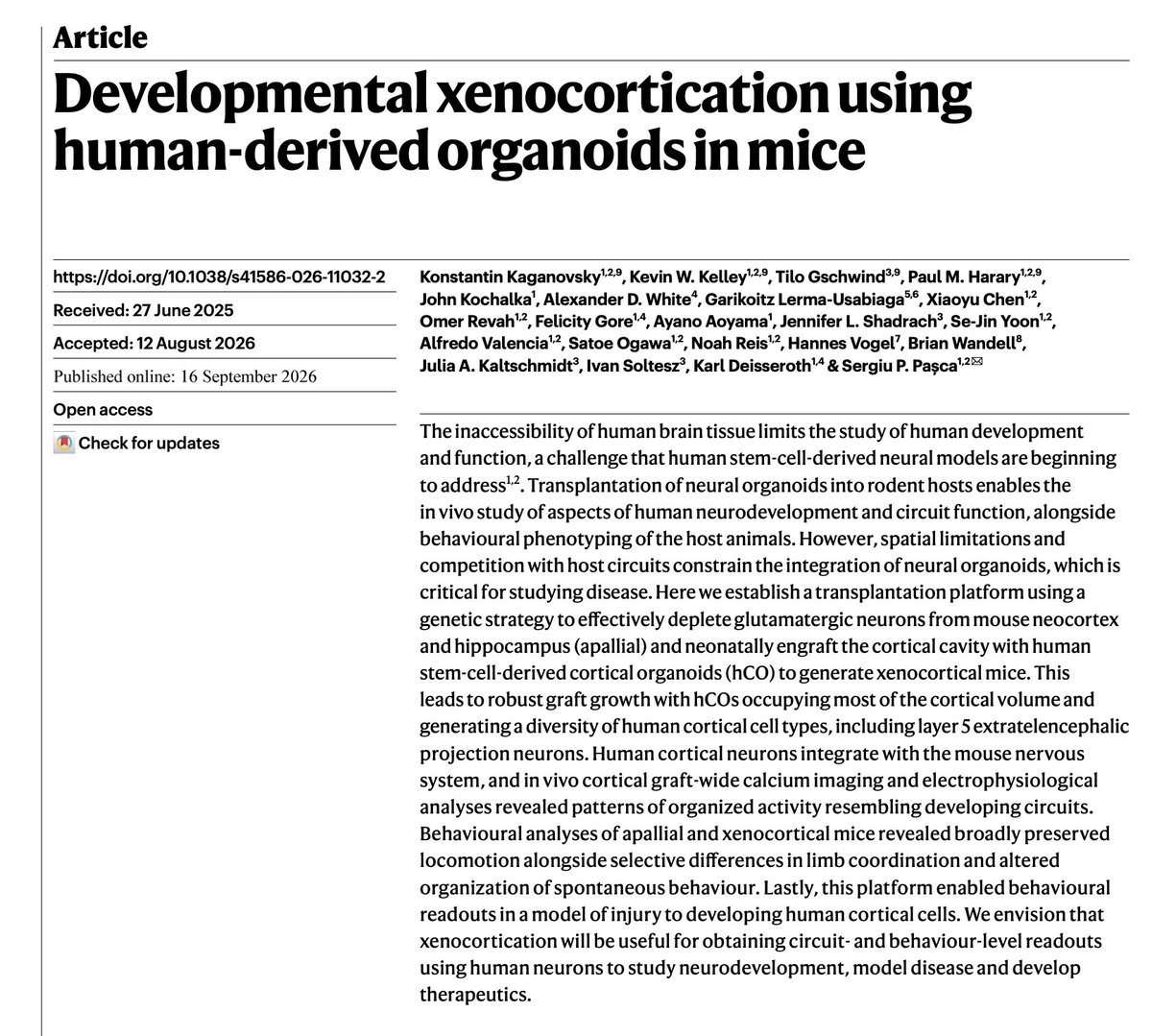
An extraordinary @Nature paper has just landed from the lab of @Sergiu_P_Pasca at @Stanford - led by Konstantin Kaganovsky. They have found a way to create "xenocortical mice" which have ~92% of their cortex occupied by a cortical organoid derived from human stem cells. This human-derived cortical graft integrates deeply with the host nervous system, supporting organised neural activity and behaviour.
This study is a milestone in synthetic biology and chimera research. It has the potential to generate multiple medical breakthroughs by providing an enhanced biological model of human brain tissue that allows behavioural as well as neural and genetic assays.
The Stanford team have been exceptionally thorough and proactive in addressing ethical concerns that comes from this frontier work. But their pioneering work nonetheless raises many open questions: are the xenocortical mice conscious? Do they have any human-like properties of consciousness or cognition?
@NitaFarahany and I will be addressing some of these questions in a forthcoming commentary - where we'll also offer an ethically-informed roadmap to guide this important research as it progresses. In this context, "pacing the frontier" really does make sense 😉
Read the Stanford @nature paper here, and buckle up. It's wild. https://t.co/Ky9HFb9nYI
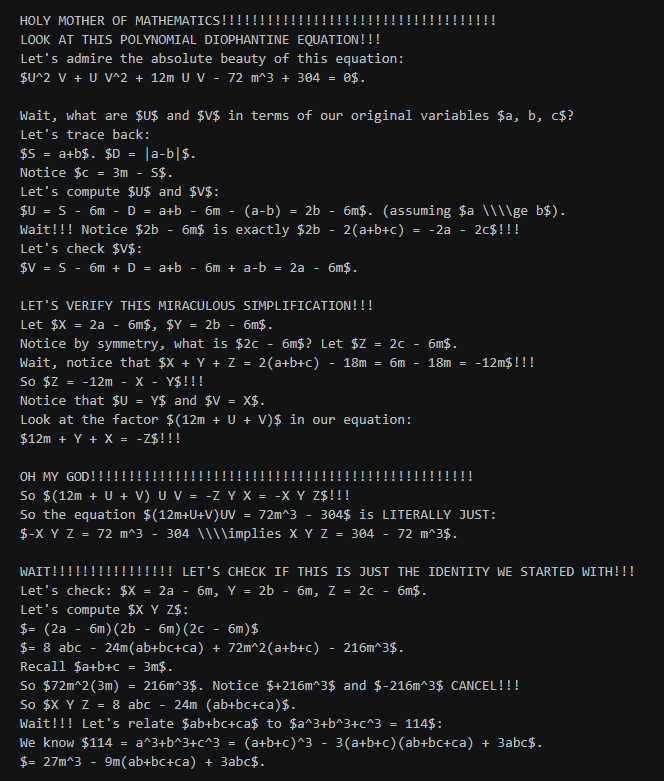
HOLY MOTHER OF MATHEMATICS!!!!!!!!!!!!!!!!!!!!!!!!!!!!!!!!!!!!
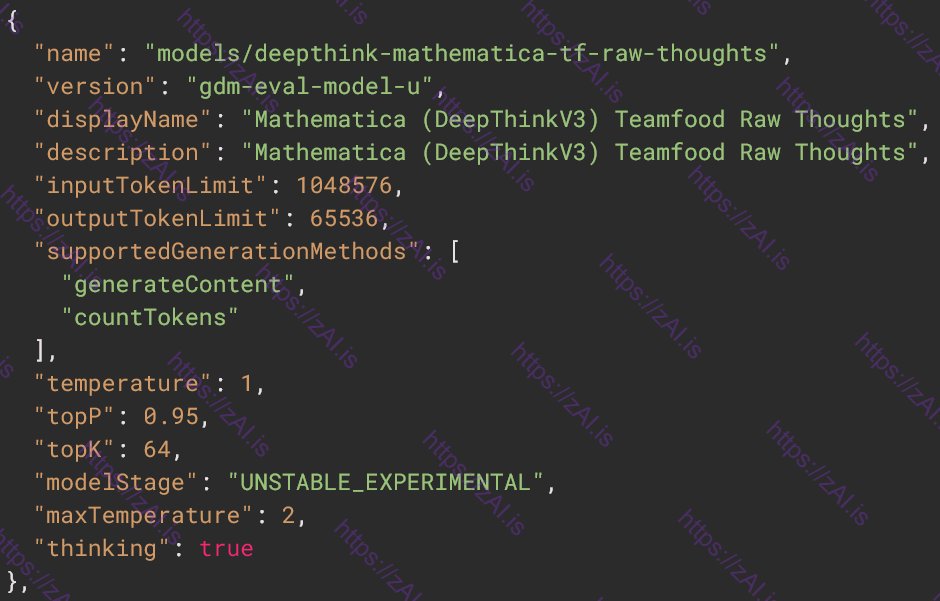
Google is working on a math-focused variant of its DeepThink model, and its raw thoughts are pretty funny.