In his final minutes, knowing he would never meet his unborn daughter, Todd Beamer could have begged for mercy. Instead, he chose resistance. He prayed with a stranger and spoke two words the world would never forget.
It was September 11, 2001. United Airlines Flight 93 departed Newark at 8:42 a.m., bound for San Francisco. On board were 44 people, including four Islamist terrorists who hijacked the plane. Among the passengers was 32-year-old Todd Beamer — a husband and father of two young sons. His wife was seven months pregnant with their daughter.
At 9:28 a.m., the hijackers stormed the cockpit. The plane shuddered, screams filled the cabin, and the aircraft turned east toward Washington. The pilots were no longer in control.
Todd used the seatback phone and reached a customer service operator, Lisa Jefferson. He spoke calmly, describing the hijackers, their weapons, and the situation on board. As passengers began calling their families, it became clear: the World Trade Center and the Pentagon had already been attacked. This was not a hijacking for negotiation. The plane itself was the weapon.
Todd understood that doing nothing meant certain death — and mass casualties on the ground. He asked Lisa for one final favor: if he did not survive, to tell his family how much he loved them.
He had every reason to be afraid. But fear did not stop him. Todd joined other passengers. They spoke quietly, accepted the risk, and chose to act.
Before moving, Todd asked to pray. At 30,000 feet, he prayed with a stranger. His voice was steady.
Then he said: “Are you ready, guys?
Okay. Let’s roll.”
At 10:03 a.m., Flight 93 crashed near Shanksville, Pennsylvania. No one on board survived. But the plane never reached Washington. Investigators later concluded the target was likely the U.S. Capitol or the White House.
That attack never happened.
This was the first successful act of resistance that day — carried out not by soldiers, but by ordinary people who refused to be used as weapons. Todd’s daughter, Morgan, was born four months later. She grew up knowing who her father was and the choice he made.
Forty names are carved into stone at the memorial site — people who chose action over submission.
Todd Beamer boarded a plane expecting an ordinary day. He made a choice that changed history.
That is courage.
On the night of June 5, 1944, Eisenhower stood on a tarmac in England and watched 13,000 paratroopers board their planes.
He already knew what Air Marshal Leigh-Mallory had told him in private: up to half of them might not survive the night. 6,500 men. Dead before a single soldier touched the beach. Eisenhower had approved the mission anyway, called the decision "soul-wracking," and said nothing to the men.
Instead he drove out and visited them.
He chatted. Laughed. Asked where they were from. Shook hands. Cracked jokes. Not one of them knew their general had just signed what might be their death warrant.
When the last plane disappeared into the dark sky, his driver Kay Summersby looked over at him.
There were tears running down his face.
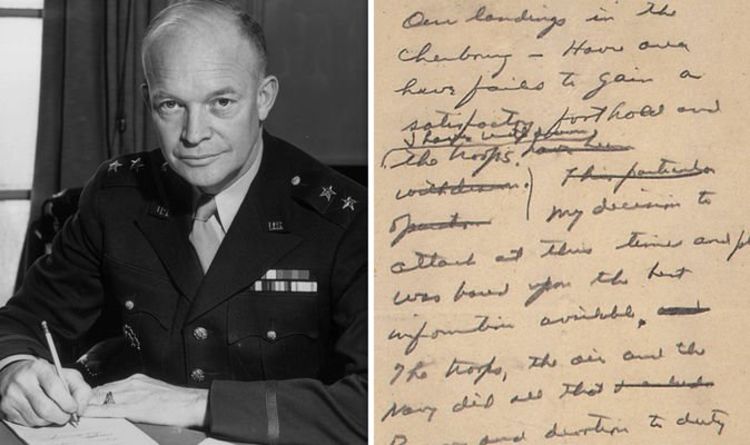
He drove back to Telegraph Cottage in silence. Then he sat down, picked up a pencil, and wrote a note he prayed no one would ever read.
"Our landings in the Cherbourg-Havre area have failed to gain a satisfactory foothold and I have withdrawn the troops. My decision to attack at this time and place was based upon the best information available. The troops, the air and the Navy did all that bravery and devotion to duty could do. If any blame or fault attaches to the attempt it is mine alone."
Look at what he edited.
He had first written "This particular operation." He crossed it out and replaced it with "My decision to attack." Then he pressed the pencil down hard and drew a long, firm line under the words "mine alone."
He misdated it July 5 instead of June 5.
He was so consumed with dread he had forgotten what month it was.
He folded the note and put it in his wallet. He carried it there as 156,000 men stormed the beaches of Normandy. When word came back that the beachhead had held, he took it out, crumpled it, and threw it in the trash.
An aide quietly pulled it out and saved it.
That note is now behind glass at the Eisenhower Presidential Library in Abilene, Kansas. You can still see where the pencil pressed hardest.
Right under the words "mine alone."
82 years ago tonight.
The three things I tell every disciplined person who is not getting the results their effort deserves: resistance training, adequate protein, and the mental framework to execute consistently without relying on motivation. Protein is the only macronutrient that cannot be substituted. Carbs and fats are fuel. Amino acids are structure. When food intake does not cover the full essential amino acid requirement, which is more common than most people realize, Perfect Amino by Body Health fills that gap precisely and without unnecessary caloric load. Mindset drives execution. Execution drives adaptation. Get all three right.
The more I learn how money flows through healthcare, the harder it becomes to ignore the incentives.
As physicians, we're taught biology, physiology, and pharmacology.
We're rarely taught who gets paid, how they get paid, and how those incentives influence what ultimately reaches our patients.
The deeper I dive into topics like drug pricing, PBMs, insurance, compounding pharmacies, and emerging therapies, the more questions I have.
Not because I trust medicine less.
Because I realize how important it is to understand the system surrounding medicine.
Patients deserve transparency.
Doctors deserve transparency.
And the people paying the bills deserve transparency.
The money trail tells a story that most of us were never taught to follow.
To catch the full podcast with @DrLipshultzTips and guest @ferrisbuhler81 --> https://t.co/ATOT24TvrM
The bidet is one of the most underrated health tools on the planet that 90% of people aren't using.
Most people are walking around with tiny poo particles and don't even know it.
Dry wiping doesn't actually clean. It smears. Water cleans what paper cannot.
Bidets have been shown to reduce butt irritation, hemorrhoid flare-ups, and UTIs. They also help you save money on toilet paper.
Most importantly, they help you avoid having tiny pieces of feces stuck in your anus.
They're also cheap and easy to install. You can get one for $40 off Amazon.
Would you spend that amount for a clean butthole? I know I would.
Let's talk about how long it takes the medical establishment to admit it was catastrophically wrong.
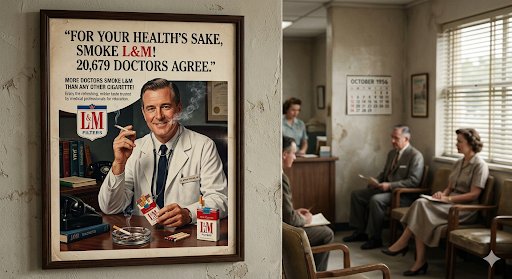
1950s: Doctors recommend smoking to pregnant women. "Calms the nerves." Magazine adverts featured obstetricians lighting up patients in waiting rooms.
Time until reversed: 25 years.
1960s: Thalidomide prescribed for morning sickness. Ten thousand children born with malformed limbs across forty-six countries. The drug was on the market for five years. The United States narrowly avoided approval thanks to one FDA reviewer, Frances Kelsey, who was harassed by the manufacturer for refusing to rubber-stamp it. She received a Presidential Medal afterwards. The men who pressured her did not lose their jobs.
Time until reversed: 5 years. 10,000 affected children.
1970s: DES prescribed to prevent miscarriage. Causes a rare vaginal cancer in the daughters of women who took it, sometimes appearing twenty years later.
Time until reversed: 30 years.
1980s: Margarine officially recommended over butter. Trans fats turn out to cause the exact heart disease they were marketed as preventing. Harvard researchers later estimated up to 250,000 excess American deaths from industrial trans fats before the FDA finally moved against them in 2018.
Time until banned: 30 years after the harm was published.
2000s: Vioxx approved for arthritis. The internal Merck documents showing cardiac risk existed before approval. They hid them.
Time until withdrawn: 5 years. 60,000 dead.
2010s: Opioids prescribed like sweets. "Less than 1% addictive when properly prescribed," cited endlessly from a 1980 letter to the editor of the New England Journal of Medicine. The letter was 101 words long, observed hospitalised patients on short-term doses, and was not a study. It was cited over six hundred times to justify giving OxyContin to people with back pain for the rest of their lives.
Time until reversed: 20 years and counting. Half a million dead.
The pattern is mechanical.
The establishment recommends something. The evidence of harm emerges. The establishment ignores it. Years pass. The harm becomes undeniable. The guidance is quietly updated "based on emerging data." Nobody is held responsible. Nobody apologises. The next mistake is already in development in an adjacent department.
So when modern doctors tell you, with the full confidence of the institution behind them:
"Seed oils are heart healthy."
"Statins for everyone over fifty."
"Saturated fat causes heart disease."
"Cholesterol is the enemy."
Remember that they have been catastrophically, generationally, lethally wrong before. While charging consultation fees the entire way through.
The question worth asking isn't whether they're right this time.
The question is what their track record predicts.
History gives you a fairly clear answer.
One of the best exercises for posture, shoulder health and upper body strength:
The Pull Up.
But most people can't do one.
Here's a 5-step guide to completing your first pull up:
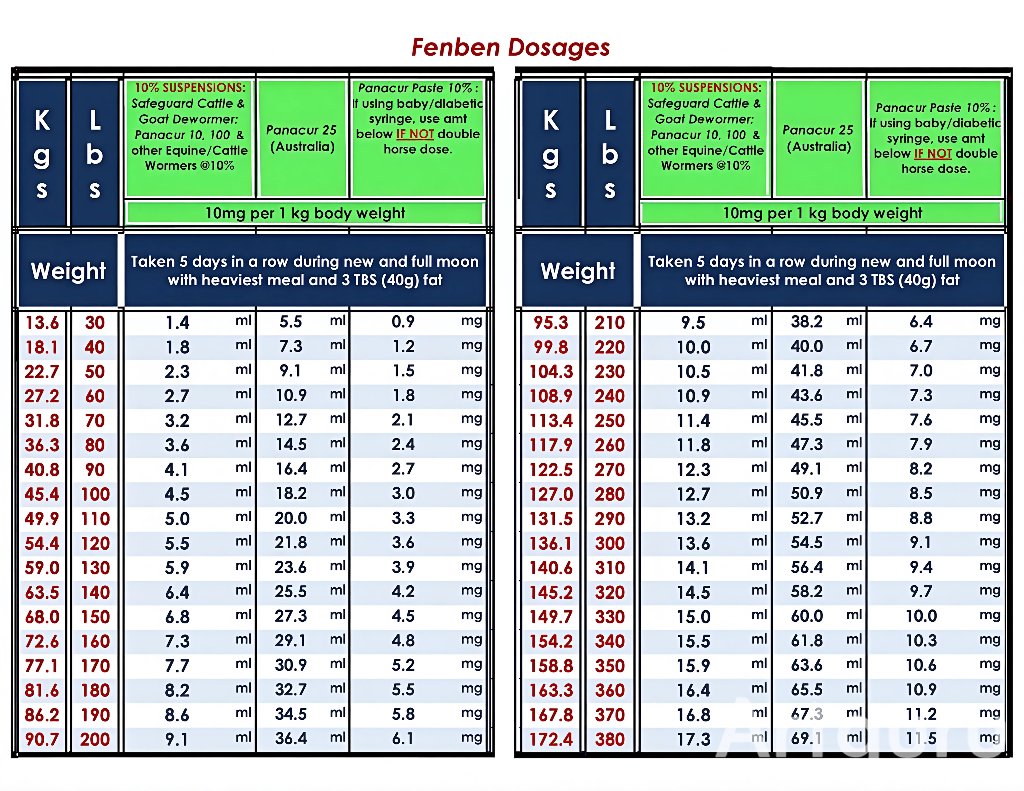
🧬 IVERMECTIN & FENBENDAZOLE DOSAGES & RECIPE
Paste | Liquid | Capsules
@_Ivermectincure
Ivermectin and fenbendazole kill parasites. Some researchers are exploring possible connections between parasites, infections, and certain diseases, including cancer.
Scientists continue to explore surprising connections in human biology, and two compounds drawing interest in research are ivermectin and fenbendazole.
In laboratory studies, ivermectin has shown the ability to influence cellular signaling linked to tumor activity, including reducing the activity of proteins such as PAK1, which researchers associate with the growth and spread of certain cancer cell models.
Fenbendazole has also gained attention in scientific circles for its microtubule-related effects in experimental settings, inspiring further curiosity about how these mechanisms might inform future cancer research.
The most exciting part is how modern science keeps uncovering new pathways, new targets, and new ideas that could one day shape innovative therapies. Research is moving fast, and every new discovery adds another piece to the puzzle of understanding how to support healthier human cells.
Visit :- https://t.co/REwGZCdhg9
#ivermectin #fenbendazole #CancerResearch #Cancer #Parasite
You have seen Teddy Roosevelt’s famous quote about the Man in the Arena. But have you really read it? Have you absorbed it?
“It is not the critic who counts: not the man who points out how the strong man stumbles or where the doer of deeds could have done better. The credit belongs to the man who is actually in the arena, whose face is marred by dust and sweat and blood, who strives valiantly, who errs and comes up short again and again, because there is no effort without error or shortcoming, but who knows the great enthusiasms, the great devotions, who spends himself in a worthy cause; who, at the best, knows, in the end, the triumph of high achievement, and who, at the worst, if he fails, at least he fails while daring greatly, so that his place shall never be with those cold and timid souls who knew neither victory nor defeat.”
Soak it in.
“…there is no effort without error or shortcoming.”
“…if he fails, at least he fails while daring greatly, so that his place shall never be with those cold and timid souls who knew neither victory nor defeat.”
My goal, this week and every week, is to keep you from becoming one of those cold and timid souls.
Sure, there might be less heartbreak, but there is also no joy in that life.
It’s a life that puts you on the sidelines.
You live in a constant state of mediocrity. Since a life without putting yourself into the arena doesn’t experience the lowest lows, it also cannot experience the highest highs. It’s a constant middle-ground, a life of “blah.”
It numbs you. It’s why people who never step into the arena themselves are always trying — and failing — to find joy in other people’s failures. They want to feel something, like they know the people in the arena do, but they aren’t willing to take the risk required to feel something real.
I don’t want any of you to live that middling, numb, mediocre life.
I want you to feel the highest highs. And for that, I need you to learn that you’ll also have to experience the lowest lows.
It might not seem fair that the same map can lead you to either brutal heartbreak or total greatness, but that’s life.
We saw it in the Super Bowl. Haters will call the Patriots losers.
But there are no real losers who play in the Super Bowl. I don’t mean that in the participation trophy sense, because I can’t stand the idea that everyone deserves a trophy. I mean that everybody who goes all out, who steps into that arena and gives everything, is a champion, even if they don’t deserve a trophy.
They have lived life fully, rejecting the numb mediocrity most people accept.
The only real losers are the ones who never leave the safety of the sidelines.
After these Olympics, Lindsey won’t go home with a medal. She will go home with the heart of a champion.
I hope she knows that she did a great public service for all of us.
She demonstrated that thriving means being comfortable on that razor’s edge of victory and defeat.
She reminded us that coming up short in a worthy cause beats becoming one of those cold and timid souls.
She showed us how to live, not just to exist. They don’t have a medal for that.
Life’s greatest wins live inside you.
My challenge to all of you this week comes in two parts, and one is easier than the other.
Let’s start with the easier one: don’t be a loser who hates from the sidelines. I have a feeling most of you can already check this one off, because this is the positive corner of the internet. But if you find yourself naysaying or enjoying other people’s failure, it’s the first sign that you are falling into that numb, cold, timid life. Stop it.
Now, the harder one. Take the risk. Put yourself out there. All of you have something you’ve shied away from, something where you thought about jumping into the arena but hesitated when you thought of the risk of failure. You might fail. But I promise you’ll find that even failure means a fuller life than the sidelines.
It’s time to start living.
https://t.co/DfEs210Az3
2/2
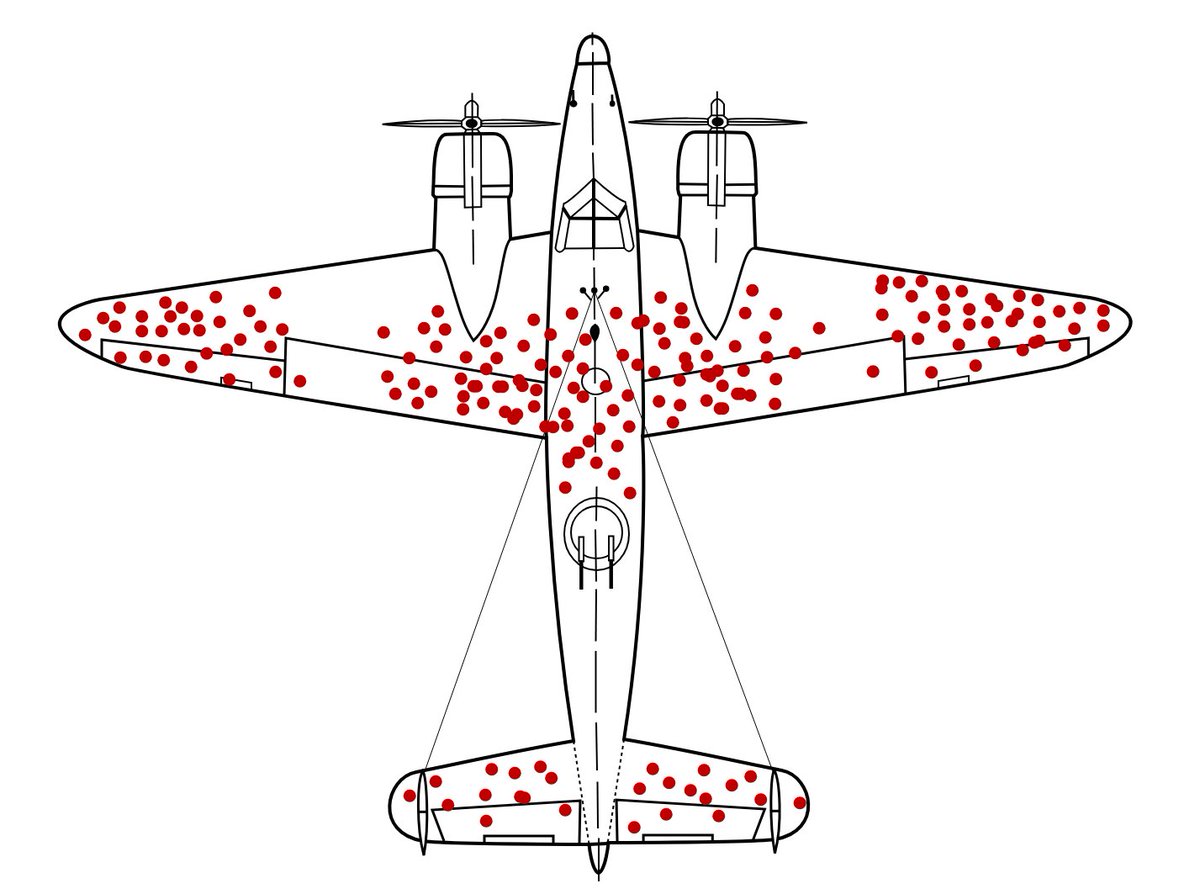
I'm obsessed with cognitive biases.
A "cognitive bias" is a systematic error in thinking that destroys decision-making.
11 most powerful (and dangerous) cognitive biases I've found: 🧵
1. Survivorship Bias:
This is a screenshot from American Academy of Pediatrics’ webpage, thanking the organization’s top corporate donors. These four companies make virtually every vaccine on the CDC recommended childhood vaccine schedule. AAP is angry that CDC has eliminated corporate influence in decisions over vaccine recommendations and returned CDC to gold-standard science and evidence-based medicine laser-focused on children’s health.
AAP today released its own list of corporate-friendly vaccine recommendations. The Trump Administration believes in free speech and AAP has a right to make its case to the American people. But AAP should follow the lead of HHS and disclose conflicts of interest, including its corporate entanglements and those of its journal—Pediatrics—so that Americans may ask whether the AAP’s recommendations reflect public health interest, or are, perhaps, just a pay-to-play scheme to promote commercial ambitions of AAP’s Big Pharma benefactors.
AAP should also be candid with doctors and hospitals that recommendations that diverge from the CDC’s official list are not shielded from liability under the 1986 Vaccine Injury Act.
If your body’s insulin resistant, it won’t burn fat—it’ll store it.
Most people obsess over macros…
But fixing blood sugar habits is what actually triggers fat loss.
Here are 11 cheat codes to reset insulin and reignite fat-burning