It’s been 10y since we opened our lab at @IcahnMountSinai. What an exciting ride and supportive environment it has been. We are now moving to @Columbia@ColumbiaPeds. Thrilled at the future and discoveries in genetics and immunology to come.
New work from the Victora lab (@victora_lab) explains why in secondary immunizations, new germinal centers form from naïve cells that bind poorly to the antigen. It’s all about pre-existing antibodies! https://t.co/d4M4HGPTDd
https://t.co/eW9v5mIB0d
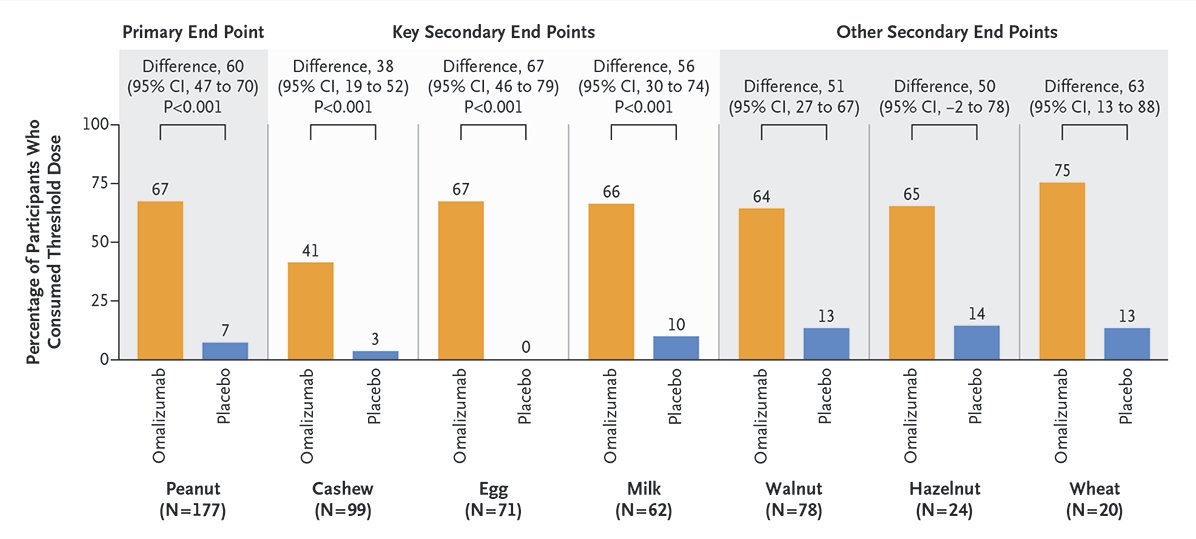
Results of the first stage of the NIAID funded CoFAR OUtMATCH trial, involving 10 sites including Mount Sinai (Scott Sicherer, PI) were just reported https://t.co/KxlC8VT58Q
Important news for pediatric food allergy!! The FDA approved anti-IgE (Omalizumab) treatment to reduce reactions to accidental exposures to allergenic foods. More in https://t.co/8BiqPahdqm.
Original Article: Omalizumab for the Treatment of Multiple Food Allergies https://t.co/FKbAqMmw6p
Editorial: Options for Multiple Food Allergies — Food Avoidance or Pharmacologic Treatment? https://t.co/rvbUDVzryS
This week's new issue of #ScienceTranslationalMedicine has arrived! Researchers uncover stealthy immune saboteurs that drive allergic memory in humans, a new analysis in mice reveals how the brain recovers after stroke, and more. https://t.co/qvu75o4KIY
Therefore, the findings described in our new @ScienceTM manuscript link these Type 2 IgG memory B cells to the production of peanut allergy-causing IgE antibodies, an important discovery for understanding and treating #FoodAllergy. 5/n
Check out our paper in @ScienceTM with insight into how B cell memory for allergen-specific IgE antibodies is stored in CD23+IgG1+ memory B cells in kids with peanut allergies. Similar findings in pollen allergy reported in the same issue by @jfekoenig 1/n https://t.co/p4eGkaLdlT
When we isolated the cells that directly bind the main peanut allergen Ara h 2, we found that they belong to the Type 2 IgG memory cells, they contain clones that are similar between different individuals, and they produce antibodies that bind Ara h 2 with high affinity. 4/n
Our new manuscript on by Miyo Ota, Ken Hoehn and collaborators reveals the importance of type2-marked IgG memory cells in food allergy persistence. @SinaiImmunol@hoehnousk@skeinstein
https://t.co/MuZAbrjJd4