Can biomarkers inform RT de-escalation in HPV+ oropharyngeal cancer? At #DAVAHeadAndNeck, Dr. Eric Sherman (@MSKCancerCenter) reviewed selected cohorts: 5-year PFS 90% with 30 Gy vs 89% with 70 Gy (median follow-up 4.1 years).
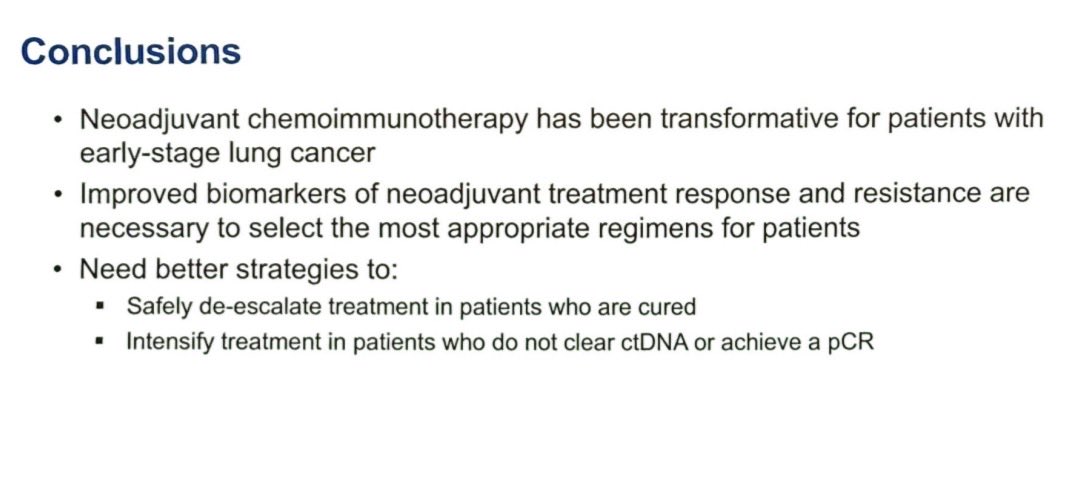
My colleague Jamie Chaft @MSK_DeptOfMed on treating brain metastases in small cell presenting at NY Lung Cancers Symposium, questions role of RT @gotoPER
Our Summer at Memorial Sloan Kettering Cancer Center (MSK) research programs are now open to current sophomores and juniors interested in biomedicine, chemistry, computational biology, and engineering.
These in-person programs in NYC offer students the opportunity to gain research experience, build new skills, expand their scientific knowledge, and explore STEM career paths.
Learn more at: https://t.co/O4wx6VwMKr
The lungs have been successfully installed! #lcam
Proud to be part of this incredible team @MSKCancerCenter raising awareness about #lungcancer , highlighting our @TheWRP4LC ribbon as well.
Researchers at MSK have developed a new computational approach to better understand why #Tcells, the immune system’s primary cancer-fighting cells, respond differently to immunotherapies.
Led by computational oncologists @bengrbm and @SohrabShah, the team created a statistical model called TCRi that links a T cell’s unique receptor sequence to its biological behavior, helping reveal how these cells recognize and react to cancer.
By analyzing more than 167,000 T cells from patients treated with checkpoint inhibitor immunotherapies, the researchers aimed to uncover how a T cell’s genetic identity influences its activity and how those behaviors change during treatment, potentially improving the ability to predict which patients will benefit from immunotherapy.
“This approach produces a standardized measurement that lets us compare results across different studies and clinical trials,” Dr. Greenbaum says. “We have a way to learn from this data what a meaningful T cell response to an immunotherapy looks like — or doesn’t.”
Learn more about this research: https://t.co/UJL48fxQ3k
In a phase 1/2 trial led by MSK thoracic medical oncologist Dr. Kathryn Arbour, more than 30% of patients with previously treated metastatic lung cancer responded to daraxonrasib, meaning their tumors shrank.
Learn how daraxonrasib targets multiple KRAS mutations and what the early findings could mean for people with lung cancer: https://t.co/rF77OOnqVA
Congratulations to MSK's most recent awards and appointments, including @_Choi_Junhong on receiving a 2026 @NIH Director’s New Innovator Award; Dr. Gregory Goldgof and @juanosoriomd for being named Damon Runyon Clinical Investigators; Dr. Michael Postow on receiving a 2026 @CureMelanoma Breakthrough Consortium Pilot Translational Award; and more: https://t.co/7NOzDcXqsU
Our bodies are colonized by trillions of viruses that we live with in homeostasis. The most diverse and abundant of these viral families are anelloviruses. A new paper from us at @MSKCancerCenter explores what happens after we *all* have been infected
https://t.co/cNOsPCbazd 1/n
MSK will be hosting a Virtual Residency Information Session for our PGY2 Oncology Pharmacy Residency Programs (Adult and Pediatrics) on Tuesday, November 24 at 5pm ET.
During these sessions we will provide an overview of our programs and answer any questions you may have. This is also an excellent opportunity to meet our program directors.
Register here: https://t.co/L7xm0pW0N9
“The promise of AI to transform biology is real, and it’s important — but it needs to be done right.
MSK computational biologist Dr. Christina Leslie discusses how AI could help design better therapies and decode why tumors resist treatment. Learn more: https://t.co/VfqyQdgT4O
Shrinking a tumor before surgery helped protect a young patient’s voice.
MSK experts took an unconventional approach, using larotrectinib to make a less extensive operation possible. Read about her treatment: https://t.co/YzCpi7Ai8s
Catch up on the cancer research MSK presented at #ESMO26. 🔬
Our roundup covers a pancreatic cancer vaccine, targeted therapy for advanced GIST, and new treatment approaches for ovarian cancer, lung cancer, and sarcoma.
Learn more: https://t.co/Ow16YTo8Pg
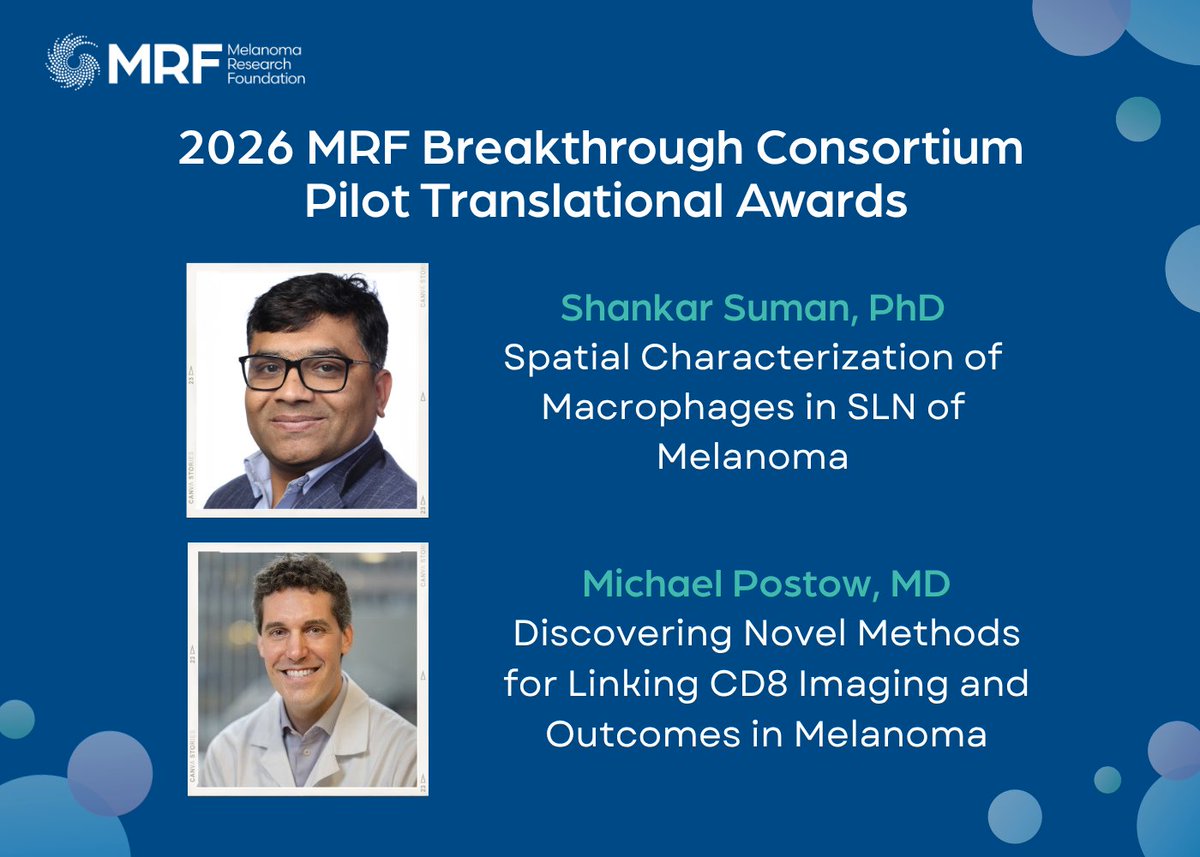
Congratulations to the recipients of this year's MRF Breakthrough Consortium (MRFBC) Pilot Translational Awards: Shankar Suman, PhD of the @MayoClinic in Rochester and Michael Postow, MD of @MSKCancerCenter!
The MRFBC is a national network of 34 centers of excellence in melanoma that collaborate to accelerate research and the development of the most promising therapies in melanoma treatment.
Learn more about this year's MRFBC Pilot Translational Awardees: https://t.co/mFSmbrBENe
This October, Breast Cancer Awareness Month, we spotlight Breast Radiation Oncologist Dr. J. Isabelle Choi.
"It is a privilege to walk alongside my patients through treatment and help them get back to the things that matter most to them."
#BreastCancerAwarenessMonth#RadOnc
As members of the @CAIAorg, MSK is helping accelerate development and deployment of AI models to improve cancer care
"Rather than developing separate tools for every clinical question, we are training foundational models across institutions," says Dr. @SohrabShah, Chief of Computational Oncology in the Department of Epidemiology and Biostatistics at MSK.
"Our goal is to develop models that learn from patients full clinical trajectories with multimodal data and at national scales. This will ultimately inform clinical recommendations for new patients, leading to improved personalized treatment and care."
Learn more ⬇️
Two years ago, the Cancer AI Alliance set out to transform cancer research. Today, we're celebrating how far CAIA has come.
In just two years, CAIA has united insights from the data of over 1 million patients, proving what’s possible when cancer centers collaborate at scale.
Join us next week, November 5–6, for the 10th Advances in Colorectal Oncology Symposium @MSKCancerCenter, a milestone event bringing together international experts to explore the latest advances, emerging strategies, and real-world challenges in multidisciplinary colorectal cancer care.
Hear from @DrPaulRomesser as he shares what makes this year’s program especially exciting and why you won’t want to miss it.
We hope you’ll join us! Learn more and register: https://t.co/92GBJlyiDt
@jgarciaaguilar
There's a lot of buzz around mRNA #cancervaccines, but how do they actually work?
These vaccines help train your body’s immune system to recognize the unique genetic signature of cancer cells. Once activated, the immune system can:
🔹 Target and attack cancer cells while helping spare healthy cells
🔹 Work alongside other cancer treatments
🔹 Create a lasting immune response that may help prevent cancer from returning or spreading
📽️ Hear more from Dr. Vinod Balachandran (@TheVinodLab), Director of the Olayan Center for Cancer Vaccines at MSK, about what patients should know about experimental mRNA cancer vaccines.