Gambling disorder cases have started skyrocketing in states where sports betting is legal (this started ~May, 2018) following the end of COVID.
They've remained flat from COVID to today in states where it has remained illegal.
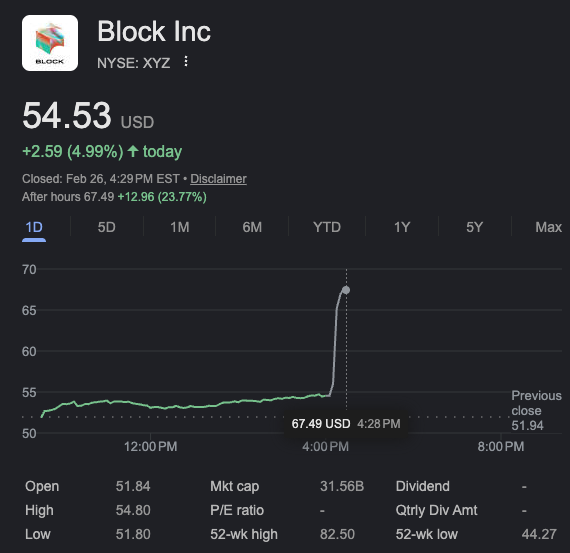
Once the bubble pops, Anthropic and OpenAI will become the Coinbase and Block of the AI world. Mundane companies that ship narrative wrappers on mundane bytes.
That the bubble will pop isn’t some apocalyptic doomsday prophecy. It’s not that complicated: AI is freakishly expensive to serve. If the returns on the other end are not justified, the bubble pops. And thus begins the decades long buildout to actually economically justifiable AI.
It’s amusing how resistant reality is to our fictions and fantasies. In the peak of the crypto bubble we thought reality was going to be transformed into financial liberty and democratization for all, and network states and decentralized reserve currencies. Coinbase stood to be a multi-trillion dollar company and is now just a mundane tech startup.
Today we spin similar narratives about the intellectual upheaval of AI, about the new democratization of intelligence and how everything will soon begin to orbit this new technology.
At the end, Anthropic and OpenAI will be mundane IT providers with an insanely grim research outlook to make AI economically sensible and useful, no different from Google’s position in trying to make quantum commercially viable.
Reality is, fortunately, pretty hardened against our delusions.
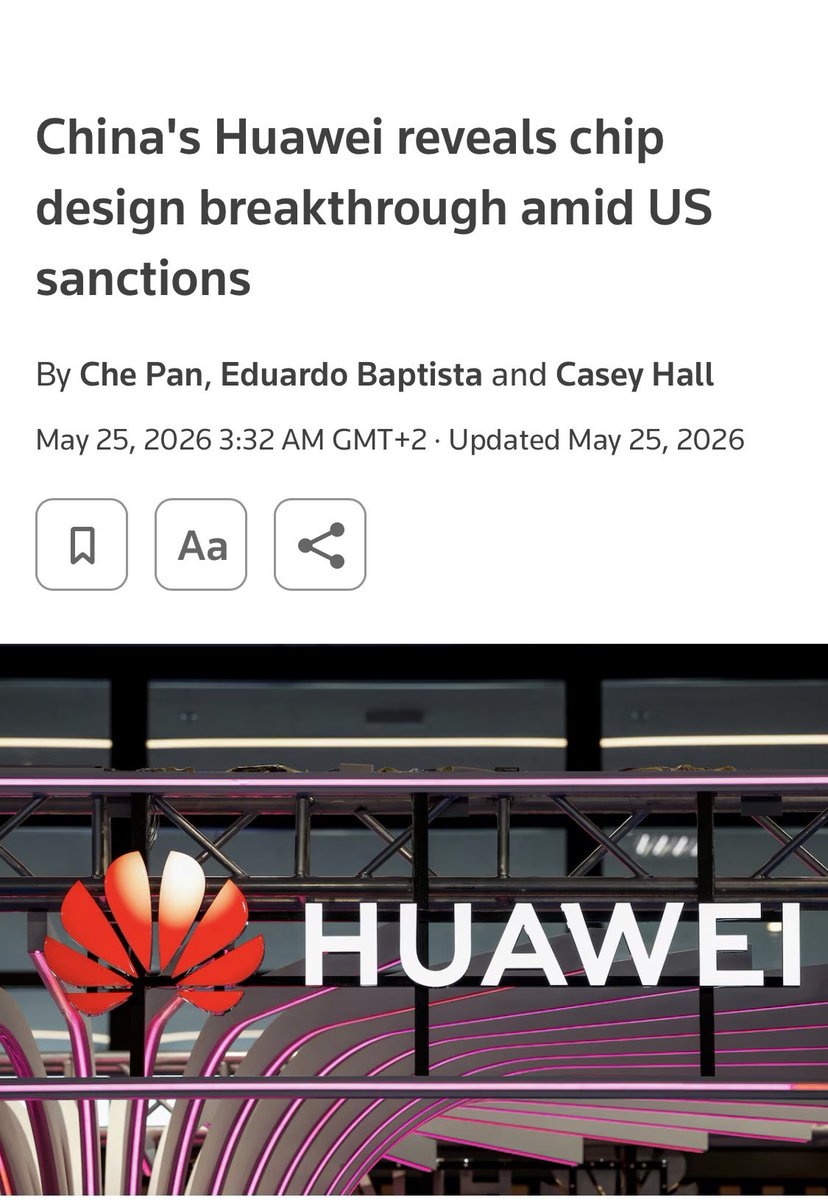
franchement l'annonce de Huawei hier à Shanghai vient de mettre noir sur blanc ce que j'essaie de vous faire comprendre ici depuis des années
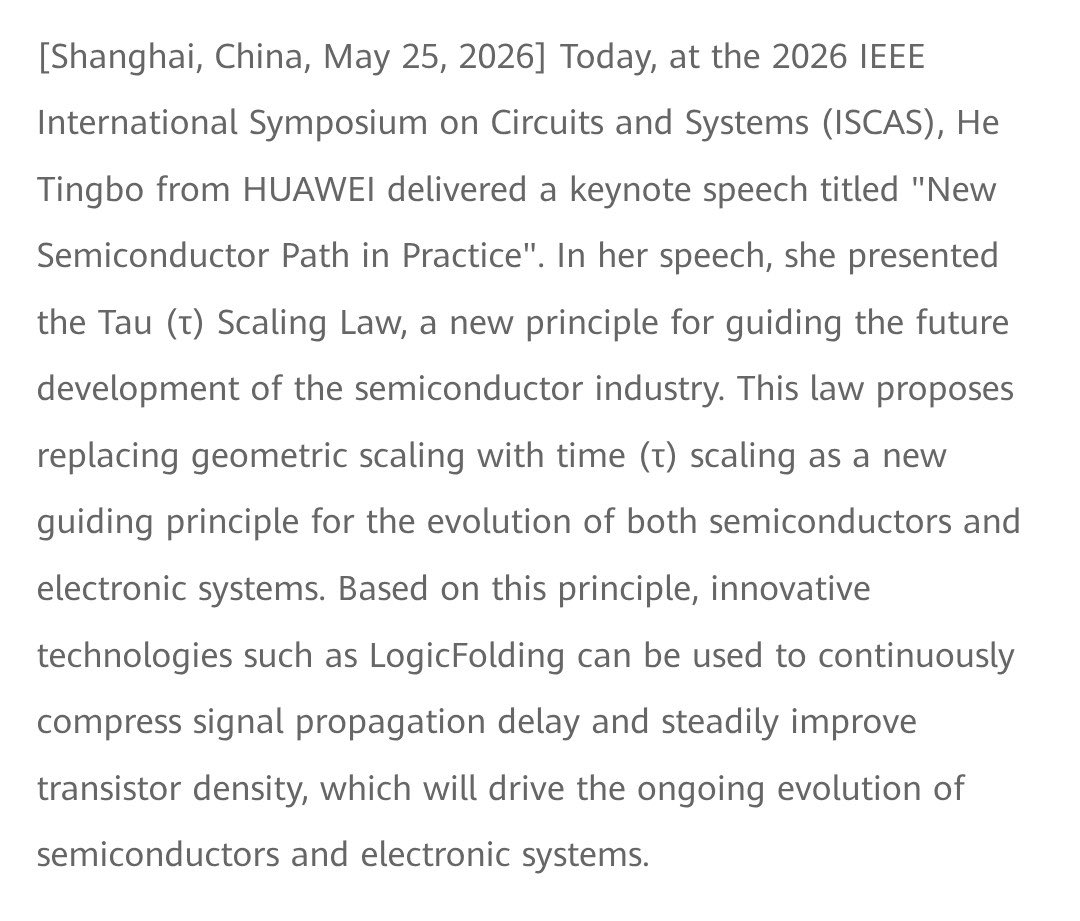
pour vulgariser Huawei vient d’annoncer au sympoisum ieee iscas une nouvelle loi physique qui remplace la loi de moore, ils l’appellent la tau scaling law et elle change littéralement le paradigme du semiconducteur mondial, en gros au lieu de continuer à rétrécir les transistors ce qui se heurte à des limites physiques quantiques infranchissables, ils optimisent dorénavant la constante de temps tau à 4 niveaux simultanément et obtiennent des gains de performance équivalents à ce que les américains atteignent avec leur lithographie euv à 200 millions de dollars la machine, sauf qu’eux n’ont pas accès à cette lithographie depuis les sanctions de 2019
la Chine dépasse donc la silicon valley sur son propre terrain et la rend périmée et ce qui se joue réellement est l'exact contraire de ce que Washington imaginait en décidant des sanctions de 2019
en ce sens je crois que très peu de gens ont pris la peine de regarder vraiment les slides de la présentation parce que le coeur de la rupture se cache ailleurs que dans le concept marketing de tau scaling law, il se trouve dans un détail technique que seuls quelques ingénieurs spécialisés ont remarqué (et que je suis parti fouiller haha), il existe visiblement un procédé de collage entre couches de silicium avec un espacement + petit que 2 micromètres, ce qui transforme les fils verticaux reliant les différentes couches d'une même puce en chemins de calcul à part entière, ils maîtrisent là l'intégration en 3 dimensions au sens fort pendant que le reste du monde raisonne encore sur un seul plan horizontal
pour moi la meilleure image c'est celle d'un architecte qui construit une tour pendant que ses concurrents continuent d'étaler des maisons individuelles à l'horizontale, intel et tsmc se battent pour graver des transistors toujours plus minuscules parce que leurs lithographies euv les enferment dans cette logique, huawei coupé de ces lithographies depuis 2019 a choisi un autre combat, raccourcir au maximum le temps qu'un signal électrique met pour traverser l'ensemble du système, cette durée qu'ils nomment tau et qu'ils minimisent simultanément au niveau du composant du circuit de la puce et de la machine complète, c'est de la physique réelle présentée dans la conférence ieee la plus sérieuse au monde sur le sujet
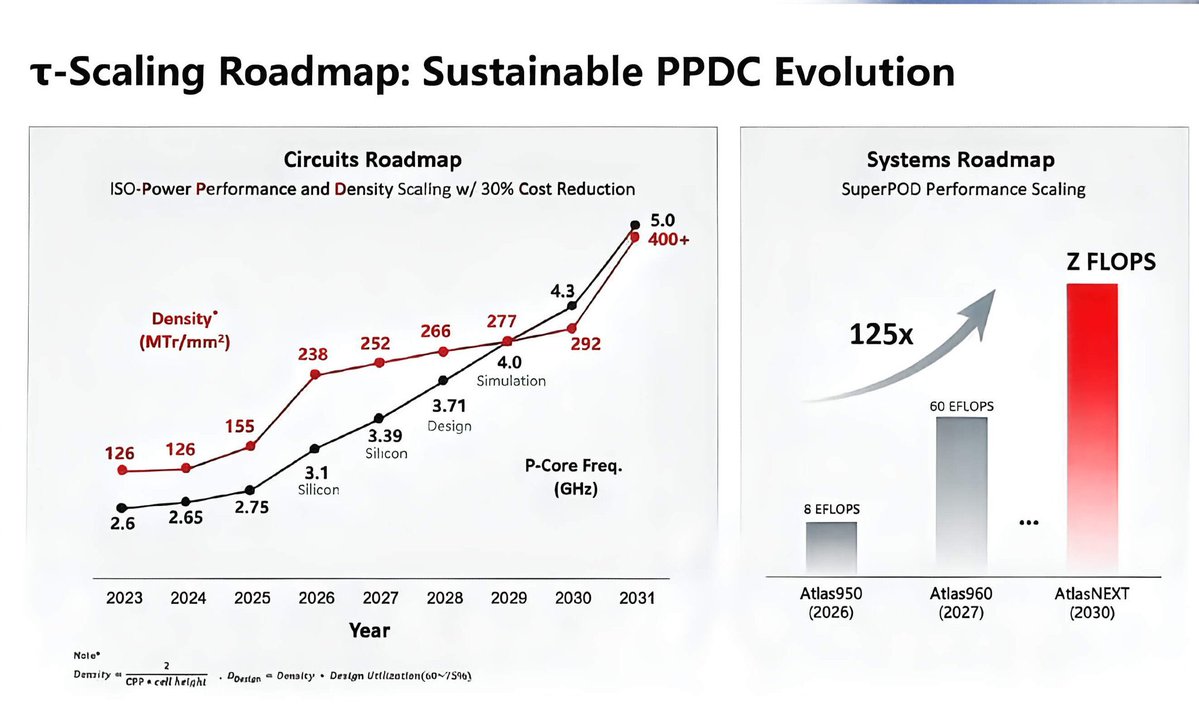
d’ailleurs les chiffres font réfléchir, allez jeter un coupé d’œil et vous allez voir que la densité de transistors monte de 126 à plus de 400 millions par millimètre carré entre 2024 et 2031, la fréquence des coeurs grimpe de 2,6 à 5 gigahertz, même la performance des systèmes complets fait x125 en 4 ans entre 2026 et 2030 & surtout 381 puces ont déjà été fabriquées en série selon ces principes depuis 2020, autant dire qu'ils ont commencé à changer de paradigme dès la première vague de sanctions américaines, 6 années de travail discret pendant que les analystes occidentaux les croyaient en mode survie mdr ce que tout le monde prenait pour de la résistance était en réalité un virage stratégique médité et mené avec la patience d'un peuple qui voit à 50 ans (la vision à très long terme de la Chine dont je vous parle souvent )
je vous le répète depuis des années ici, les sanctions occidentales accélèrent la politique industrielle et tech de Chine au lieu de la freiner, elles l'obligent à inventer le monde d'après pendant que l’occident reste coincé dans celui d'avant, d’ailleurs pour info même BYD a créé la batterie LFP face au blocage du nickel et il domine désormais le marché mondial de la voiture électrique, deepseek a conçu son architecture multi-head latent attention face au blocage des puces h100 et il a divisé par 10 le coût des grands modèles de langage, Huawei vient de poser logicfolding et tau scaling face au blocage de l'euv et il redessine déjà la trajectoire mondiale du semiconducteur jusqu'en 2031
@LALakersFR Pour AR ça fait 2 ans que le gap avec sa saison régulière est énorme. Et défensivement c’est une passoire, ils le ciblent à chaque possession, Son futur contrat doit refléter ça, pas ses stats en RS.
Judging by my tl there is a growing gap in understanding of AI capability.
The first issue I think is around recency and tier of use. I think a lot of people tried the free tier of ChatGPT somewhere last year and allowed it to inform their views on AI a little too much. This is a group of reactions laughing at various quirks of the models, hallucinations, etc. Yes I also saw the viral videos of OpenAI's Advanced Voice mode fumbling simple queries like "should I drive or walk to the carwash". The thing is that these free and old/deprecated models don't reflect the capability in the latest round of state of the art agentic models of this year, especially OpenAI Codex and Claude Code.
But that brings me to the second issue. Even if people paid $200/month to use the state of the art models, a lot of the capabilities are relatively "peaky" in highly technical areas. Typical queries around search, writing, advice, etc. are *not* the domain that has made the most noticeable and dramatic strides in capability. Partly, this is due to the technical details of reinforcement learning and its use of verifiable rewards. But partly, it's also because these use cases are not sufficiently prioritized by the companies in their hillclimbing because they don't lead to as much $$$ value. The goldmines are elsewhere, and the focus comes along.
So that brings me to the second group of people, who *both* 1) pay for and use the state of the art frontier agentic models (OpenAI Codex / Claude Code) and 2) do so professionally in technical domains like programming, math and research. This group of people is subject to the highest amount of "AI Psychosis" because the recent improvements in these domains as of this year have been nothing short of staggering. When you hand a computer terminal to one of these models, you can now watch them melt programming problems that you'd normally expect to take days/weeks of work. It's this second group of people that assigns a much greater gravity to the capabilities, their slope, and various cyber-related repercussions.
TLDR the people in these two groups are speaking past each other. It really is simultaneously the case that OpenAI's free and I think slightly orphaned (?) "Advanced Voice Mode" will fumble the dumbest questions in your Instagram's reels and *at the same time*, OpenAI's highest-tier and paid Codex model will go off for 1 hour to coherently restructure an entire code base, or find and exploit vulnerabilities in computer systems. This part really works and has made dramatic strides because 2 properties: 1) these domains offer explicit reward functions that are verifiable meaning they are easily amenable to reinforcement learning training (e.g. unit tests passed yes or no, in contrast to writing, which is much harder to explicitly judge), but also 2) they are a lot more valuable in b2b settings, meaning that the biggest fraction of the team is focused on improving them. So here we are.
Everyone felt sad for the penguin walking alone and the monkey rejected by his mother. But this video is far more heartbreaking, yet it didn’t receive the same attention.
There’s a new kind of burnout now.
Not from working too much.
From trying to keep up
with tools, models, frameworks, launches,
and 600 people saying “it’s over” every morning.
@BullTheoryio I don’t get the panic. Claude Security is a static code scanner. These products are about monitoring your live infrastructure. Whole different layer. The stocks were def overpriced. But they ll bounce back the second one of them announces (ironically) solid AI agent protection