To close out Rare Disease Day, Tasia Rechisky is giving a shoutout to the Dr. Inderneel Sahai. Tasia and all of us here at MitoAction are so thankful to have Dr. Sahai as a part of our mito and FAOD community. Thank you for all you do! #RareDiseaseDay https://t.co/0TmhSSXsRB
🚨 New paper alert! 🚨
Check out our latest work on HypoxyStat, a small-molecule therapy that increases oxygen-hemoglobin affinity and provides a practical form of hypoxia therapy. A great collaboration with @MazeInBiotech 🔗 Paper: https://t.co/21dGI0ebhX @CellCellPress
"People considered me unsuccessful."
Katalin Karikó met with biomedicine student Emanuelle Tavares to talk about life and science. Our medicine laureate explains that, despite being terminated from her position, she felt successful as she was always learning in her lab.
Watch the full conversation: https://t.co/MEd8gfttDQ
#WomeninScience
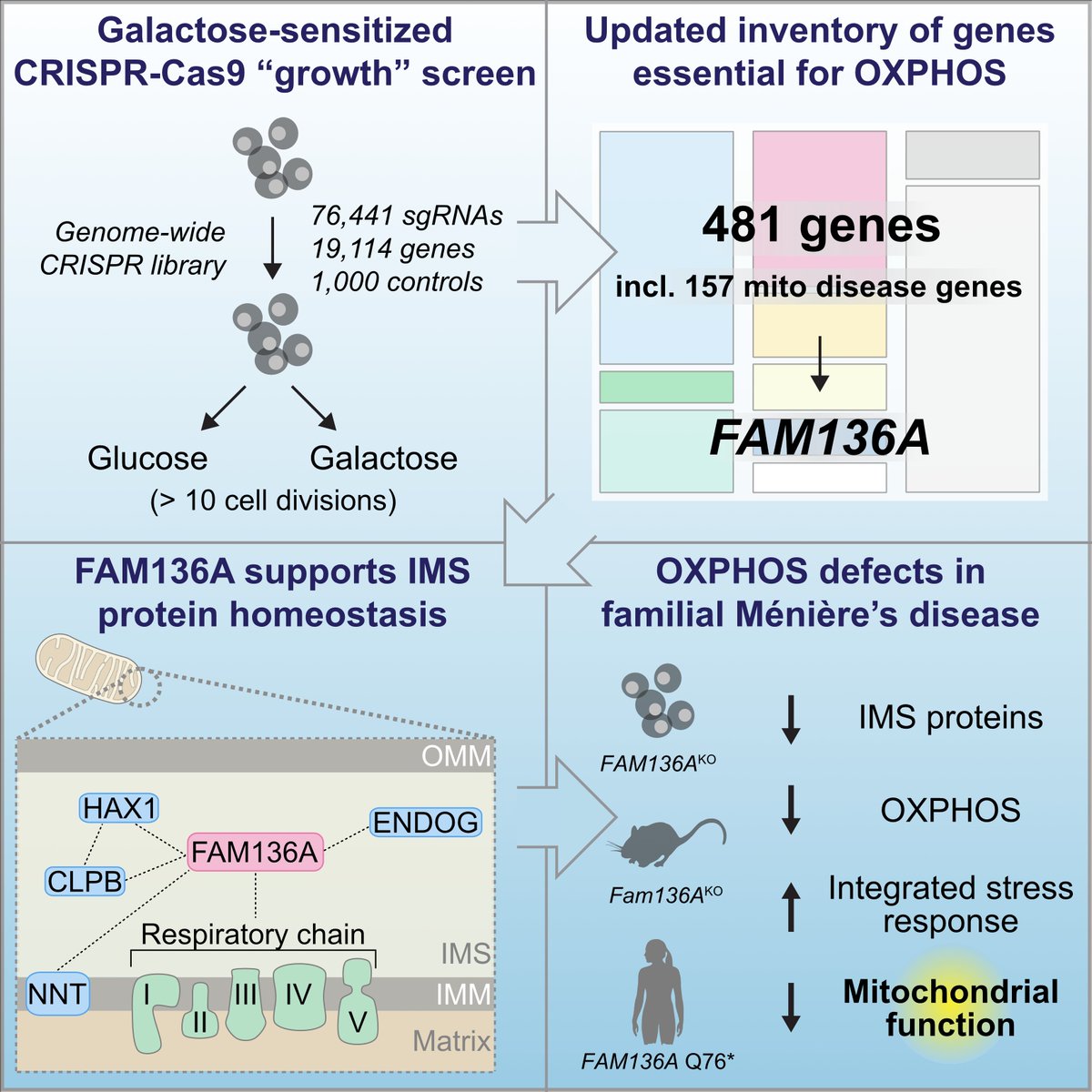
New preprint from the lab! 🚨
🧫 New galactose #CRISPR screening strategy
🎯 481 genes required for #OXPHOS
⚙️ #FAM136A in IMS proteostasis
👂Mito defects in #Menieres disease
by Marcell Harhai @FBM_UNIL
A short thread 1/5
https://t.co/YTTWEqRnul
Single case > new insights. Increased perfusion BEFORE other MRI changes during a MELAS stroke-like episode + ictal-interictal continuum during symptomatic period.
@AltenBaris @nsanar Cat Chu @MGHNeurology@MghPediNeuro
https://t.co/PcaeMV2tqH
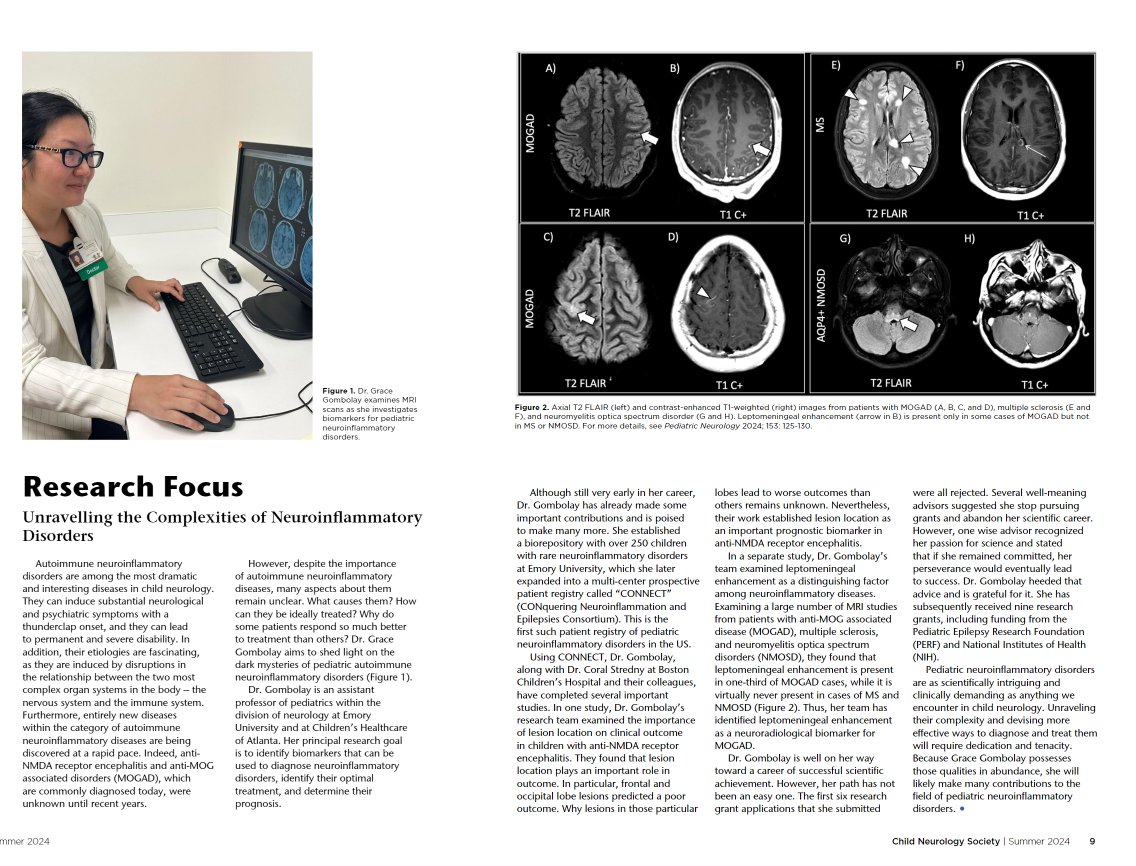
Proud to be part of this incredible all-woman group of pediatric neuro-immunologists: https://t.co/eZb6fhMGkg
...and if you didn't catch this profile of @GraceGombolayMD in @ChildNeuroSoc Connections, check it out: she's doing amazing things in this field.
Introducing a resource of mtDNA copy number (mtCN) across ~10k human donor-tissues (GTEx), 20 murine tissues, and 173 cancer cell lines. Insights emerge by integrating mtCN w/other large-scale measures, e.g., DepMap cells w/high mtCN resist loss of GPX4.
https://t.co/Ks93xjGj0X
We were able to squeeze in one more #MitoMed LIVE on our very last day with Dr. Amy Goldstein from @ChildrensPhila. On her 24th MitoMed Cleveland Anniversary, Dr. Goldstein shares how important it is to be able to welcome and truly foster the next generation of #mito doctors.
Don't forget! Join us for an Ask the Mito Doc webcast on Wednesday, May 29 at 7:00pm eastern for a "Mitochondrial Disease Primer" with Dr. Melissa Walker. We'll also provide a brief overview of What to Expect for #MitoMed 2024 in Cleveland. Register: https://t.co/qFR16cB4Kv
Delighted to share new work led by Josh Meisel w/Gary Ruvkun using forward genetics to discover a new mode of post-transcriptional gene regulation. The mechanism involves mRNA methylation and P-bodies to allow neuron-specific mitochondrial gene expression.
https://t.co/umm7U7g9Wi
mtDNA heteroplasmy dynamics are so complex, even paradoxical. To understand why, we combined precise mtDNA editing w/a new method SCI-LITE. In dividing cells, selection (not drift) acts on cell (not intracellular) fitness to shape population heteroplasmy. https://t.co/ZVryLp9SeM
📣 Calling all 🧠 child neurologists: Apply 4 @ChildNeuroSoc PERF grants by today Monday April 15 at midnight! For young investig early in academic career or applying for first NIH or CIHR research grant. Can’t win it if you’re not in it 💪🏽
Link: https://t.co/71fAXtmWar
Continuing our study of the somatic segregation of pathogenic mitochondrial DNA variants. T cell activation selects against the m.3243A>G variant in a manner that persists with time/age. @VamsiMootha@broadinstitute@MGHNeurology@MGHMolBio
https://t.co/WPQCotgblU
Delighted to introduce PMF-seq: a new way to link genetic perturbations to detailed bioenergetic phenotypes. We use the method to dissect genetics of mitochondrial ETC branching and acute tBID action. Led by https://t.co/jYQkGEVrpg @broadinstitute. https://t.co/GT8qUYnLCR