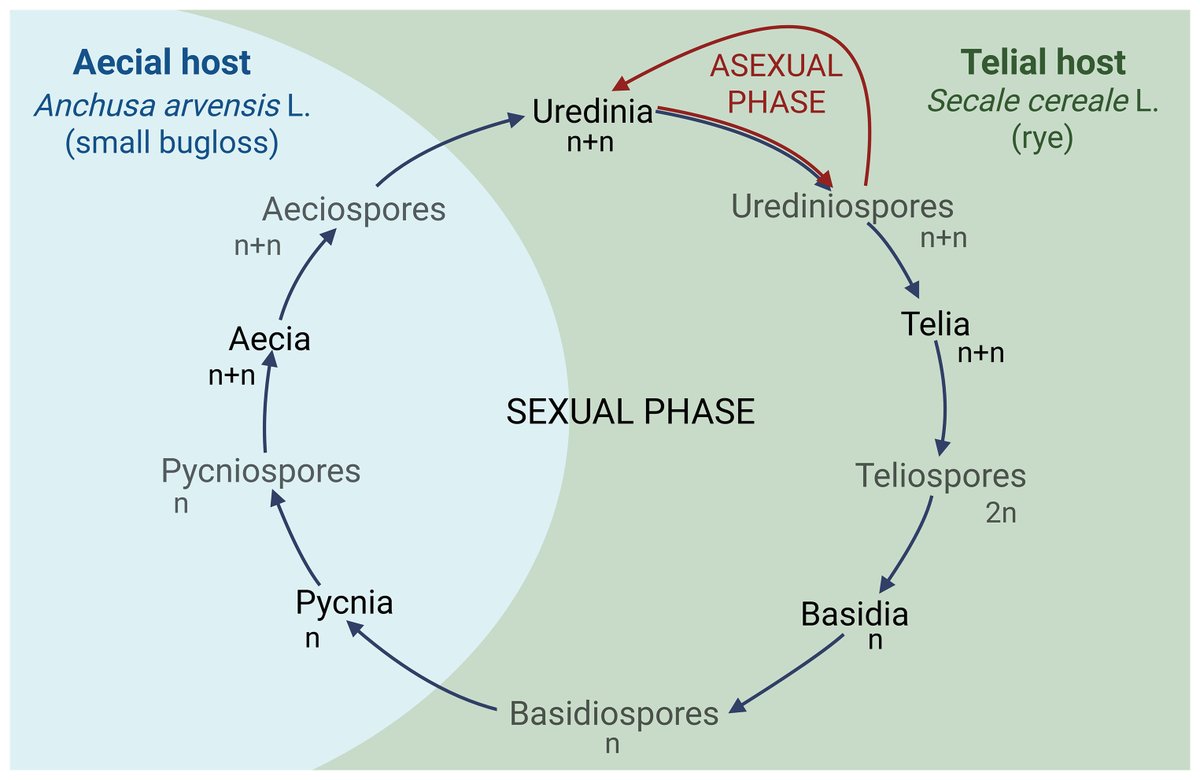
Interactions Review: Leaf rust, caused by #Puccinia recondita f. sp. secalis, is considered one of the most dangerous rye diseases, causing yield losses exceeding 35%. Monika Rakoczy-Trojanowska et al. summarize all currently available data about this disease: pathogen characteristics (including its life cycle, natural variation, and disease symptoms), resistance resources, and the background of the plant immune response at the genome, transcriptome, and metabolome levels. Learn more: https://t.co/f6MdeweCVc
New preprint out 🌱
We present a new T-DNA vector system for Arabidopsis that supports clean, genomically mapped, single-copy T-DNA insertion with predictable cell-type/conditional gene expression.
@MoKhalilLab + Gehring labs
https://t.co/oqkjliGHaQ
🧵1/16
Check out our latest work! AlphaFold 3 revealed a transient immune receptor complex that eluded biochemical studies for almost a decade🤯 We describe a conserved structural logic underlying sensor–helper communication in an NLR immune receptor network 🧵👇
https://t.co/H55EMmrtZn
Geneticist J. Craig Venter, best known for his role in sequencing the human genome, has died aged 79.
He spoke to Nature in 2023 about AI, sequencing the ocean – and why he had no plans to stop working.
https://t.co/FYq5jbMpxa
I just published Don’t Perish! A Step-by-Step Guide to Writing a Scientific Paper (2026 edition)
Great science deserves to be read—not buried under unclear writing. This is the updated 2026 edition of your favorite guide to writing scientific papers.
https://t.co/ad1I0s4gK0
Preprint alert 🚨 (1/10) 🧵
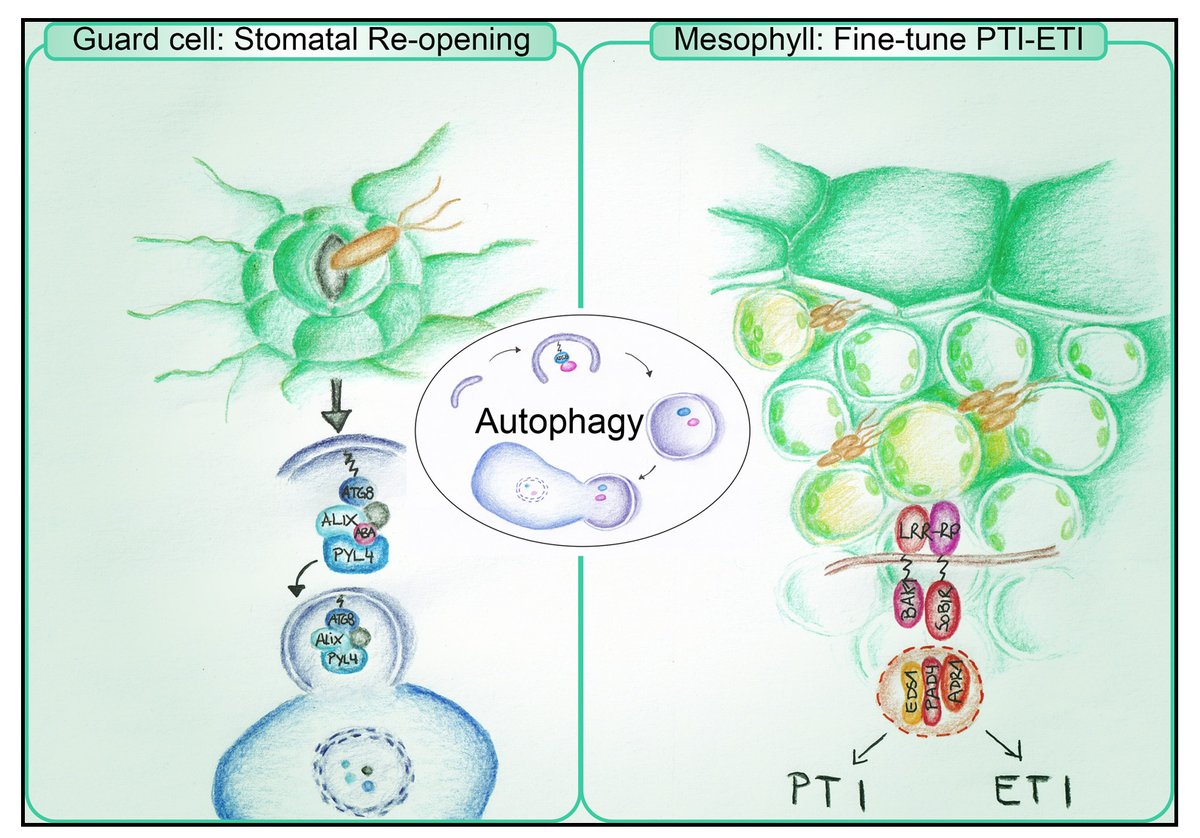
Autophagy can promote resistance, susceptibility, or restrict cell death 🤯
So what is its actual role?
We show it acts as a spatial organizer of immunity across cell types 🌱🦠
https://t.co/JjxuB7oCTt
New #preprint 😍‼️ led by 2 incredible postdocs Ni Zhan & @ranjithbio: transforming #UFMylation from a local ribosome rescue pathway to systems level regulator of mRNA splicing https://t.co/2ZILMnEAvy A short 🧵
I’m very excited to share this work! Understanding plant hypersensitive cell death has been a key challenge. Using time-lapse imaging, we captured the full process: from calcium influx to organelle breakdown and cell collapse. @YiFeng_eYFP@IPMBSinica
https://t.co/3wVNWr4Au9
Excited to share our PNAS commentary, “A nematode-built conduit for cross-kingdom biotrophic interaction,” on a fascinating recent discovery in root-knot nematode biology from @MitchumLab .
Please take a look : https://t.co/SyJ93495TQ
I spent 1.5 years at MIT co-designing a new undergrad program in Genetic Engineering.
The full report is now publicly available. It describes what needs to be built to educate the next generation, and why.
Appendix II includes notes from interviews with 100+ biotech company CEOs and scientists about what they look for in new hires.
Appendix III includes a huge analysis of all existing curricula in biotechnology and genetic engineering globally. It also features dozens of photos from my visits to biotechnology centers across the U.S., Europe, and Asia.
Hopefully this will be a useful resource for educators looking to adapt or expand their curriculums, too.
Freaky Flowers Volume 3!🌸🧬
Did you know that just a few mutations can transform the Arabidopsis flower into all kinds of forms? 🤯
Here’s a tour of 6 mutants that orchestrate floral development and architecture 🧵
🦣🧬🦣 🤯💥 We are pleased to share our new paper about ancient RNA expression profiles from the Woolly Mammoth, now published in Cell @CellPressNews
https://t.co/9IWBZNEXpQ
If you want to know more, read the 🧵 below:
#mammoth#RNA#DNA#Pleistocene
🚀 We’re hiring a #Postdoc!
Join our group in Poznan, Poland to study meiotic crossover recombination in plants🌱 Highly motivated & enthusiastic candidates are welcome!
📅 Deadline: Nov 1, 2025
🔗 https://t.co/R8TIEnGatE
#PlantScience#Meiosis#PostdocJobs
Great to see this important advance published in PBJ. As well as being highly ranked, our journal is focused on translation and application - how can science help deliver useful solutions for global challenges. Here's an example.
https://t.co/8xmjFHEwz2.
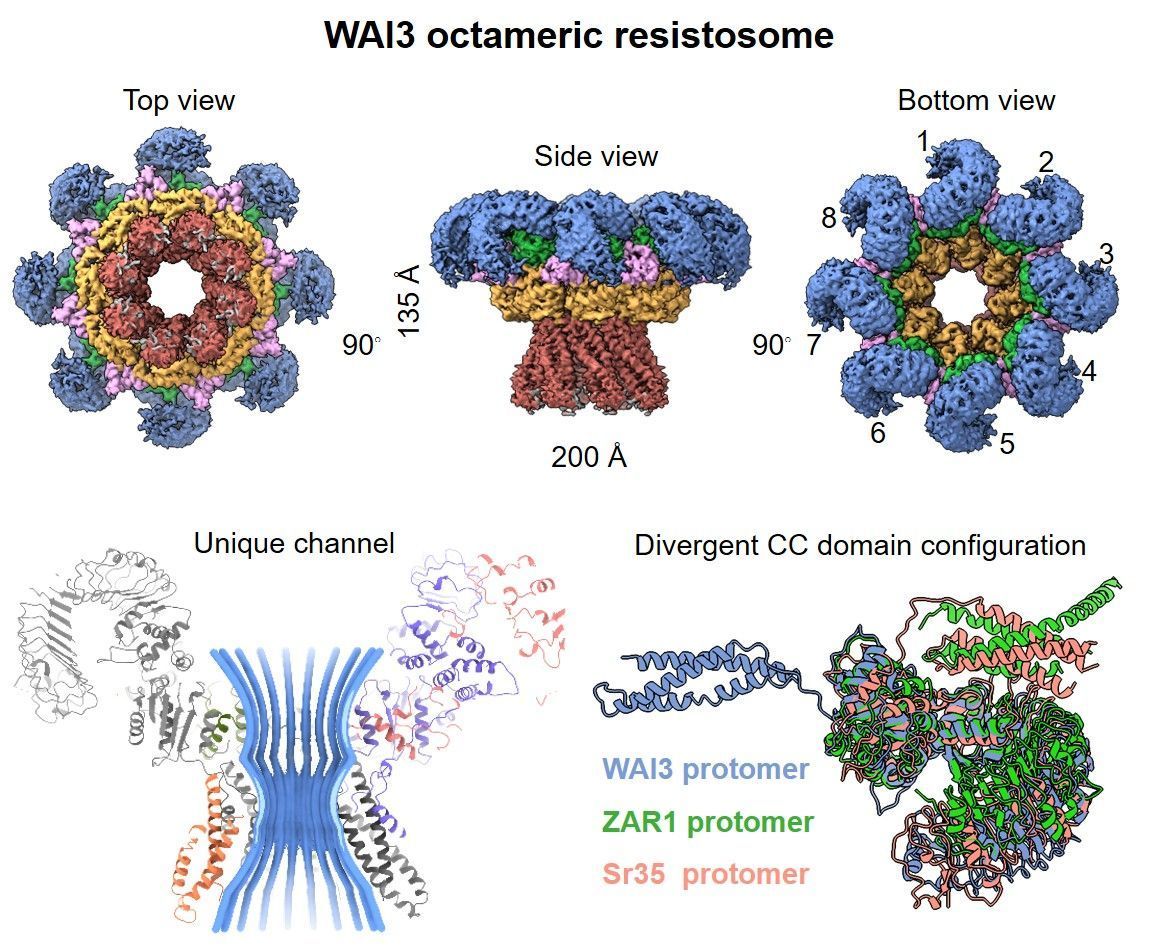
A new preprint involving the labs of @jonathandgjones and @kamounlab unveils the structure of the largest plant resistosome to date.
The octameric WAI3 resistosome was found in wheat, but similar arrangements are found in other plants 🌾
Check it out 👉 https://t.co/Vvxo4yoFce
If you’re enjoying some calm while others are on holiday, here’s a #NEW#preprint to dive into — led by the brilliant @viennabiocenter student @Alibequelous:
👇A quick 🧵+ link:
https://t.co/sNIxsrdr0p
Robust and reproducible plant culture systems are essential for studying physiological, molecular, and developmental responses under controlled conditions. Current Protocols has published an article going more in depth about this topic, check it out here!
https://t.co/nj2UU6ZDKt