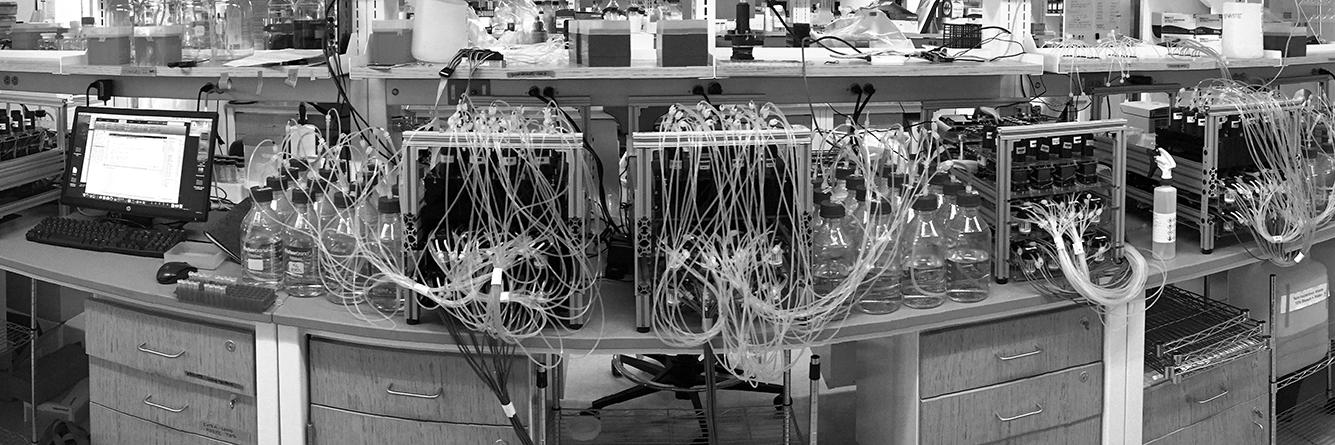
Attn eVOLVER users & enthusiasts. 2 BIG developments!
1) New open-source eVOLVER wiki, which will be a hub for guides and documentation: https://t.co/1RkGpYgltq
2) eVOLVER software version 2.0 is now available! Read about the new features on the forum: https://t.co/K2oHCngHSG
Fantastic Junior Group leader position at the Curie Institute in Paris!! Areas of interest include stem cells, tissue growth and morphogenesis, epigenetics, genomics, integrated physiology, metabolism, and synthetic embryo models. Please RT!
https://t.co/SoEq7CCete
This work led by @jennbrophy7 and her student @vivzhong97 in collaboration with my lab & student Michaela Jones published online this morning at Nature Biotechnology
https://t.co/RWsS8WNsBm
Helps limit engr'd microbial functions to target plants
Exciting science, amazing collab
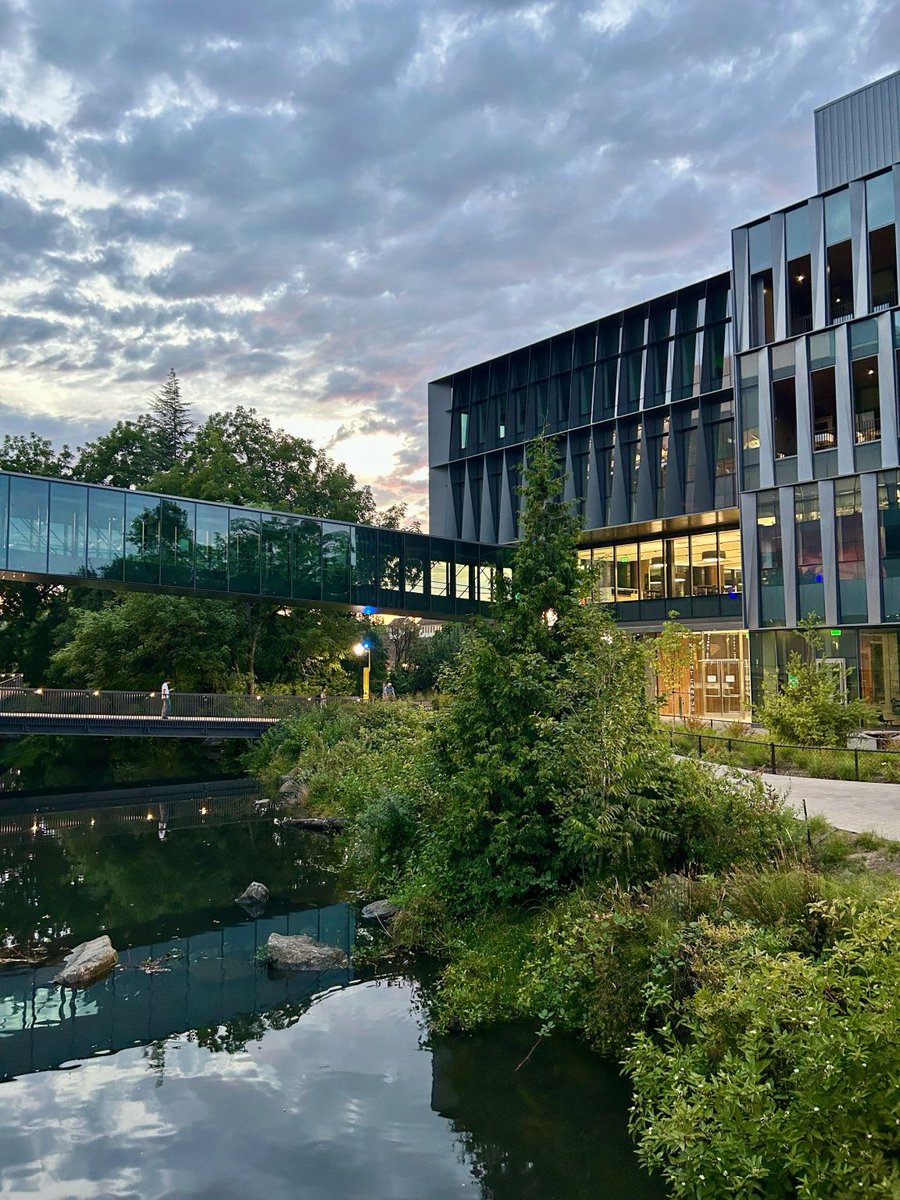
We have two faculty positions open in synthetic biology (one experimental and one computational), both very broadly defined. Deadline is Oct 31. The Dept of Bioengineering in the Knight Campus at UOregon is a great place to work. Come join us! Link below.
1/5 Telomerase has long been linked to chromosome maintenance in eukaryotes. Now, we show that telomerase-like activity is also present in bacteria, shedding new light on its ancient origins.
Excited to share that our work on DRT10 is now out in @Nature!
https://t.co/4CekquyMXX
PAM scanning, a CRISPR-based technique, maps where proteins tolerate insertions by testing function in living cells, and scales to any gene expressible in yeast. Out in JBC: 91 yeast GPCR chimeras, sites transferred to human A2A and MTNR1A receptors.
https://t.co/DhqK9lsm7K
of course that's your contention. you're a first-year frontier bio guy. you just finished reading about CRISPR, probably watched a Doudna talk too. so now you're convinced everything is just gene editing.
that's gonna last until next month when you discover base editing, and then you're gonna be talkin' about how cutting DNA was barbaric and double-strand breaks are a legacy approach.
then you're gonna read about delivery, and suddenly everything's about lipid nanoparticles and how editing was the easy part and the whole goddamn thing is bottlenecked by getting it to the right organ.
that'll last until somebody shows you AlphaFold, and then you're gonna be in here regurgitating DeepMind, talkin' about de novo enzymes and virtual cells and how wet labs are economically obsolete.
then six months from now you'll watch one assay fail four times in a real lab, and start telling everybody the bottleneck was never ideas, it's validation.
somewhere in there you'll find a guy named Keith on Telegram, and you'll start doing reconstitution math in your head at dinner.
and by next year you're gonna be standing right here explaining to me you reversed your biological age by six years because you picked the clock that said so.
Exciting day for DNA Typewriter w/ 2 papers from the lab & SeaHub out today :)
1. Mouse lineage from E0 to E13.5
https://t.co/wTVo9mHQ5P
2. A fluctuation test for gastruloid heterogeneity
https://t.co/hkXNM9lgZK
Paper #1 covered in quoted thread. More on paper #2 here. 1/n
Out today in @nature.com: our review on how single cells evolve into multicellular organisms, with Ozan Bozdag, @kai_tong_mc25, Peter Yunker, and Matt Herron.
https://t.co/mJYWOSK3g3
For an overview, check out the video below.
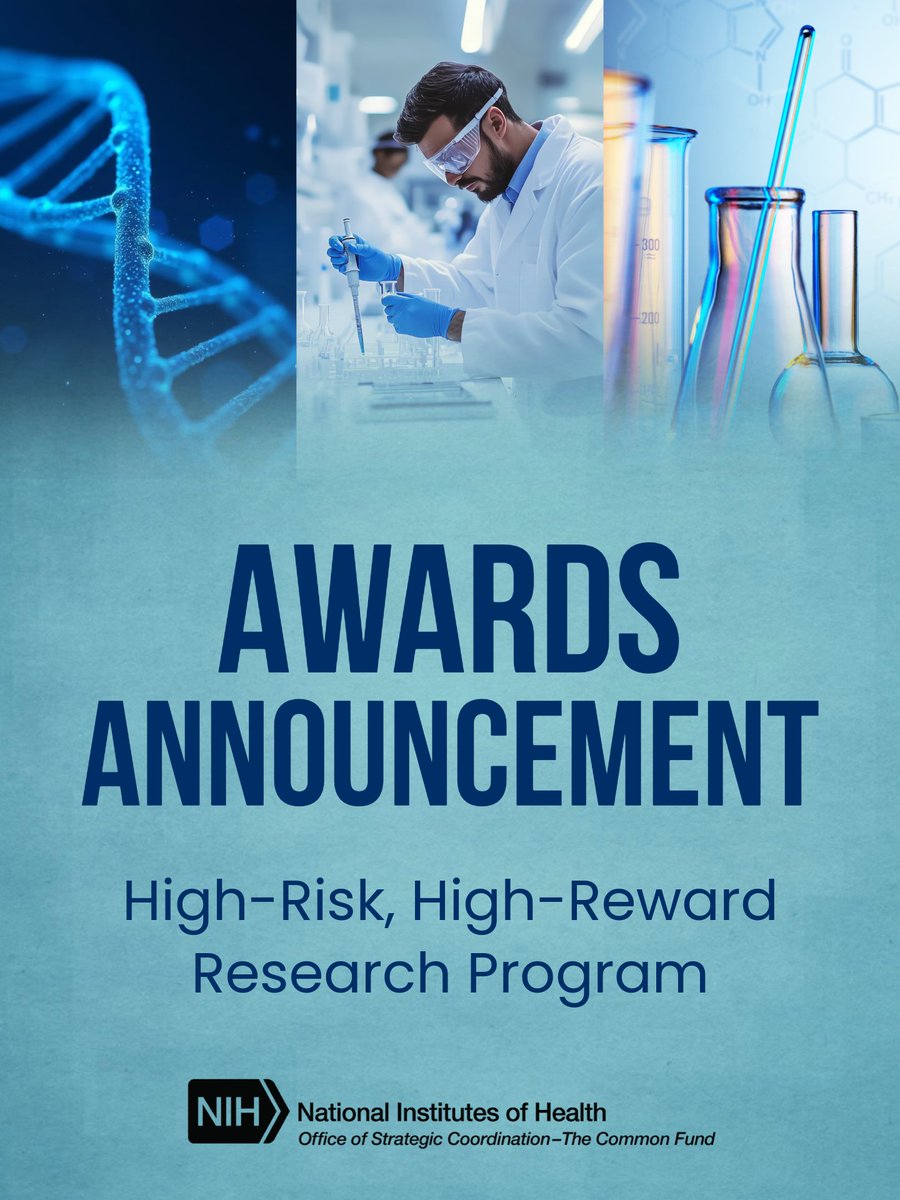
Exciting news! Our team was selected to receive the @NIH Director's Pioneer Award!
Our project asks: can we make a tool to perturb & map proteome function at scale, to do “do for proteins what CRISPR has done for genes"?
The NIH Director’s High-Risk, High-Reward Research Awards empower innovative scientists redefining the limits of biomedical and behavioral research.
Meet the 2026 recipients of the NIH Director’s Pioneer, New Innovator, and Transformative Research Awards and discover the groundbreaking research they’re pursuing: https://t.co/ER0N4lHGsc
Harvard’s FAS is launching 25 tenure-track faculty searches, FAS Dean Hopi Hoekstra announced, loosening a hiring freeze instituted last spring as the school draws an influx of philanthropic support.
@abbysgerstein and @amannmahajan report.
https://t.co/bIUybWNBuP