While journaling on my own mental challenges these days a moment ago, I came to the insight that just like humans need trials to be perfected, so too must systems face trials to be perfected. (paraphrased from Confucius obviously).
True virtue cannot be developed in stability.
@NeverSinkDev If it doesn't write stuff in a way you understand, or that is not ergonomic to use, etc., then when your tokens run out you can't do anything but wait before you continue, or remove all its code and do it yourself.
A personal library is a tool for research, not an ego-boost.
Unread books have more value than read books, because books read well contain little potential for more knowledge / illumination, whereas unread books can contain just the gem you need to solve a problem.
Umberto Eco, qui possédait 50 000 livres, disait ceci à propos des bibliothèques personnelles :
"Il est insensé de penser qu'il faut lire tous les livres qu'on achète, tout comme il est insensé de critiquer ceux qui achètent plus de livres qu'ils ne pourront jamais en lire. Ce serait comme dire qu'il faut utiliser tous les couverts ou les lunettes, les tournevis ou les forets que vous avez achetés avant d'en acheter de nouveaux.
Il y a des choses dans la vie pour lesquelles nous avons besoin de toujours avoir suffisamment de provisions, même si nous n'en utilisons qu'une petite partie.
Si, par exemple, nous considérons les livres comme des médicaments, nous comprenons qu'il est bon d'en avoir plusieurs à la maison plutôt que quelques-uns : quand on veut se sentir mieux, alors on va au « placard à pharmacie » et on choisit un livre. un livre aléatoire, mais le bon livre pour le moment. C'est pourquoi vous devriez toujours avoir un choix nutritionnel !
Ceux qui n'achètent qu'un seul livre, ne lisent que celui-là et s'en débarrassent ensuite. Ils appliquent simplement la mentalité de consommateur aux livres, c'est-à-dire qu'ils les considèrent comme un produit de consommation, un bien. Ceux qui aiment les livres savent qu'un livre est tout sauf une marchandise."
Umberto Eco, qui possédait 50 000 livres, disait ceci à propos des bibliothèques personnelles :
"Il est insensé de penser qu'il faut lire tous les livres qu'on achète, tout comme il est insensé de critiquer ceux qui achètent plus de livres qu'ils ne pourront jamais en lire. Ce serait comme dire qu'il faut utiliser tous les couverts ou les lunettes, les tournevis ou les forets que vous avez achetés avant d'en acheter de nouveaux.
Il y a des choses dans la vie pour lesquelles nous avons besoin de toujours avoir suffisamment de provisions, même si nous n'en utilisons qu'une petite partie.
Si, par exemple, nous considérons les livres comme des médicaments, nous comprenons qu'il est bon d'en avoir plusieurs à la maison plutôt que quelques-uns : quand on veut se sentir mieux, alors on va au « placard à pharmacie » et on choisit un livre. un livre aléatoire, mais le bon livre pour le moment. C'est pourquoi vous devriez toujours avoir un choix nutritionnel !
Ceux qui n'achètent qu'un seul livre, ne lisent que celui-là et s'en débarrassent ensuite. Ils appliquent simplement la mentalité de consommateur aux livres, c'est-à-dire qu'ils les considèrent comme un produit de consommation, un bien. Ceux qui aiment les livres savent qu'un livre est tout sauf une marchandise."
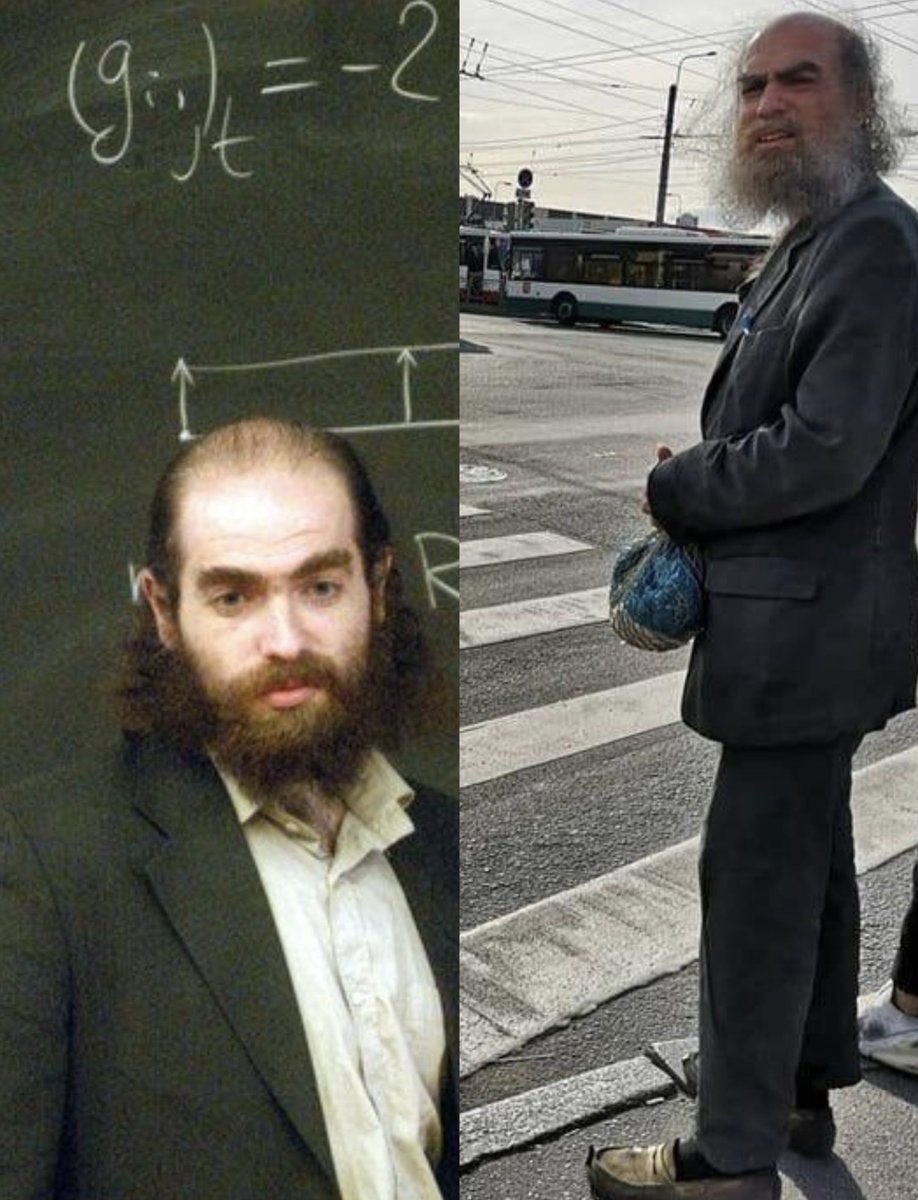
Grigori Perelman is a Russian mathematician known for his work in geometry and topology. In 2002, he published work that proved the Poincaré conjecture, a major problem in topology.
In 2003, he reportedly stopped working in mathematics and lived a private life with his mother in Saint Petersburg.
In 2006, Perelman was awarded the Fields Medal for his contributions to geometry, particularly his work on Ricci flow. He declined the medal, saying that he was not interested in money or fame and did not want public attention.
In 2010, he was awarded the Clay Millennium Prize of one million dollars for proving the Poincaré conjecture. He also declined this prize.
Perelman became known for avoiding publicity and for rejecting major awards and prize money.
If this is true (which I believe), I love the mentality.
Time is one of the only resources you can never get back, which makes it more valuable than virtually anything else.
In 2017, a Japanese railway company issued a formal public apology.
The crime?
A train departed 20 seconds early.
Not late. Early.
No passenger complained. No one missed the train.
The company apologized anyway, because a timetable is a promise,
and a promise broken by 20 seconds is still broken.
It gets better.
When a train in Japan runs 5 minutes late,
station staff hand out an official document: a delay certificate.
You show it to your boss or your teacher.
It says: this was not this person's fault.
Think about what that little piece of paper actually means.
The railway assumes you were on time.
Your boss assumes the certificate is real.
The whole chain runs on the assumption that people keep their word.
The average delay of the Tokaido Shinkansen, per train, per year?
Under one minute. Including typhoons. Including earthquakes.
Americans often ask me what Japan's secret is.
There is no secret.
There are just millions of people who decided
that other people's time is sacred.
In 2020, 13-year-old Callum Manning from South Shields, England, created an Instagram account for one simple reason. He loved books and wanted somewhere to share his reviews.
At the time, the page had around 50 followers.
Then some students at his new school found it.
Instead of encouraging him, they created a group chat and mocked him for reading, calling him names like “creep” and “sad weirdo.” Callum was added to the chat and had to watch the messages appear himself.
It hurt more than he expected. He later said it was the first time in a long while that he had actually cried.
His 24-year-old sister, Ellis, decided to do something. She shared what had happened online, hoping maybe 20 or 30 of her friends would follow Callum and leave a few kind comments.
That wasn't what happened.
Within days, Callum went from around 50 followers to hundreds of thousands.
Authors including Neil Gaiman, Malorie Blackman, Matt Haig and Caroline Kepnes reached out. Publishers offered him books. Waterstones encouraged him to keep reviewing and offered him a free book when he next visited.
And Callum kept reading.
The account that classmates had mocked became the place where hundreds of thousands of people came to hear what a 13-year-old thought about the books he loved.
His sister had only wanted a few people to remind him that there was nothing embarrassing about loving books.
She found an entire community waiting to tell him the same thing.
A video I uploaded to YouTube 10 years ago, thinking "nobody is going to watch this", has just passed a million views. Its crazy. Looking back, there are things I would change in an update, but most of it holds true.
https://t.co/8HcBK6O3c8