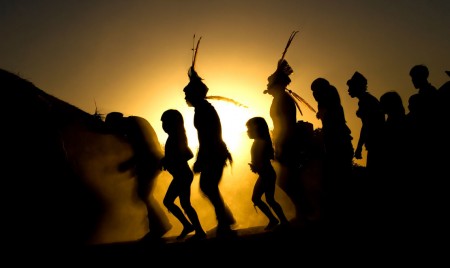
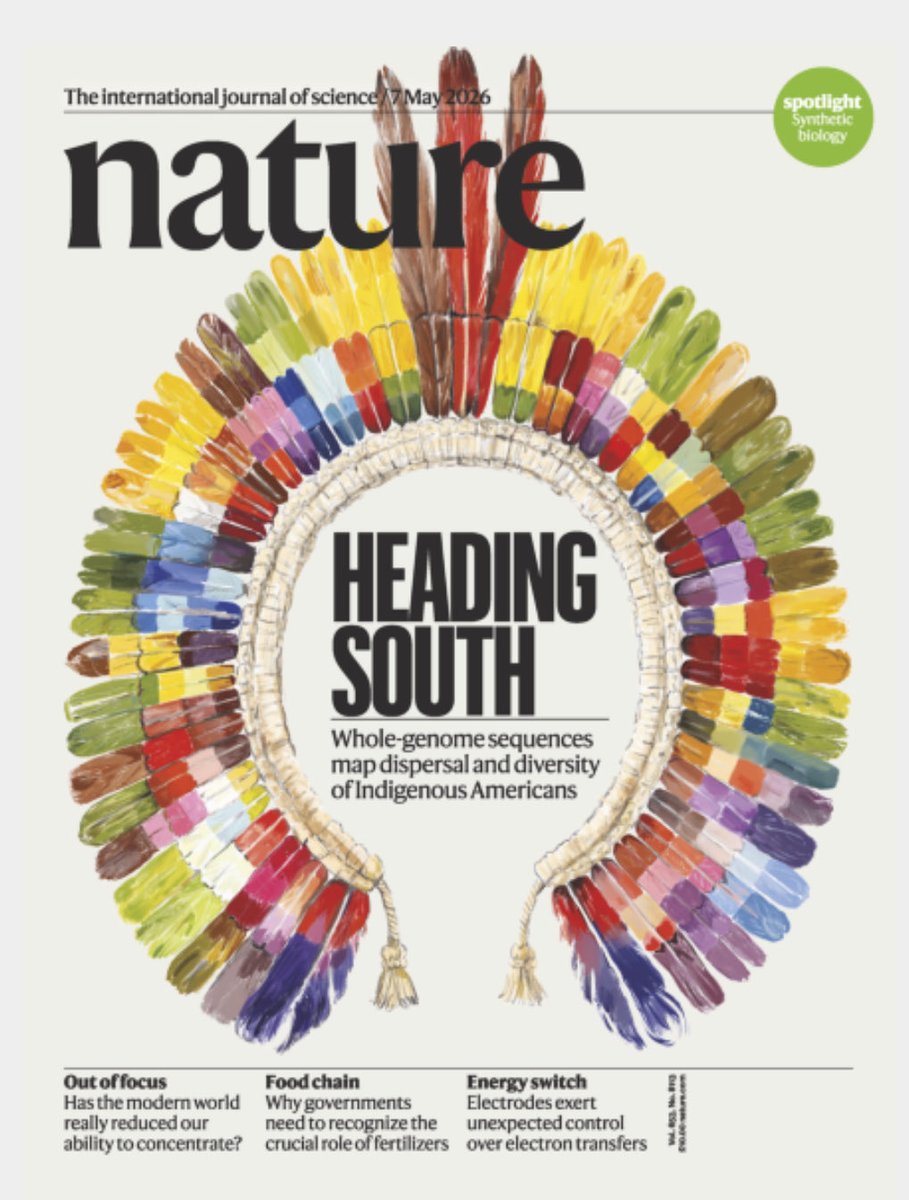
🚨 Check out our new paper in Nature!
In our new study, we sequenced 128 high-coverage genomes from Indigenous peoples across Latin America and uncovered their unique genetic diversity and history. 👇🧵
https://t.co/Y9t0N9VfEs
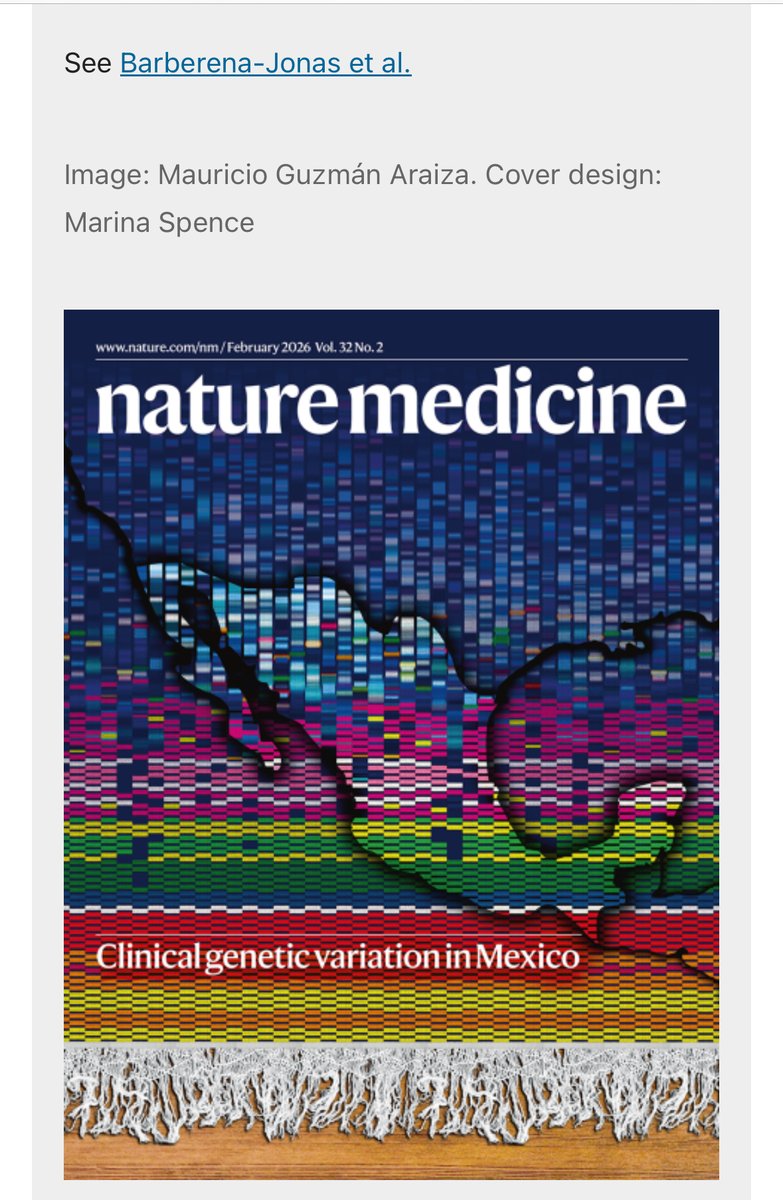
Second time the MX biobank project (https://t.co/qaLnfPzcz2) gets the cover in a @Nature journal! This time in @NatureMedicine highlighting the work by @BarjonCar on Clinical genetic variation in Mexico. Another amazing cover by @mauguz33! https://t.co/k3eGLX4809
#Indígenas sul-americanos são diversos e descendem de terceira onda migratória. Estudo com genomas completos de todo o continente conta história mais detalhada e revela maior complexidade do povoamento. Trabalho foi capa da revista científica @Nature. https://t.co/k9CTWJ5F6c
🎉 ¡Estrenamos un nuevo espacio web dedicado al Programa Ramón y Cajal!
🔹Dos idiomas: 🇪🇸🇬🇧
🔹Información completa sobre la convocatoria
🔹Trayectoria e histórico de ediciones anteriores
🔹Novedades convocatoria 2026
👉https://t.co/T0mFcWMWh8
📰https://t.co/kR0AaGKP2u
#RyC
@morestrada@Nature@hunemeier_t Thanks @morestrada for the support and for sharing our paper! 🙏 I'm glad and proud to be part of this amazing community of Latin American researchers ✨🙌
Absolutely thrilled to see our work featured on the cover of @Nature, with the stunning artwork of Emiliano Bellini! Deeply grateful to all collaborators, the Indigenous communities who made this work possible, and the funding agencies for their support!
Our study also challenges traditional dynamics in science, especially in cutting-edge research fields.
The Global South is not only the subject of scientific research, it also leads, shapes, and drives it.
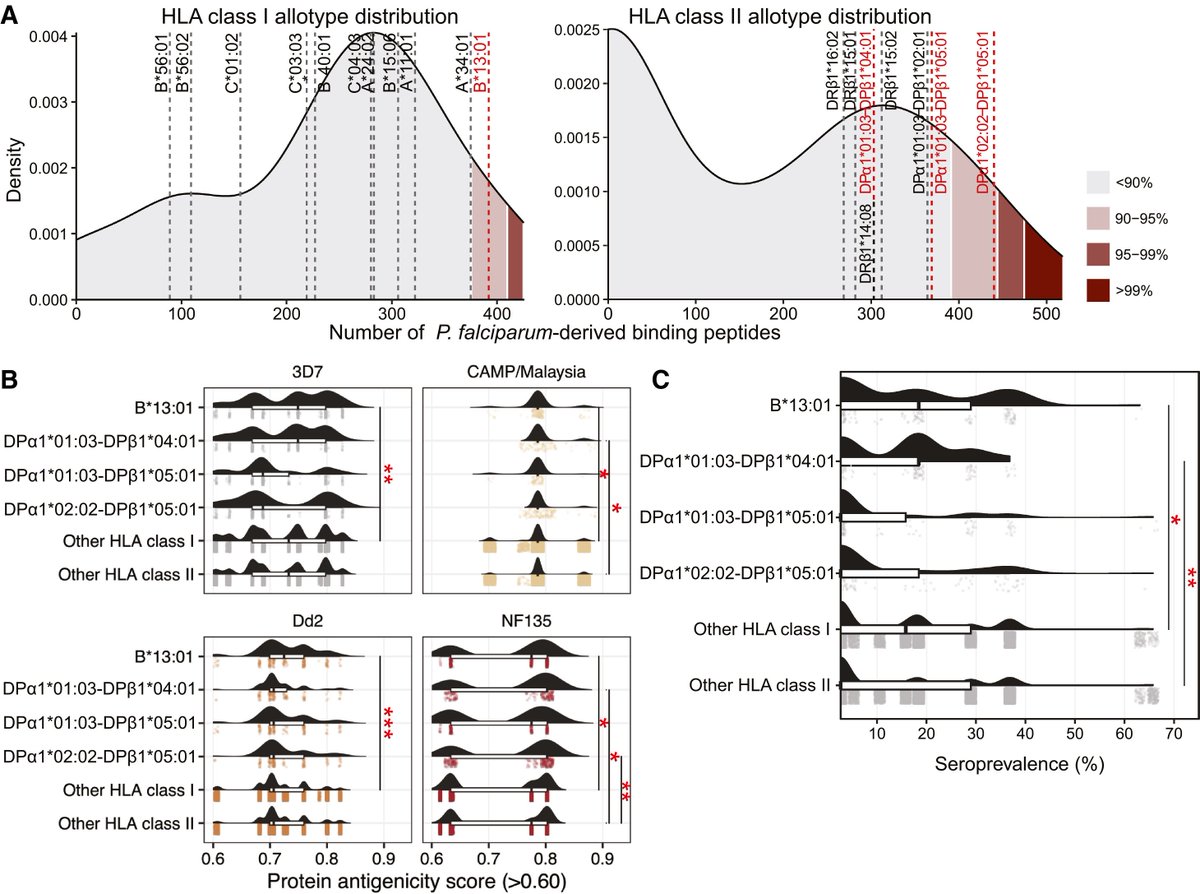
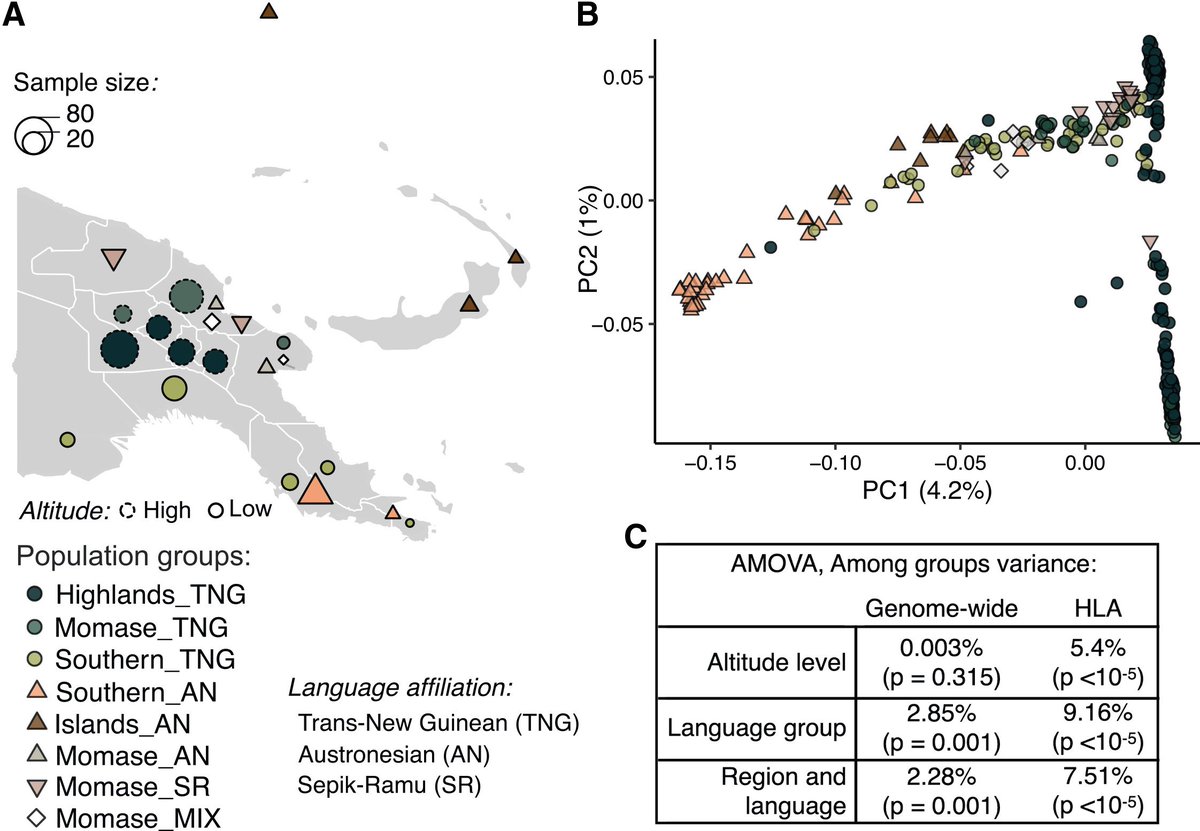
New paper from @NFontPorterias finds pathogen-driven selection in the HLA region of Papuans. Interestingly the selection and HLA landscape differs between highland and lowland groups, potentially due to different malarial burden. Read it here: https://t.co/NOqAbdUMs6
A new paper in PNAS thanks to collaborators in NCCR Evolving Language. Integrating genetics and linguistics is fun. @chiarabarbieri_ https://t.co/cbAnyWePAb
BRASILEIRO TORTURADO SOB CUSTÓDIA DE ISRAEL: RELATOS CONFIRMADOS PELA EMBAIXADA APONTAM ESPANCAMENTO ATÉ A INCONSCIÊNCIA, RISCO DE CEGUEIRA PERMANENTE E MORTE
As informações já foram confirmadas pela própria Embaixada do Brasil.
O cidadão brasileiro Thiago Ávila está sendo submetido a graves violações de direitos humanos por forças israelenses. Não se trata de relato, de boato ou de versão disputada. Trata-se de informação oficial.
Thiago foi espancado de forma brutal, com inúmeros golpes direcionados ao rosto, a ponto de não conseguir sequer abrir os olhos. O olho esquerdo apresenta risco concreto de PERDA DE VISÃO PERMANENTE, evidenciando a intensidade da violência empregada.
Há indícios de múltiplas costelas quebradas, compatíveis com agressões reiteradas e de alta intensidade física.
Durante a condução forçada, foi ameaçado de ser jogado ao mar pelos soldados, o que por si só já configura tratamento cruel, desumano e degradante, além de indicar risco real à sua vida.
Como se não bastasse, houve também ameaças dirigidas à sua família no Brasil, ampliando o quadro de intimidação e violência psicológica.
O nível de violência foi tão extremo que ele DESMAIOU DUAS VEZES em decorrência das agressões, o que demonstra não apenas a brutalidade dos atos, mas também o risco concreto à sua integridade física e à sua vida.
E mais: soldados israelenses disseram a ele que destruiriam seu corpo a ponto de impedir qualquer participação futura em novas missões humanitárias, o que reforça o caráter deliberado e punitivo das agressões.
Isso tem nome.
À luz do Direito Internacional, especialmente das normas que vedam a TORTURA e protegem a integridade física de pessoas sob custódia estatal, estamos diante de condutas que podem se enquadrar como tortura e tratamento desumano, práticas absolutamente proibidas em qualquer circunstância.
Nenhuma justificativa política, militar ou de segurança autoriza esse tipo de conduta contra um civil, ainda mais um cidadão estrangeiro sob custódia.
A situação é gravíssima.
Estamos falando de um brasileiro que teve sua integridade física violada, sua vida colocada em risco e sua dignidade atacada enquanto estava sob controle de agentes estatais.
Isso exige resposta.
Não apenas diplomática, mas também jurídica, internacional e imediata.
O que está acontecendo não pode ser normalizado. Não pode ser relativizado. E, sobretudo, não pode ficar impune.
🧬Impressive study on the genetic history of the domestication of ... baker’s yeast.🥖
The authors analyzed 2,950 genomes of Saccharomyces cerevisiae and arrived at several interesting conclusions.
It turns out that “home” sourdough starters are not simply collections of random wild yeasts from flour, air, or the local environment. Many sourdough strains instead form genetically related groups close to yeasts from Asian solid-state grain fermentations, including sake, rice wine and baijiu. In the phylogenetic tree a large proportion of home sourdough/dough strains cluster with Asian fermentation lineages (pink cluster) rather than with local North American wild, wine, or beer isolates.
Commercial baker’s yeast, however, follows a different evolutionary trajectory. In the genetic tree, these strains fall into the Baking & Brewing clade, associated with Europe. Commercial strains also more often show polyploidy, aneuploidy, and copy-number variation. This is consistent with the idea that industrial selection and mass production may have led to different genomic adaptations from traditional sourdough fermentation.
From a genetic perspective, one of the most interesting observations is that not all strains underwent genome “simplification” during domestication. Many lineages associated with domestic and traditional fermentations did not show a significant reduction in genome size compared with wild yeasts.
The question of how sourdough yeasts became so widely distributed, however, remains open. The authors propose several non-mutually exclusive explanations: historical admixture between lineages, dispersal by humans, spread through traditional fermentations, modern introduction of commercial strains, and the role of household and bakery microbiota.
Overall, the study shows that baker’s yeast is not a single simple evolutionary lineage, but rather a complex network of histories shaped by human culture, fermentation technologies, and repeated mixing between populations.
https://t.co/JxcRR8Bb1n
#BakerYeast #Domestication #Phylogenetics #sourdough
@Tatsuya9JP As you pointed out, the source of that ancestry is still unknown. And the hypotheses you talk about are sound.
It would be great to look deeper into this question, exploring the connections between ancient Asian populations and the ancestors of Indigenous Americans.
🚨 Check out our new paper in Nature!
In our new study, we sequenced 128 high-coverage genomes from Indigenous peoples across Latin America and uncovered their unique genetic diversity and history. 👇🧵
https://t.co/Y9t0N9VfEs
@Tatsuya9JP We have avoided using terms like “Australasian-like” to describe the ancestry.
However, we did refer to a genetic affinity with Australasians. I agree that this phrasing is still not precise enough, and it would be better to refer more directly to the source of that ancestry.
🧬Un estudio internacional reconstruye las raíces genómicas de los pueblos indígenas de América
💡El @IBE_Barcelona ha creado la mayor base de datos genómica de indígenas, que desvela una diversidad genética única
➡️ https://t.co/rJiaWrN8CG