I run a $1,000,000+ cleaning company 100% remotely.
And I franchise my system to 15 franchisees.
Each paying a 6% royalty fee.
Which is funny, because people HATE royalty fees.
Until they see what it buys them…👀
Here's what you get when you buy into a franchise:
👇👇
I know on Twitter its cool to have black-and-white opinions, but blanket statements like this cause more harm than good.
“I personally had a bad experience with X. Therefore all of X in the entire world is bad for everyone”
Sounds like a combo of 2 main things were the problems here:
- Having to shell out half a mil for a franchise, in between buying 3 territories, leases, etc
- Comical levels of no support from the franchisor in question, if not straight up deceit
That’s a rough combo. Legitly rooting for Greg to win the lawsuit, there are bad actors out there.
But a $500K SBA loan + 0 franchisor support is NOT the standard for every single home service franchise in existence.
If the startup costs were a fraction of that, the support was 20x….
Would a home service franchise be a good fit for some new entrepreneurs? Probably hell yes.
Does that mean its a good fit for every single person? Hell no.
Not everyone should buy a franchise….I’ve turned away more people than I remember if I think they should go do something else.
Some people are better off starting something on their own and would be happier doing it.
Some people are better off starting off their entrepreneurial journey with a franchise that has a lot of support and low costs + no overhead (ahem @maidthis).
Nothing I’m saying is discounting Greg’s hardship….no one should have to go through that.
But there is nuisance to every person's situation, risk tolerance, desire for support, capabilities, etc.
Blanket statements like this ain't helping.
I have grown up in SV my entire life. I know many of the guys who built the computer revolution going back to the 1960s. For decades. Countless old guy back in the day stories I have sat and listened.
I say this with zero reservation, Chamath and his contemporaries consumed the culture of Silicon Valley to get rich.
Did they “pass it on”? Mentor? Build stuff for fun? Contribute to the community? No, nothing.
They did nothing but take. They are takers. And therefore are losers.
Chamath is a loser. And if you met him, you’d know that he knows it too.
Intelligent people live a boring life. They go to bed at 10. Wake up at 6. Eat simple foods. Go for long walks. Read thick books. Say no to things that drain them. The world chases excitement. But they chase calm. Things that align with their soul. A calm routine. A quiet mind. A healthy body. Meaningful work. A small circle. A private life. Their life may look boring from the outside. But from the inside, they experience a kind of freedom most people spend their entire lives searching for.
Charlie Munger:
“The secret to life is easy because it's so simple:
You don’t have a lot of envy or resentment. You don’t overspend your income. You stay cheerful in spite of your troubles. You deal with reliable people and you do what you’re supposed to do.”
One of my favorite Steve Jobs quotes...
“A small team of A+ players can run circles around a giant team of B and C players.”
How to tell A players from B & C players:
- they get more done in less time
- they make the people around them better
- they bring better solutions than what you have
- they make quick decisions without needing permission
- they hold themselves to a higher bar than anyone else would
One A-player is worth more than three B or C players combined.
The uncomfortable truth is that some beliefs are held for the same reason some people buy Rolexes: they look good in public.
In the same way that many people buy expensive material possessions, not because they especially like the possession itself, but because they know it will impress other people, there are people who express luxury beliefs not simply because they believe them, but because they know those beliefs will bring them clout and status.
So the motivation behind the luxury good and the luxury belief is often very similar. But many people convince themselves that their motives are completely sincere.
Take a guy who buys a Lamborghini. If you ask him why he bought it, he might say, “Look, it makes me feel confident. I like driving it. It makes me feel good. That’s why I bought it. I’m not trying to impress anyone.”
And I think part of you might suspect, “Well, all of that may be true. But I also think part of you likes the fact that when people see you in that Lamborghini, they think of you in a certain way.”
The same thing can happen with luxury beliefs. People may sincerely believe what they are saying. But part of me thinks that, somewhere deep down, there is also a sense of satisfaction that comes from expressing a belief and having your peers, your social circle, and other similarly credentialed elites applaud you for it. They think, “What a compassionate, interesting, sophisticated person you are for holding that view.”
A belief can be sincerely held while also conferring status to the speaker.
As MaidThis continues to grow, @NeelBParekh has been continuing to create organic content and make more relationships with franchise brokers.
#franchise#entrepreneurship
Replacing a full-time job with a full-time business.
Breanna Bertschinger, owner of our Milwaukee franchise, shares part of her story.
#entrepreneurship
Is there an inverse incentive to publishing a book now?
Prior to 2022, writing a book was a great way to cement your personal brand, generate leads, launch a political career, etc.
It still can be... but massively diminished. People are not only reading less overall, they also distrust books written post-AI for obvious reasons.
And now that books are used as training data for LLMs, we've created an environment where if you have insanely valuable niche expertise you are disincentivized to publishing a long form book for mass distribution.
The revenue upside is greatly diminished, and you better protect your intellectual property keeping your best ideas to yourself, paywalled tightly, and self-distributed to (an implicitly narrower) audience.
I don't think that's a good thing, tbc, but in "show me the incentives" framing its pretty clear what the outcome will be.
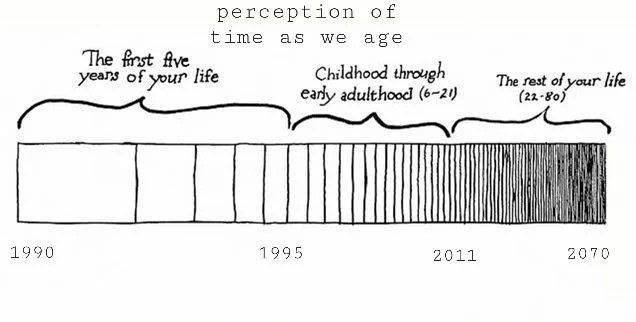
The older we get, the faster life seems to move.
This is known as Janet’s Law.
Ironically, investing is the same.
In the beginning, progress feels painfully slow. Your contributions do almost all the work.
But as your portfolio grows, compounding takes over and 'decades' of progress can happen in just a few years.
I'm convinced the ability to smile through chaos is a legitimate competitive advantage. It's a rare trait. When most people get tight, a few get loose. They thrive on it. They actually enjoy it. I'd never bet against the person smiling like a psycho as they enter the storm.