A recent paper answered a question I had for over twenty years: how does a brain organize the sense of smell? This mouse study shows a 1 dimensional spatial code gives a brain map for ~1000 different smell sensors. This raises so many more questions. https://t.co/jSdBPNFY1F
This week was tough. I had dinner with my intelligent friends from European countries, people who have spent half their lives working within the United Nations. We were having a good time until the conversation turned to Donald Trump and Iran. Everyone, without exception, spoke badly of Trump: that he causes problems for everyone, that war is terrible, that it is illegal, and so on.
I stayed silent. When everyone finally became quiet, I asked only one question: who is actually going to collect and remove those more than 400 kilograms of uranium?
My French friend said: Trump is no better than the regime. On top of that, he has started an illegal war, and many countries have nuclear power plants why shouldn’t Iran have them too?
I exploded inside, but I remained silent at first. When I finally broke my silence, I said: was it illegal when the United States helped the French during the Second World War? Was it unnecessary?
Then silence returned.
I kept thinking about how to express everything happening inside me; how to explain the regime to a European-someone surrounded by left-wing ideology, enclosed within indirect forms of censorship, and always ready to say that war is terrible, yet surprised when I say many Iranians wanted it.
How do you explain to people who live in safety that some nations sometimes see outside pressure as the only remaining path when every internal path has been closed? How do you explain that they do not even speak in geopolitical terms, but judge only from a position of moral comfort, while others are speaking about survival?
Europeans who, despite democracy and free internet, still do not know what happened in Iran on January 8–9. Europeans who believe every conflict can be understood through the same moral template. Europeans who condemn all violence in theory, but have never had to live under a Islamic system where violence is part of everyday life.
And I sat there with the feeling that the distance between our realities was greater than the table around which we were sitting…
🚨 WOW! Exiled Iranian crown prince Reza Pahlavi just TRUTH NUKED fake news across the West attacking Trump
"I read in your newspapers about the tragedies of war…”
“…But what of the regime's crimes against my compatriots?!” 💯🇺🇸🇮🇷
Our paper in @Nature today 🥳 We tracked 6,438 mice from puberty to death and mapped the genetics of *when* you die, not just whether a gene associates with lifespan.
https://t.co/EoeexqJoHk
59 loci. Two decades of data. Thread 👇
#Longevity#Aging#Genetics#Healthspan
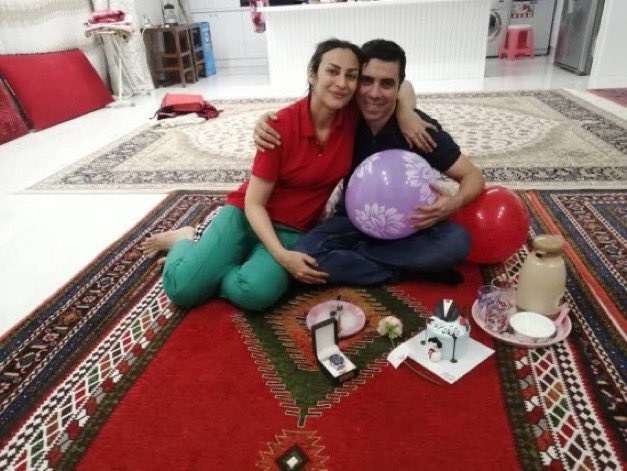
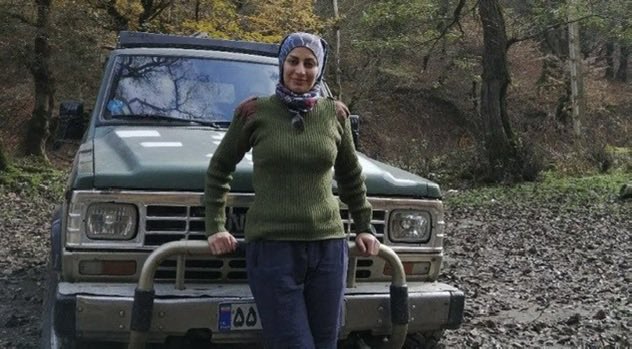
Iranian nurse Salehe Akbari, who aided protesters in January, reportedly was hunted down in her home and shot in the heart in front of her husband.
An Iranian refugee who spoke to NewsNation under a condition of anonymity for their safety said Akbari and her husband Ahmad Khodaei helped those wounded in the January protests. “The next day, regime thugs discovered what they were doing and attacked their home … they shot her in the heart,” the refugee said. Her body was reportedly taken by IRGC militants and gang raped, the refugee added, with photos sent to her husband.
NewsNation’s @DianaFalzone reports.
Read the full story: https://t.co/30XZ55Bero
🚨 A devastated husband took his own life after regime agents raped his dead wife’s body and sent him the photos.
Islamic Republic security forces raided the home of Saleheh Akbari and her husband Ahmad Khodaei.
Saleheh, a 38-year-old nurse, operating room technician, and mountaineer, along with her husband, had opened their house to wounded protesters during the January 2026 uprising - people too terrified to go to hospitals because the regime was hunting them down.
They treated the injured. They hid them. They saved lives.
A few days later, regime agents stormed in. They beat Ahmad. Saleheh threw herself between them to protect her husband. They shot her point-blank in the heart - right in front of him and their young child.
She died in his arms.
Then came the unspeakable: agents assaulted Saleheh’s lifeless body, took photos of the desecration, and sent them to Ahmad as psychological torture.
The sexual harassment and horror he endured pushed him beyond any human limit.
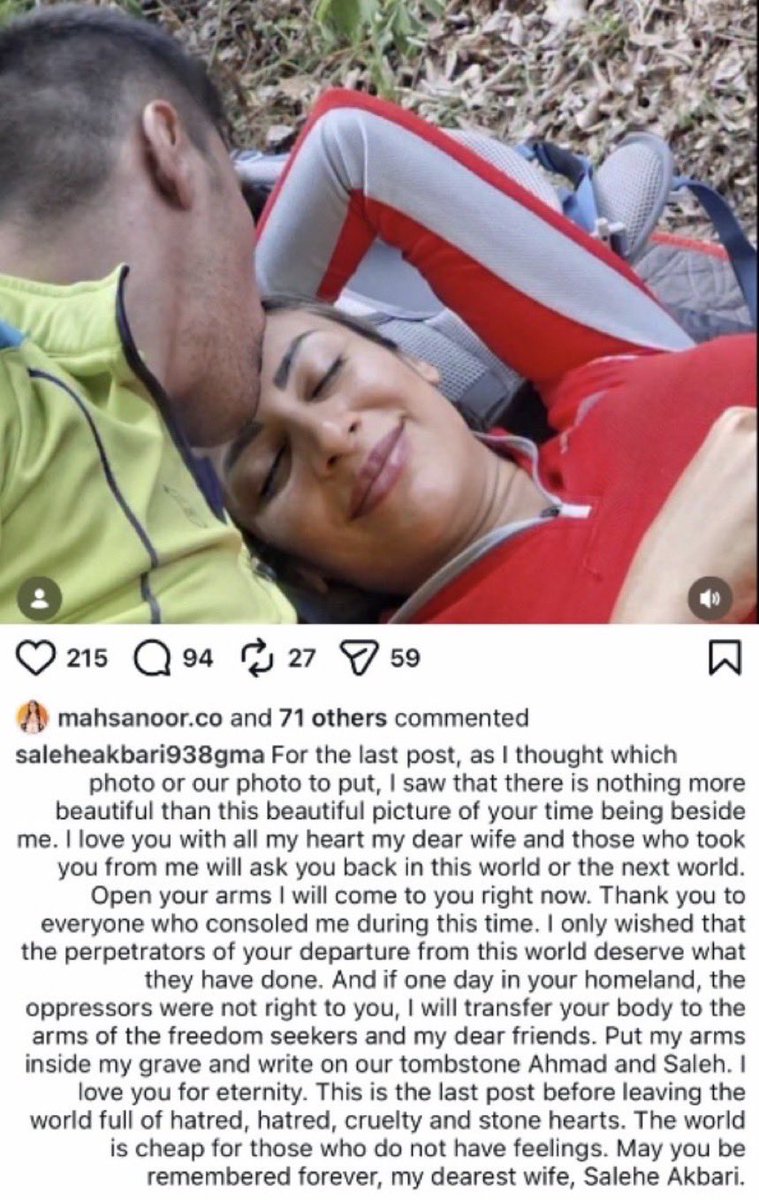
Broken by grief, Ahmad posted a final goodbye letter to his wife on Instagram and took his own life.
Two kind, brave souls - a mother and father who only showed humanity in a regime that has none - are gone.
Islamic regime forces raided their home and shot Salehe Akbari straight in the heart right in front of her husband.
They later gang-raped her lifeless body and sent him the photos of the assault on her corpse.
Salehe and her husband Ahmad Khodai were nurses. They were secretly helping wounded protesters during the January uprising — because the regime was hunting injured people even inside hospitals and executing them with shots to the head.
In a voice note, her husband said they broke his ribs and damaged his kidney in prison, but the torture of seeing those photos of his dead wife being raped was a thousand times worse.
In the end, he couldn’t bear it anymore. He posted a final goodbye on Instagram and took his own life.
This is the Islamic Republic.
They didn’t just murder her.
They gang-raped her corpse, sent the photos to her husband to break him, and drove him to suicide.
Pure. Fucking. Evil.
Maher: “The president had the constitutional authority to direct the use of military force because he could reasonably determine that such use of force was in the national interest.”
Schiff: “Totally vague.”
Maher: “That’s from Obama about Libya.”
⚠️ An uncomfortable finding from our lab that I want to state carefully.
BCI trials are enrolling participants without routine genetic screening for neurodegeneration risk. We have mouse data that makes this worth examining systematically. 🧵
My department is looking for a PhD candidate in cancer research, the application deadline is April 30. 🥼🔬
@AcademicChatter#PhDPosition
https://t.co/rtNrIykPEC
Posterior insula neurons transiently encode individual heartbeats, particularly around systole, and this specific cardiac tuning intensifies during emotional states.
https://t.co/p9yJ7ujoSH