50 websites that can turn a “quick visit” into hours of exploring 🌍
1. https://t.co/PmN3iyAvUi — Live satellite views
2. https://t.co/4bhSTXMfCy — Track planes worldwide
3. https://t.co/s5RxYgh6BM — Track ships in real time
4. https://t.co/m8hw0wB2Gp — Live weather & storms
5. https://t.co/DBWPi99tw3 — Live lightning strikes
6. https://t.co/gjqbW0sLms — Recent earthquakes
7. https://t.co/OHJqNCszIs @sauda_coder — Explore internet cables
8. https://t.co/PyLjqsVv5O — Monitor global forests
9. https://t.co/7Kx4nXV9hV — Live world statistics
10. https://t.co/wZFNs91I9W — Live internet stats
11. https://t.co/WT0k0xRn4G — Compare country sizes
12. https://t.co/XT5znDkqR3 — Explore historical maps
13. https://t.co/89g6cAHX4L — Historical map archive
14. https://t.co/0xNPXQ428i — Community-built world map
15. https://t.co/EQwCNaLXbU — Windows around the world
16. https://t.co/AjtkPAaUdz — Virtual city walks
17. https://t.co/UIWRY2Qzim — Random places worldwide
18. https://t.co/n2IA1Fynxy — Strange places worldwide
19. https://t.co/E0Sh7FpbRP — Fun interactive experiments
20. https://t.co/LfH2hzXOQz — Atom to universe
21. https://t.co/CRMyTskESP — Explore space in 3D
22. https://t.co/Qg2D5RGdBS — Interactive sky map
23. https://t.co/hPZmbxkzQp — NASA’s daily space image
24. https://t.co/xSrwQ6mvSV — NASA image archive
25. https://t.co/rNr9053gwO — Interactive data stories
26. https://t.co/NmEaouyPm7 — Global data & insights
27. https://t.co/bgsmPFN7Yr — Understand global trends
28. https://t.co/7YJVP4alm2 — Data visualizations
29. https://t.co/ZinNgUIykf — World Bank data
30. https://t.co/klYvh1Nq7e — Turkey’s official statistics
31. https://t.co/T7cN4toaR5 — Massive digital archive
32. https://t.co/zkYukaR7XP — Free classic books
33. https://t.co/NOuSRzxPOz — Explore millions of books
34. https://t.co/xd4ryE7SSW — Library of Congress archive
35. https://t.co/0YUzVBvkKe — Europe’s cultural archive
36. https://t.co/mOs4kUfdwJ — America’s digital library
37. https://t.co/pjshcR2XS7 — Virtual museums
38. https://t.co/P7YK0szKxF @sauda_coder High-res artworks
39. https://t.co/9Kjxscw85f — Online art collection
40. https://t.co/7zR1klSlYT — Historical treasures
41. https://t.co/dOm8fOIRU3 — Free culture & education
42. https://t.co/S6vwG5fCqi — Explore the Met collection
43. https://t.co/NF3TG9ygXz — Explore music genres
44. https://t.co/NBjUhuUoWH — Music by country & decade
45. https://t.co/AB8Vu4fvsu — Wikipedia edits as audio
46. https://t.co/a3JtKGBBfp… — Random knowledge
47. https://t.co/CNa94OaH7m — Time & astronomy tools
48. https://t.co/CTXoQ2JxWc — Latest science news
49. https://t.co/6666krwpV2 — Free research papers
50. https://t.co/sOJYgf24Yh — Interactive data visualizations
The internet is much bigger than your usual feed.
🔖 Bookmark this for later.
Follow @Sia_TechAi for more useful websites & AI tools. 🚀
Inference scaling part 1.
Starting with a modded text generation function (temperature scaling, top-p filtering, multinomial sampling) to generate diverse outputs for self-consistency and best-of-N (improving answer accuracy by>2x)
00:00 Introduction and recap
00:31 Training-time and inference-time scaling
07:52 What we'll implement
11:47 Notebook setup and model loading
17:43 Building a flexible text generation function
24:40 Chain-of-thought prompting
28:26 Sampling and output diversity
33:43 Next-token logits and greedy decoding
38:20 Temperature scaling step by step
42:46 Softmax and token probabilities
47:42 Multinomial sampling
54:51 Adding temperature sampling to text generation
59:31 Top-p filtering step by step
1:10:23 Adding top-p filtering to text generation
1:13:43 Sampling and LLM watermarking
1:16:01 Self-consistency and majority voting
1:20:36 Implementing self-consistency
1:29:02 MATH-500 results
1:35:01 Accuracy and compute tradeoffs
1:36:50 Next steps and self-refinement
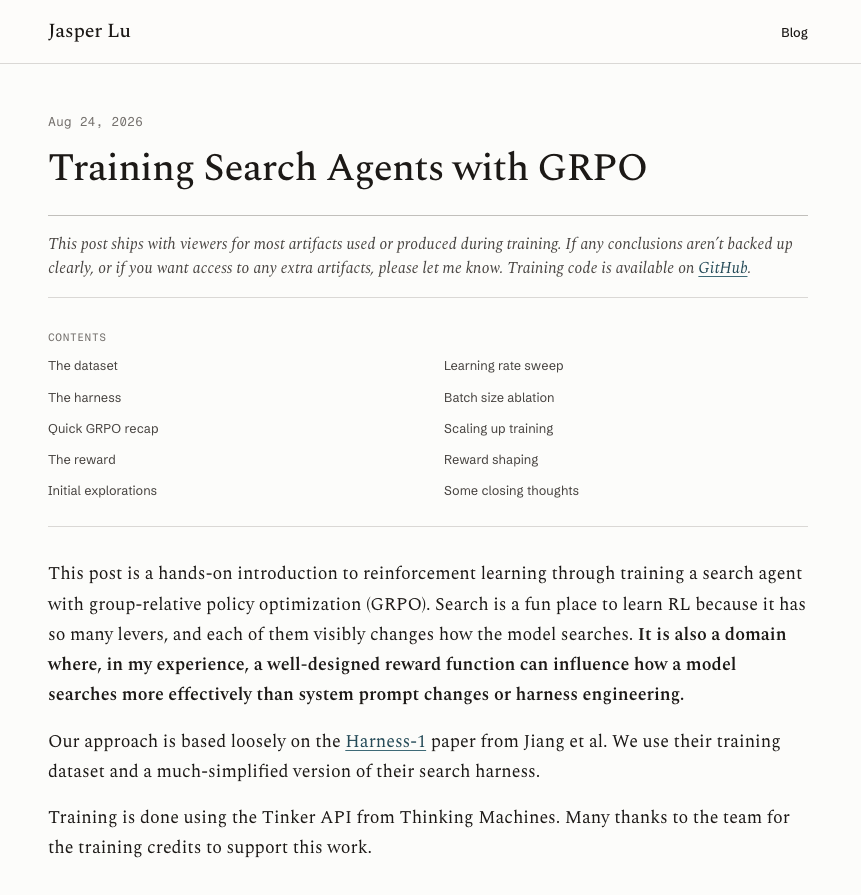
We need more examples like this in the open-source RL ecosystem
Very well-written and articulated blog by @lu_jasper on training search agents with GRPO was a nice weekend read !!
Google Brain founder, Andrew Ng:
"Prompting will die in 6 months. Loops and graphs are what's replacing it."
In 99 minutes he shows how to build agents that plan, execute and improve without you
Prompts → Agents → Loops → Graphs
skip a layer and it comes back as a failure you blame on the model
by the time you find it the week is already gone
that is the whole difference between using AI and having AI work for you
watch it today, then save the full guide on loops and graphs below ↓
Yesterday I said Jev would open a ton of doors...
24 hours later, this exists.
Cua built a 2.8MB model that scored 99.7% on their form-filling eval.
Hosted Jev scored 83.6%.
Not to mention it's FREE and only 706K parameters.
Small enough to run locally with not even 1gb or ram.
Fast enough to make decisions in one pass.
And specialized enough that your agent doesn't need to call a giant LLM for every tiny action.
Think about what this unlocks.
Every repetitive computer task could eventually get its own tiny specialist:
• forms
• CRM updates
• data entry
• browser actions
• document routing
• UI decisions
Then one powerful agent just routes work between them.
We are going to see some ridiculous stuff built from this as well.
🔺 The Real AI Disruption Isn’t the Technology. It’s the Company.
💬 Incumbents are racing to add AI to their organizations. The bigger challenge is competing with businesses designed around AI from day one.
https://t.co/9OWnQ2rOjd
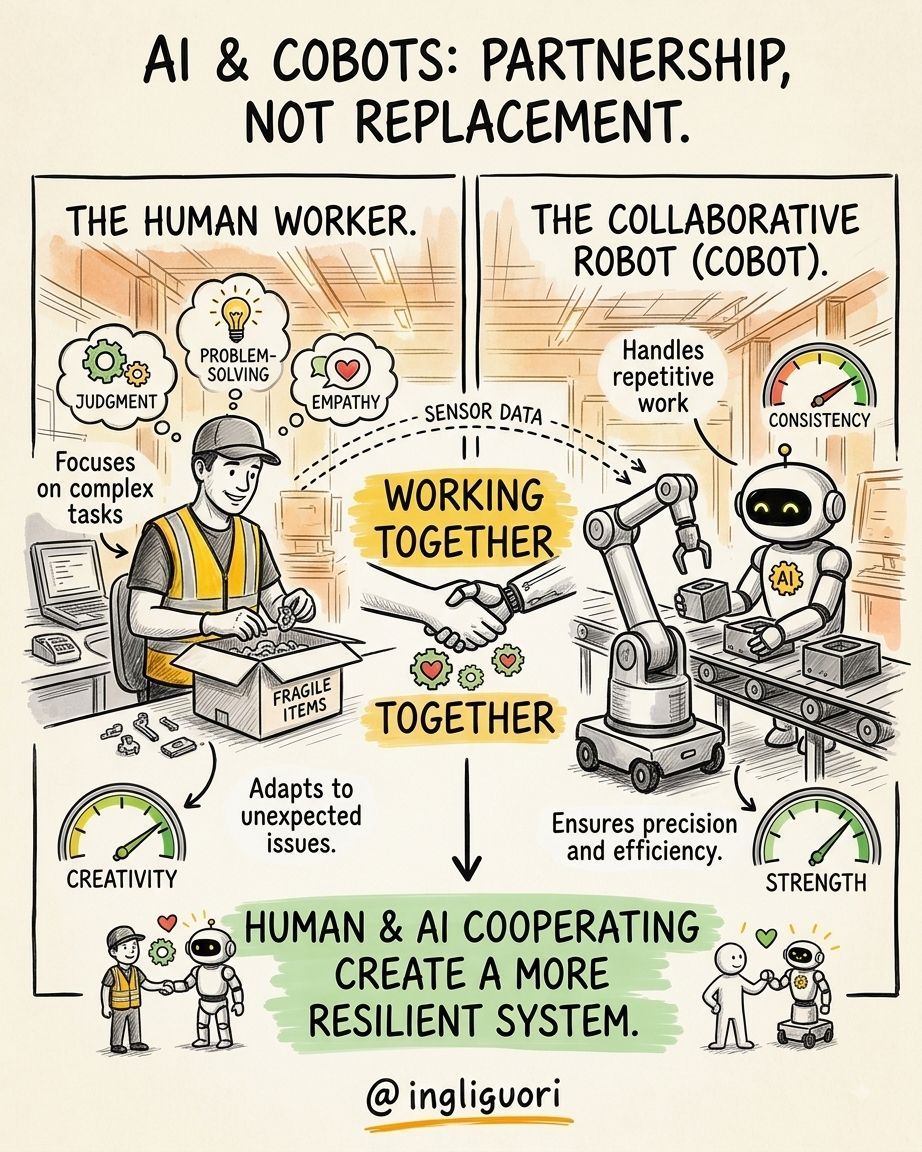
Watched a robot fold laundry yesterday.
It took 3 minutes. My wife does it in 20.
But here's what blew my mind:
The robot NEVER complains about doing it again.
We're obsessed with what robots CAN'T do yet.
Meanwhile, they're already:
✅ Sorting 10,000 packages/hour in warehouses
✅ Performing surgery with sub-millimeter precision
✅ Harvesting crops 24/7 without breaks
The question isn't "will robots take our jobs?"
It's "what will we do when the boring stuff is automated?"
I don't have the answer.
But I know this: The companies figuring this out NOW will dominate the next decade.
What's your take on robotics in your industry?
#Robotics #Automation #FutureOfWork #Innovation #AI
Finally reading this, and whats crazy here is that if they did strike that Chinese ship, they’d have ran with this story and the media would have backed them up and disseminated it
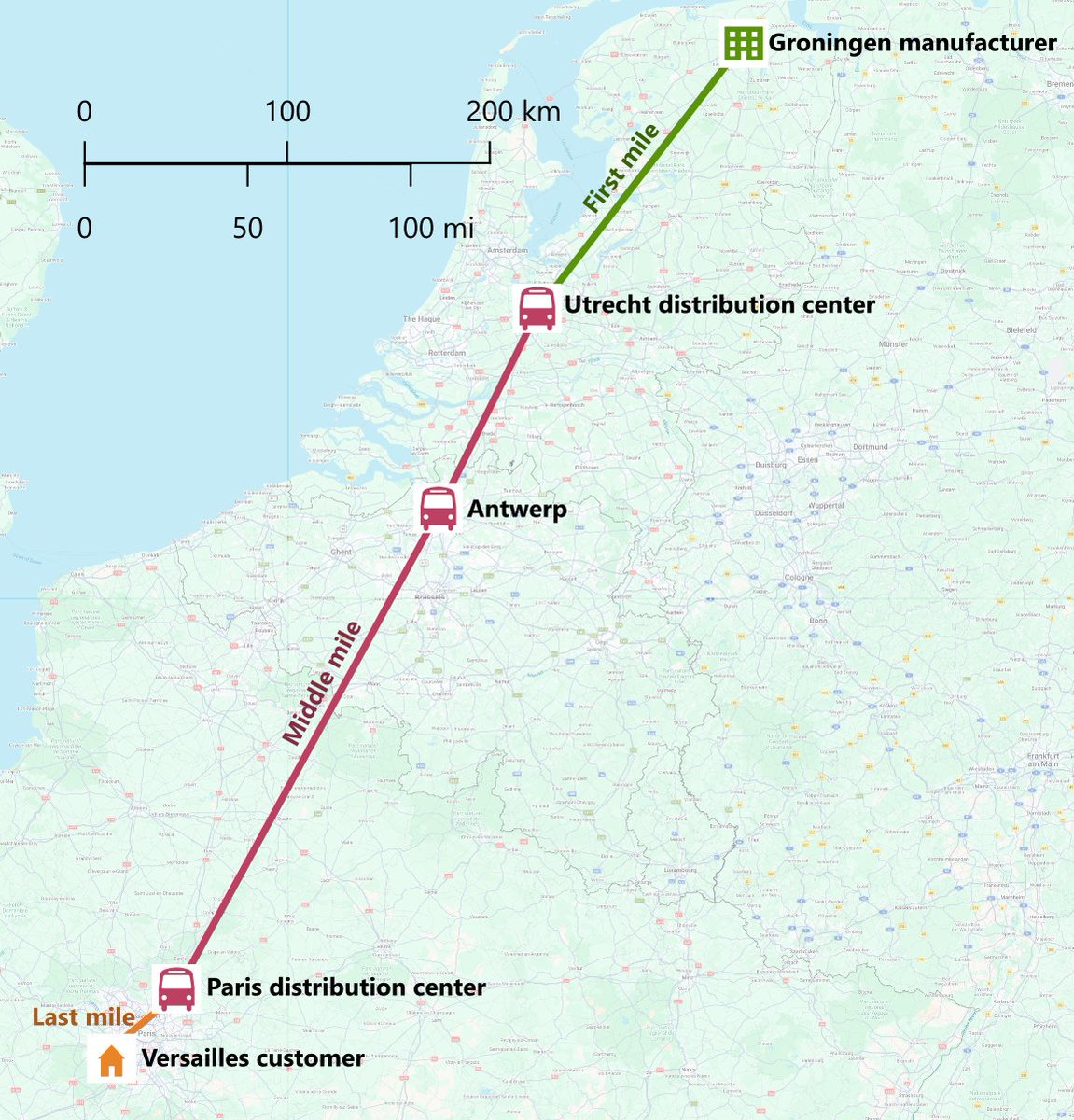
How do goods travel 450 miles overnight? It’s thanks to careful logistics optimization, particularly in the middle-mile segment, but optimizing these networks is difficult without public data. MilleMiglia provides a standardized benchmark, using spatial clustering and gravity models to simulate realistic scenarios for middle-mile delivery problems. Learn more: https://t.co/v4zQUMuxcf
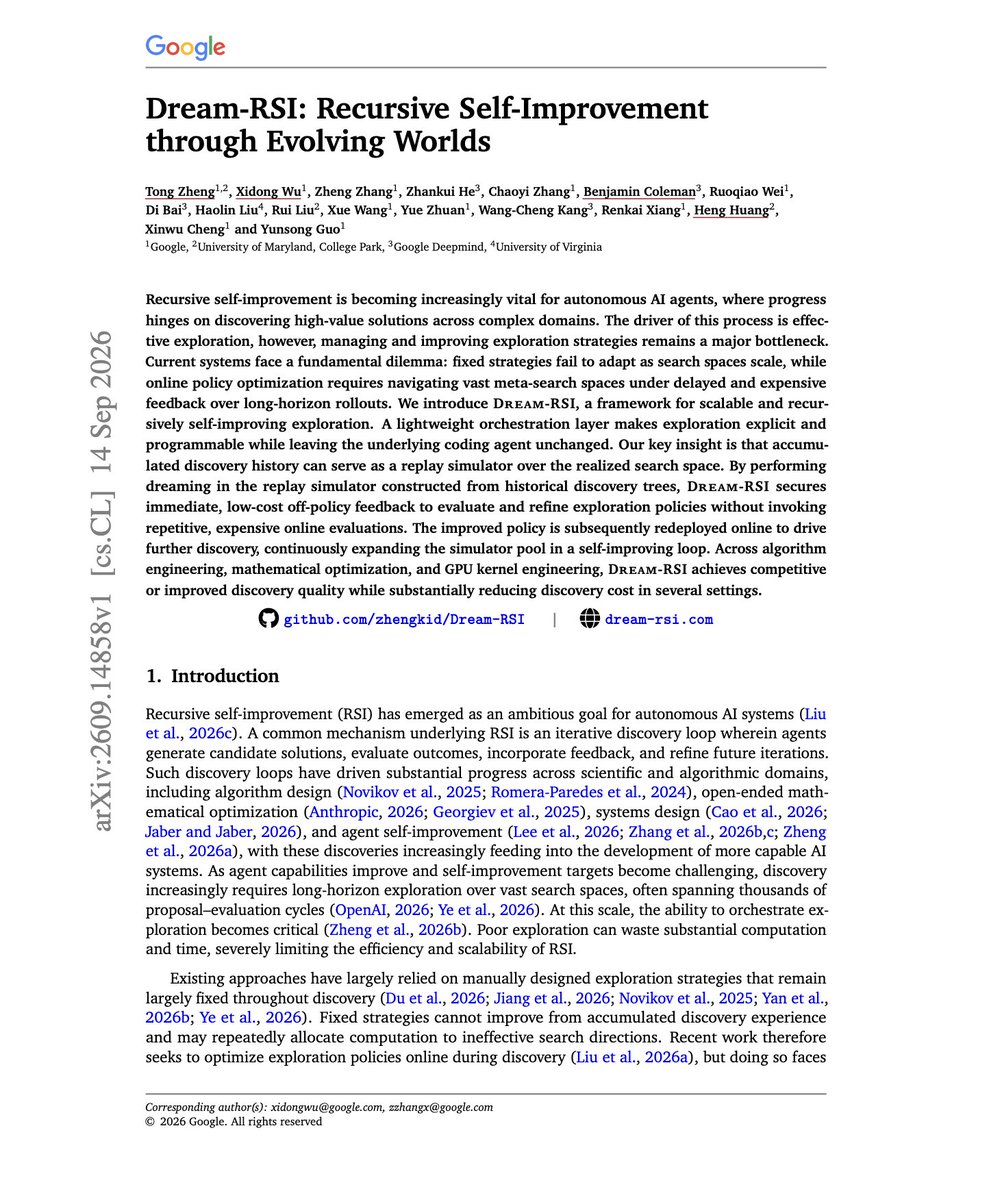
“Dream-RSI: Recursive Self-Improvement through Evolving Worlds”
AI agents can search for better solutions, but they’re usually stuck using the same search strategy over and over.
Dream-RSI lets the agent learn how to search better by turning its past exploration into a simulator, where it can cheaply replay different strategies before spending compute in the real world.
So the agent improves not just its solutions, but also the process it uses to discover them.
https://t.co/7IuiFYFUI2
A year ago, people joked that China was building a base on the moon, as the construction site looked so futuristic.
Answer is out: China has built its first river-to-sea canal, solving a major logistics problem for Western inland cities, like Chongqing, whose exports had to detour thousands of km to reach the sea.
This grand canal is a perfect example of why I always say: investing in infrastructure is investing in the future.
The 134 km canal costs $10.2 billion, that's about 10 days of US military spending on the Iran war.
Google engineer:
"we are running 100+ agents at once. they basically automated our job
now our job is open laptop, check agents and close laptop till next day"
in 1-hour workshop, a Google engineer showed how they manage their team of agents
this workshop will replace you years of learning agents
watch now, then read how to build your agents team from scratch
AI capabilities are advancing exponentially by some measures. Infrastructure builds more linearly. Organizations can take years to change.
The result: bottlenecks, risks, and opportunities.
New MGI research maps the AI economy as an interconnected system: https://t.co/MQbYD8Lyxa
INSTEAD OF WATCHING NETFLIX TONIGHT.
Spend 2 hours with this.
Claude AI FULL COURSE that teaches you how to BUILD and AUTOMATE anything.
The people who watch this tonight will wake up tomorrow with a new skill. Watch it and bookmark it now.
Super interesting!
"Work at the Frontier: How workers are unlocking new ways of working" by Alex Martin Richmond and Caroline Chin.
"We find that workers use AI differently for tasks outside their occupations, and that some of these activities become recurring parts of their AI use. Together, these patterns suggest one way jobs could broaden: through changes in the mix of activities workers undertake."
https://t.co/e1zwYPA7eD
Huge and Important AI news
Google just demonstrated a recursive self improvement loop for AI discovery
Google/DeepMind researchers introduced Dream-RSI, a system where an AI agent improves how it explores problems by replaying its past discovery attempts, testing thousands of alternative strategies cheaply, then deploying the better strategy in the next round.
Across algorithm design, mathematical optimization, and GPU kernel engineering, it matched or improved discovery quality while cutting search costs dramatically, in one setting reducing agent calls by up to 162x. 👀
Importantly, it improves the exploration policy, not the underlying model weights.