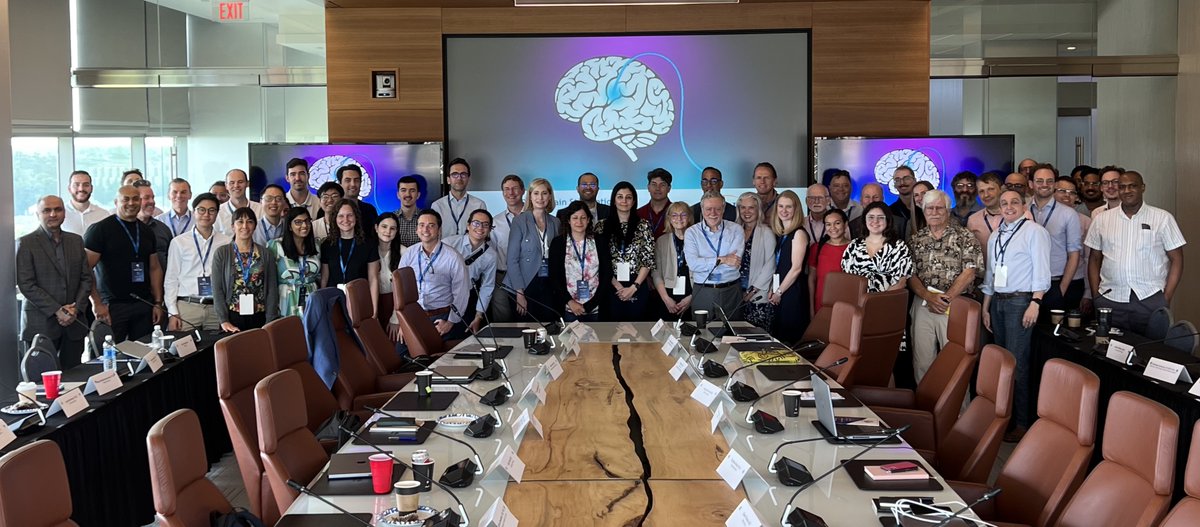
I’m inviting you to attend a conference May 7-8 at Georgia Tech called InterfaceNeuro (https://t.co/qIN35hDFEn), targeting the intersection of neuroscience, neuroengineering, clinical/translational research, neurotech industry, and individuals with lived experiences. Please RT!
1/ Check out our new publication: VTA projections to M1 are essential for reorganization of layer 2-3 network dynamics underlying motor learning, out in Nature Communications:
https://t.co/FsljdIweVk
I'm thrilled to share that my work is now officially available on bioRxiv! https://t.co/DCed8eHhAv
A sincere and heartfelt thank you to our incredible team, mentors, collaborators, and funders for their unwavering support and invaluable contributions throughout this journey!
Our latest work in collaboration with the Bourhy Lab (Pasteur Inst.) in which we use scRNA-seq to characterize host-rabies molecular interactions across diverse human brain cell types. Recommended if you're interested in "system virology" or glial biology: https://t.co/jPhuG3z3SL
Excited to share my PhD results showing a hierarchical coordinate system for sequence memory in human EC.
https://t.co/8KicCW0j73
Below is a thread explaining this nonsense. 1/9
Fantastic, authoritative & comprehensive ‘roadmap’ article out in @NatRevNeurosci by Segobin et al. about in vivo segmentation of the thalamus.
https://t.co/h9qWnJ03cw
We mapped the subcortical hubs of brain networks that sustain consciousness to provide therapeutic targets for patients with severe brain injuries.
preprint: https://t.co/zM0ymybPec
hub maps: https://t.co/SQXDMWnQpF
@MorganCambareri @andrewli1127@andreashorn_@lauradata
Applying to PhD programs in neuroscience this cycle and interested in NYU? Current students are happy to help take a look at your app and offer advice! Sign-up here for the 2024 edition of the NYU Neuroscience Application Support Group! https://t.co/316P2b7Q5P
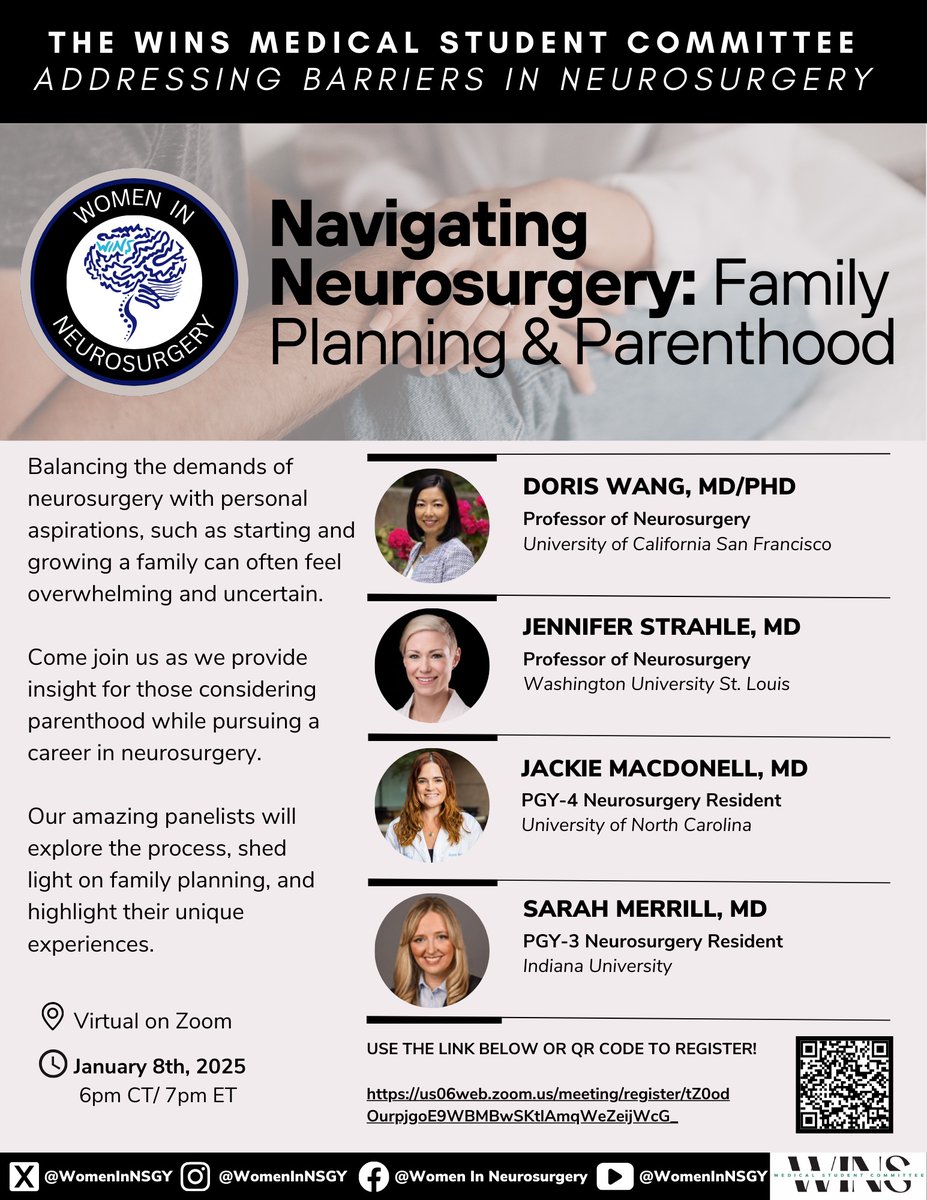
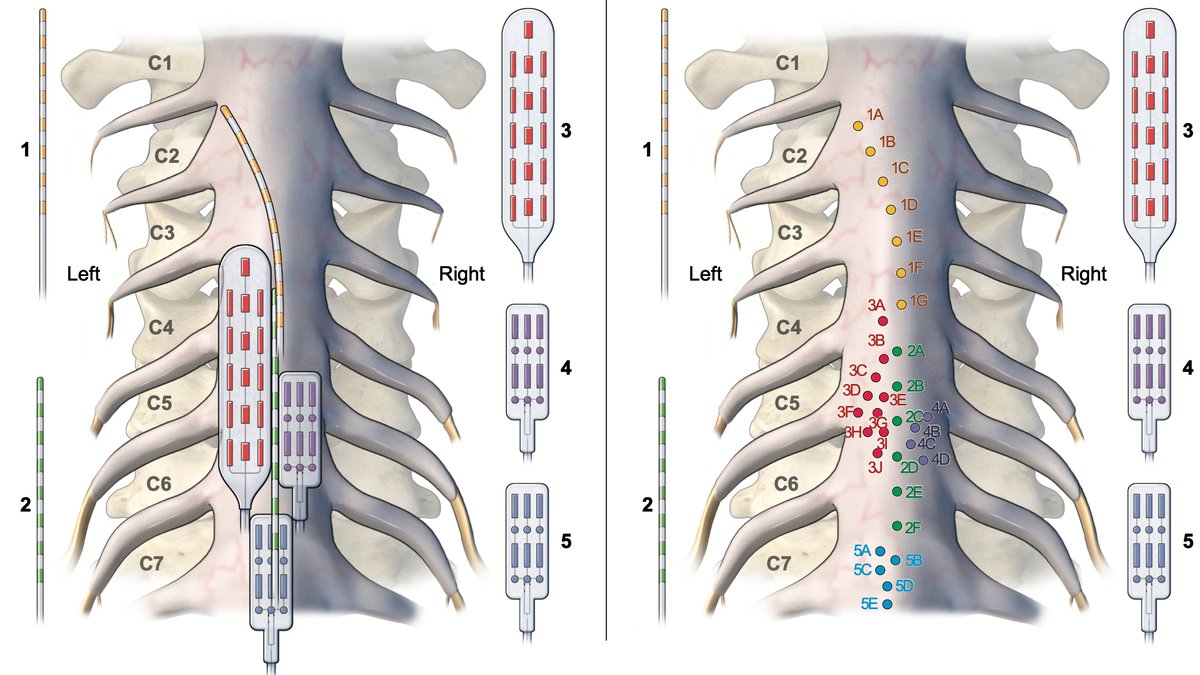
In #JNeurosci, @DorisWangLab shows that their novel approach for recording the electrical activity of the spinal cord in participants identifies oscillatory patterns in the neural signals that correspond to voluntary movement: https://t.co/dwMoHw0okh @PoojanShuk90434
Getting ready to head to Chicago for the pre @SfNtweets conference 'Barrels'. I'm looking forward to some great science, but also I'm looking to recruit!
If you're looking for a postdoc using fancy optical tools for neuroscience questions, let me know. I'll buy you a coffee!
New publication alert! In this paper, we demonstrate causal evidence linking memory to behavior, even in complex, high-level cognitive navigation tasks. Huge congrats to a former postdoc @KanghoonJung, and collaborators @Sethblackshaw and @ruimcosta. https://t.co/vJkp5uacRI
New work with @Jack_W_Lindsey, Larry Abbott, Dmitriy Aronov, and @selmaanchettih! We propose a model of episodic memory where memories are bound to “barcode” activity patterns, enabling precise and flexible memory.
https://t.co/5fth544FS2
big day!! so excited to share the preprint of my postdoc project in @TheHongLab 🥳🥳🙌🏼🙌🏼🕺🏼🕺🏼
we identified how prefrontal populations enable social groups to coordinate into huddles during thermal challenge! ❄️🐭🐭🐭🐭❄️
Does the brain change during pregnancy? You bet it does. How about doing 26 MRI scans on a single person pre-conception to 2 years post-partum. WOW! Laura Pritschet and colleagues nailed it with their new paper in @NatureNeuro.
Key Points:
- The authors point out that pregnancy is a period of profound hormonal and physiological changes.
- The authors did something incredible by mapping neuroanatomical changes in an individual from preconception through two years postpartum.
- Boom! There were pronounced decreases in gray matter volume and cortical thickness.
- There were increases in white matter microstructural integrity, ventricle volume and cerebrospinal fluid.
- There were few regions untouched by the 'transition to motherhood.'
My take: This study shows us how a single brain in a single person can be a powerful resource when scanned serially over time. This method is hard to pull off, however what it has the potential to teach us about neuroscience is mind-blowing. Though this paper is only a single subject, the data provides a comprehensive map of the human brain across gestation. It will be interesting to add to the dataset, so we can understand changes across multiple persons and multiple conditions. The convergence of evidence is revealing that pregnancy as associated with dramatic neuroplasticity. How about a shout out to this 38-year-old woman who underwent 26 MRI scans along with blood draws from 3 weeks preconception through 2 years postpartum!
https://t.co/LEnPHzKCcl #pregnancy #brain @ndosenbach@andreashorn_@EMiddlebrooksMD
A truly collaborative work with the amazing Prof Dai and Prof Wu on mesoscale 3D imaging of the whole dorsal cortex at video rate. This cheap and easy to implement setup can routinely track multiple tens of thousand neurons across days.
https://t.co/4HVig5AYbk
Does STN DBS improve depressive symptoms or depression? Check out this data just presented by Prof. Günther Deuschl #WSSFN2024 this morning. If you divide the groups in the @BSCDBS Vercise DBS registry into those with more severe depression at baseline (and those without depression) the severe group gets considerably better and holds the benefit. Both groups worsen slowly over time. Folks, a Beck Depression Index of ~20 is real depression folks, and 5 points of improvement meaningful Prof. Deuschl, @JuliePilitsis and I this AM together tried to convince the world of the importance of DBS registries and funding collection of long-term datasets. #Parkinsons #deepbrainstimulation #DBS #tourette
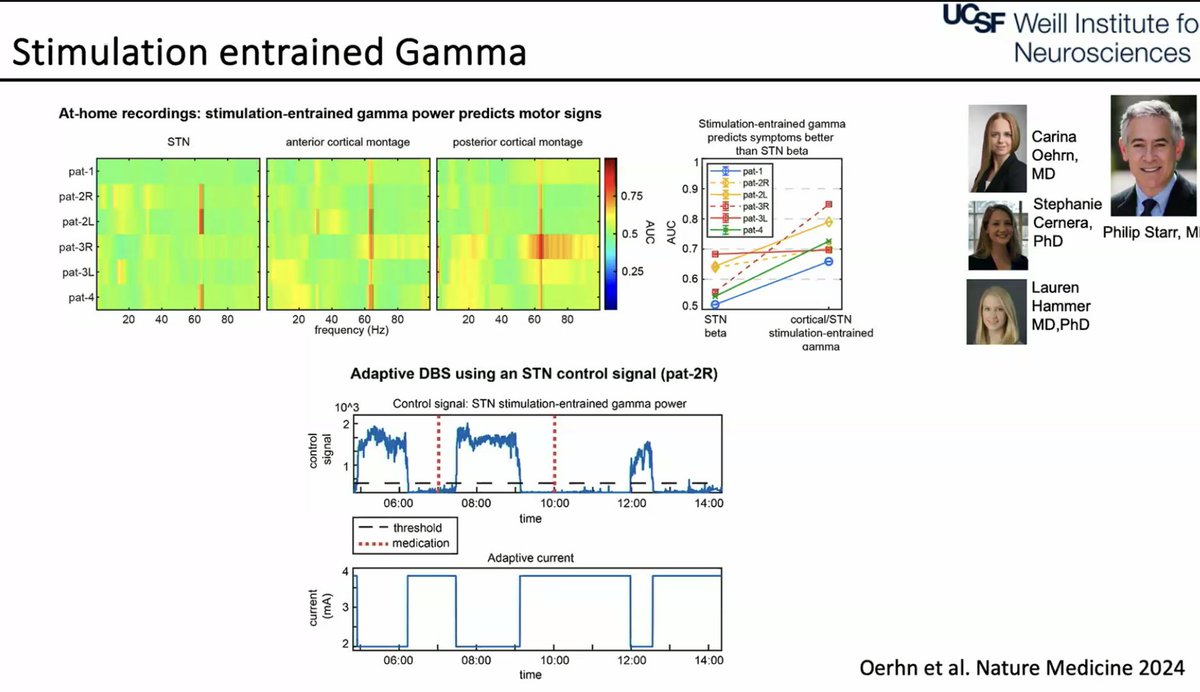
When they go low (beta) we go high (gamma) for adaptive DBS for Parkinson's. @littleneuro showing this new @NatureMedicine paper w/ three woman first authors which he is very proud of as three rising stars in the field. @DBSThinkTank first speaker today showing a paper literally just published!