A masterclass in standing up to intimidation.
During the Seoul Defense Dialogue 2026, a Chinese military attaché handed Philippine Defense Secretary Gilberto Teodoro a note reiterating Beijing’s claim that the 2016 South China Sea ruling is “illegal, null and void.”
Teodoro read it aloud and dismantled it point by point.
“No binding force” ~ “Because you don’t want to be subjected to UNCLOS.”
“China does not accept the ruling” ~ “Of course, because you lost.”
Then, in Filipino: “Show a little decency. Have a little shame.”
The room applauded.
Teodoro called China’s move “actual coercion, bullying and aggression” and kept the note as a “memento.”
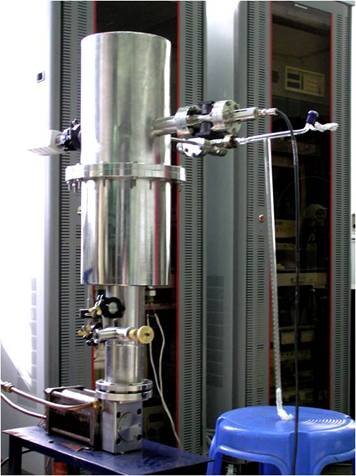
Another milestone for India and has broken into a highly exclusive club of nations possessing closed-loop cryogenic refrigeration technology
RRCAT developed a Gifford-McMahon (GM) cryocooler capable of reaching −243°C (30 Kelvin) along with an indigenous helium compressor
1/2
India is about to attempt one of the hardest industrial challenges it has taken on.
Five inputs go into a battery cell:
→ Cathode — dark powder, 30-40% of a cell's cost
→ Anode — graphite, baked four weeks at 2,800°C
→ Separator — plastic sheet, 5 to 16 microns
→ Copper foil — 4.5 to 8 microns
→ Electrolyte — the liquid
Together they are more than 60% of what a cell costs. India makes almost none of them.
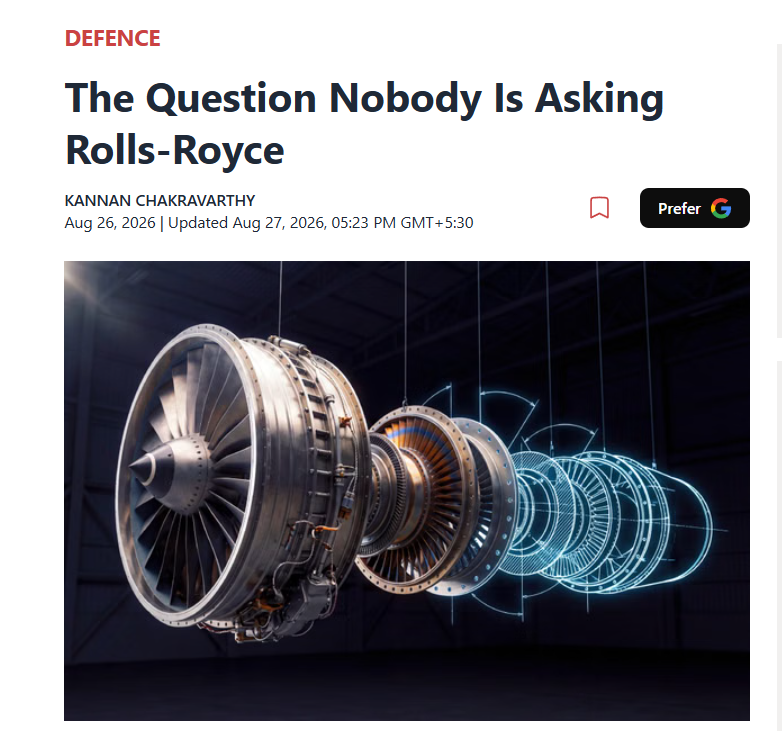
3 foreign engine makers are pitching India for AMCA fighter engine - A Must Read Insight :)
GE transfers 80% manufacturing know-how for F414 but keeps engine control software and design authority. Safran offers to co-develop new 120 kN engine with 100% Indian IP, but Safran has never built military engine at that power level.
Rolls-Royce promises full transfer and Indian IP ownership but has not said which engine parts Indian engineers would design. Same words, very different deals. What matters is not who promises transfer.
It is who lets Indians design specific modules
Why does module-level design matter so much? Because engineers only learn what they are responsible for building from scratch. When you design something, you pick materials, run tests, read failures, fix problems, test again.
That is how knowledge transfers. If India only manufactures parts from foreign process sheets, it gets production skill without understanding why those designs work. That difference, know-how versus know-why, decides whether India can design its own next-generation engine or stays dependent forever.
GTRE asked this in January 2025. No company has answered with module-level schedules
India has proof this works. ISRO received French rocket engine tech in 1974 and put its own engineers inside French labs doing real work. Today ISRO runs Vikas engine independently with 58+ missions.
Bharat Forge imported Austrian gun design, bought entire Swiss artillery factory, shipped it to India. Worked because Bharat Forge had 60 years of metallurgy. PTC Industries now makes single crystal turbine blades for GTRE.
Same lesson every time. Transfer works when Indian engineers design and fail and redesign. Not when they receive finished drawings.
https://t.co/xkt6GZZ0cJ
DRDO’s conventional missile technologies to move into wider industrial production 🇮🇳
RM Rajnath Singh has approved ToT of all DRDO-developed conventional missile systems to Indian defence industry.
▪️Pralay-Astra-ATGMs-Akash ADS-LRashM-LRLACMs-NASMS
India Plans Massive Production Run of 2,000 Indigenous Air-Defence Missiles 🇮🇳⚡️
India is moving toward one of its biggest domestic surface-to-air missile production pushes, with potential requirements for around 1,000 QRSAM and 1,000 Akash-NG missiles.
> Around 1,000 QRSAM missiles could be ordered from Bharat Dynamics Limited
> The missile contract alone is estimated at ₹11,000–12,000 crore
> The wider QRSAM programme could be worth around ₹30,000 crore
> BEL is the lead integrator, with L&T and other Indian firms contributing key platforms and subsystems
> A new 75-hectare production complex is being prepared at Chitrakoot in the UP Defence Industrial Corridor
> The Defence Ministry is also examining a requirement for around 1,000 Akash-NG missiles
> Akash-NG has completed user evaluation trials and brings a more compact, canisterised air-defence architecture
👉 This is the real scale-up phase of Aatmanirbhar Bharat in air defence: moving from successful indigenous development to mass production, sustained orders and eventually exports.
📌 Follow @_TheTathya for more such updates.
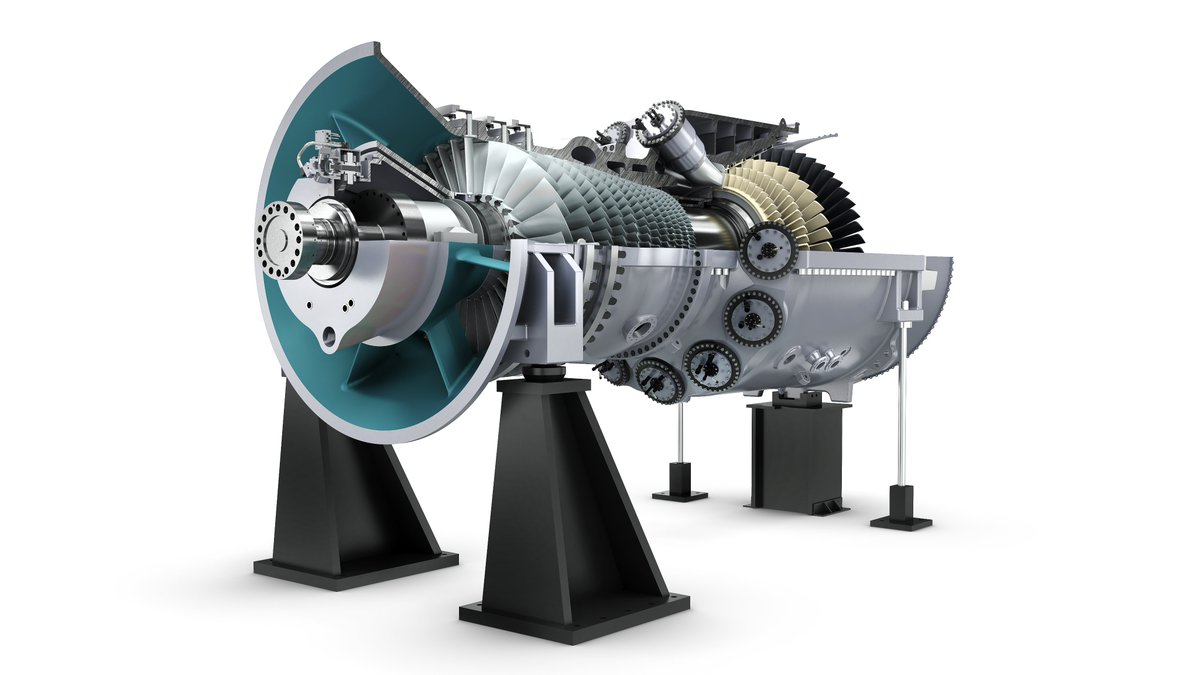
This is the most powerful single gas turbine engine ever built for electricity generation.
Siemens Energy's SGT5-9000HL weighs nearly 500 tonnes, spins at 3,000+ rpm and can produce 593 MW from a single machine.
Its exhaust leaves at around 670°C. Instead of wasting that energy, a combined cycle plant uses it to drive a second steam turbine, pushing total output to roughly 880 MW at over 64% efficiency, enough electricity for around 840,000+ homes.
Run it continuously for 24 hours and that's 21.1 GWh of electricity.
For perspective, to generate the same amount of electricity it would take roughly 1 million 600 W solar panels spread across 16 km² and would take around 6 average days to generate that much electricity.
Or 40 modern 15 MW offshore wind turbines would take roughly 3 average days.
This is the sheer scale and power density of modern gas-turbine engines, generating hundreds of megawatts, continuously, from a single rotating machine.
Yesterday: Policy notified: ₹62,500 Cr on the table.🇮🇳💰
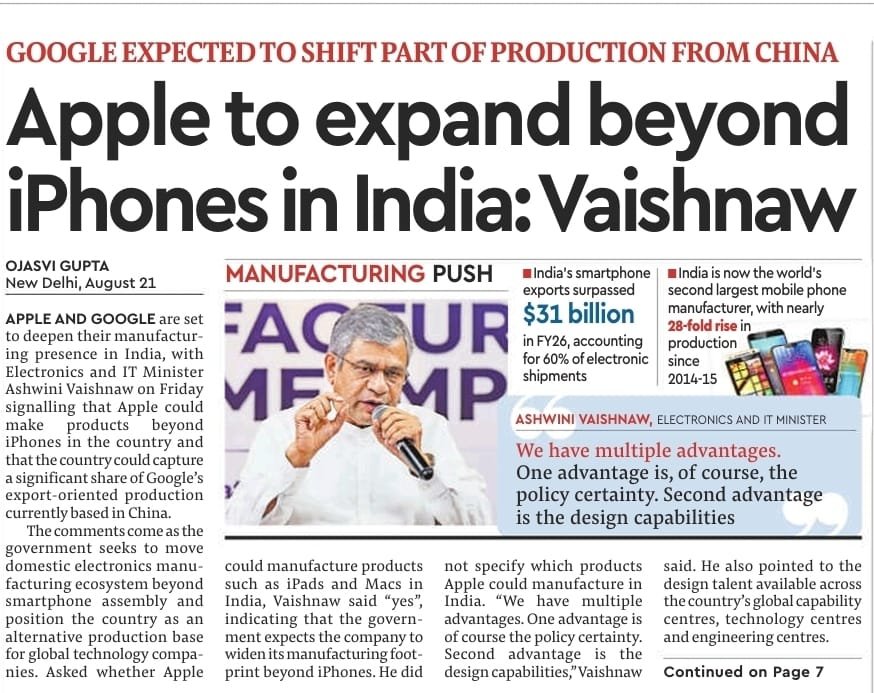
Today: Apple and Google hit the accelerator on Make in India. Bringing iPads, Macs, and Pixels into the fold. 📲💻
India’s electronics manufacturing just hit an inflection point.
Big Tech is no longer looking at India purely as a smartphone assembly outpost, it is becoming a multi-product manufacturing powerhouse for global markets.
Here is what this next wave of expansion means:
1. The Next Expansion Wave
* Apple goes beyond iPhones: Signals point to local manufacturing expanding to iPads and Macs, scaling beyond the iPhone base built by Tata Electronics and Foxconn.
* Google shifts out of China: Targeting global exports by moving production of Pixel smartphones, smartwatches, and wireless earbuds to India and Vietnam by 2027, partnering with domestic champions like Dixon Technologies.
* Global volume scale: India is projected to account for ~26% of global iPhone production by 2026.
2. Upgrading Domestic Value Addition:
* Value addition in domestic electronics manufacturing has moved past 25–28%, shifting away from basic single-digit assembly.
* Expanding into complex product lines (laptops, tablets, wearables) forces localized component sourcing: casings, printed circuit boards (PCBs), sub-assemblies, and precision mechanics.
3. Deepening the Ecosystem
* Local champion integration: Indian EMS players (Tata Electronics, Dixon) are transitioning into Tier-1 global manufacturing partners.
* Design & GCC integration: Tapping into India’s vast pool of Global Capability Centres (GCCs) and engineering talent to bridge hardware assembly with hardware design and system architecture.
4. Economic & Export Potential
* Surging shipments: Smartphone exports crossed $31 billion in FY26, making up over 60% of total electronics shipments.
* Production scale: A 28-fold rise in production volume since 2014–15 has cemented India as the world's second-largest mobile manufacturer.
* Strategic supply shift: Capturing major market share as global tech giants execute long-term "China+1" diversification strategies.
The transition from device assembly to ecosystem ownership requires:
* Localizing high-value component supply chains (display panels, camera modules, advanced semiconductors).
* Sustaining long-term policy certainty beyond initial incentive lifecycles.
* Developing deep technical skill sets for high-precision computing and tablet manufacturing.
India is no longer just assembling devices. It is anchoring the next global electronics supply web.
cc: @AshwiniVaishnaw@Apple@Google@TataElectronics
By #ojasvigupta
#MakeInIndia #ElectronicsManufacturing #SupplyChain #BigTech #PLIScheme
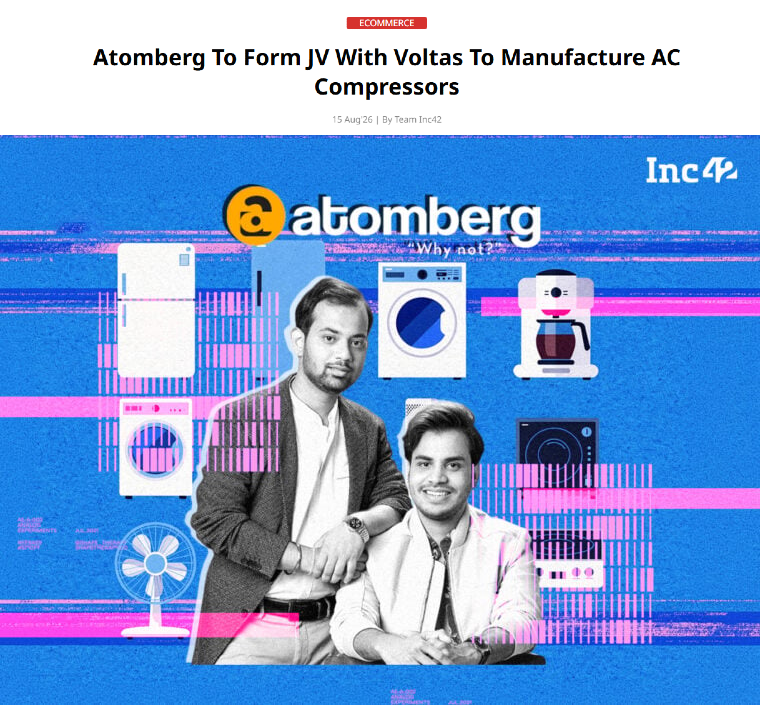
Voltas is Indias biggest AC brand with about 18.5% market share, selling over 2m units per year
They need compressors to make every single AC, India imports most of these from China. Government just capped those imports at 30% of last years volumes for FY27. So Voltas needs domestic compressor supply fast.
They partnered with Atomberg, Indian deep-tech startup that built rotary compressor tech from ground up using BLDC motor design. This is 50-50 JV where Voltas is anchor buyer and Atomberg brings engineering.
Both sides need each other equally
Voltas tried this exact same move with Chinese company Shanghai Highly back in 2022. Government blocked it under Press Note 3, which requires approval for investments from countries sharing land borders with India.
JV was terminated in April 2023, For 3 years after that, Indias top AC company had no local compressor partner. Now they found Atomberg, founded by IIT Bombay alumni, fully Indian, no foreign ownership complications.
Pattern is clear - India wants domestic manufacturing but will not let China own that supply chain
Only 10% of Indian homes have AC today. China sits at 80%. India sold about 15m AC units in FY25 and is on track for 28m by 2030. Every unit needs compressors, motors, controllers, heat exchangers.
Right now most of these parts come from China, Government is shutting that door step by step with import caps, QCO orders, and PLI incentives.
Companies like Voltas, Blue Star, Daikin are all racing to build backward into components. Atomberg JV is just 1 piece of much bigger reshuffling across Indian cooling supply chains.
Forex can be save multiple way in the next 5 year that will show up in the GOI Balance sheet :)
https://t.co/e5LPYjzxDr
🚨India’s First Private Nuclear Fusion Tokamak Is Now on the Floor: A Tiny Bengaluru Startup Steps Into the Race to Harness the Power of the Sun
India’s nuclear journey has entered a new phase. A Bengaluru-based startup, Pranos Fusion Energy, has built PRAJNA, reportedly India’s first privately developed tokamak for nuclear-fusion research.
Unlike conventional fission, which splits atoms, fusion attempts to replicate the process powering the Sun, combining light atomic nuclei under extreme conditions to release enormous energy.
PRAJNA is a remarkably compact spherical tokamak, with a reported major radius of around 0.4 metres. It is not designed to generate commercial electricity yet. Instead, it serves as a test bed for experimenting with plasma confinement, magnetic systems and other technologies needed for future fusion reactors.
That approach could be strategically important. While giant fusion projects such as ITER require enormous infrastructure and decades of research, compact tokamaks can potentially be built, modified and tested faster and at lower cost.
The breakthrough is particularly significant because India's fusion programme has historically been dominated by government institutions, especially the Institute for Plasma Research under the Department of Atomic Energy. India already has substantial experience in tokamak research, including the SST-1 programme and experiments involving extremely high-temperature plasma.
Now, India's private sector is entering the field.
PRAJNA does not mean India has solved commercial fusion. Sustaining stable plasma, achieving net energy gain and eventually producing economical electricity remain enormous scientific and engineering challenges.
But the direction is unmistakable.
As the US, China, Europe, Japan, South Korea and others race to unlock practical fusion, India is building its own capabilities through both government research and private innovation.
The machine may be tiny.
The ambition behind it is anything but.
SarvamAI just had its biggest day yet at Epoch 2026 in Bengaluru 🇮🇳
The company announced it's building a 1 trillion+ parameter AI model from scratch in India. This AI is being designed for coding, cybersecurity, scientific research, simulations and other advanced tasks, with the goal of reducing India's dependence on foreign AI models.
Everything announced:
1. Sarvam 105B (upgraded)
Its flagship AI model is now better at handling complex tasks, supports voice, and costs $0.80 per million blended tokens. Sarvam says it's 5.5× cheaper than GPT-5.4 Mini, and also announced another 30% price cut, saying India can become a global hub for affordable AI.
2. Sarvam Vision 2.0
A new AI model that can read documents much more accurately. It can understand Indian handwriting, scan tables, read forms and automatically identify important details like names, addresses and IDs.
3. Saras V4 (Speech-to-Text)
Converts spoken words into text. Sarvam says it's now among the world's best for English while also supporting several Indian languages including Odia, Sanskrit and Manipuri.
4. Saras V4 Multi-Speaker
Can separate and transcribe multiple people talking at the same time, making meeting recordings much easier to understand.
5. Bulbul V4 (Text-to-Speech)
Turns text into natural-sounding speech with emotions such as laughter, excitement and emphasis, instead of sounding robotic.
6. Sarvam Inference
Developers can now run leading open AI models on servers located in India, giving faster responses while keeping data inside the country.
7. Custom Model Training
Companies can train their own AI models on Sarvam's infrastructure using their own data instead of relying on generic AI models.
8. India's Largest Blackwell AI Cluster
Sarvam says it is now operating the country's largest NVIDIA Blackwell GPU cluster, giving it much more computing power to train and run advanced AI models.
9. Global Expansion
The company is opening a San Francisco office and has appointed Devendra Singh Chaplot, formerly from Mistral's founding team and Thinking Machines Lab, as an advisor for frontier AI research.
10. Voice Agents
Businesses can build AI-powered customer support or calling agents in less than an hour.
11. Work Agents
AI assistants that can work securely with company tools like Slack to help employees complete tasks.
12. Content Studio
A tool with more than 50 AI voices, voice cloning and movie-quality dubbing for creating videos and other content.
13. Document Agents
AI that can read, extract information, digitize and translate documents in both English and Indian languages.
14. Sarvam Code (Beta)
A coding assistant built using open AI models to help developers write and understand code.
15. Samvad
AI voice agents are now generally available at ₹3.5 per minute for businesses.
16. Indus
Sarvam's AI agent platform has already handled 325 million conversation minutes, showing large-scale real-world use.
17. Instant Phone Number Rental
Businesses can get an Indian phone number in about 30 seconds after PAN and Aadhaar verification.
18. Chanakya
A complete AI system that can run entirely inside an organization's own servers, designed for defence, intelligence and national security where sensitive data cannot leave the premises.
19. Anvaya
A custom 30B AI model built specifically for defence, intelligence and government agencies.
20. Kaze
AI-powered smart glasses that can understand what you see and help with everyday tasks.
21. Kivi
A voice dictation app that quickly converts your speech into text.
Sarvam is trying to build almost every part of the AI ecosystem in India, including AI models, computing infrastructure, business tools and even AI devices.
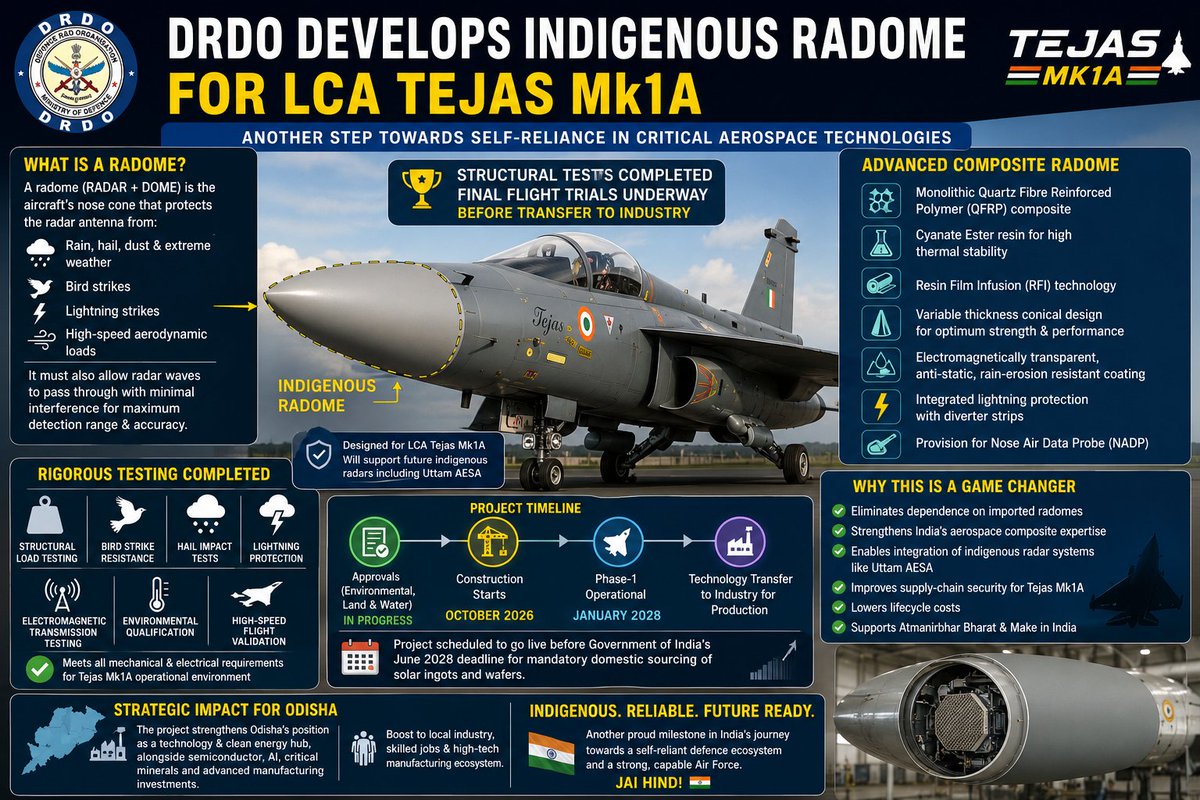
🚨 #DRDO achieves another major milestone for the LCA Tejas Mk1A! 🇮🇳✈️
The Defence Research and Development Organisation (DRDO) has successfully developed an #indigenous radome for the LCA Tejas Mk1A, completing structural qualification tests and entering the final flight validation phase before transfer to Indian industry for serial production.
A #radome is far more than the aircraft's nose cone—it protects the radar from extreme weather, bird strikes, lightning and aerodynamic loads while allowing radar signals to pass through with minimal attenuation, ensuring maximum detection range and tracking accuracy.
Key Features:
🔹 Advanced Quartz Fibre Reinforced Polymer (QFRP) composite construction
🔹 High-performance Cyanate Ester resin for superior thermal stability
🔹 Manufactured using Resin Film Infusion (RFI) technology
🔹 Electromagnetically transparent, rain-erosion resistant coating
🔹 Integrated lightning protection with diverter strips
🔹 Designed for optimal structural strength and radar performance
Extensive Qualification Completed:
✅ Structural load testing
✅ Bird-strike validation
✅ Hail impact tests
✅ Lightning protection evaluation
✅ Electromagnetic transmission testing
✅ Environmental qualification
➡️ Final flight trials are now underway before production handover.
Why it matters:
🔹 Eliminates dependence on imported radomes
🔹 Strengthens India's aerospace composite manufacturing capabilities
🔹 Supports the integration of indigenous radar systems such as the Uttam AESA
🔹 Enhances supply-chain security for the Tejas Mk1A programme
🔹 Advances the vision of Atmanirbhar Bharat in defence manufacturing
Once certified, DRDO will transfer the technology—including manufacturing processes, quality assurance procedures and production documentation—to Indian industry, enabling large-scale indigenous production for future Tejas Mk1A fighters.
Another critical indigenous technology that brings India one step closer to a fully home-grown combat aircraft ecosystem. 🇮🇳⚡
#DRDO #TejasMk1A #LCA #IndianAirForce #radome #AatmanirbharBharat #Defence #MakeInIndia #Aerospace #UttamAESA #India
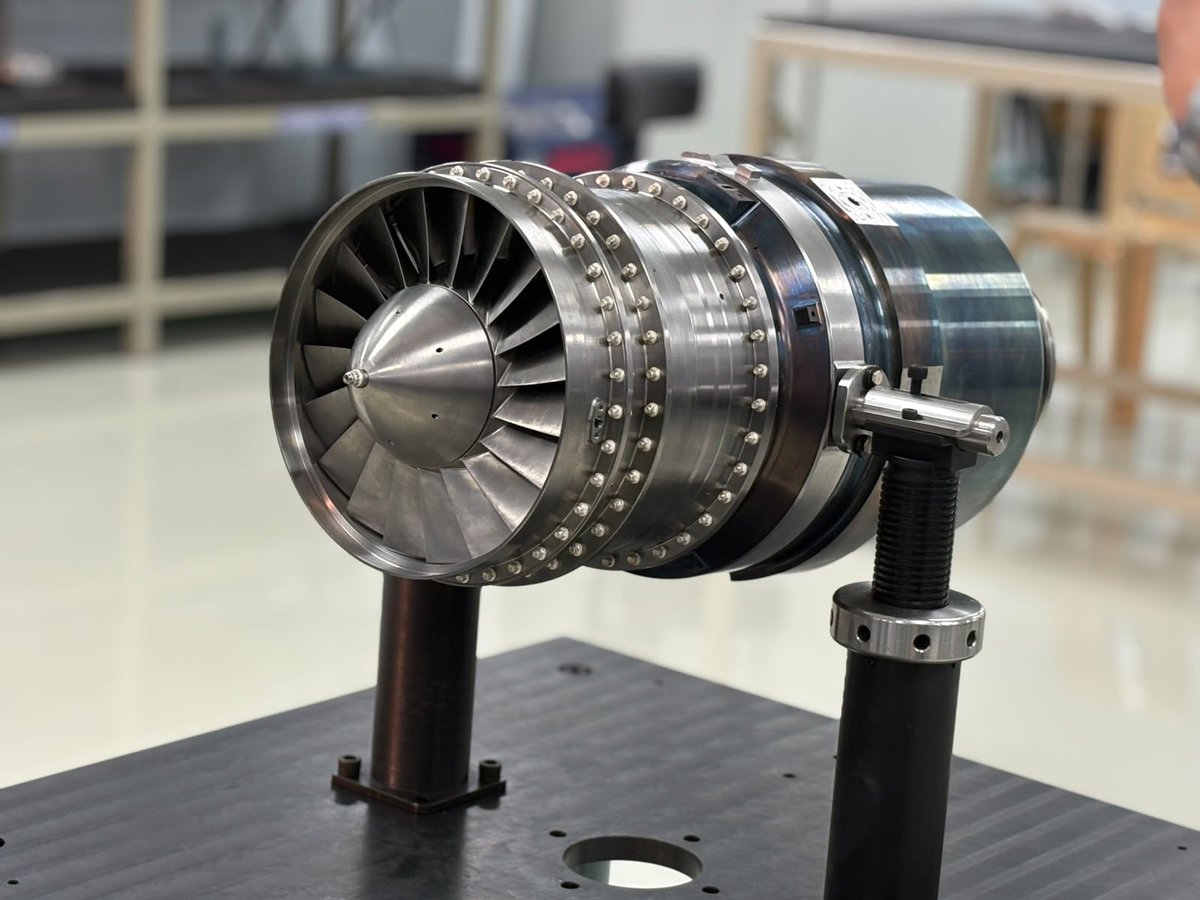
Indigenous Expendable Turbo Jet Engine of 350 kg thrust class, designed by GTRE, has been successfully developed. GTRE had identified Azad Engineering, Hyderabad as Industry partner. On July 22, 2026, the engine was successfully realised and delivered to GTRE by Azad Engineering
PM Modi called the Skyroot Aerospace team after Vikram-1, India’s first privately developed orbital rocket, successfully reached orbit.
Look at the pride and joy on our scientists’ faces. This is real nation-building.
Meanwhile, self-proclaimed "scientists" were busy staging fraudulent hunger strikes for headlines.
Some of you have been asking where CATS Warrior stands in the development cycle, so here’s the comparison:
✅ Ghatak: DAC granted AoN on 27 March 2026 under official designation RPSA (Remotely Piloted Strike Aircraft), for 4 squadrons (~60-80 airframes)
✅ CATS Warrior: technology demonstrator built, no AoN yet
Remember funding in India’s procurement system usually begins at DAC.
Sudanese AKINCI downed an RSF-operated FH-95 UCAV (Chinese-origin, allegedly supplied via UAE) using ROKETSAN’s EREN munition .
open-source/wreckage-level verification.
My Take: prop-driven, non-manoeuvring UAV with zero countermeasures (no RWR/chaff/ECM) isn’t a real A2A validation.
But EREN’s specs impress regardless: 35kg, turbojet, 100+km range, IIR+AI seeker. Serious engineering in a light package.
How Modi Saved India (Thread)
The Untold Story of Indian War room to protect India from Biggest Energy Crisis of 21st Century
March 2026
A war in West Asia shut down the Strait of Hormuz, the passage for nearly 20% of the world's oil trade, along with liquefied natural gas and fertiliser shipments
Many countries declared a national energy emergency. India imports 90% of its crude oil.
So how did it largely avoid the same fate?
1/23
Maersk placed an order for 1,000 India-made shipping containers with DCM Shriram Group after unveiling the country's first domestically manufactured EXIM container. The move aligns with the ₹10,000 crore Container Manufacturing Promotion Scheme and starts a long-term supply partnership.
https://t.co/YiQm7xgkNf