Parker Solar Probe has phoned home!
After passing just 3.8 million miles from the solar surface on Dec. 24 — the closest solar flyby in history — we have received Parker Solar Probe’s beacon tone confirming the spacecraft is safe. https://t.co/zbWT7iDVtP
Parker Solar Probe has phoned home!
After passing just 3.8 million miles from the solar surface on Dec. 24 — the closest solar flyby in history — we have received Parker Solar Probe’s beacon tone confirming the spacecraft is safe. https://t.co/zbWT7iDVtP
STOP! Going to #AAS245 in DC? Before you make your travel plans, ask yourself: do you want to learn how to provide excellent peer-review? If yes then join our Peer review training provided by AAS journal editors!!
Join us the morning of Sunday, Jan 12!
Unfortunately, the account of @SWATNetProject has been compromised and thus is not accessible any more by the editors. We could not restore the access which is a big loss for us. But we still want to engage with you, 530 followers, on the X platform!
A helicopter airlifts #Sunrise_III’s hardware components from the landing site to #NormanWells, a small town by the Mackenzie River. Here you can see the box that held the post-focal instrumentation flying away. The main mirror of #Sunrise_III’s #telescope travelled IN the heli.
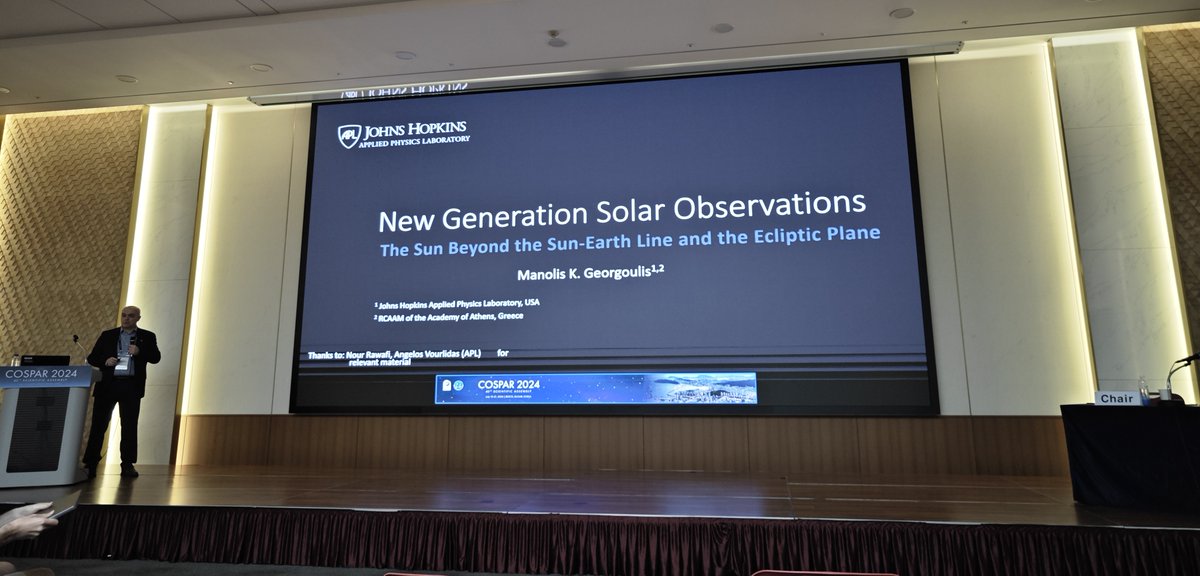
An excellent @CosparHQ 45th Scientific Assembly in Busan last week, organized by a very proud LOC led by James Park. Settings in the southern coast of Korea equally amazing. Honored to give a well-attended talk on the future of Heliophysics missions (photo credit: Shangbin Yang).
@xudong_sun We have seen this record-breaking behavior in other parameters, too. Beff (effective connected magnetic field strength) peaked at 9+ kG in the region when Halloween 2003 regions did not go above 4 - 4.5 kG (Source: @esaspaceweather A-EFFort service).
Join scientists around the world at #COSPAR2024 to share, learn & discuss every space topic under (and over) the Sun. But also, explore the wonders of Busan, Korea🇰🇷
Join us. Regular registration closes 3 June ☀️✍🏼➡️ https://t.co/aChX8Zkiw7
Finally, a GOES X5.7 from NOAA AR 13664 in the early morning hours (UT) of May 11. Still way below what this active region can give! As mentioned already, this will be a long weekend geomagnetically.
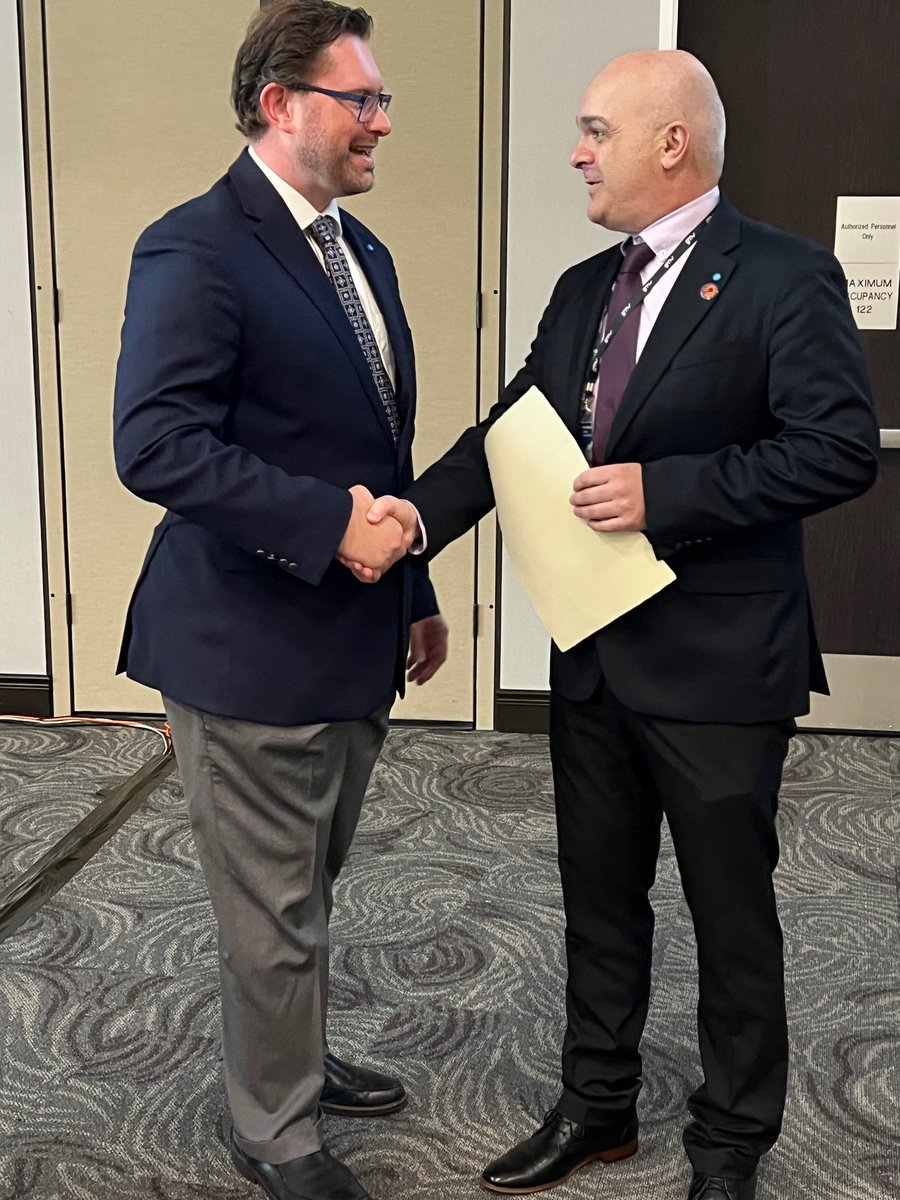
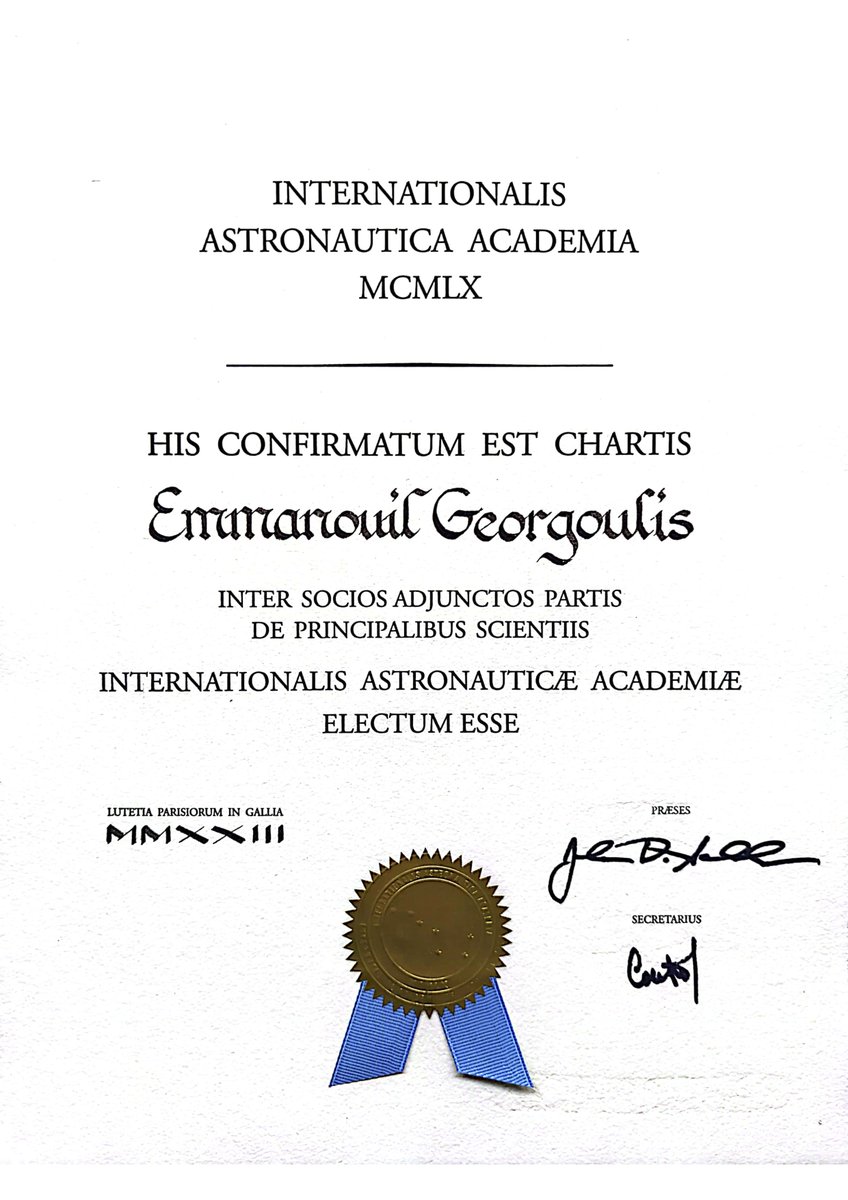
On top of all this excitement with solar flares and eruptions, I should mention how humbled I feel being acceded officially as a Corresponding Member of the International Academy of Astronautics at @EmbryRiddle during the 4th IAA/SSA Conf!
Pledge to work to honor this election!
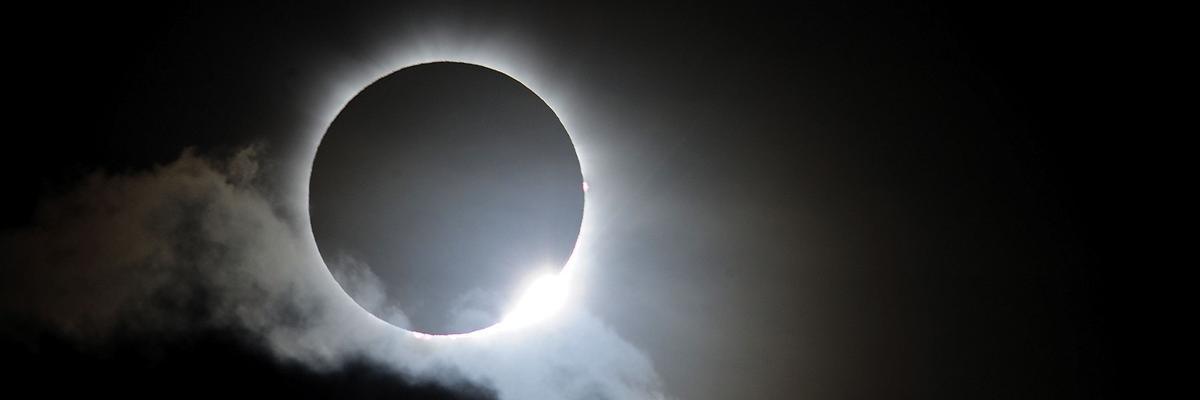
NOAA AR 13664 is indeed a Carrington-level region. Strong statement, but there's more: while it can easily launch X5+ flares for a couple of days now, it stays at low X-class with a series of CMEs. What is more important to relax - flaring or shedding helicity away? More to see..
@jen_k_usa Great questions! No, Lij is not a vector; it's a linear segment connecting the centroids of two opposite-polarity magnetic flux partitions. Lij is not a constant, not even L11. It means the connection length between the ad hoc first positive and the ad hoc first negative polarity