Online now! Cerrato et al propose a consensus roadmap towards precision senescence medicine, emerging from the SENESCENCE2030 meeting in Coimbra, Portugal earlier this year @marc_dema https://t.co/pgMKLOYtrp
🧬 Senescent cells accumulate as we age, can we understand them for better therapies?
@marc_dema will explore how understanding senescence could help develop new approaches to healthier ageing at #BSRA2026
🗓️ 9–11 Sept
📍 Keble College, Oxford
🔗https://t.co/0FOTFr0aRd
Online now!✨Wang et al report a role for CDK4/6 in regulating not only cell cycle progression but also the SASP, via retinoic acid signaling and NFkB. Targeting this pathway reduces inflammation and improves function in aged mice @Marc_dema https://t.co/e5PnvbjcK8
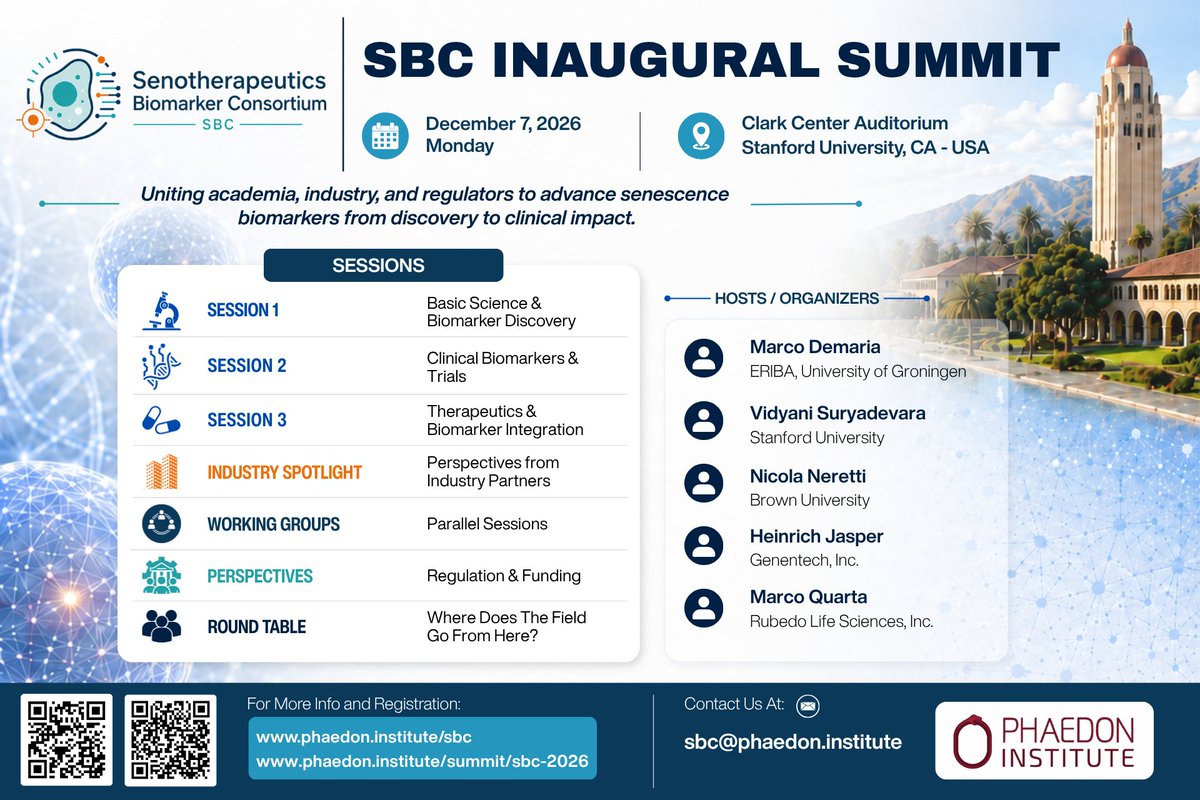
We are pleased to announce the Senotherapeutics Biomarker Consortium (SBC) Inaugural Summit, taking place on December 7, 2026 at the Clark Center Auditorium, Stanford University.
Registration is now open: https://t.co/aJ5SCgLunu
#PhaedonInstitute#SBC2026#Senescence#Longevity
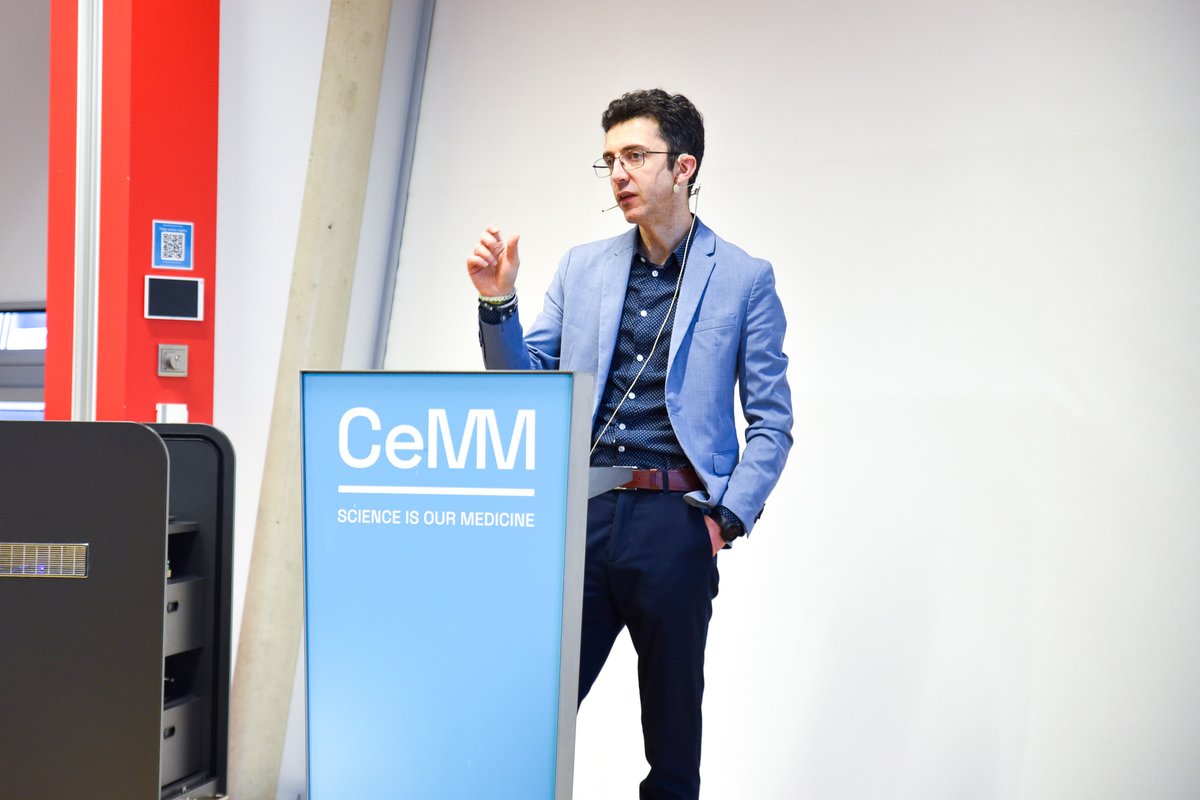
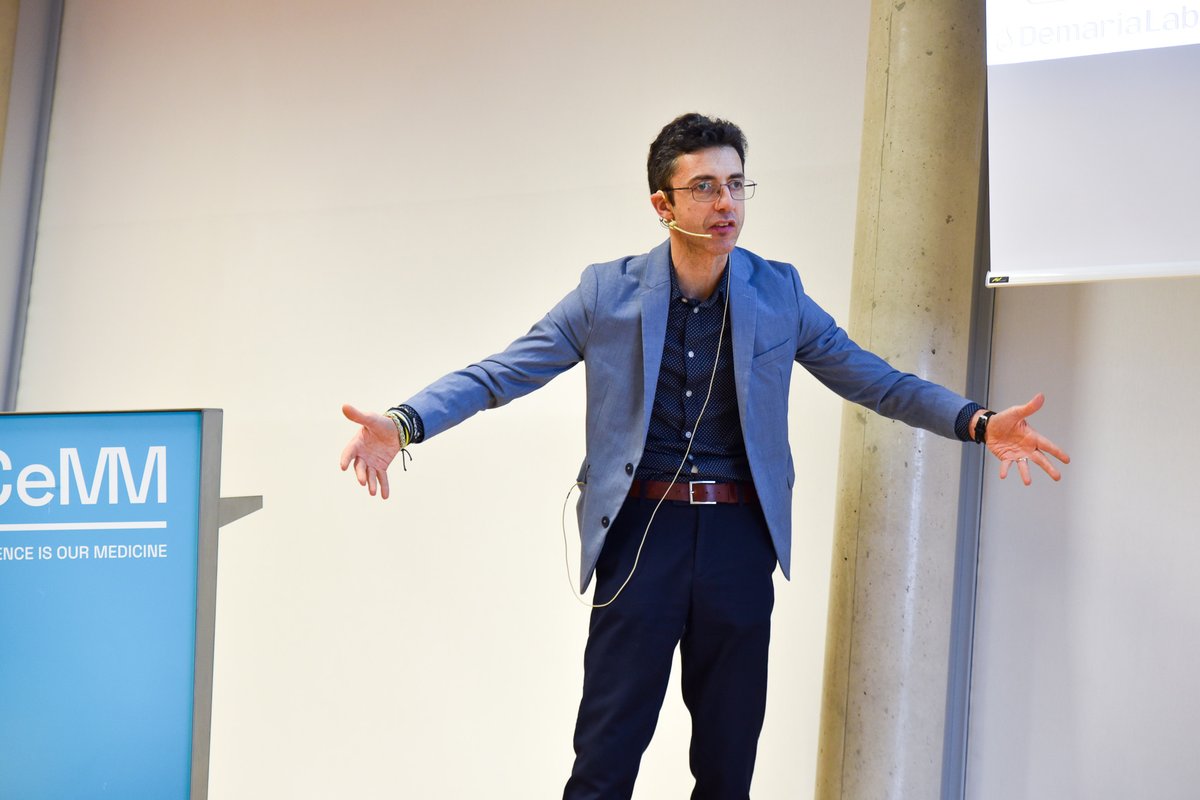
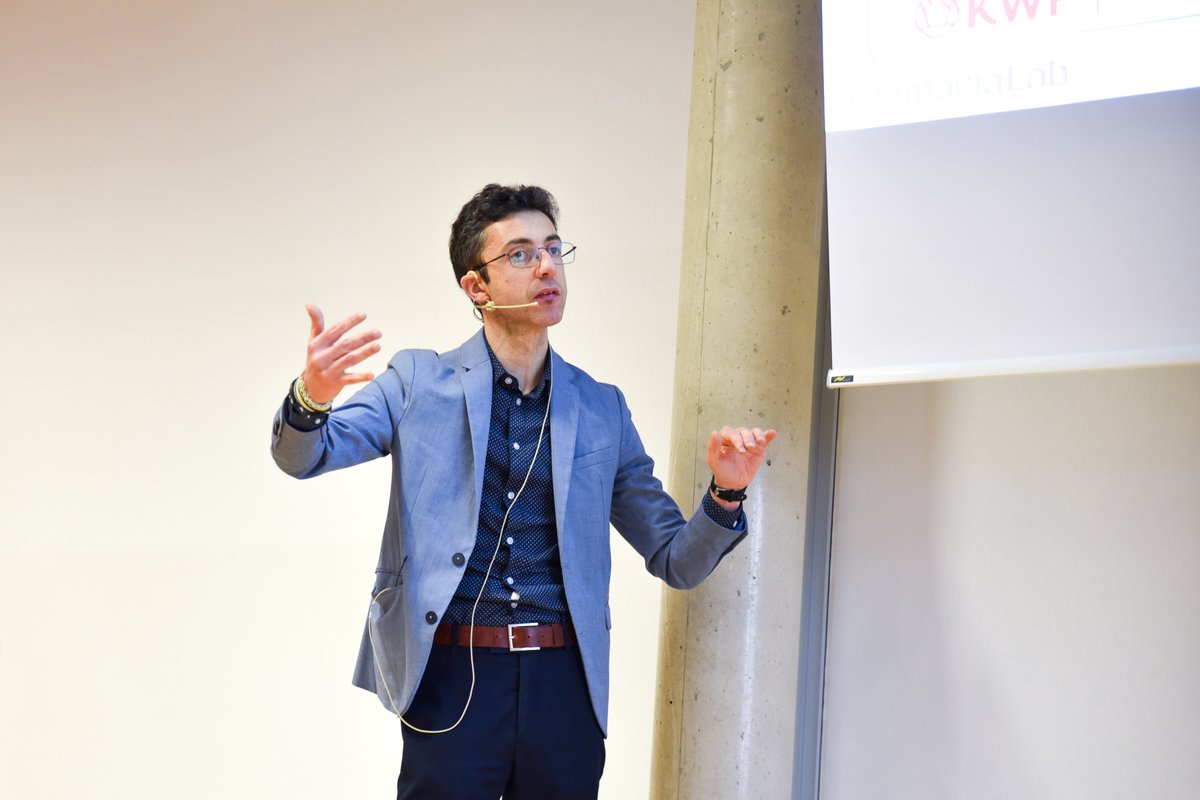
Thank you, @marc_dema (@umcg) for a great #CeMMinar on heterogeneity in cellular #senescence! He shared how senescent cells can both aid tissue repair & drive aging & dysfunction, & how targeting them could support healthy #aging. Thanks to hosts @rooij_laura & André Rendeiro!
Removing p16⁺ senescent cells rejuvenates female liver profiles—boosting mitochondrial function and reducing inflammation, mimicking effects of calorie restriction, #rapamycin, and #acarbose, a new study finds. #senescence
By Yao Lin, @marc_dema, et al.
https://t.co/MFjeX6cEEL
We were proud to sponsor a poster prize at the ICSA Conference & Senotherapeutics Summit in Rome, co-organized by our EIC @marc_dema.
🎉 Congrats to Cheng Chen (Pasteur Institute, Paris), prize winner for her work on senescent FAPs in muscle regeneration!
#ICSA2025#Aging
Aging-US supports a milestone event for the global senescence & aging research community. @marc_dema
🗓️ September 16-19, Rome:
🔹10th Annual ICSA Conference
🔹2nd Phaedon Senotherapeutics Summit
Learn more and register ⬇️
https://t.co/PNBATshYsY
#ICSA2025#Aging#Longevity
Super excited to invite you to #ICSA2025 in Rome– September 16-19!
This will be a special edition—celebrating 10 years of ICSA, and joining forces with the Phaedon Institute for a full day dedicated to senotherapeutics! https://t.co/exQqH3RjHh
#Senescence#LongevityScience#Aging
Can aging biology reshape healthcare?
In my latest editorial for @AgingJrnl , I argue it's time to shift from reactive disease treatment to proactive, biology-driven strategies that extend healthspan.
https://t.co/pfNBlLbLd9
#AgingResearch#Healthspan#Geroscience#Longevity
"I am committed to advancing the journal’s mission by promoting rigorous science and encouraging interdisciplinary dialogue that bridges basic biology with clinical relevance." - @marc_dema
Read the full message from our new Editor-in-Chief:
🔗 https://t.co/cquuS1cKcp
#aging
📢#CallforPapers: Aging (Aging-US) invites #submissions on cellular #senescence - its mechanisms, functions & clinical applications - in memory of Dr. Judith Campisi. @marc_dema
📅Deadline: January 15, 2026
🔗Submission Details:
https://t.co/L8Gs56zGqW
#AgingResearch#oa
📢#CallforPapers: Aging (Aging-US) is honoring @Blagosklonny with a special #collection.
Submit your #research, reviews and perspectives on mTOR, rapamycin, #aging, cancer & more.
📅Deadline: December 1, 2025
🔗Submission Details:
https://t.co/0JerApWcNd
#agingresearch
Check out my recent comment https://t.co/wsrbKQoLop on the accelerated aging phenotype in cancer survivors. With increasing survivorship, understanding & addressing this issue is critical to improve quality of life. Free full access: https://t.co/BwphZmhPgd #Longevity#Aging
At https://t.co/rjA2hB4aOc we're seeking original research, reviews & perspectives on aging & age-related diseases, including:
- Biology of aging
- Translational & clinical research
- Epidemiology & multi-morbidity
Submit your best work!
#AgingResearch#Longevity#AgingUS
We believe this strategy could help eliminate therapy-induced senescent(-like) cancer cells, reducing recurrence & improving outcomes. Hopefully some funding agency will hep us to extend our study for pre-clinical validations and for applications in other tumor types
We show that:
CDK4/6i induces a senescent-like state in breast cancer cells but these cells resist common senolytics;
Lysosomal alterations make them vulnerable to lysosomotropic agents (LLOMe, salinomycin);
Sequential treatment reduces tumor growth in HR+ & some TNBC models