He/Him. Former Seattle COO, Seattle U Prof/speaker, Wrote 'Powershift', Board of @FFI_Solutions. Housing Zealot. Climate Hawk. Find me: @marcolowe.bsky.social
The price of housing is set by supply and demand. If we want to make housing in big jobs-rich cities affordable to middle class people, we are going to have to build a LOT of new homes.
Claudia @RoweReport is absolutely right. As I said on @KUOW’s Week in Review on Friday, there’s nothing progressive or “sex positive” about the current prostitution market on Aurora.
This isn’t “sex work” rooted in the autonomy of adult women using their agency to decide for themselves the use of their own bodies. It’s the exploitation and degradation of addicted women, many of them underage. And it is fueling high levels of gun violence (about one shots fired incident a week over the last two years) because the control of the turf - and the women - is so lucrative, and so consequence-free.
HOP legislation passed 9-0 at @SeattleCouncil just now! A moment to celebrate one step towards many more homes, more quickly, in our fantastic city. Shoutouts to sponsors CM Eddie Lin, CM @Alexis4Seattle. Up next: tracking HOP's impact. For a refresher: https://t.co/FGiC0CSoPL
One of our ADU projects got through several departments only to get stuck on a “zoning architect” clearance.
4 weeks our team emailed and called 1-2 X per week trying to get direction on a couple of corrections.
Finally last week we got fed up and each of the 3 partners started calling and emailing the zoning architect and her supervisor everyday. They likely received 20 voicemails and emails from us in a week. Still didn’t respond.
So today one of the partners sent them a request to connect on LinkedIn. Kinda weird, but it was a Hail Mary 🤷♂️! Shortly after I walked into DBS on Fig looking for their office. Couldn’t find any listed office for them, so I started at the 4th floor counter. They told me to call or email again 🤪
Finally after responding several times with “nah I already emailed them 45 X” they told me to walk into the 8th floor. At the 8th floor they were annoyed with the 4th floor and said something about needing a meeting to stop 4th floor from sending people up to the 8th floor.
But I wasn’t leaving so they started looking through the system to find our “zoning architect”. They finally found the email and phone number I already had, to which I told them again I already tried that for 4 weeks.
At that point one of the plan checkers I think took pity on me and left the room and maybe went to call her or her supervisor. No way of knowing for sure what he did.
Within a few minutes we received an email about her returning from a long vacation and offering a meeting for tomorrow 🤔
I have no idea if she really did just get back from the Bahamas, or if she thought damn these guys are nutcases and might follow me home if I don’t answer their correction questions.
In LA you navigate several different departments even on a small ADU project. It’s nonsense that so many people look at your project. If one of the plan checkers sprains an ankle, or goes to the Bahamas, or ignores you for 4 weeks, your project gets put on ice.
This is why I hate the new system of doing everything online. It is a lot harder to ignore someone when they are sitting in front of you 🤪
Bring all these plan checkers and city staff back in office 5 days a week!
Because San Francisco refuses to build housing and so most service workers have to travel up to two hours each night back into exurban exile in e.g. Solano County and Contra Costa County.
This @seattletimes op-ed lays out the case for accelerating new ways of building homes, the exact kind of technology that's a part of the HOP (Housing Opportunities) legislation that's before @SeattleCouncil right now, with a final vote coming this Tues: https://t.co/gk2x1ahZuQ
It's interesting that American consumers can appreciate that Costco is profitable b/c they have the scale/size to sell at lower price.
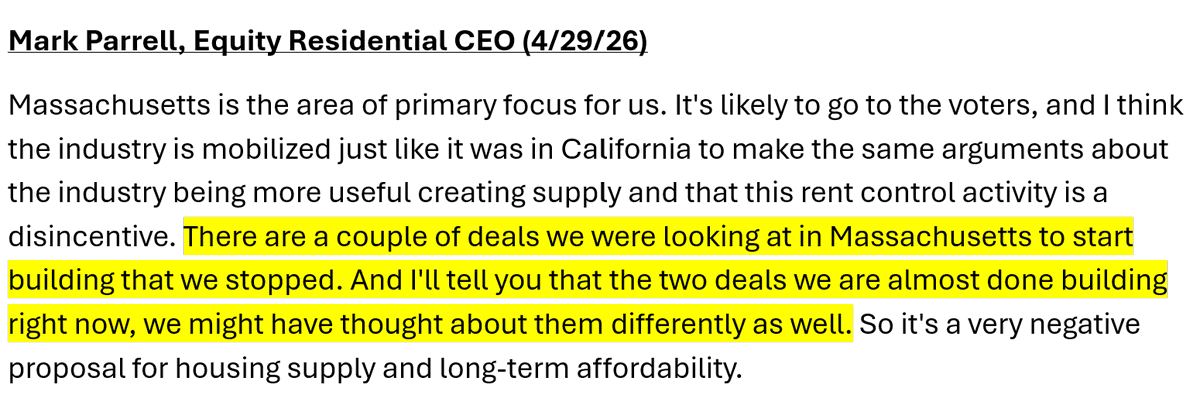
Yet, bizarrely, when it comes to rental housing, people assume that scale equals higher prices/rents.
Costco shows us that higher price do not equate to higher profitability. Same is true for apartments and single-family rentals. There is zero revenue on a vacant unit and therefore zero incentivize to price a rental unit too high that it sits vacant.
HOP is one vote away! Huge thanks to @SeattleCouncil's Land Use Chair Eddie Lin, CM @Alexis4Seattle, CM Dionne Foster, and @CMDanStrauss for moving it through committee. Join us Tues 6/2, 2pm at City Hall to help get it across the finish line: https://t.co/FGiC0CSoPL
It's crazy how many US states, including California, allow local jurisdictions to substantially amend or adopt their own building code. How can you have an efficient, national construction industry when you've got tens of thousands of sets of distinct regulatory frameworks?
Requiring that 30% of these new high rise apartments be rented at a loss killed the project’s financial feasibility.
Now 0 new apartments will get built and the 840 rich households that would’ve lived in those fancy new homes will bid up the price of older, cheaper apartments.
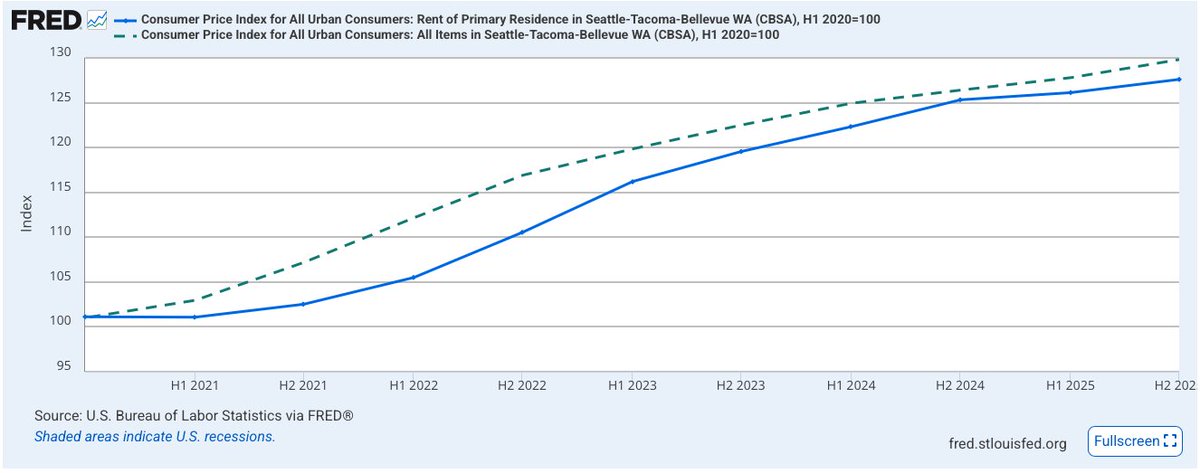
Seattle's housing crisis, brought to you by the industry that has built more housing than anywhere else in (except Austin), resulting a meaningful fall in rents (not like Austin but still)
The New York Times editorial board just endorsed permitting reform.
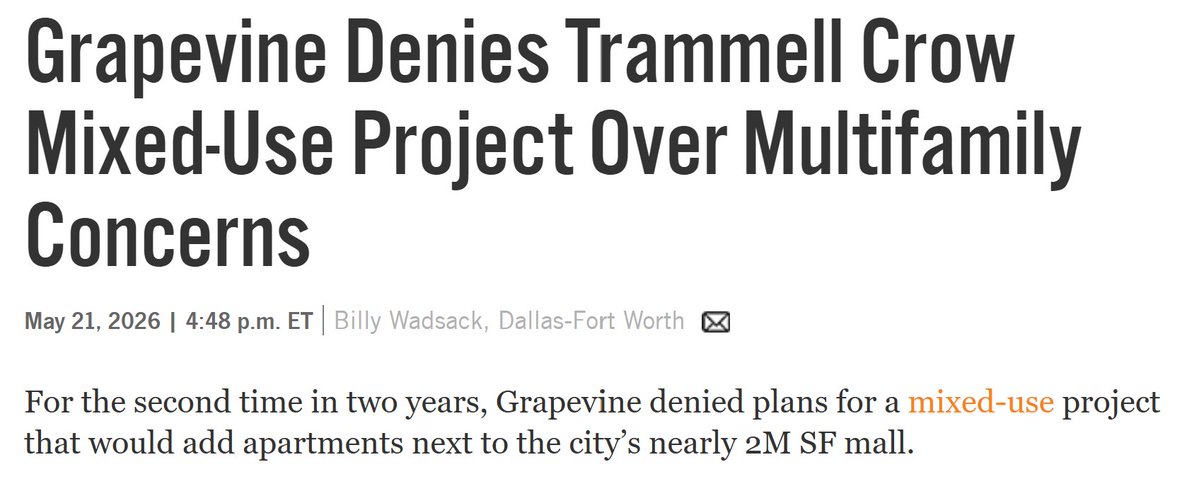
Stories like this are causing people to wake up to the harms of red tape built up over decades:
Affordability is becoming more of a tailwind than a headwind for apartment demand -- or more specifically, for market-rate apartment demand.
Rent-to-income ratios are down to the lowest levels since pre-COVID thanks to the huge wave of new supply putting downward pressure on rents, allowing wage growth to top rent growth for 3+ years. Meanwhile, REITs and other operators continue to report that renters are paying rent more often and renewing leases more often.
So, how do you square this trend with all the headlines warning about a rent affordability crisis? Well, it's a nuanced topic that is often painted too broad a brush. The reality is renting in America is increasingly K-shaped, a story of haves and have nots. The number of "haves" are growing far faster than the "have nots," but we still have a real challenge at the low end of the market, particularly among households making <$30k a year (which means most can't cover even the operating costs of a typical apartment). Harvard research shows this group spends an unfathomable 80% of income on rent. This is a real crisis, but few in this category live in market-rate apartments.
On the other side of the K, Harvard's data aligns with industry data showing all the net new demand in recent years (even pre-mortgage spike) coming from higher-income households spending ~20% of income on rent. There's no demand issue in this group. In fact, industry data shows net absorption from 2023-25 far above long-term norms -- and disproportionally concentrated at the upper end of the market.
In earnings calls last week, REITs reported rent-to-income ratios ranging from 19% to 22% (well below the affordability threshold of 30%) -- while also noting improved rent collections. That aligns with national data (see below) on rent-to-income ratios for households signing a lease in a market-rate apartment. That ratio fell to 21.7% in April, mirroring pre-COVID levels.
Friendly reminder: If we want to address affordability challenges in America, we need to zoom in on where the real challenges actual exist.
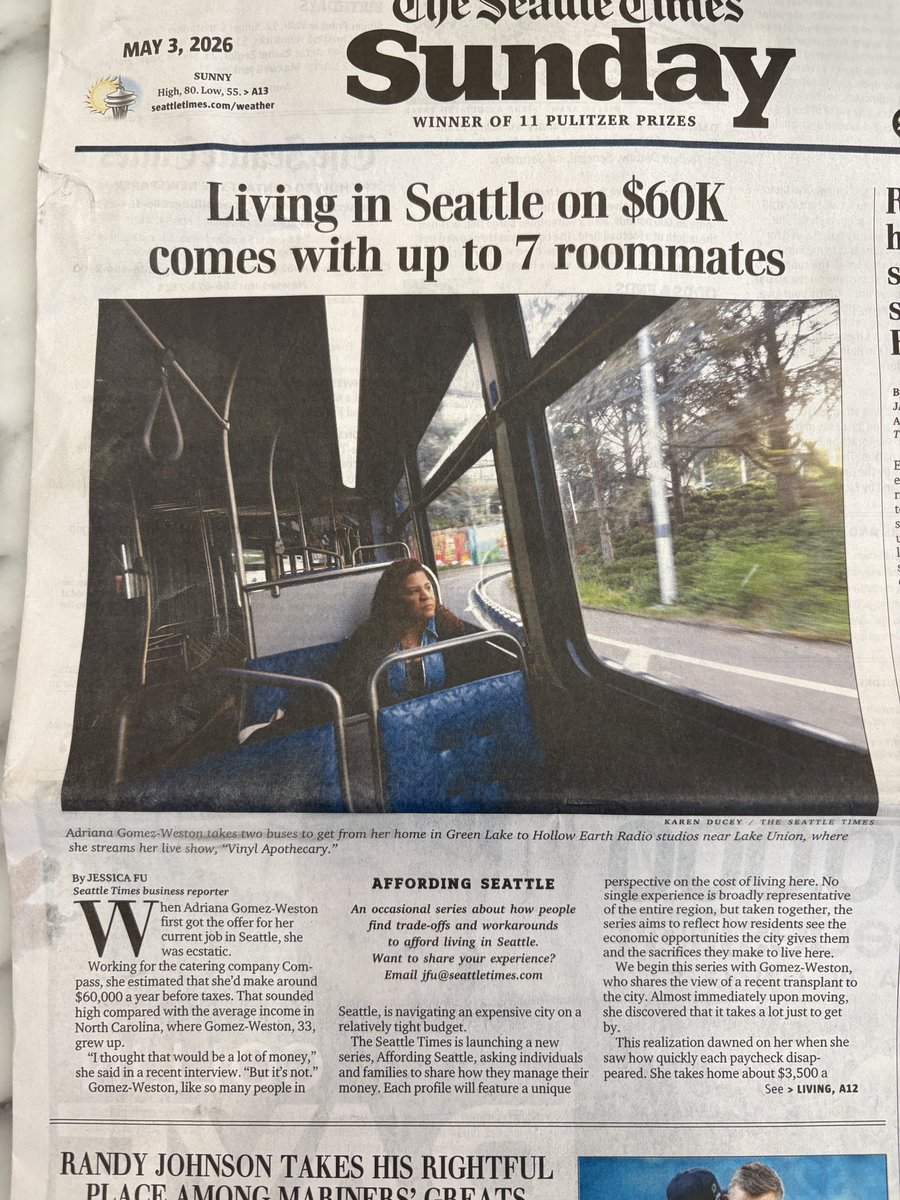
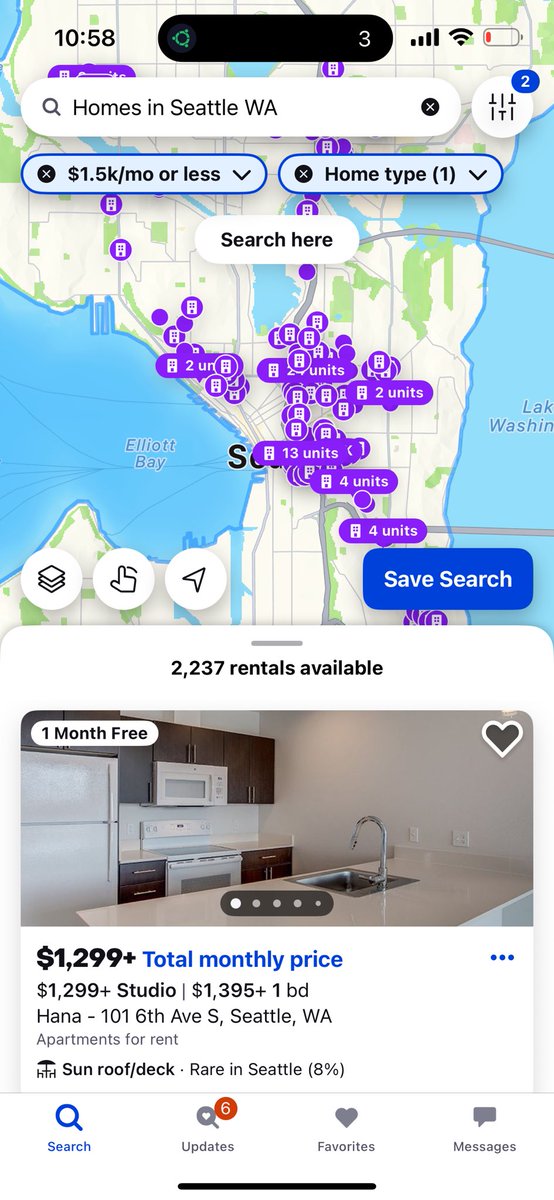
Seattle times still stuck in a the decade old era where we don’t have housing for this 60k/60% AMI cohort. That’s $1500 a month rent. Did they bother to search on Zillow for 1 second? 1/2