Yes we were informed of this yesterday and were extremely heartbroken. The Sameer Project has the ability to scale up water, all we need is funding. Help us do more than half a million liters of water. We beg you. Things are bad in Gaza, really really bad.
Support now: https://t.co/6l9JFjWInX
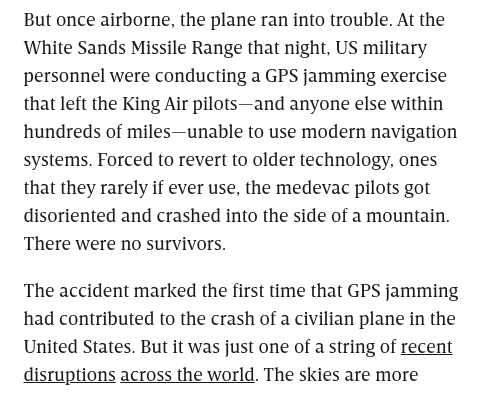
Holy shit... Wired reports that back in May, the U.S. Military was testing an experimental GPS jammer and and caused a civilian plane to crash into the side of a mountain, killing everyone on board.
Okay but why do data centers use any water at all? Wouldn’t you just fill up the cooling system once and it circulates the water for years without the need for more
your critique of ai cannot be entrenched in aesthetics because there will be a time when you see an ai image or hear an ai song and think "that looks/sounds good". your critique of ai must always be entrenched in the poisonous effect it has on people's brains and the planet.
🦔AI companies are bulk-buying rare books, scanning them through high-speed machines that cut the spines off, and shredding the originals. A service called ISBNdb facilitates orders of up to a million books and keeps buyers anonymous. Pre-2022 books are premium because they're free of AI-generated text. A federal judge ruled the practice is fair use because eliminating the original means only one copy exists at a time. Anthropic hired the former head of Google Books partnerships to obtain "all the books in the world."
My Take
This got to me. A bookseller told 404 Media that rare books with almost no surviving copies are being fed into this pipeline. Books that survived wars, fires, and centuries of handling are being shredded so an AI can learn to write a better marketing email.
ISBNdb's website literally says "'AI company destroys two million books' is not a headline that generates sympathy," and they still built an entire business around making it happen quietly. They offer NDAs as a feature. They coach clients to call it "digital preservation."
I've covered AI companies scraping the internet, torrenting libraries, and stealing music. This is worse because it's irreversible. You can re-upload a website. You can reprint a bestseller. You can't replace the last three copies of an 18th-century botanical text once someone shreds them for training data. And the judge said it's legal. So it's going to accelerate.
"We shred rare books and offer NDAs so nobody finds out" is a legitimate business model in 2026. What a timeline.
Hedgie🤗
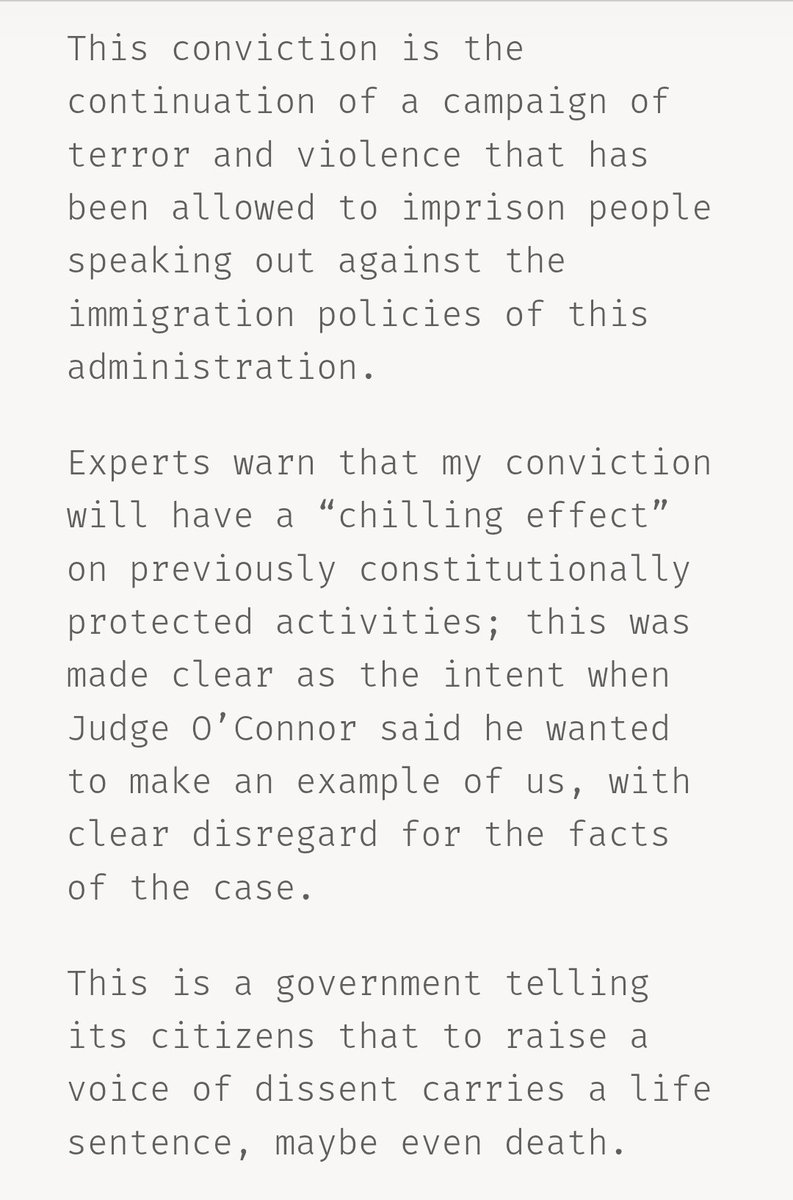
heres Savanna Batten's post sentencing statement who was sentenced to 50 yrs.
"To my friends, to Renée Good, to Alex Pretti, and to the people being held in detention centers across the country, I have the very same urgent message that compelled me to Prairieland that night..."
#GIVEAWAY Here is your chance to win the #1 Collector's Edition of THE DIRTIES (1/3000) featuring NEW interviews with the cast and crew including director Matt Johnson!
To enter:
1. Follow us
2. Like the post
3. Retweet the post
We will draw the winner next week.
Good luck 📹
We’re thrilled to announce the hatching of a Micronesian Kingfisher chick at San Antonio Zoo!
This marks our first hatch of the species in five years and the 47th in our history, an exciting milestone for one of the world’s rarest birds. With around 150 remaining in the world, every hatch is a critical step toward recovery.
There’s hope on the horizon: in 2024, Micronesian Kingfishers were released into the wild for the first time in more than 40 years. Even more incredible, those birds can trace their lineage back to San Antonio Zoo.
We’re proud to play a role in bringing this species back from the brink. Stay tuned as this little one grows!
Went down the rabbit hole on this. The dancing is the tamest part of the story. Marine biologist Amanda Vincent has spent decades studying seahorses, and what’s underneath that morning ritual goes way deeper than a cute video.
The morning ritual lasts about 6 minutes. Both seahorses brighten their skin, link tails, and pirouette around a shared piece of coral or seagrass. Researchers call it “the carousel dance.” But it has a specific biological function: it synchronizes their reproductive cycles so the female’s eggs are ready the exact moment the male’s brood pouch is empty. That timing matters because the male can’t accept new eggs while he’s already pregnant.
The male gets pregnant. The female transfers her eggs into his pouch through an organ called an ovipositor (a tube for depositing eggs). The whole transfer takes about 6 seconds. His pouch seals shut immediately. Inside, he grows a network of blood vessels that works almost exactly like a human placenta, delivering oxygen and nutrients to up to 1,000 developing embryos. Research from the University of Sydney, published in the journal Placenta, found the pouch wall thins and builds new blood vessels during pregnancy in ways that closely mirror what happens in a mammalian uterus.
He gives birth using skeletal muscles, not smooth muscles like in mammalian labor. That means he has conscious control over the process. Labor can take hours. And within hours of delivering up to 1,000 fully formed babies, he’s ready to mate again. The female already has her next batch of eggs prepared, sometimes the same day.
Less than 0.5% of those babies survive to adulthood. Fewer than 5 out of every 1,000. No parental care after birth. They get swept into ocean currents, eaten by crabs, or starve before they find food. That survival rate is why the morning dance matters so much. Every lost mating cycle is hundreds of offspring that never existed.
The monogamy is extraordinary for a fish. Only about 3% of mammals form lasting partnerships. For fish, it’s rarer still. But in species like the Australian H. whitei, pairs are genetically monogamous across multiple breeding seasons. They greet each other every morning and ignore other seahorses entirely. The bond only breaks when one partner disappears. Amanda Vincent once watched a female keep visiting a male whose brood pouch had been punctured by a predator, making pregnancy impossible. She showed up every morning for weeks until his pouch healed. Then they remated.
About 150 million seahorses are pulled from the ocean every year for traditional medicine and the pet trade. Most pet seahorses don’t last six weeks. 14 of the 47 known species were only identified in this century, meaning we’re losing populations of animals we barely knew existed.