Help us sign the petition to lift U.S-imposed travel ban on Syrian nationals.
The ban has affected many IMGs(including myself), academics, and families kept from reuniting with each other.
Your support means a lot to us.🙏
https://t.co/i5KnowwV84
#1 After my 3rd Trail, i matched today.
For all applicants who did not match, remember that not matching does not mean you are permanently out of the system. It simply means your turn is still in progress—and it WILL COME SOON. Challenges help prepare you for success when your opportunity arrives, and setbacks build the character that a single success alone cannot.
@imghelpinghand@projectimgnet@Inside_TheMatch
Low Step 1 score Average CK score
Unmatched on the first attempt.
Debt piling up. Financial uncertainty.
No clear roadmap ahead.
Thought about quitting, more than once.
But kept showing up.
US visa journey wasn’t easy either:
Applied three times, limited stays on the first two.
Administrative Processing hit twice:
• During 3rd year of residency, delayed 3 months → went off-cycle, lost Chief Residency, couldn’t pursue Addiction Fellowship
• After finishing residency, another 4 months → emotional and financial toll
Still standing.
Not because it was easy, but because of faith in God Almighty, and unwavering support from family, friends, and mentors.
If you’re struggling right now:
Keep going. Keep working. Keep believing.
Your story isn’t over yet.
#Match2026 #SOAP2026 #NRMP
New Clinical Problem-Solving: A Matter of Time 👉 https://t.co/Mqhl4D31Bf
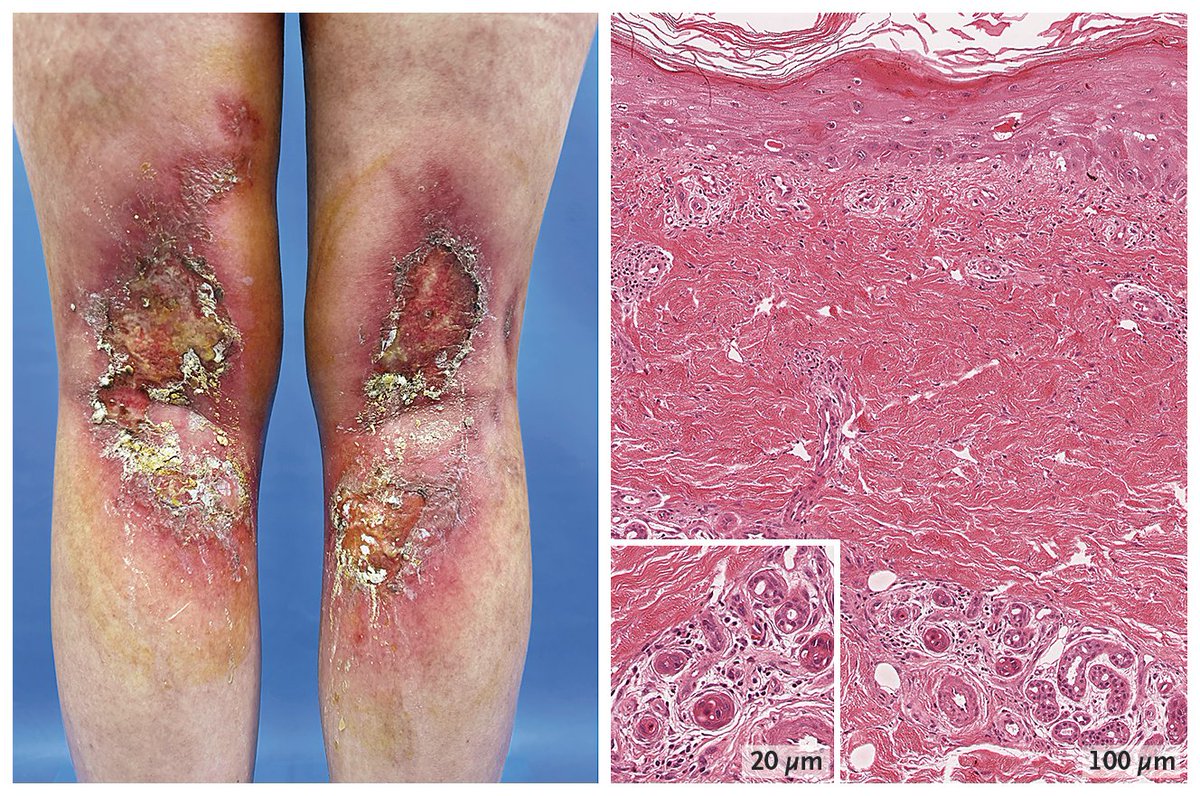
A 29-year-old woman with active opioid, alcohol, benzodiazepine, tobacco, and cocaine use disorders and recent intravenous drug use presented with acute onset of chills and increased pain and drainage of chronic wounds in both legs. Her wounds first appeared more than a year before presentation and were attributed to xylazine exposure. She had not injected into the wounds or shared needles.
She reported that she did not have fever, sweats, rigors, rash, cough, abdominal pain, or dysuria. The wounds in her legs were purulent, erythematous, and painful (seen in figure). She reported no additional medical history and took no medications. Her social history was notable for engaging in occasional unprotected transactional sex. The hemoglobin level was 8.7 g per deciliter with a mean corpuscular volume of 78.5 fl (both unchanged from 1 month earlier), white-cell count 4930 per cubic millimeter with 57% neutrophils and 31% lymphocytes, and platelet count 484,000 per cubic millimeter. The results of a complete metabolic panel were unremarkable. The erythrocyte sedimentation rate was 77 mm per hour, and the C-reactive protein level was 3.1 mg per deciliter. Given concern for SSTI, with possible underlying osteomyelitis, blood cultures were obtained and empirical antimicrobial therapy was initiated with vancomycin.
Read the full case details in the Clinical Problem-Solving article “A Matter of Time” by G.A. Wilson et al., from @HopkinsMedicine: https://t.co/Mqhl4D31Bf
Case Record of the Massachusetts General Hospital (@MassGeneralNews): A 58-year-old woman was admitted to this hospital because of diplopia and fever.
Three weeks before the current presentation, the patient underwent lumbar hemilaminectomy, facetectomy, and foraminotomy on the left side, with excision of a herniated disk and decompression of the nerve root, at another hospital. On postoperative day 1, back pain increased substantially, and oxycodone was prescribed. Owing to the back pain, which did not abate after oxycodone treatment, and the development of left leg pain with resultant limited mobility, prednisone was prescribed on postoperative day 3.
On postoperative day 4, the patient was readmitted to the other hospital. The blood levels of glucose and electrolytes were normal, as were the results of tests of kidney function. Magnetic resonance imaging (MRI) of the lumbar spine, performed after the administration of intravenous contrast material, reportedly showed postsurgical changes and an epidural fluid collection, measuring 16 mm in diameter, on the left side at the level of the fifth lumbar vertebra; a radiograph of the left leg was reportedly normal, and ultrasonography showed no deep venous thrombosis in the legs. Treatment with intravenous dexamethasone and oral acetaminophen, cyclobenzaprine, celecoxib, gabapentin, hydromorphone, and tramadol was administered.
Read the full case details in “A 58-Year-Old Woman with Diplopia and Fever,” a Case Record of the Massachusetts General Hospital, by S.L. Arvikar et al., from Massachusetts General Hospital (@MassGeneralNews) and Harvard Medical School (@harvardmed): https://t.co/bb1ebiGxeu
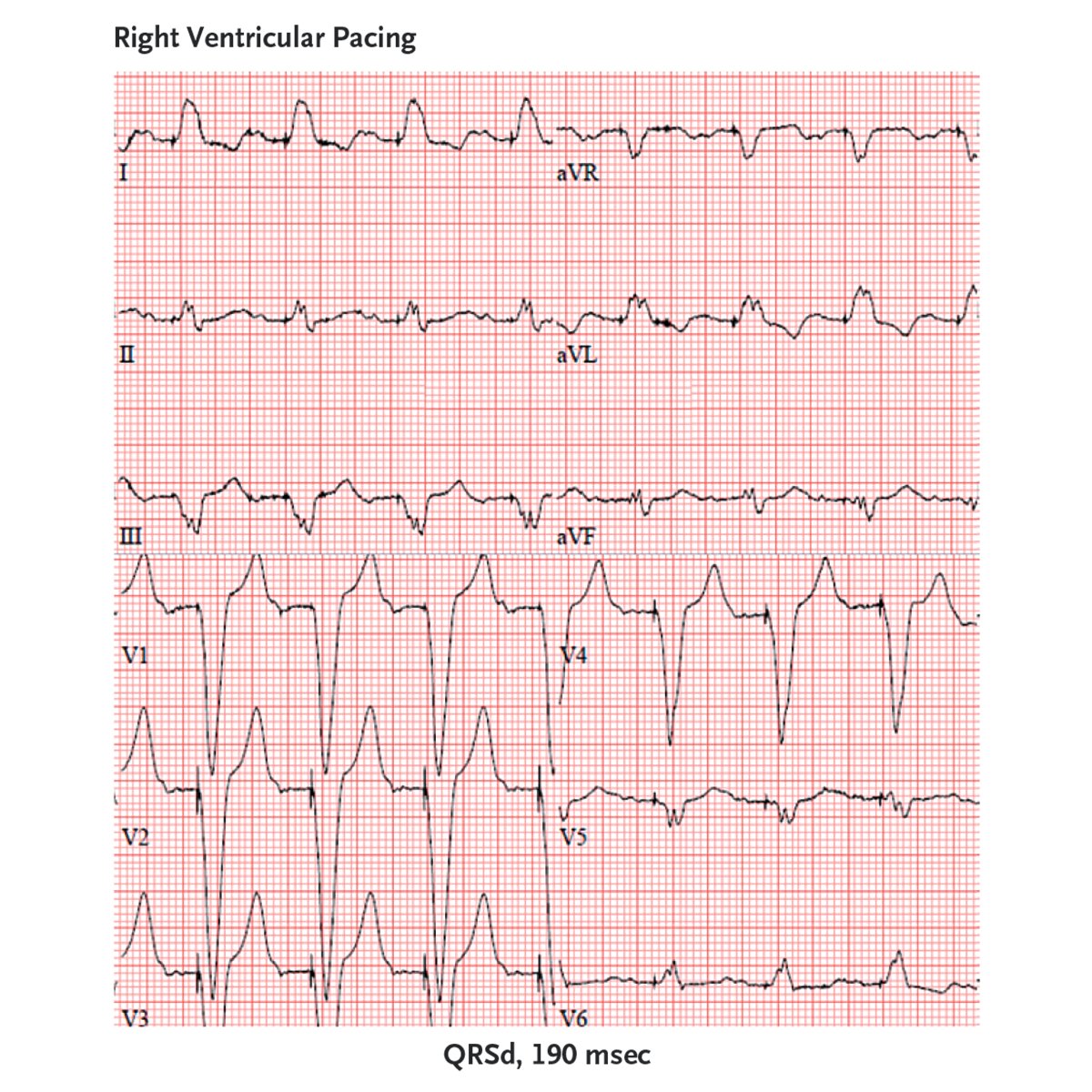
A new review summarizes cardiac physiologic pacing for heart failure, highlighting benefits of biventricular pacing and emerging evidence for His-bundle and left bundle-branch pacing to improve function and outcomes.
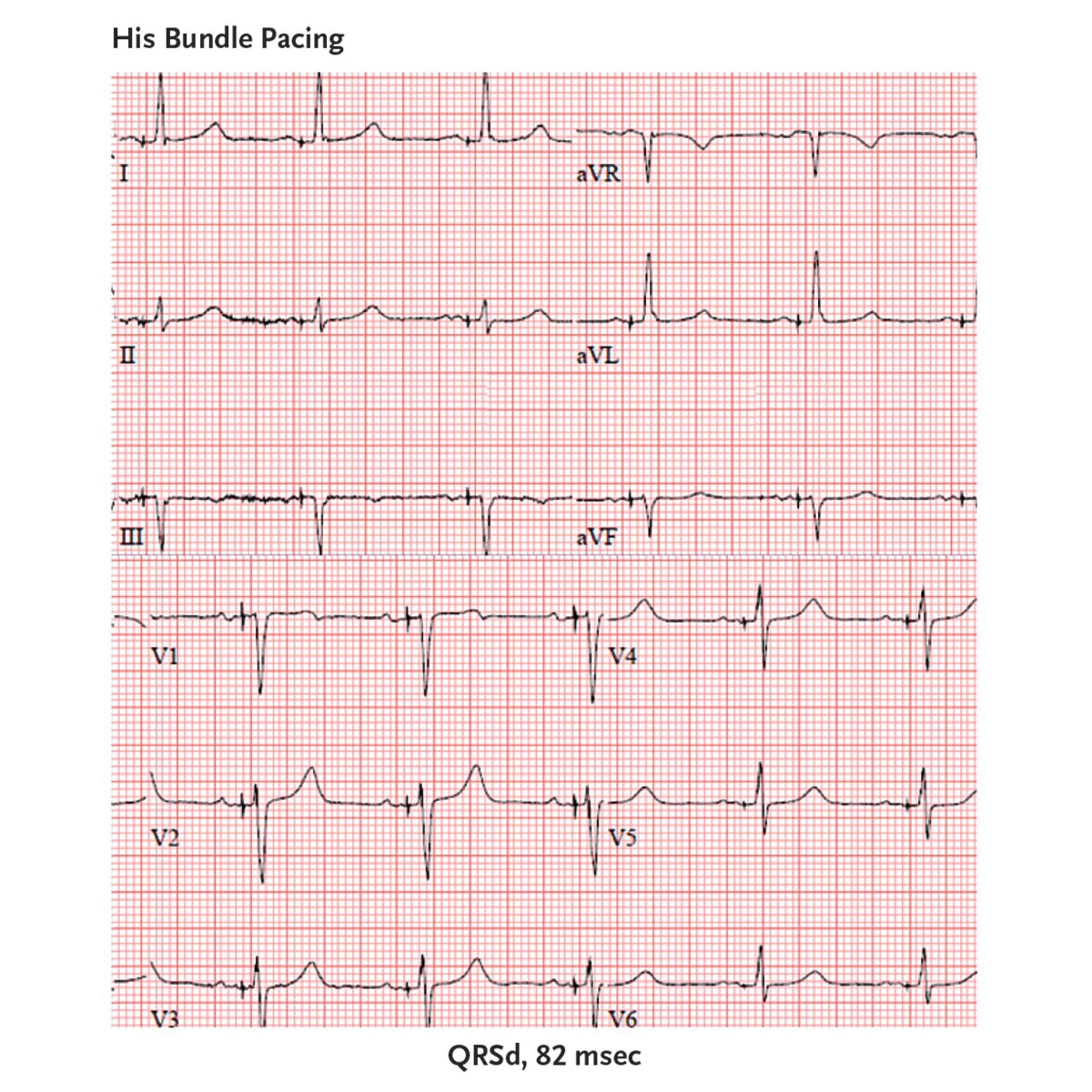
Figure 2 from the review shows His bundle pacing on electrocardiogram (ECG).
Panel A shows an ECG of right ventricular pacing with a paced QRS duration (QRSd) of 190 msec. In this patient, who had complete heart block at baseline and a left ventricular ejection fraction (LVEF) of 60 to 65%, pacing-induced cardiomyopathy developed, leading to a LVEF of 35 to 40% with 100% right ventricular pacing.
Panel B shows an ECG of His bundle pacing with a paced QRSd of 82 msec. Upgrading the patient’s pacemaker to a His bundle pacemaker improved the LVEF to a range of 60 to 65%.
Learn more in the Review Article “Physiologic Pacing in Heart Failure” by @MihailChelu, MD, PhD, Jeanne E. Poole, MD, and Kenneth A. Ellenbogen, MD (@KennethEllenbo1), from the Baylor College of Medicine (@bcmhouston), University of Washington (@UW), and Virginia Commonwealth University School of Medicine: https://t.co/RuLZCpYUXn
𝗛𝗶𝗽𝗽𝗼𝗰𝗿𝗮𝘁𝗲𝘀 𝘄𝗮𝘀 𝗮𝗻 𝗜𝗠𝗚:
If medicine has a father, it is Hippocrates, and by today’s definition, he would be an International Medical Graduate.
He trained outside where many of his students later practiced, crossed borders to teach and heal, and laid the ethical foundation of medicine that we still follow centuries later. Medicine, from its very beginning, has advanced because knowledge traveled across regions, cultures, and nations.
📌 Powerful reminder:
IMGs are not outsiders to medicine.
IMGs are how medicine began.
Today, International Medical Graduates continue that legacy, serving in underserved areas, filling workforce shortages, advancing research, and caring for patients when and where they are needed most.
Your degree’s geography does not define your worth.
Your skill, dedication, and compassion do.
From Hippocrates to today’s IMGs, the heart of medicine has always been global.
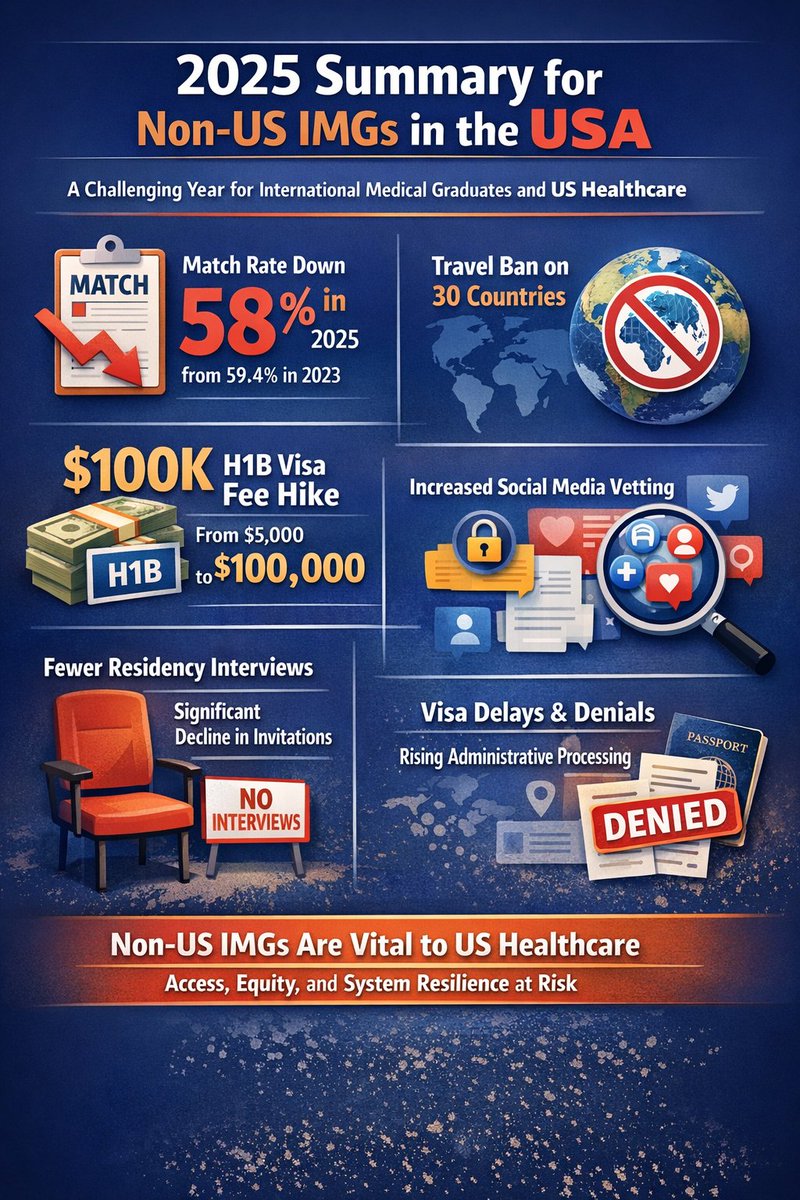
𝟮𝟬𝟮𝟱 𝗦𝘂𝗺𝗺𝗮𝗿𝘆 𝗳𝗼𝗿 𝗡𝗼𝗻-𝗨𝗦 𝗜𝗠𝗚𝘀:
Overall, 2025 has not been a favorable year for Non US International Medical Graduates or for the US healthcare system that relies heavily on them.
🔶 The Match Rate for Non US IMGs has continued to decline, dropping from 59.4 percent in 2023 to approximately 58 percent in 2025, reversing years of slow progress.
🔷 New travel restrictions affecting IMGs from nearly 30 countries have created uncertainty, delays, and emotional and financial stress for thousands of applicants and trainees.
🔶 The H1B visa fee increase from roughly $5,000 to nearly $100,000 has placed an unprecedented financial burden on physicians and healthcare institutions, particularly safety net and underserved hospitals.
🔷 Expanded social media and background vetting has increased the risk of administrative processing, prolonged visa delays, and outright denials, often without transparency.
🔶 As a combined result of travel bans, visa cost escalation, and intensified scrutiny, there has been a noticeable and concerning decline in the number of residency interviews received by IMGs across multiple specialties.
✨ Non US IMGs remain essential to the US healthcare workforce, especially in underserved and rural areas. Policies that restrict their entry and training ultimately harm patient access, healthcare equity, and system resilience.
🚨 2025 should serve as a warning, not a precedent 🚨
#Match2026 #MedTwitter #MedEd #HappyNewYear2026 #USMLE
📋The origins of the medical licensing exam in the U.S. date back to the 19th century. Licensing exams originated as state-developed assessments. A direct line can be traced from these exams to the USMLE® program. These questions are from a Virginia licensing exam in 1920.
Happy to have passed the USMLE Step 2 CK. I am excited for what lies ahead and look forward to connecting with other aspirants and mentors.
If I can do it, so can you.
Special thanks to @mehlman_medical , @jasonryanmd, @SeeFisch, and the wonderful #MedTwitter community.