Introducing Claude Fable 5: a Mythos-class model that we’ve made safe for general use.
Its capabilities exceed those of any model we’ve ever made generally available.
Ahead of his prediction -> Cloudflare CEO Matthew Prince says agentic traffic is "growing so fast that bots have now passed human traffic online for the first time
https://t.co/03pDmDKaq5
Yeah, no brand mention tracking, no query fan-outs, etc.
This new Google AI search report won’t be super valuable in its current form IMO.
Especially given that there seems to be a growing disconnect between which URLs Google is citing and which brands it’s recommending in AI responses.
In the last 6 months at @Ahrefs, we analyzed over 1 billion data points across 14 studies. Here's what we learned about AI search optimization:
1) "Best X" blog listicles are the single most prominent content format cited by AI chatbots. They make up 43.8% of all page types cited by ChatGPT specifically.
2) 67% of ChatGPT's top 1,000 citations come from sources marketers can't influence: Wikipedia (29.7%), homepages (23.8%), app stores (6.6%). Only 32.3% are influenceable content like educational pages, reviews, news, and blog posts.
3) 28.3% of ChatGPT's most-cited pages have zero Google organic visibility. These pages get cited repeatedly by ChatGPT despite not ranking in Google at all. A completely separate discovery layer.
4) ChatGPT only cites about 50% of the URLs it retrieves. It fetches dozens of pages per query but uses half as background context without attribution. This means that being retrieved and being cited are very different things.
5) Adding schema markup had zero meaningful impact on AI citations. AI Overviews actually dipped −4.6%, while AI Mode (+2.4%) and ChatGPT (+2.2%) showed changes indistinguishable from zero.
6) YouTube mentions have the highest correlation (0.737) with AI brand visibility out of all the factors we studied (including all the conventional SEO metrics like backlinks, page count, DR, etc). This held true for both Google-owned and OpenAI products.
7) AI Overviews reduce clicks to the #1 result by 58%. That’s up from 34.5% just 10 months earlier. The trend is accelerating.
8) 99.9% of AI Overviews appear on informational intent queries. Transactional, navigational, and local searches are almost entirely AIO-free. Shopping triggers AIOs just 3.2% of the time.
9) For a given search query, Google’s AI Mode and AI Overviews reach the same conclusions 86% of the time — but cite almost entirely different sources (only 13.7% citation overlap).
10) AI Overviews change every 2.15 days on average, with 70% of content differing between consecutive observations. But semantic similarity stays at 0.95. The words, sources, and entities constantly shuffle, but the actual meaning barely moves.
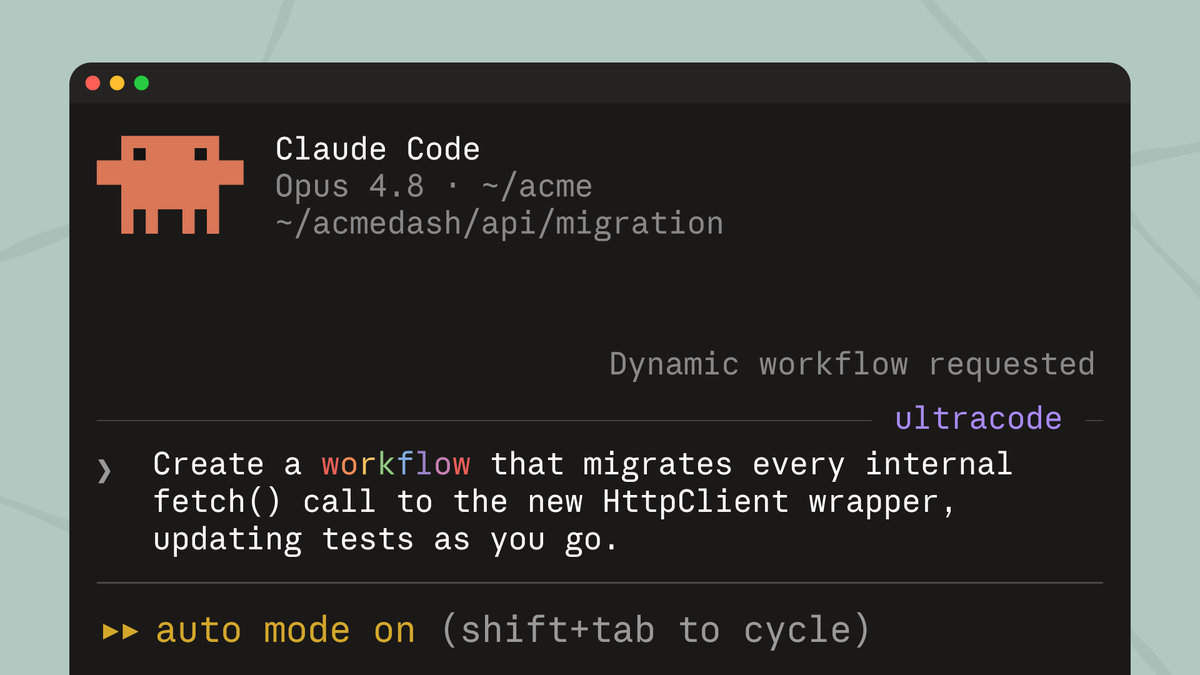
New in Claude Code (research preview): dynamic workflows.
Claude writes an orchestration script on the fly, then spins up a large fleet of coordinated subagents in parallel to take on your most complex tasks.
Use the word "workflow" in a prompt to get started.
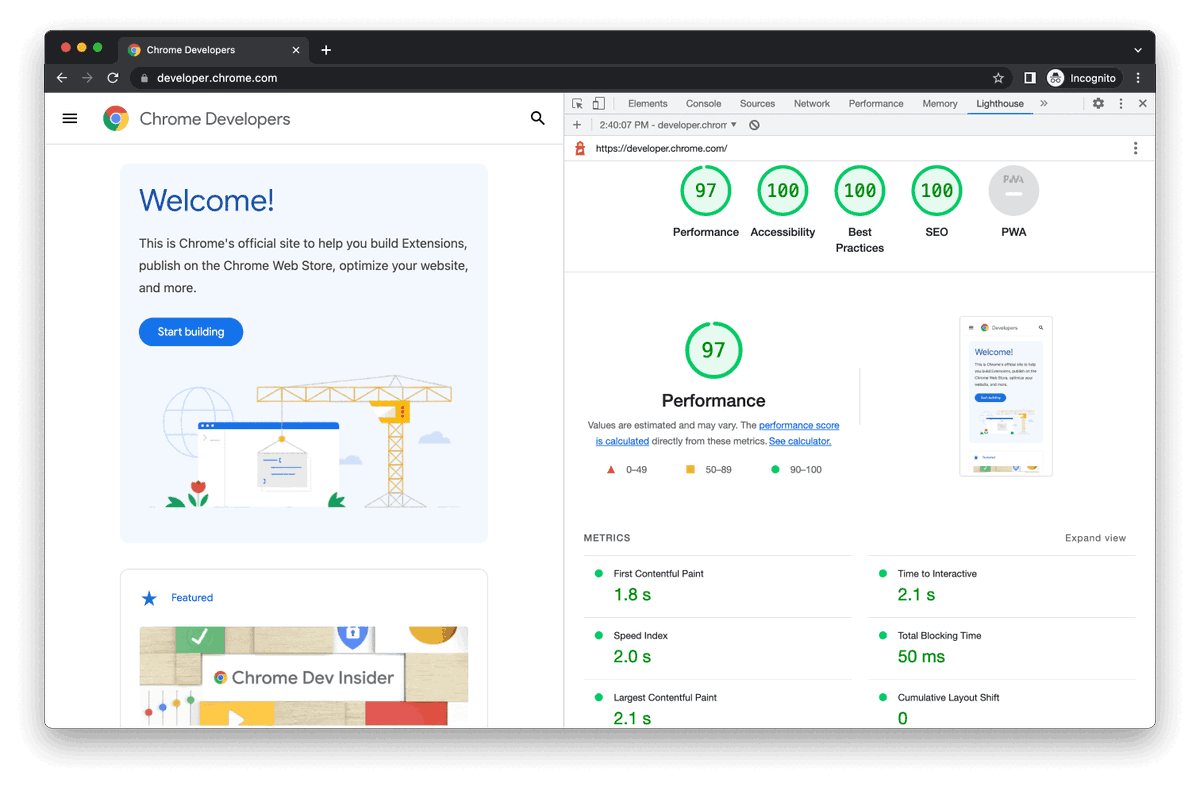
Prepare your site for AI agent interaction with Lighthouse → https://t.co/5myVWdLZd9
If you want AI agents to actually navigate your site properly, the new experimental audit in Lighthouse lets you see:
☀️ Discoverability for AI agents
⚡ WebMCP integration
👀 AI accessibility
#GoogleIO
Today, @editframe emerges from stealth. Agents need video.
Editframe Agent Skills:
npm create @editframe@latest
Just prompt Claude Code, Cursor, or Codex and get a working video or a full interactive GUI.
This video was created just by prompting 👇
@ReplitSupport@Replit Thanks. I've done all of that. This happens on every project on every chat I have. I always use plan mode.
I'm always specific. I've opened several support tickets and have shown clear examples of BS charges and nobody wants to help other than to keep giving me the same tips
Did xAI just mass-murder the entire voice AI industry? 🤯
Grok just launched two voice APIs. Speech-to-Text and Text-to-Speech.
Built on the same stack powering Tesla cars and Starlink support.
And priced at 10x cheaper than ElevenLabs.
Speech-to-Text: $0.10/hr batch. $0.20/hr streaming.
Text-to-Speech: $4.20 per million characters.
25+ languages. Real-time streaming. Speaker diarization.
Already outperforming ElevenLabs, Deepgram, and AssemblyAI on word error rate.
TTS ships with expressive tags like [laugh], [sigh], <whisper>, <emphasis>.
Voices that don't sound like robots reading a script.
ElevenLabs spent years building a voice AI company.
xAI built voice AI for cars and satellites.
Today, we are excited to introduce https://t.co/F5gmrAYGFP — a new tool to help site owners understand how they can make their sites optimized for agents. https://t.co/2xAeZlX5AI
OK, I’ve had it with #replit ripping me off. Somebody needs to do something about this. 30% + my of credits were consumed by error-correction cycles that the agent caused. It is like paying a contractor the same hourly rate to fix their own mistakes as to do new work.