@mazit@NatureComms Very excited to see my manuscript published in @NatureComms about our #medicinalchemistry efforts to develop inhibitors of ProRS for #malaria. This work is supported by the development of a single step, homogeneous TR-FRET assay. Truly grateful to @Mazit and all our coauthors
@mazit@NatureComms Very excited to see my manuscript published in @NatureComms about our #medicinalchemistry efforts to develop inhibitors of ProRS for #malaria. This work is supported by the development of a single step, homogeneous TR-FRET assay. Truly grateful to @Mazit and all our coauthors
What an amazing opportunity to be able to spearhead this project! Really enabled by the collaborative NIBR environment, a unique framework from the innovation postdoc fellowship, and top notch scientific mentorship.
Very exciting work by @Chemist_Payne and @mazit to combine #CoraFluor and nanobodies to make TR-FRET even better. I’ve personally used this toolbox for my own unpublished work and can vouch for just how easy this is to use and that it worked very well.
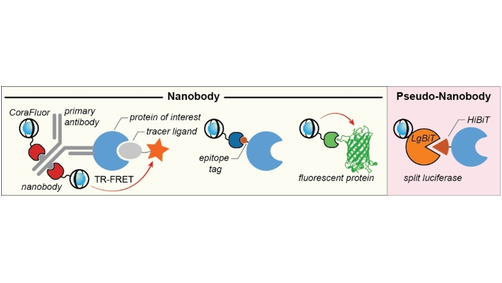
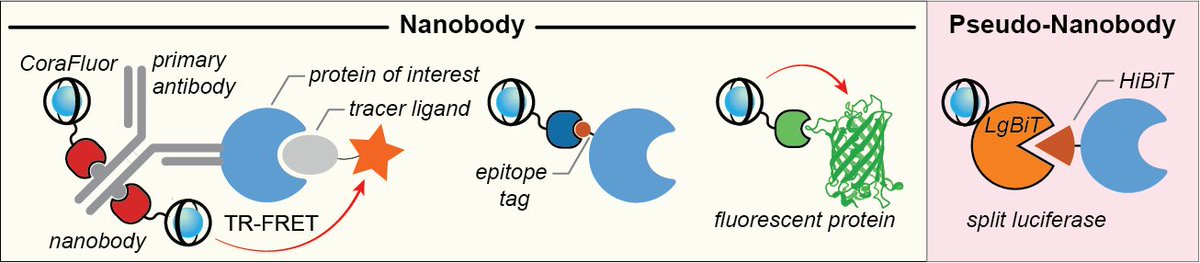
In our latest work @AnalysisSensing, we develop a highly versatile TR-FRET assay toolbox using #CoraFluor labeled nanobodies. Pick your favorite flavor and make TR-FRET easier than ever. @mazit (1/n)
https://t.co/Wa7jHh0hOn
Online now! A direct high-throughput protein quantification strategy facilitates discovery and characterization of a celastrol-derived BRD4 degrader https://t.co/g0eS6a5VNa #chembiol
Very happy to share the final version of our manuscript in @CellChemBiol. We developed a new assay strategy to both quantify target proteins & measure TE of small molecules - all using endogenous protein in lysates from unmodified cell lines. Oh, and it only takes 1 h ⌚️✅ (1/3)
Are you working in TPD/#PROTAC-development and would welcome a simpler, faster, higher throughput way to quantify the abundance of endogenous target proteins directly in cell lysates, while getting a sensitive target engagement assay for ligand characterization for🆓?
Congrats to @Chemist_Payne and @mazit for revealing the isoform and corepressor complex selectivity of HDAC1/2 inhibitors. Our nano-secondary alpaca anti-rabbit IgG fused to CoraFluor and Alexa Fluor® dyes was employed in TR-FRET measurements. https://t.co/XvTzTzHrEL
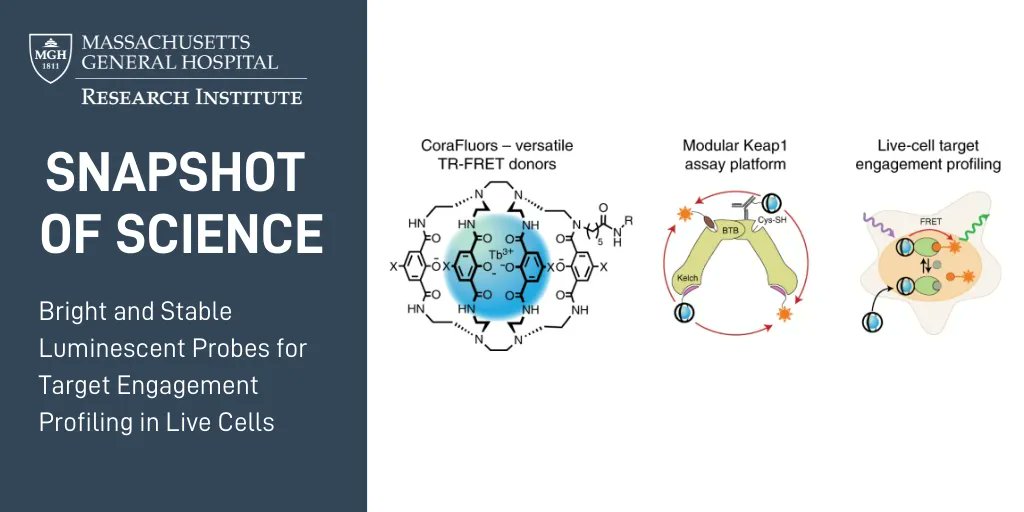
Researchers from @MGHCSB@broadinstitute and colleagues have developed we CoraFluors, a suite of novel luminescent molecules optimized for biological applications including imaging studies https://t.co/yz2dOSI9Za
On @biorxivpreprint we report a direct TR-FRET-based protein quantification strategy (<1 h from lysis➡️read) in unmodified cell lines. If you're into PROTACs, and you hate running Westerns, check it out! Mini-thread: (1/n)
https://t.co/GMJ92QFW4V
This post is not for you if you a) like running Westerns or b) are not interested in targeted protein degradation. However, if you dig PROTACs and/or welcome a fast, easy and accurate way to quantify endogenous target proteins directly in lysate, keep reading. #nomorewesterns 1/n
What if I told you that much of what we thought to know about the isoform selectivity of HDAC1/2-inhibitors is likely not true 🤔? What if told you that we have (once again) been deceived by static biochemical assays and that reality is more “complex”💡? See below a thread: 1/n
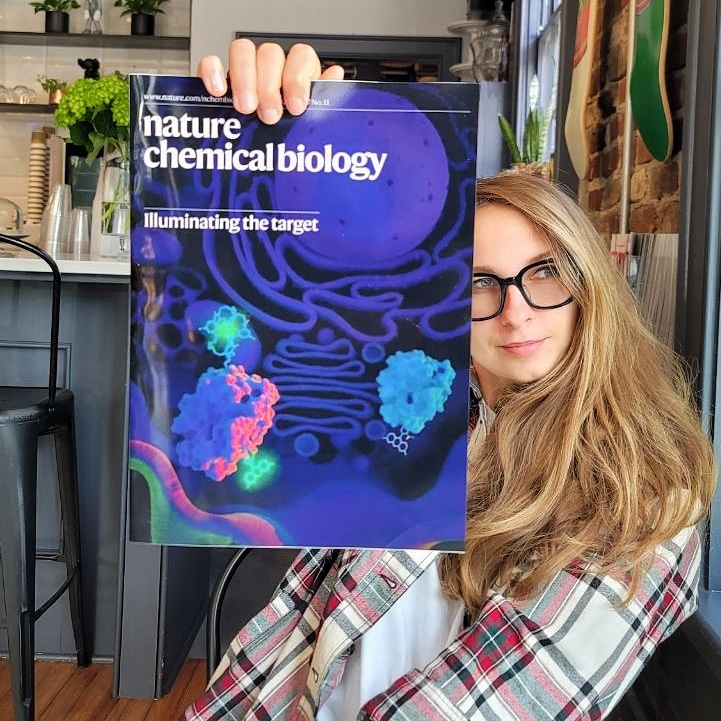
New cover from our studio! #sciart
The pace of progress in biomedical research directly depends on techniques that enable the quantitative characterization of interactions between proteins with each other or with their small molecule ligands. 1/4