Cardiovascular disease accounts for 32% of deaths
We now have a twice-yearly injection that cuts LDL cholesterol by ~50% and reduces cardiovascular events.
Between this, GLP-1s, and AI innovation the next decade is going to be remarkable for human longevity.
@BenBikmanPhD@donlayman LDL-C (or more accurately apoB) is causal of ASCVD. HDL-C (more specifically a low HDL-C) is a potential marker of insulin resistance/metabolic health, but indirect nonetheless.
LDL-C matters and “normal” vs biologically optimal are not the same thing.
My view on this NVDA fiasco: The board should have put Jensen on leave and let the investigation play out. Instead they pushed him out before all the facts were in and look silly reversing course a week later. Either they were wrong the first time or they're wrong now.
Everyone is so quick to judge and point fingers. Patience is an undervalued asset these days and in this case impatience is proving an expensive lesson.
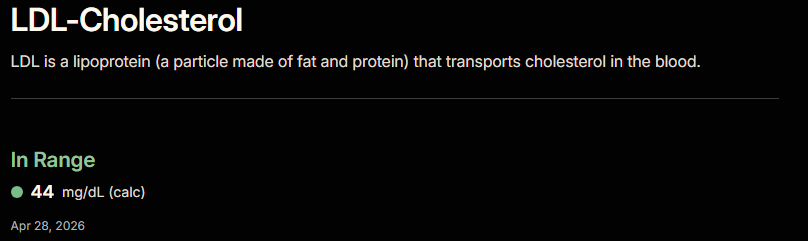
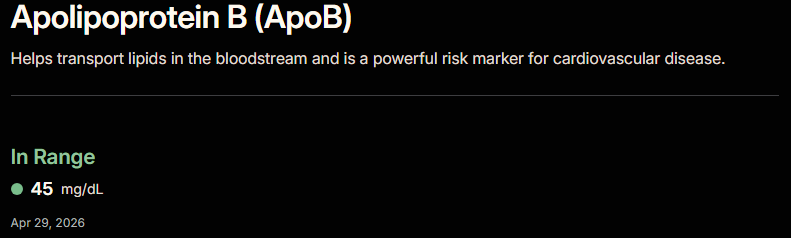
My LDL-C hovered around 75-95 mg/dl (ApoB was similar range) with a high fiber / low SF diet (part of an overall higher protein Mediterranean diet diet). Took the Boston Health cholesterol balance test & was a hyper-absorber so added ezetimibe monotherapy (preventively). LDL-C/ApoB now sit ~45-50 mg/dl.
“War, mass unemployment, financial collapse, and pandemic. These are the moments that bring this size of deficit. Today, though? GDP is growing and unemployment is reasonable. So why all this borrowing?”
https://t.co/OmKDq2uCka
“Down the road, we’ll look back at this as an important moment, or a period we forget. Either way, there’ll be lessons learned upon reflection.”
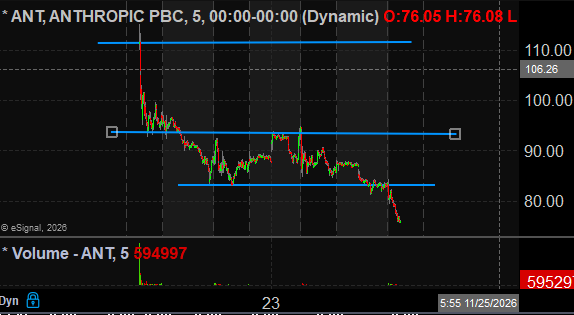
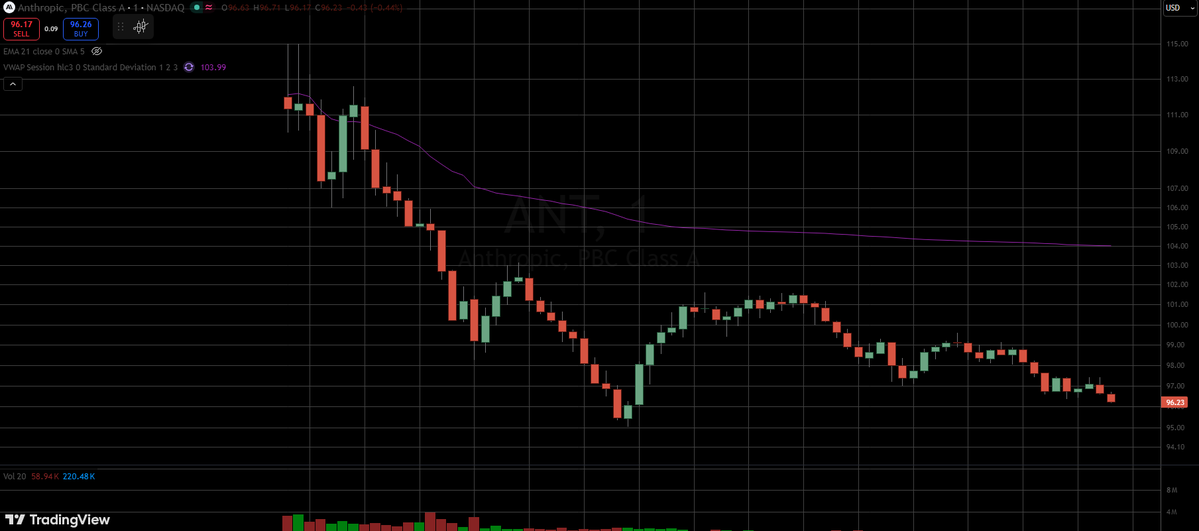
Dear Diary, November 2026 has been brutal (via @SamRo)
https://t.co/q51RQHw6a4
Pandemic of Meta-Ignorance.
This is what I learnt from my weekend reading on Dunning-Kruger effect.
We’ve all done it: seen a post on something outside our expertise and felt the pull to weigh in anyway.
Turns out there’s real psychology behind why. David Dunning (of the Dunning-Kruger effect) calls it “meta-ignorance” — we’re usually blind to the edges of our own knowledge. When we don’t have real expertise, we unconsciously reach for adjacent, general knowledge that feels relevant, stitch it together, and mistake it for an informed opinion.
The sharper finding is the “double burden of incompetence”: the same gaps that make us wrong are usually the gaps that stop us from seeing we’re wrong. In one classic study, people who actually scored in the 12th percentile rated their own performance at the 60th — off by nearly 50 points, not a little. (And those who scored in the ~90th percentile rated their own performance at ~78 percentile - underestimating their skill).
It’s structural: the skill needed to give a good answer is the same skill needed to judge one. Missing the first usually means missing the second too — which means anyone can fall into this, on topics outside their own lane, experts included.
Social media rewards instant takes. Worth remembering that instant confidence and instant accuracy aren’t the same thing — and the gap is often invisible from the inside.
(And yes, I study circadian rhythms and related topics — not psychology. So consider this post itself a live demonstration of the phenomenon. )
https://t.co/J71S2KW0S6
This narrative review finds that the evidence overall suggests that progressive resistance training combined with higher protein intake, typically ~1.6-2.4 g/kg/day and higher relative intakes during energy restriction or leanness, is likely to be the most consistent strategy for body recomposition.