What is the minimally effective way to construct a reservoir computer that can learn chaotic dynamics?
In my new paper, I demonstrate that deterministically constructed reservoirs with minimal topologies (MESNs) consistently outperform conventional random-initialized ESNs.
1/2
Storage and selection of multiple chaotic attractors in minimal reservoir computers
Francesco Martinuzzi, Holger Kantz
https://t.co/KcyFZNmUce [𝚗𝚕𝚒𝚗.𝙲𝙳 𝚌𝚜.𝙻𝙶]
Why it matters:
- More reliable than random-initialized models
- Lower tuning overhead, less trial and error
- Stronger stability across runs
📄 Read more: https://t.co/p6waQBYwTF
2/2
What is the minimally effective way to construct a reservoir computer that can learn chaotic dynamics?
In my new paper, I demonstrate that deterministically constructed reservoirs with minimal topologies (MESNs) consistently outperform conventional random-initialized ESNs.
1/2
Can time series #FoundationModels like Chronos zero-shot generalize to unseen #DynamicalSystems (DS)?
No, they cannot.
But *DynaMix* can, the first FM based on principles of DS reconstruction, capturing the long-term evolution of out-of-domain DS: https://t.co/fL1CLATTpB
(1/6)
New blog post: How chaotic is chaos? How some AI for Science / SciML papers are overstating accuracy claims.
https://t.co/SQvbZ3T8C8
#julialang#sciml#chaos#ergodic#ai4science
⭕️ This week @Sca_DS.
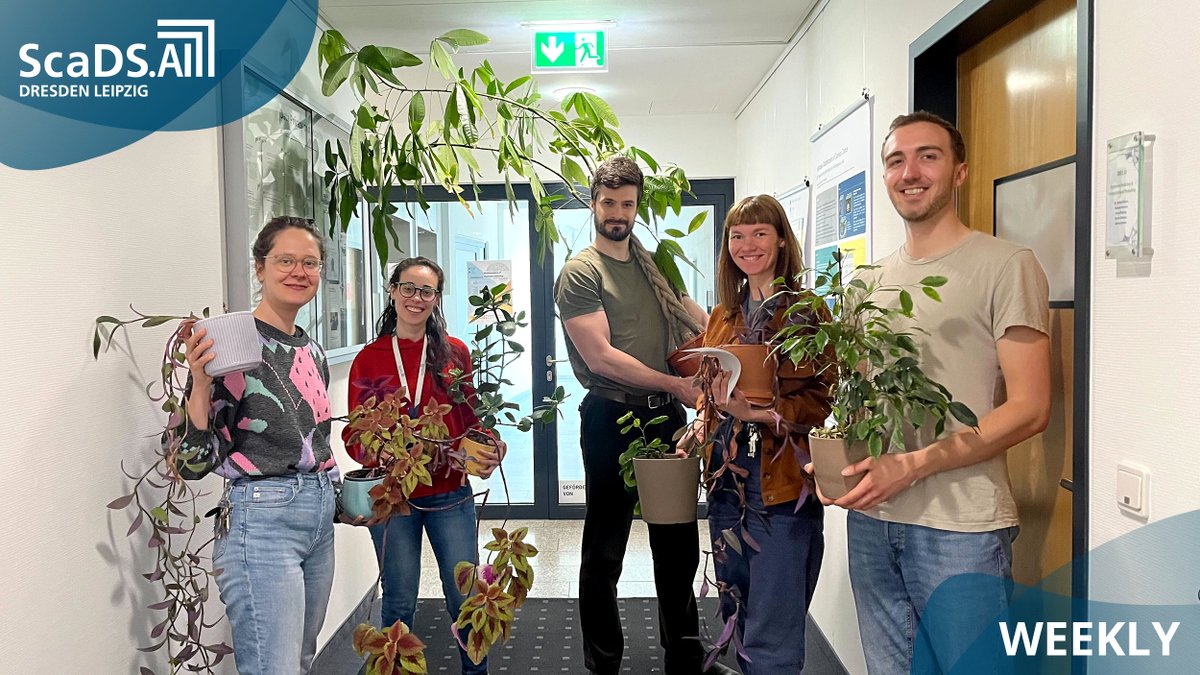
Our scientists (and their green colleagues🍃) are moving up. In recent years, @Sca_DS has grown rapidly. With the additional space on the 5th floor, our center in Leipzig has now more than doubled in size. This week the move was mostly completed. #RoomToGrow
🚨 New paper out in @NatureComms
We review how #AI is transforming modeling & understanding extreme weather & climate events like floods, heatwaves, and wildfires📷
🔗Read it! https://t.co/WJWw93wROf
🚀 Call for Papers 🚀
Special Session: Reservoir Computing in the Deep Learning Era: Theory, Models, Applications, and Hardware
📍 IJCNN 2025 | 30 June - 5 July 2025 | Rome, Italy
🔗 https://t.co/KQwLoyMLoz
📅 Submission Deadline: January 30, 2025 (extended)
Generating cat videos is nice, but what if you could tackle real scientific problems with the same methods? 🧪🌌
Introducing The Well: 16 datasets (15TB) for Machine Learning, from astrophysics to fluid dynamics and biology.
🐙: https://t.co/PMAHK7i2lG
📜: https://t.co/6XLJA5lJnI
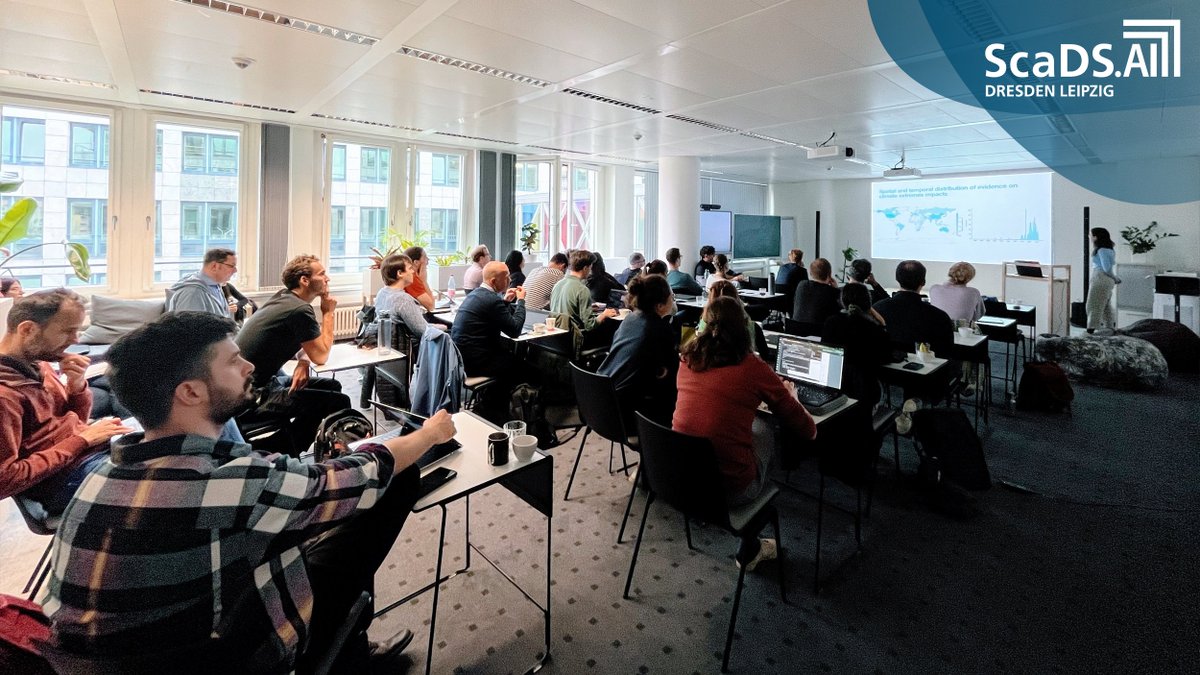
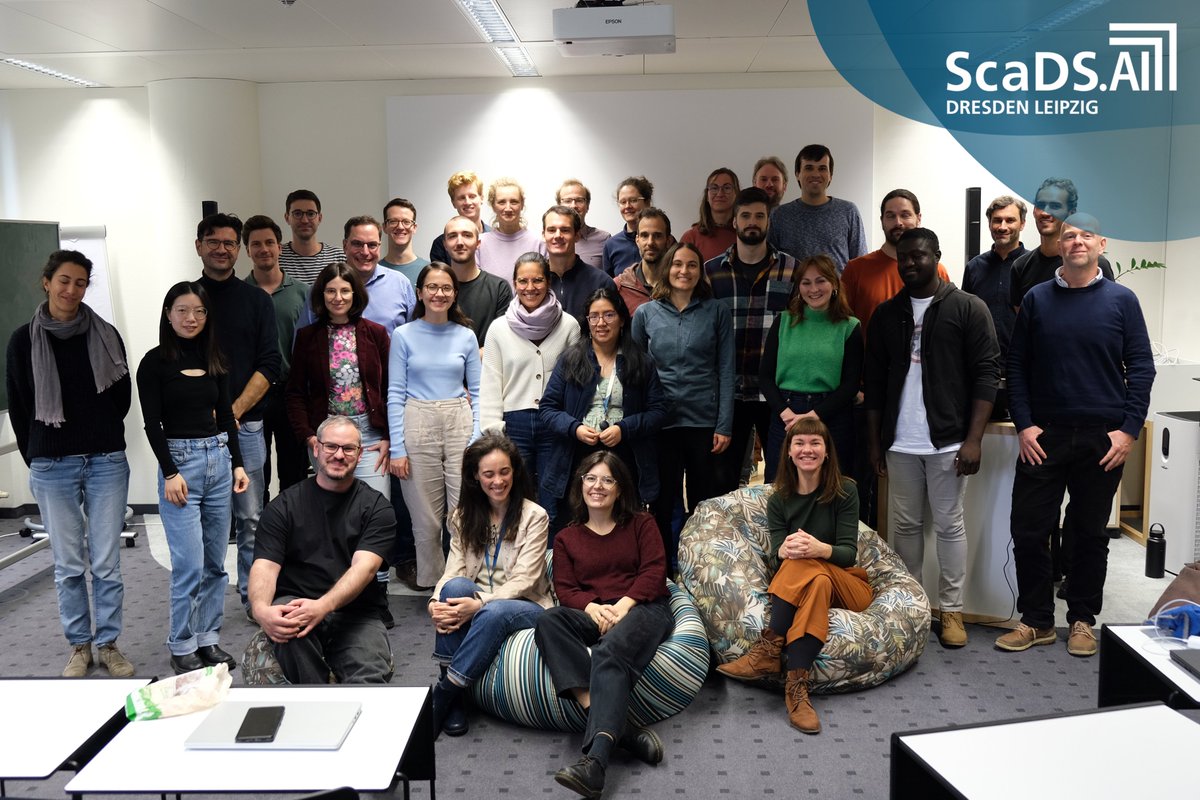
🌳On Wednesday, the 3rd annual Topic Area Meeting of the Earth and Environmental Sciences @ScaDS_AI took place. With great success!
🌍Throughout the day, more than 30 participants discussed their research across environmental sensor types, scales and ML architectures. #AppliedAI
This isn't the actual Lorenz attractor: it's a prediction made by Echo State Networks after being trained for only ~1 second. To know more about the work done in the first #GSoC month with #JuliaLang and #SciML head over to https://t.co/su1RuKtOX2
To get 2 reviewers per paper at @EnvDataScience, I have to invite >20. Meanwhile, I get daily review requests I have to decline—already committed to project and tenure reviews + journal duties. So I can't blame anyone, but how do we fix this unsustainable system??? #PeerReview
🔥New paper🔥
A sensitivity analysis of cellular automata and heterogeneous topology networks: partially-local CA and homogeneous homogeneous random boolean networks
https://t.co/HmajcJsUB0
Led by @TomEivindGlover , w/ @Stormjotne, @MartinuzziFra, P. Lind & me
@hiofnorge
🔥New preprint🔥
"A Sensitivity Analysis of Cellular Automata and Heterogeneous Topology Networks: Partially-Local CA and Homogeneous Homogeneous RBNs"
https://t.co/jTPuuEqHho
led by @TomEivindGlover, with @Stormjotne, @MartinuzziFra, P. Lind and myself






![SciencePapers's tweet photo. Storage and selection of multiple chaotic attractors in minimal reservoir computers
Francesco Martinuzzi, Holger Kantz
https://t.co/KcyFZNmUce [𝚗𝚕𝚒𝚗.𝙲𝙳 𝚌𝚜.𝙻𝙶] https://t.co/wTjMXHzyRT](https://pbs.twimg.com/media/HDl0utyXEAA998R.png)