As the news cycle moves on, please don't lose sight of what the NAEP results mean for our nation’s students. District and school leaders must ACT with urgency—address gaps, support teachers, double down on what works, and use data to drive progress.
🎙️LISTEN to a special episode of the ACT Ready for Work podcast featuring a panel discussion on innovative strategies and real world examples of how partnerships between industries, #edu, and government are reshaping #workforce development. https://t.co/xgIwHd4XIA
Joe T. Wood, special projects coordinator at Hardeman County Schools in Tennessee spoke with ACT at the 2023 Workforce Summit about how skills-based hiring addresses changing workforce demands.
💡 When employers eliminate people with records from their pool of candidates, they are cutting out 1/3 of the U.S. population and missing out on more than 70 million people who have the skills, talent, and drive to be successful in the workplace. #SecondChanceMonth#fairchance
Excited to share the news that past Wenner-Gren grantee Emilie Le Febvre's book, "Photography and Making Bedouin Histories in the Naqab, 1906-2013" is now available! https://t.co/wkYXmMnK9b..
VIDEO: In a new video blog post, watch as Joe T. Wood talks with us about the opportunity he sees in what he calls “the fourth industrial revolution,” for how skills-based hiring can address changing #workforce demands. https://t.co/ynIqt1pnso
For most people, a college education is viewed as a reliable pathway to opportunity. However, college is not a guarantee of labor market success. And today in partnership with @BrningGlsInst we released Talent Disrupted: College Graduates, Underemployment, and the Way Forward.
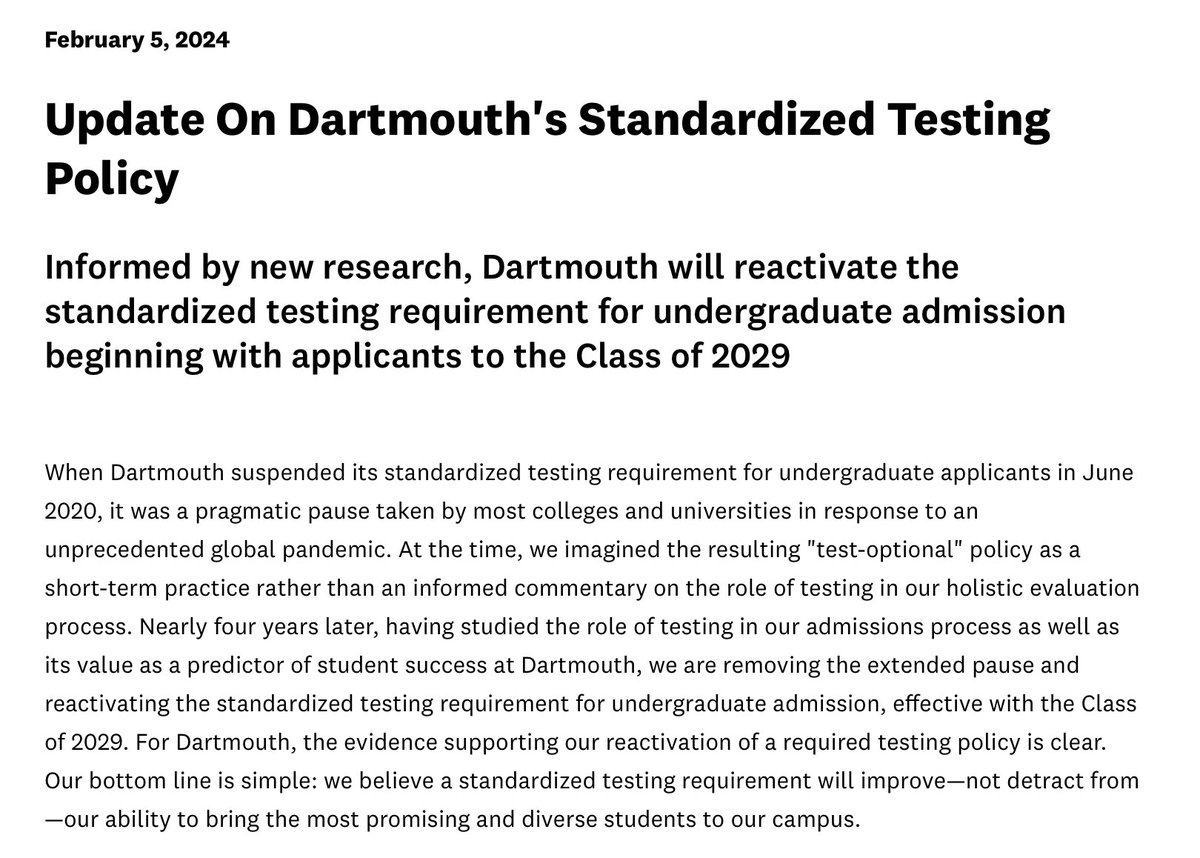
NEW: Dartmouth College is the first Ivy League school to reinstitute a standardized testing requirement for admissions:
“Standardized testing requirement will improve—not detract from—our ability to bring the most promising and diverse students to our campus.”
ACT is proud to collaborate with @OpptyatWork to better understand the experiences of more than 70 million American workers who are Skilled Through Alternative Routes besides a bachelor’s degree, or STARs. https://t.co/9RQnoQwVXU #HireSTARs#WorkforceDevelopment
How can institutions ensure that students are able to earn credit for learning done outside the classroom? @CCAPrezYolanda and @CBGuidry say proactive communication and student-friendly policies are key. Learn more on our blog: https://t.co/DdMkqQ3tUB
#Education#Postsecondary
Persistent talent shortages have put state and regional talent pipelines at the forefront of discussions about corporate site selection. Join @ACT for this five-part webinar series, Driving Economic Growth with CTE and Workforce Policy Innovation
https://t.co/naGqqPH5pK
🚨LAW Alert!
Do you know any #communitycollege students interested in a career in politics or public service? Applications are now open for the Summer 2024 White House Internship Program! This is a PAID opportunity.
Read the application guidelines here:
https://t.co/HDSDLXbwRe
5 days left to apply for two tenure-track jobs at Rice! (Oct 1)
Both are open area, with a hope to find people who will bridge across our 4 main areas: I/O, Human Factors, Health, and Cog/Affective Neuro.
Quant Methods:
https://t.co/Uv7CuMvvcn
Applied:
https://t.co/Xp77YtzxFP
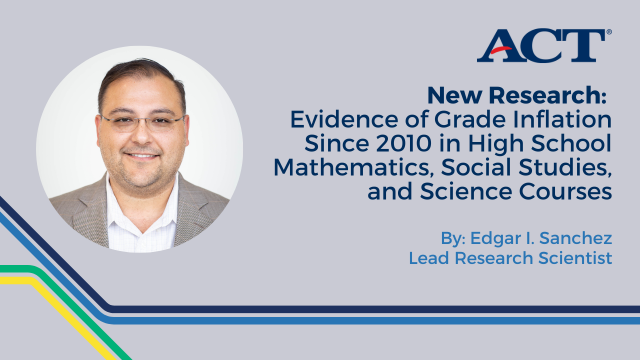
ACT research: “For all subjects examined … the percentage of #students assigned B and C grades declined, while the number of students who were assigned A grades increased. These higher grades were not associated with improved achievement on the ACT exam.” https://t.co/yUTNRgWMVF
A young statistician saved their lives.
His insight (and how it can change yours):
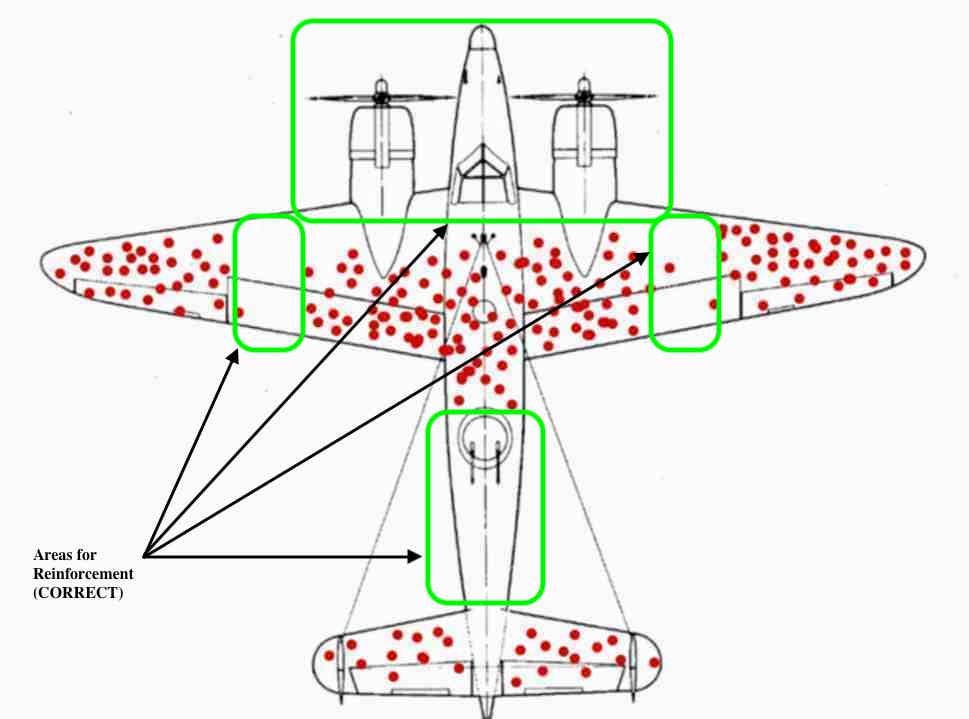
During World War II, the U.S. wanted to add reinforcement armor to specific areas of its planes.
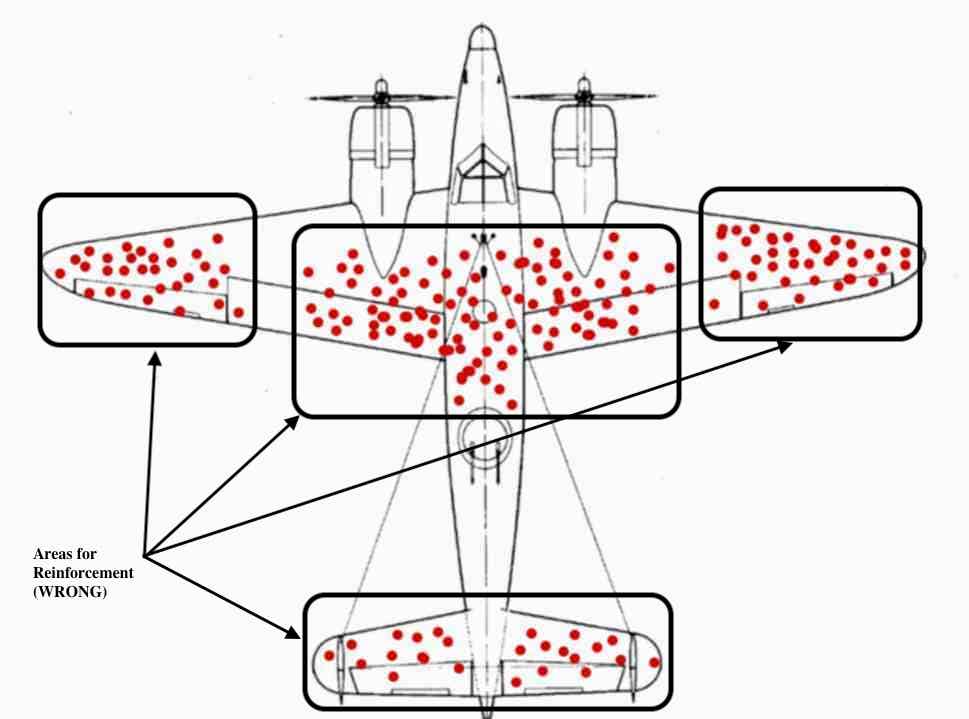
Analysts examined returning bombers and plotted the bullet holes and damage on them (as in the image below).
Based on this analysis, they came to the conclusion that adding armor to the tail, body, and wings would improve their odds of survival.
But a young statistician named Abraham Wald noted that this would be a tragic mistake.
By only plotting data on the planes that returned, they were systematically omitting the data on a critical, informative subset:
The planes that were damaged and unable to return.
Abraham Wald recognized a key fact:
• "Seen" planes had sustained damage that was survivable.
• "Unseen" planes had sustained damage that was not survivable.
Wald concluded that armor should be added to the *unharmed* regions of the returning planes (the areas without bullet holes on the image below).
His profound logic:
Where the survivors were unharmed was actually where the planes were most vulnerable.
Based on his insight, the military reinforced the engine and other vulnerable parts, significantly improving the safety of the crews during combat and saving thousands of lives.
Abraham Wald had identified a cognitive bias called "Survivorship Bias":
The error resulting from systematically focusing on survivors (successes) and ignoring casualties (failures) that causes us to miss the true base rates of survival (the actual probability of success) and arrive at flawed conclusions.
We see examples of Survivorship Bias all around us:
1. We read books on the common traits of successful people, but fail to consider all of the unsuccessful people who possessed those same traits.
2. We applaud the belief when we hear that an entrepreneur took out a second mortgage and succeeded, but fail to consider all of the entrepreneurs who did the same and went bankrupt.
3. We study the cultural strategies of the most successful companies, but fail to consider all of the companies that followed those same strategies and fell apart.
When we fail to consider the range of outcomes and the hidden evidence, we develop a skewed (and often incorrect) view of reality.
It cannot be avoided altogether, because the vast majority of books and history are written by and about the survivors and victors, but wherever possible, consider the unseen evidence.
Remember: What is unseen often has just as much value as what is seen.
***
If you enjoyed this or learned something, follow me @SahilBloom for more in future!
The first pandemic-influenced data from the Progress in International Reading Literacy Study (PIRLS) test are in. Unsurprisingly, an initial analysis says the news is bad. https://t.co/yIbgDz7WEL
Recent ACT research found grade inflation in all subjects, especially math. Read the study by Dr. Edgar I. Sanchez and learn how grades are becoming a less reliable measure of a student’s academic performance and how prepared they are for future endeavors. https://t.co/yUTNRgWMVF