How strong is strong enough?
When most people think about being strong, they probably picture an athlete or someone lifting a ridiculous amount of weight.
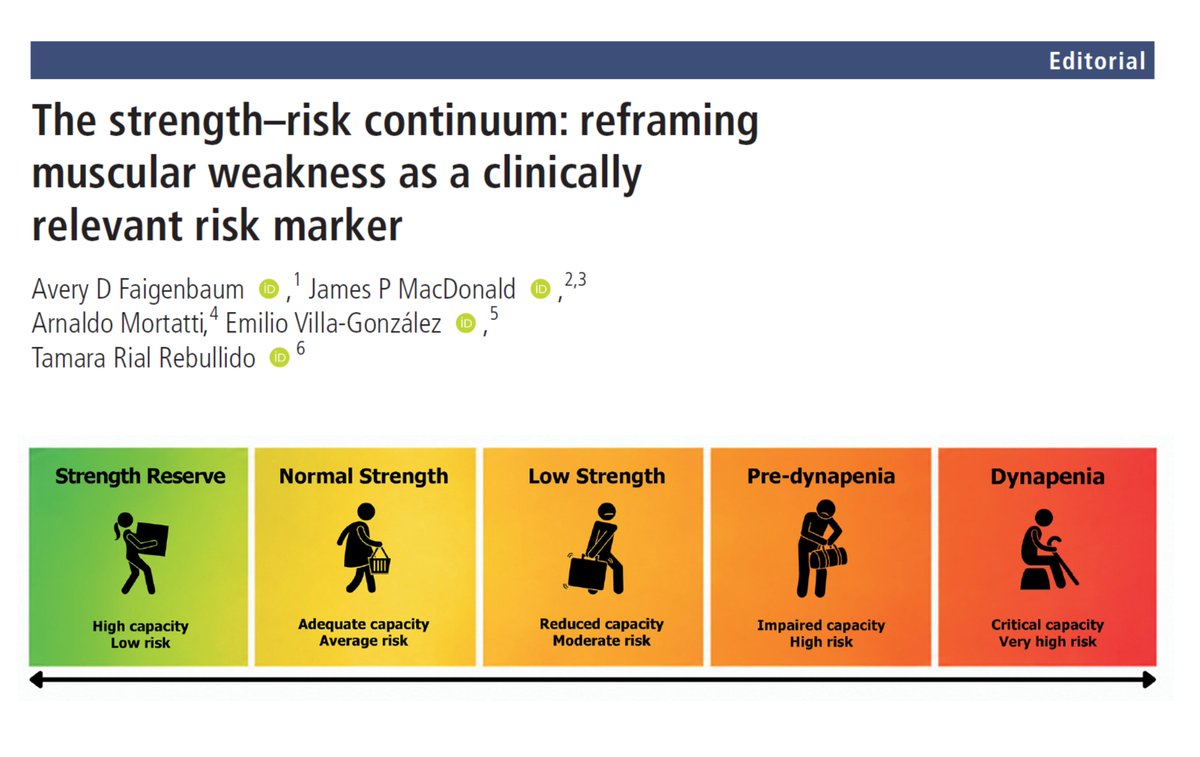
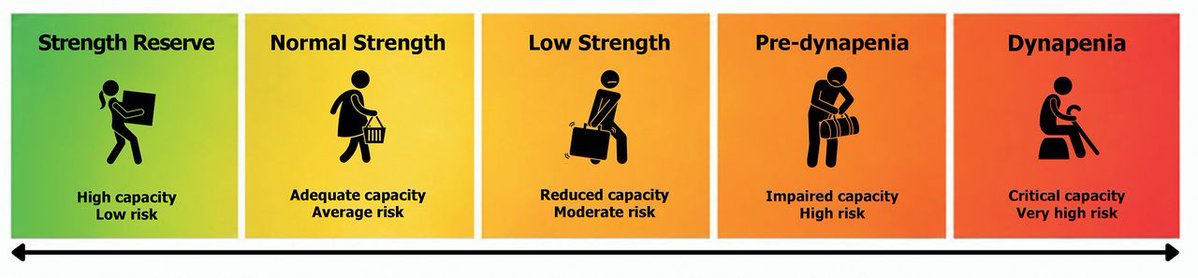
A potentially useful way to think about strength is through the strength-risk continuum, as described in this new editorial in the BJSM.
The idea is that as strength declines, our risk of chronic disease and vulnerability to adverse outcomes tend to increase, particularly the lower end of the strength spectrum.
Building strength now is a way to build a valuable reserve of physical capacity that may hold you in good stead later - particularly when declines in strength may be accelerated by future injury, illness, or prolonged inactivity.
That’s a helpful message, but I also think we should consider what better strength can mean for us right now as well.
Picture something as simple as climbing a flight of stairs. For one person it’s effortless, but for another, it requires almost everything they’ve got. Both complete the task, but one has far more physical capacity left in reserve.
That means improving strength could make your everyday activities easier and less physically demanding right now.
What’s encouraging too is strength can improve quite quickly with relatively low amounts of training, particularly in those with a lower starting point. One study (Fisher et al., 2014) found middle-aged adults increased the weights they could lift by 38-91% over 12-19 weeks - with a training commitment of just two 12-15-minute sessions per week.
The point is strength matters - not just for the future, but for making everyday life easier now too. And you don’t need to become exceptionally strong or spend hours in the gym to start seeing those benefits.
-----
📸 Image from:
Faigenbaum AD, MacDonald JP, Mortatti A, Villa-González E, Rial Rebullido T. The strength-risk continuum: reframing muscular weakness as a clinically relevant risk marker. Br J Sports Med. 2026 Sep 17:bjsports-2026-112013.
📊 Strength data from:
Fisher J, Steele J, McKinnon P, McKinnon S. Strength Gains as a Result of Brief, Infrequent Resistance Exercise in Older Adults. J Sports Med. 2014;2014:731890.
Sprinting is anaerobic. Endurance exercise is aerobic. Right?
Wrong.
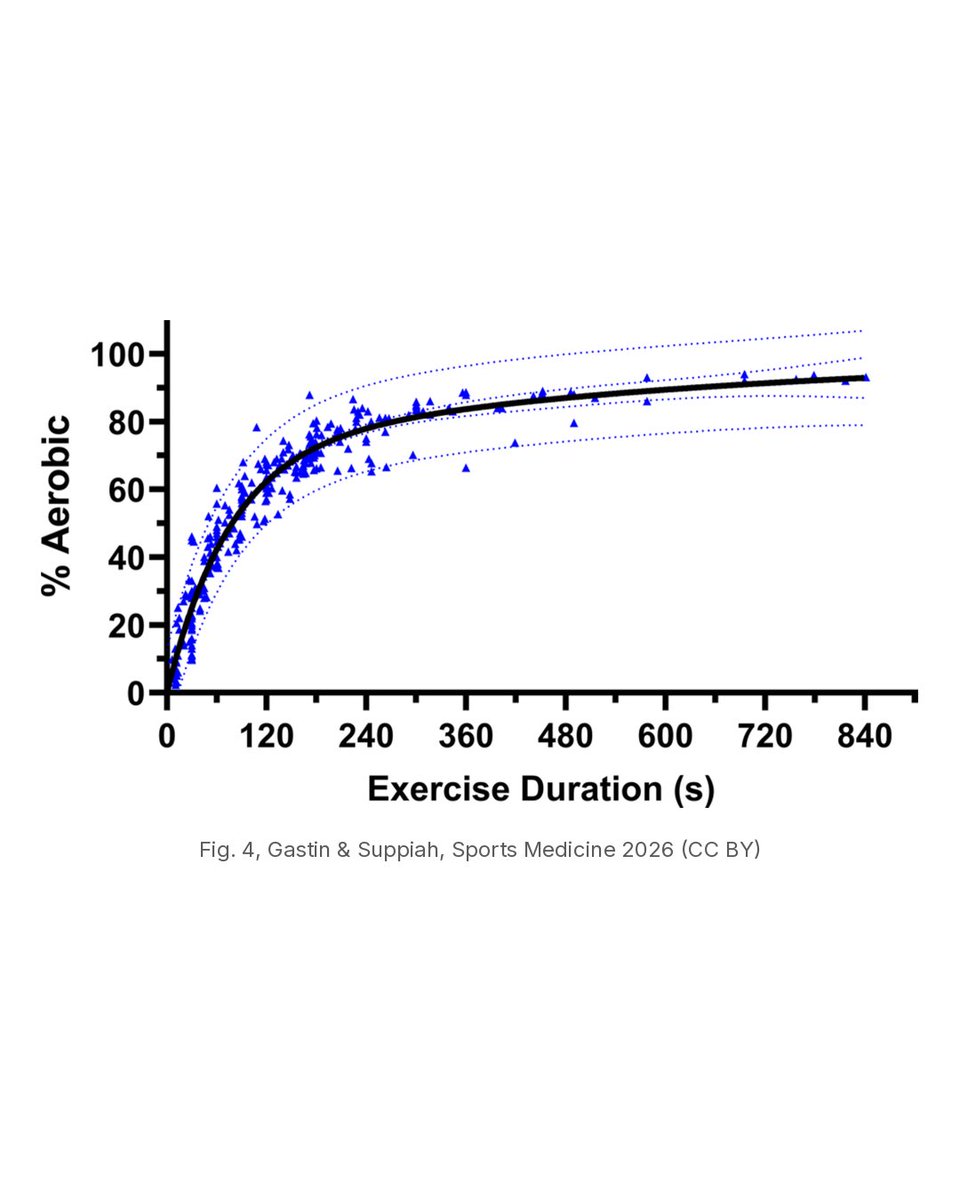
A 2026 systematic review estimated where the energy comes from during all-out efforts lasting anywhere from 6 seconds to more than 28 minutes.
• A 10-second maximal effort was about 91% anaerobic and 9% aerobic. By 30 seconds, the aerobic system was already supplying 25% of the energy, and by 60 seconds, 42%.
• The two systems contributed equally at about 78.6 seconds.
• At 2 minutes, the effort was roughly 62% aerobic, and at 5 minutes, 81%.
The curves didn't differ between running and cycling or by training status.
The aerobic system isn't a backup generator that kicks in late. It contributes meaningfully even in very short maximal efforts, and its share rises fast.
A new @WHO study in @LancetGH suggests that one in four adolescents worldwide, some 240 million young people aged 11–17, did not reach 60 minutes of moderate-to-vigorous #physicalactivity on any day of the previous week.
The analysis drew on 389 surveys covering more than 3.2 million adolescents in 140 countries. On average, adolescents were active on 2.7 days a week, the same as in 2010, and only 14% were active every day. Girls were less active than boys: 28% of girls reported no active days, compared with 22% of boys.
Physical inactivity is a major risk factor for heart disease, type 2 diabetes, #obesity and some cancers. Being active also supports #mentalhealth, with fewer symptoms of anxiety and depression and better attention and memory.
Active habits formed early protect health for life. That calls for safe, accessible places for young people to move at school, on the way there and in their free time.
https://t.co/6d32CvgGhD
A new study in @NatureMedicine suggests that everyday habits may affect our risk of chronic disease partly through the bacteria in our gut.
Researchers in Japan analysed stool samples from 6,803 adults, together with 28 lifestyle factors and 15 chronic conditions, including type 2 #diabetes, hypertension, dyslipidaemia and depression. They found two opposing gut-bacteria patterns:
⚕️ A health-linked pattern, associated with plant-based diets, fermented foods, coffee and #physicalactivity. It was rich in bacteria that produce butyrate, such as Faecalibacterium prausnitzii, and was linked to lower levels of #inflammation markers (TNF-α, IL-8, IFN-γ).
🤒A disease-linked pattern, associated with refined carbohydrates, #smoking and sitting for 9.5 or more hours a day. It was marked by bacteria normally found in the mouth and by pathobionts such as E. coli and Klebsiella pneumoniae, along with more inflammation.
A gut-bacteria score based on these patterns held up in 13 independent cohorts from other countries. The findings show associations rather than proof of cause, and intervention trials are still needed. Even so, they add a biological explanation for why #diet and movement matter for #NCD noncommunicable diseases prevention.
https://t.co/vEGzklJql6
🚨 The strength–risk continuum 💪
Reframing muscular weakness as a clinically relevant risk marker
Popular ✅ Make sure to check out the STRONG framework for practical implementation
➡️ https://t.co/65CBWbPS9x
Is Artificial Intelligence a Useful Tool in Exercise Science and Sports Medicine?
Point: https://t.co/WFu1BtjyA8
and couterpoint: https://t.co/nnyWTRA2tn
Exercise Prescriptions for Cardiovascular Health in Adults: 2026 ACC Scientific Statement: A Report of the American College of Cardiology
https://t.co/ke1EuWcWvY
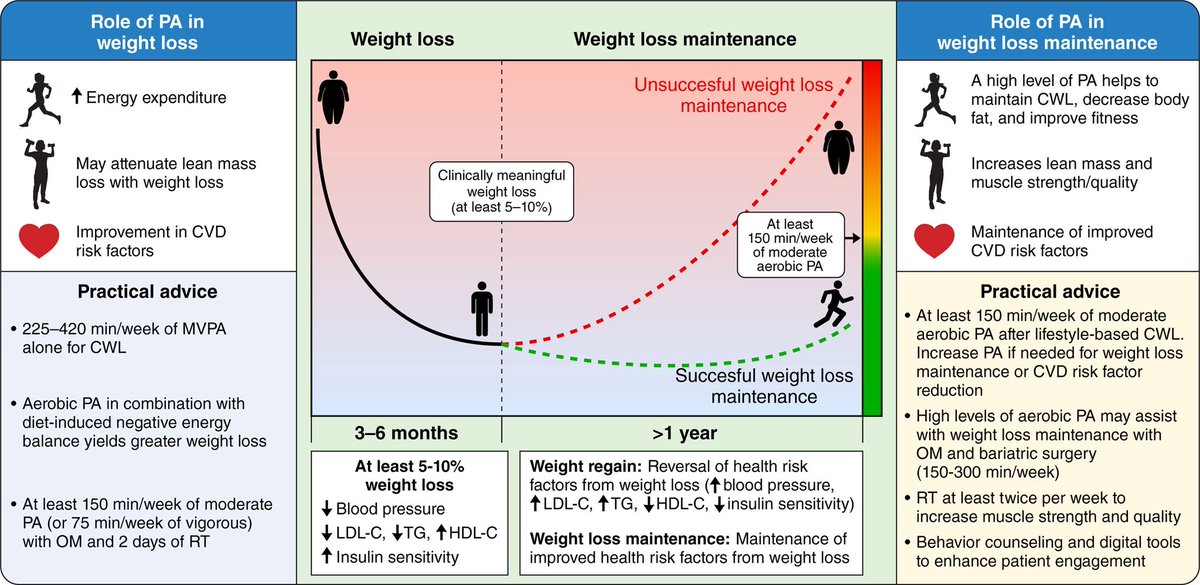
Role of Physical Activity in Obesity Treatment and Cardiometabolic Health: A Scientific Statement From the American Heart Association
https://t.co/zg2Ao3WND5
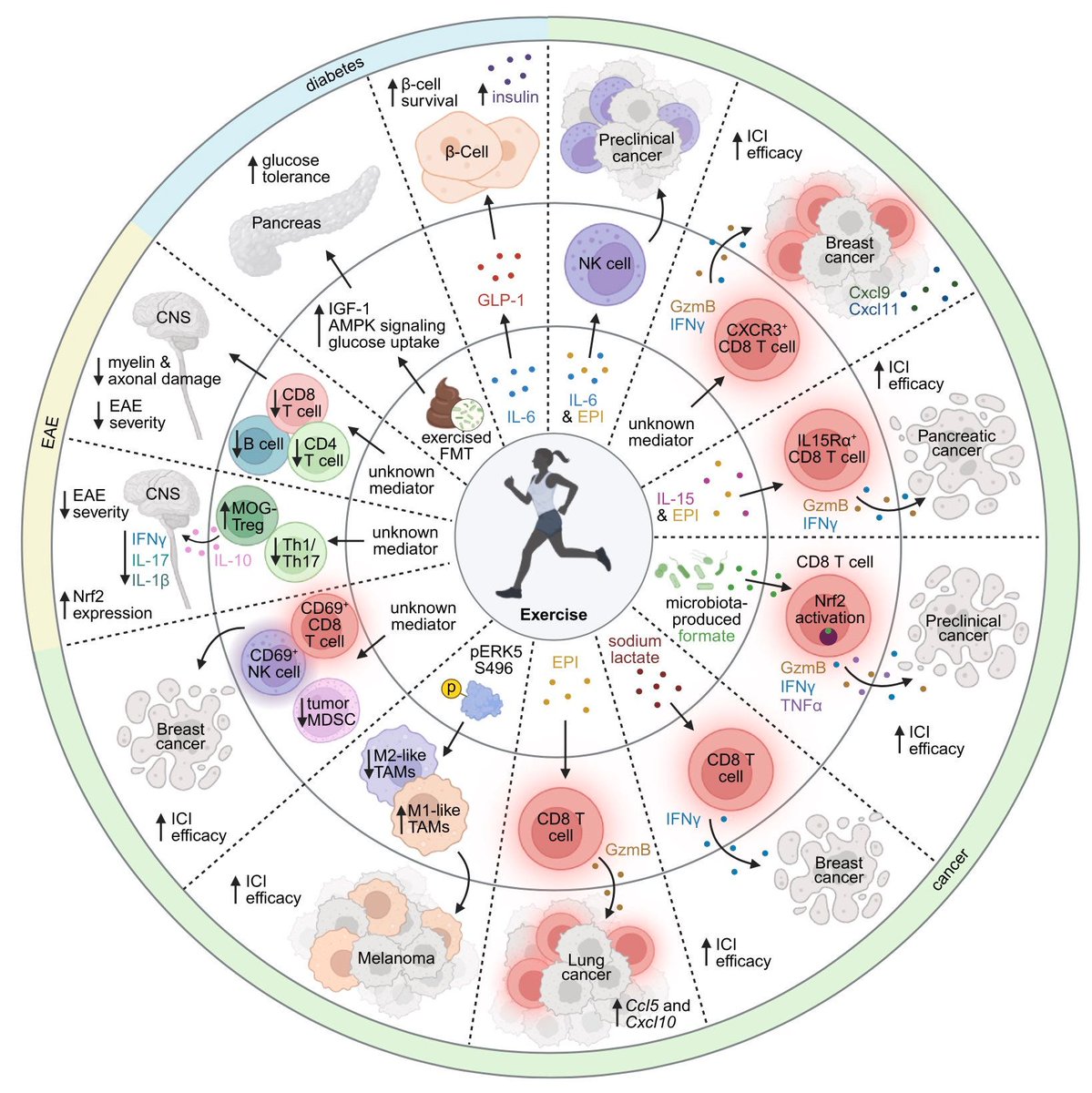
Exercise is not improving your immune system. It is reprogramming it.
Every training session mobilizes immune cells, inflammatory mediators, metabolites, and stress signals that reshape how the body detects threats, repairs tissue, and suppresses disease.
Skeletal muscle functions as an endocrine organ. The biology of performance is immunological before it is physical.
Les sport qui augmentent le + l’espérance de vie :
🥎 Sports de raquette : +9,7 ans
⚽ Football : +4,7 ans
🚴 Cyclisme : +3,7 ans
🏊 Natation : +3,4 ans
🏃 Running : +3,2 ans
👓 https://t.co/rDj4GdiPpJ
Walking is one of the most underrated tools for improving overall health.
In an analysis of 42 studies, outdoor walking groups improved by:
−3.7 mmHg systolic blood pressure
−3.1 mmHg diastolic blood pressure
−2.9 bpm resting heart rate
−1.3% body fat
+2.7 mL/kg/min VO₂max
+80 meters on the 6-minute walk test
Across the board, they became healthier.
The current physical activity guidelines are too low.
I've been saying this for a while. And a new study confirms it.
Meeting the standard 150 minutes/week was associated with only a modest ~8–9% lower cardiovascular risk.
The biggest protection occurred at roughly 560–610 minutes/week, about 3–4× higher, where cardiovascular risk was 30% lower.
We need to distinguish between the minimal activity volume required for basic protection, and the substantially higher volumes required for optimal resilience.
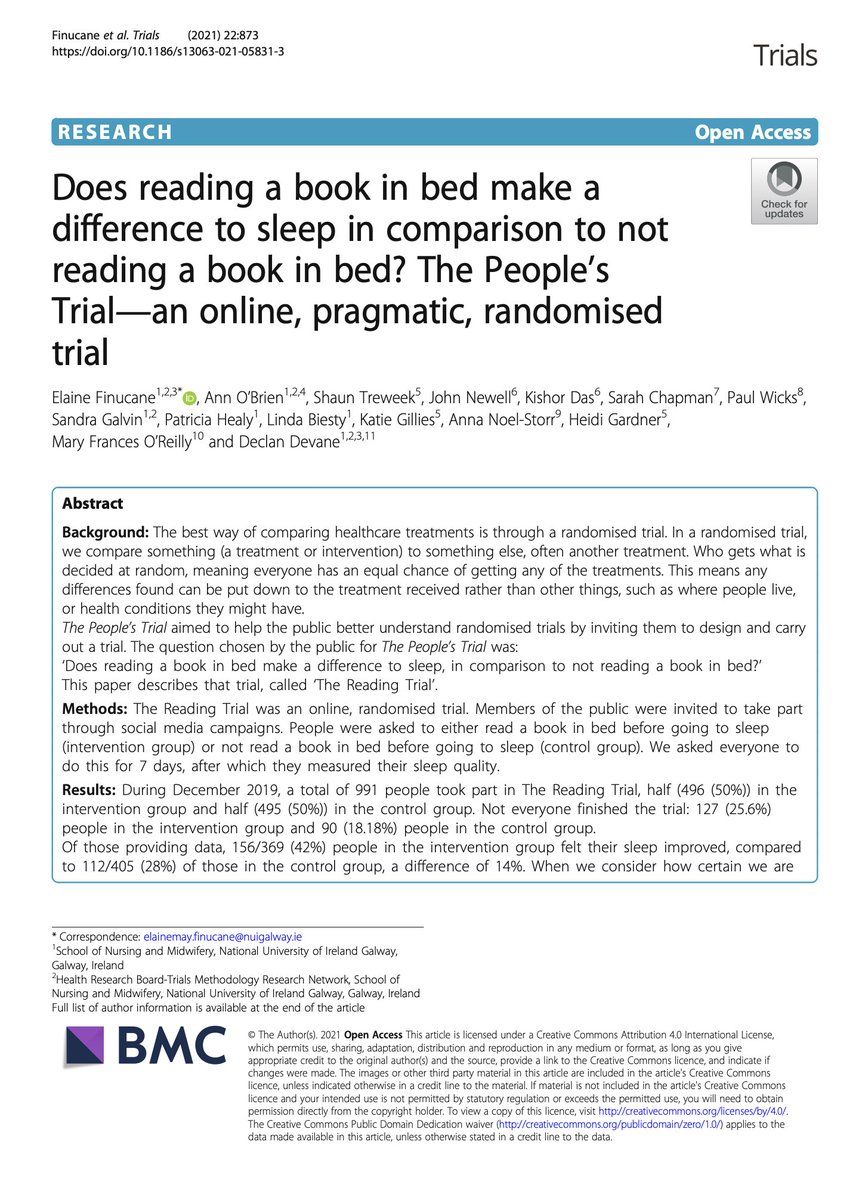
42% of people who read a book in bed before sleep reported better sleep vs. 28% who didn't read.
Simple sleep upgrade: Replace 20 minutes of scrolling with 20 minutes of reading.
Exercise is medicine. It would take how many medications to encapsulate all the benefits we get from medicine? What's your guess?
Here's an FUN article on the topic of exercise prescription. #exercise#exerciseismedicine#Health#fridaymorning https://t.co/q1YBTyD5qf
People start thinking about health and aging in their 40s, but the decline starts much earlier:
- Collagen starts declining in your 20s
- VO2 max starts declining in your 20s
- Melatonin declines after puberty
- Visceral fat starts rising post-20s
- Bone density peaks at 30
- Speed and power start declining in your 20s
Start early - prevention beats reversal. Not doing anything leads to natural age-related decline.
Graph: PMID: 28469267
Losing just 1.1% of body weight from dehydration was associated with:
- 39% lower perceived concentration
- 48% lower alertness
- 115% more driving errors
If you want your brain to function well, stay hydrated.