Physics , Chemistry and Maths teacher. Examiner . Taught Maths to A level in London .Originally from Bromley. I support Arsenal . Carer to Dad till Nov. 2019.
POV: You ask history’s greatest mathematicians one question... “What’s 55 × 55?”
Galileo, Newton, Zu Chongzhi, Ramanujan, Leibniz & Gauss all pull up with completely different methods... and still land on the same answer: 3025
Which method is your vibe? 👀
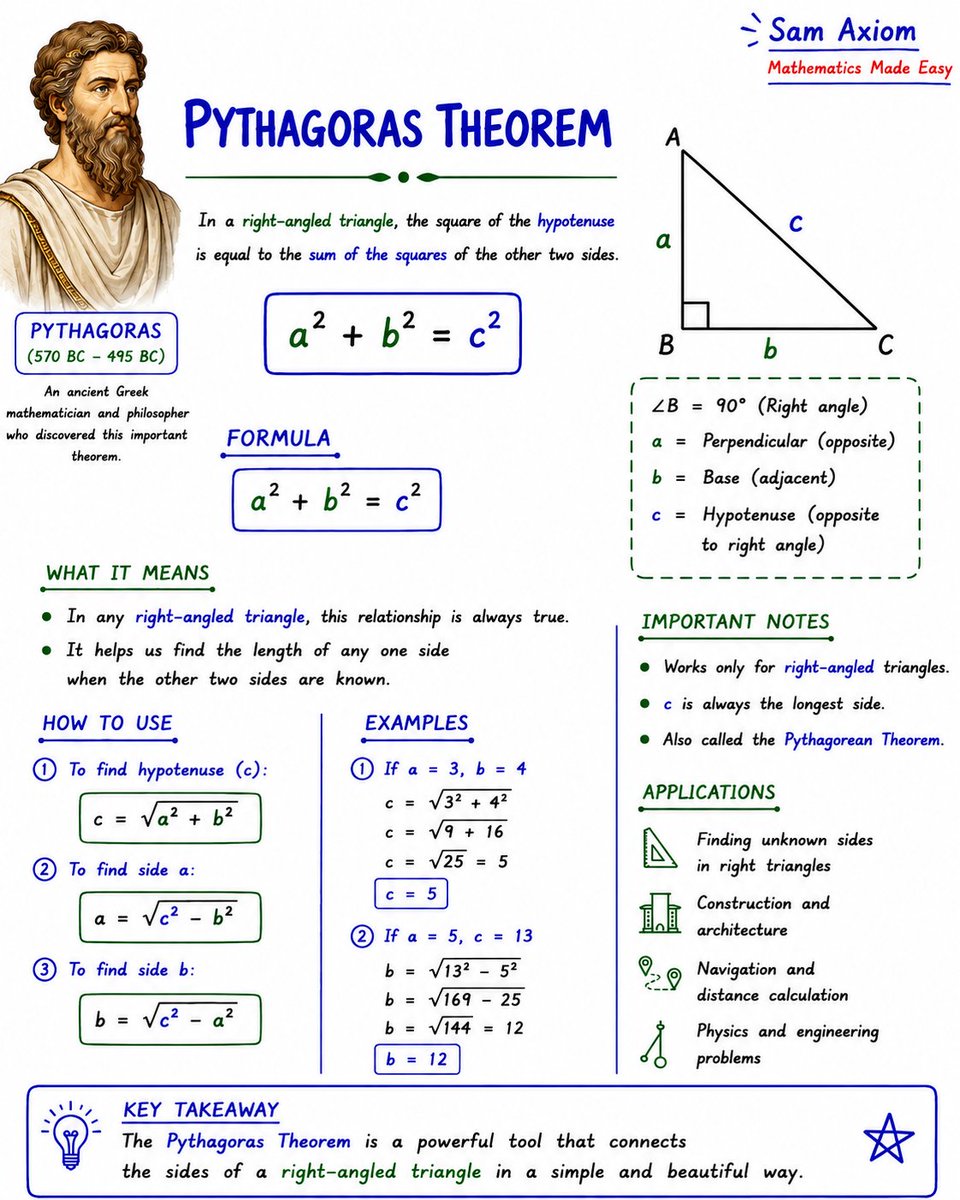
Pythagoras Theorem:
The Pythagoras Theorem is one of the most beautiful ideas in geometry that shows the simple relationship between the sides of a right-angled triangle. From school problems to real-life applications, this theorem proves how powerful simple mathematics can be.
The world's tallest church is about to get its crown.
On June 10, 2026, exactly 100 years after Antoni Gaudí's death, the Sagrada Família will inaugurate the four-armed cross atop the Tower of Jesus Christ.
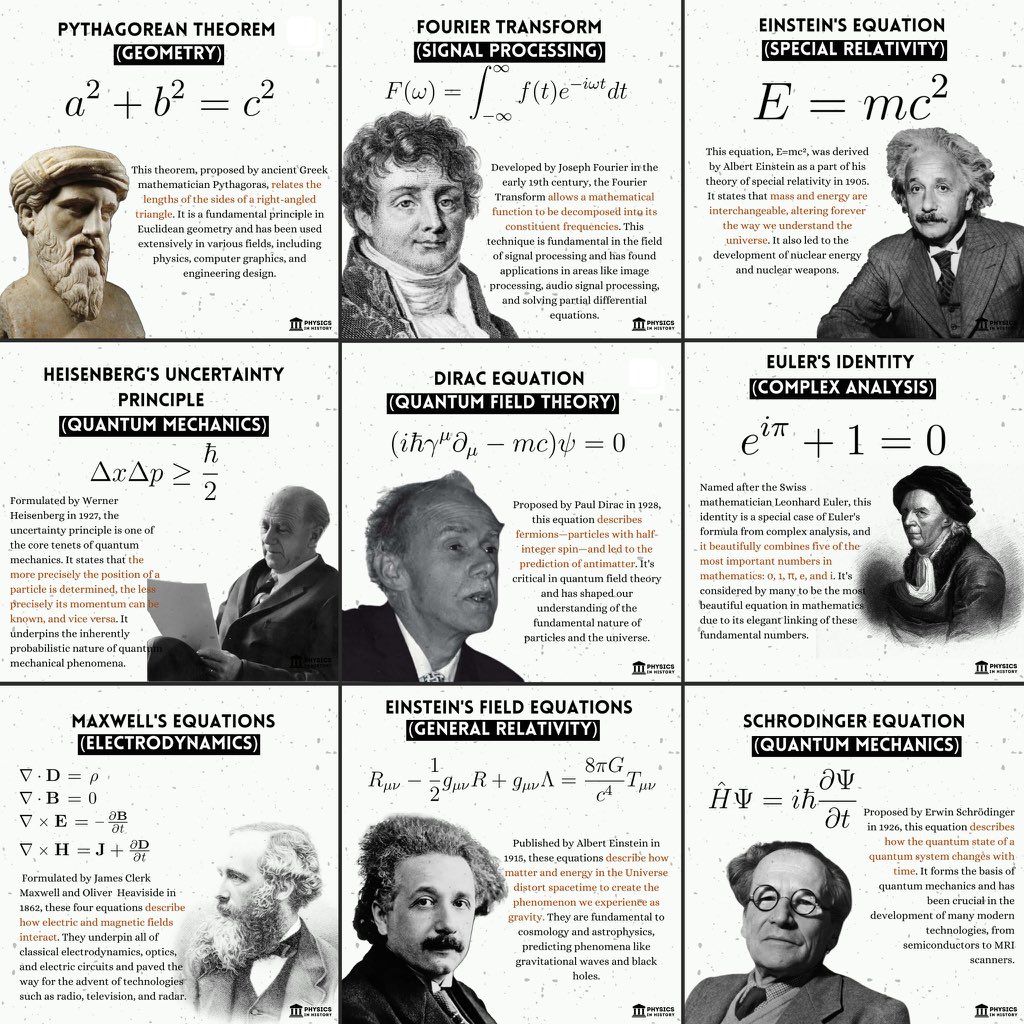
Born in 1831 in Scotland, Maxwell was a child prodigy. By the age of three, he was already fascinated by patterns and shapes.
At just 14, he wrote his first scientific paper on the geometry of curves. By 16, he was studying at the University of Edinburgh.
But his real breakthrough came later, when he solved one of the biggest mysteries in science.
For centuries, scientists struggled to understand electricity and magnetism—but Maxwell saw the hidden connections.
He formulated four elegant equations, now known as Maxwell’s equations, which unified electricity, magnetism, and light into a single theory.
This discovery eventually led to inventions like radio, television, and Wi-Fi.
Despite his groundbreaking work, Maxwell was not as widely celebrated in his time as Newton or Einstein.
He also explained how we perceive color, leading to the first-ever color photograph. In fact, the very first color photograph, taken in 1861, was based on Maxwell’s principles.
Tragically, Maxwell passed away at just 48. But his legacy is immortal—Newton explained gravity, Einstein unlocked relativity, and Maxwell revealed the invisible forces that shape our world.
History in the making
In this new image from our @NASAArtemis II crew, you can see Orientale basin on the right edge of the lunar disk. This mission marks the first time the entire basin has been seen with human eyes.