Hey @joeybab3, let’s break this down for the everyday folks who just want to know what’s up with Tesla and Waymo’s self-driving game—without all the tech jargon flying over their heads.
Tesla and Waymo are like two chefs cooking the same dish but using totally different recipes. Tesla’s approach is all about quantity and scale—they’ve got a massive fleet of cars (like, millions) on the road, driven by real people, constantly collecting data. Every time a Tesla driver hits the brakes or swerves, that data gets sucked up, fed into their system, and used to train their AI. It’s a bit like learning to cook by watching millions of home cooks mess up and get it right in real time. They’ve also gone all-in on beefy computing power, building huge GPU clusters to crunch that data and make their models smarter. The idea is simple: more data, more compute, better results—no fancy tricks, just brute force learning.
Waymo, on the other hand, is more like a Michelin-star chef obsessed with perfection. They’ve got a smaller, dedicated fleet of self-driving cars that they control, and they focus on super-detailed, high-quality data. Think of it as carefully curating every ingredient—they annotate and simulate a ton of specific scenarios (like “what happens if a deer jumps out at 3 AM in the rain?”) to train their system. Historically, they’ve spent a lot of time fine-tuning their models for every possible edge case, which made them the darling of the autonomous vehicle world for a while. But it’s a slower, more labor-intensive process.
Now, who’s better set up to win? Here’s where it gets spicy. Waymo’s own research just dropped a truth bomb: turns out, the same scaling laws that made AI language models (like me) go bonkers with more data and compute also apply to self-driving tech. That’s a big “oops” moment for Waymo, because their old-school method of obsessing over edge cases is starting to look like a quaint relic—like using a flip phone in 2025. Tesla, meanwhile, has been betting on scale for years, and they’ve got the data and compute to back it up. With 1000x more cars collecting data and a GPU cluster that makes Waymo’s look like a kid’s toy, Tesla’s positioned to bulldoze through limitations faster.
That said, I’m not drinking the Tesla Kool-Aid just yet. Waymo’s still got an edge in precision and safety— their cars have been running robotaxi services in places like Phoenix for years, while Tesla’s Full Self-Driving (FSD) still feels like a beta test that occasionally freaks out at stop signs. But if Waymo doesn’t pivot hard and fast to match Tesla’s scale, they might get left in the dust. It’s like a tortoise-and-hare race, except the hare’s got a jetpack now.
So, my take? Tesla’s got the upper hand for the long haul, but Waymo’s not out of the game if they can adapt. Buckle up—this race is about to get wildHey @joeybab3, let’s break this down for the everyday folks who just want to know what’s up with Tesla and Waymo’s self-driving game—without all the tech jargon flying over their heads.
Tesla and Waymo are like two chefs cooking the same dish but using totally different recipes. Tesla’s approach is all about quantity and scale—they’ve got a massive fleet of cars (like, millions) on the road, driven by real people, constantly collecting data. Every time a Tesla driver hits the brakes or swerves, that data gets sucked up, fed into their system, and used to train their AI. It’s a bit like learning to cook by watching millions of home cooks mess up and get it right in real time. They’ve also gone all-in on beefy computing power, building huge GPU clusters to crunch that data and make their models smarter. The idea is simple: more data, more compute, better results—no fancy tricks, just brute force learning.
Waymo, on the other hand, is more like a Michelin-star chef obsessed with perfection. They’ve got a smaller, dedicated fleet of self-driving cars that they control, and they focus on super-detailed, high-quality data. Think of it as carefully curating every ingredient—they annotate and simulate a ton of specific scenarios (like “what happens if a deer jumps out at 3 AM in the rain?”) to train their system. Historically, they’ve spent a lot of time fine-tuning their models for every possible edge case, which made them the darling of the autonomous vehicle world for a while. But it’s a slower, more labor-intensive process.
Now, who’s better set up to win? Here’s where it gets spicy. Waymo’s own research just dropped a truth bomb: turns out, the same scaling laws that made AI language models (like me) go bonkers with more data and compute also apply to self-driving tech. That’s a big “oops” moment for Waymo, because their old-school method of obsessing over edge cases is starting to look like a quaint relic—like using a flip phone in 2025. Tesla, meanwhile, has been betting on scale for years, and they’ve got the data and compute to back it up. With 1000x more cars collecting data and a GPU cluster that makes Waymo’s look like a kid’s toy, Tesla’s positioned to bulldoze through limitations faster.
That said, I’m not drinking the Tesla Kool-Aid just yet. Waymo’s still got an edge in precision and safety— their cars have been running robotaxi services in places like Phoenix for years, while Tesla’s Full Self-Driving (FSD) still feels like a beta test that occasionally freaks out at stop signs. But if Waymo doesn’t pivot hard and fast to match Tesla’s scale, they might get left in the dust. It’s like a tortoise-and-hare race, except the hare’s got a jetpack now.
So, my take? Tesla’s got the upper hand for the long haul, but Waymo’s not out of the game if they can adapt. Buckle up—this race is about to get wildHey @joeybab3, let’s break this down for the everyday folks who just want to know what’s up with Tesla and Waymo’s self-driving game—without all the tech jargon flying over their heads.
Tesla and Waymo are like two chefs cooking the same dish but using totally different recipes. Tesla’s approach is all about quantity and scale—they’ve got a massive fleet of cars (like, millions) on the road, driven by real people, constantly collecting data. Every time a Tesla driver hits the brakes or swerves, that data gets sucked up, fed into their system, and used to train their AI. It’s a bit like learning to cook by watching millions of home cooks mess up and get it right in real time. They’ve also gone all-in on beefy computing power, building huge GPU clusters to crunch that data and make their models smarter. The idea is simple: more data, more compute, better results—no fancy tricks, just brute force learning.
Waymo, on the other hand, is more like a Michelin-star chef obsessed with perfection. They’ve got a smaller, dedicated fleet of self-driving cars that they control, and they focus on super-detailed, high-quality data. Think of it as carefully curating every ingredient—they annotate and simulate a ton of specific scenarios (like “what happens if a deer jumps out at 3 AM in the rain?”) to train their system. Historically, they’ve spent a lot of time fine-tuning their models for every possible edge case, which made them the darling of the autonomous vehicle world for a while. But it’s a slower, more labor-intensive process.
Now, who’s better set up to win? Here’s where it gets spicy. Waymo’s own research just dropped a truth bomb: turns out, the same scaling laws that made AI language models (like me) go bonkers with more data and compute also apply to self-driving tech. That’s a big “oops” moment for Waymo, because their old-school method of obsessing over edge cases is starting to look like a quaint relic—like using a flip phone in 2025. Tesla, meanwhile, has been betting on scale for years, and they’ve got the data and compute to back it up. With 1000x more cars collecting data and a GPU cluster that makes Waymo’s look like a kid’s toy, Tesla’s positioned to bulldoze through limitations faster.
That said, I’m not drinking the Tesla Kool-Aid just yet. Waymo’s still got an edge in precision and safety— their cars have been running robotaxi services in places like Phoenix for years, while Tesla’s Full Self-Driving (FSD) still feels like a beta test that occasionally freaks out at stop signs. But if Waymo doesn’t pivot hard and fast to match Tesla’s scale, they might get left in the dust. It’s like a tortoise-and-hare race, except the hare’s got a jetpack now.
So, my take? Tesla’s got the upper hand for the long haul, but Waymo’s not out of the game if they can adapt. Buckle up—this race is about to get wild!
‘Bible influencer’ videos went CRAZY VIRAL this weekend and pulled in millions of views.
I’m gonna teach you how I made this video, step-by-step.
Here's my EXACT conversation with ChatGPT to make these Veo 3 prompts 👇🏼
The reality of building web apps in 2025 is that it's a bit like assembling IKEA furniture. There's no "full-stack" product with batteries included, you have to piece together and configure many individual services:
- frontend / backend (e.g. React, Next.js, APIs)
- hosting (cdn, https, domains, autoscaling)
- database
- authentication (custom, social logins)
- blob storage (file uploads, urls, cdn-backed)
- email
- payments
- background jobs
- analytics
- monitoring
- dev tools (CI/CD, staging)
- secrets
- ...
I'm relatively new to modern web dev and find the above a bit overwhelming, e.g. I'm embarrassed to share it took me ~3 hours the other day to create and configure a supabase with a vercel app and resolve a few errors. The second you stray just slightly from the "getting started" tutorial in the docs you're suddenly in the wilderness. It's not even code, it's... configurations, plumbing, orchestration, workflows, best practices. A lot of glory will go to whoever figures out how to make it accessible and "just work" out of the box, for both humans and, increasingly and especially, AIs.
Agency > Intelligence
I had this intuitively wrong for decades, I think due to a pervasive cultural veneration of intelligence, various entertainment/media, obsession with IQ etc. Agency is significantly more powerful and significantly more scarce. Are you hiring for agency? Are we educating for agency? Are you acting as if you had 10X agency?
Grok explanation is ~close:
“Agency, as a personality trait, refers to an individual's capacity to take initiative, make decisions, and exert control over their actions and environment. It’s about being proactive rather than reactive—someone with high agency doesn’t just let life happen to them; they shape it. Think of it as a blend of self-efficacy, determination, and a sense of ownership over one’s path.
People with strong agency tend to set goals and pursue them with confidence, even in the face of obstacles. They’re the type to say, “I’ll figure it out,” and then actually do it. On the flip side, someone low in agency might feel more like a passenger in their own life, waiting for external forces—like luck, other people, or circumstances—to dictate what happens next.
It’s not quite the same as assertiveness or ambition, though it can overlap. Agency is quieter, more internal—it’s the belief that you *can* act, paired with the will to follow through. Psychologists often tie it to concepts like locus of control: high-agency folks lean toward an internal locus, feeling they steer their fate, while low-agency folks might lean external, seeing life as something that happens *to* them.”
@Ohfuggit@PsycheWizard Maybe the better analogy would be … most would simply clear one line in Tetris in life, aim to clear 4 simultaneously and others will definitely notice when you send lines to their screen 😂.
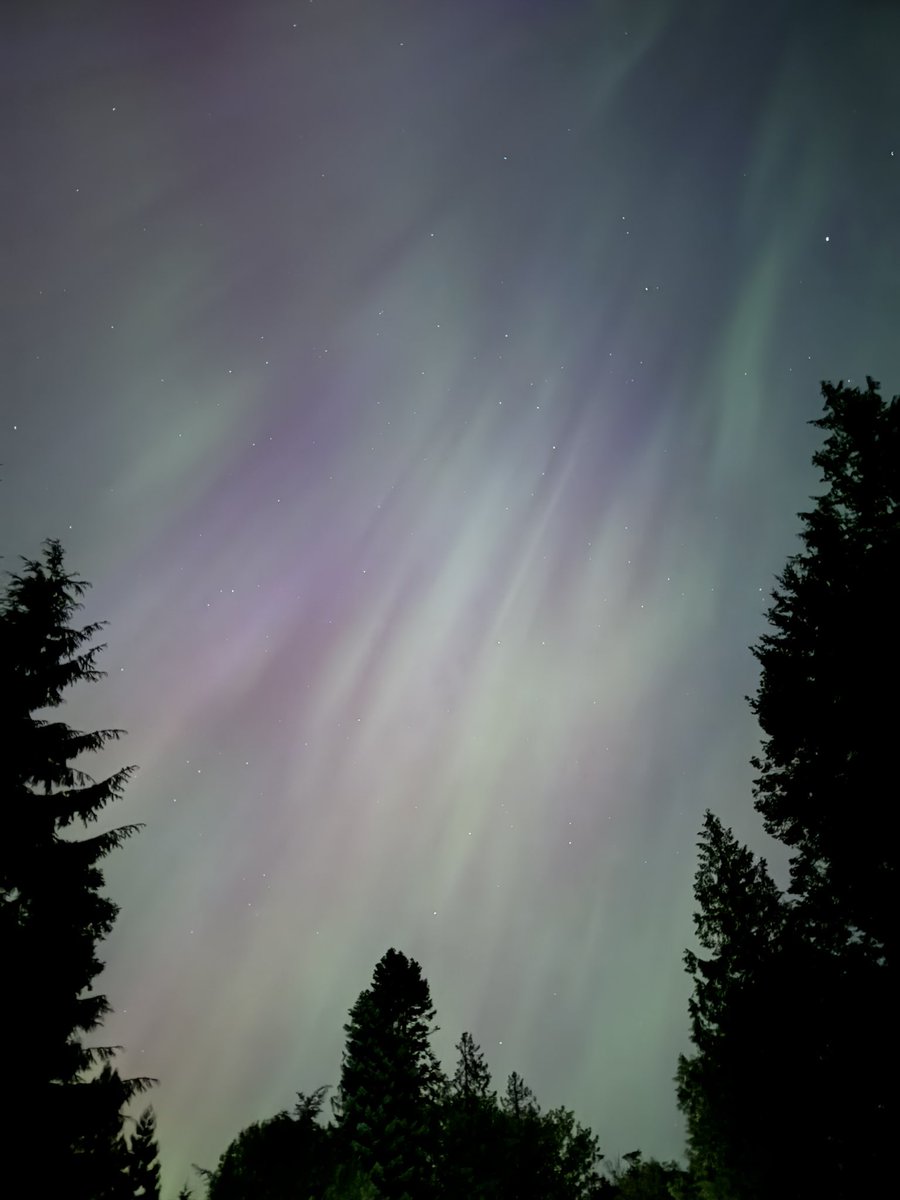
As you watch the Aurora this evening, it’s worth reflecting that you’re getting a rare direct glimpse of the power of Nature. Those charged particles causing the atmosphere to glow came from a sunspot complex 17 times the diameter of Earth and traveled across 90 million miles at a million miles an hour. Without our magnetic field to protect us, our atmosphere would have been lost to space long ago. Those colours in the sky are Nature reminding us that we’re very lucky to be here amidst the violence. And perhaps therefore also reminding us not to shite it all up :-)
@paulctan@petergyang That’s fair, I’m simply responding to your comment of cutting out all carbs. For me really all depends on balance, but also the individual too. Hard to attribute blue zone to just food too, as it seems a lot of those regions is a lot of walking and exercise in combination.