Translation Is Not a Good Method for Learning Languages
I could offer several reasons for concluding that translation is not an effective method for language learning. However, I will limit myself to a single argument.
First, I should clarify what I mean by "translation as a method." I am not referring to the occasional translation of a word in order to explain a difficult concept, nor to the translation of an idiomatic expression. Rather, I mean translation as the primary means of learning a language, as it is still employed in many schools and universities for the study of classical languages. Under this approach, students first receive theoretical instruction in grammar and then apply that knowledge by taking an unfamiliar text and producing a version of it in their native language in order to understand it.
In my view, translation is not the starting point of language learning but rather its highest and most demanding stage. To translate is to reproduce, in a target language, the full expressive force of a text written in a source language. Such a task requires not only a thorough command of both languages but also a deep familiarity with the literary tradition to which the text belongs.
Moreover, students who rely on translation as their principal means of understanding a text are confined to only one aspect of it: its syntactic structure. Yet a text, especially a classical text, is far more than syntax. It possesses a sonic and rhythmic dimension that can be fully appreciated only by someone who has learned to use the language itself rather than merely decode it.
Consider an example. In the opening speech against Catiline, Cicero asks:
Quem ad finem sese effrenata iactabit audacia?”
A student trained through translation typically breaks the sentence into its grammatical components: verb, subject, object, interrogative particle, and so forth. The student then consults a dictionary, identifies the meanings of the individual words, and finally reconstructs the sentence in the native language in order to understand it.
Yet even after this process, the sentence has not been fully understood. Why? Because many of its most significant features are not syntactic at all.
Beginning with the syllable na, Cicero arranges a sequence of three cretic feet, each consisting of a long syllable, a short syllable, and another long syllable:
nā-ta iac-tā-bit au-dā-ci-a
First cretic: nā-ta iac-
Second cretic: tā-bit au-
Third cretic: dā-ci-a(ā)-
Two effects emerge from this arrangement.
The first is rhythmic. The cretic produces a wave-like movement in which the initial long syllable gathers force, passes briefly through the short syllable, and comes to rest on the final long syllable. Yet that moment of rest immediately becomes the launching point for another cretic, and then another. The result is a succession of rhythmic surges. It is as though one were standing in the sea, struck by a first wave and, just as one attempts to regain balance, overwhelmed by a second and then a third.
The second effect lies in Cicero's choice of the vowel ā as the dominant accented sound. In each cretic, the stress falls on the initial long syllable, which repeatedly contains the open and forceful vowel a. The sequence nā ... tā ... dā ... gives the accusation extraordinary energy. The sound itself creates tension and discomfort in the listener's ear. It is not intended to please; it is intended to disturb.
Many other examples could be given of the expressive power of a sentence or paragraph that transcends its syntactic structure. This single example, however, is sufficient to show that a classical text is far more than a collection of grammatical relationships. Translation, especially when combined with the failure to actively use the language, prevents the student from penetrating these deeper dimensions of the text and from experiencing its full literary force.
Omnis societas vere iusta in agnitione inviolabilis dignitatis hominis innititur. Haec dignitas omnem concessionem civitatum praecedit et volucribus socialibus consensibus subici non potest: ad singulos homines eo ipso pertinet, quod existit, ac proinde oportet omnem ordinem iuris positivi dirigat. Viva hac persuasione manente, ius tutela fit omnium atque praesidium contra commoda et consilia particularia imposita. #IterApostolicum
Classical Latin only had UPPERCASE LETTERS, didn’t have any punctuation (except for the interpunct ⟨·⟩ to divide words, which fell out of use by 200 CE), and didn’t have spaces between words—a style of writing called *scriptio continua* ‘continuous script’ that they borrowed from the Greeks. Writing looked like this:
URGENT: Salvem el Català amb @CatalunyaAC
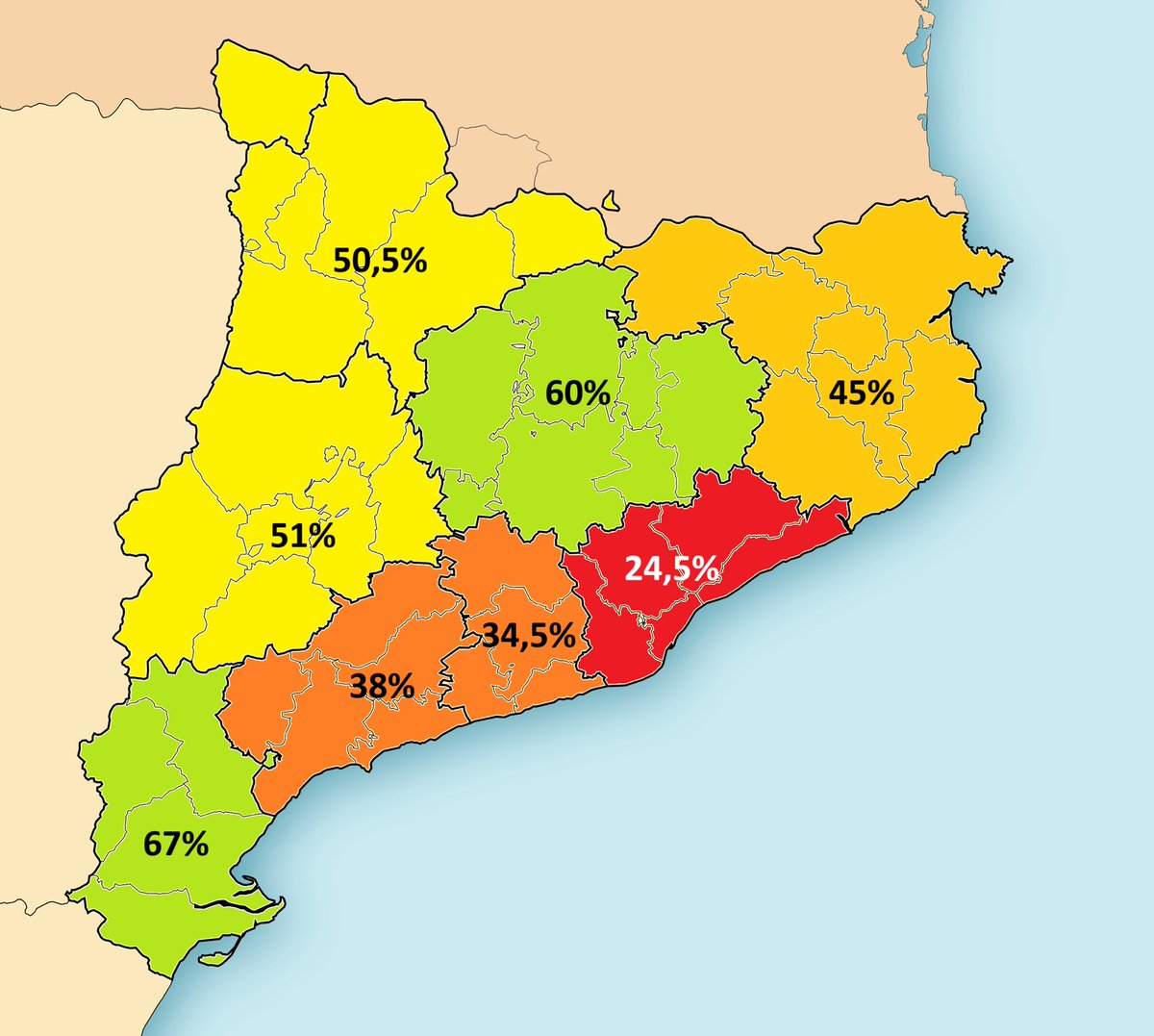
Denunciem més de 700 establiments de la ciutat de #Barcelona per incompliment de la normativa lingüística!
Davant la deixadesa de funcions de la Generalitat, des d’Aliança catalana treballem per garantir els drets dels catalans!
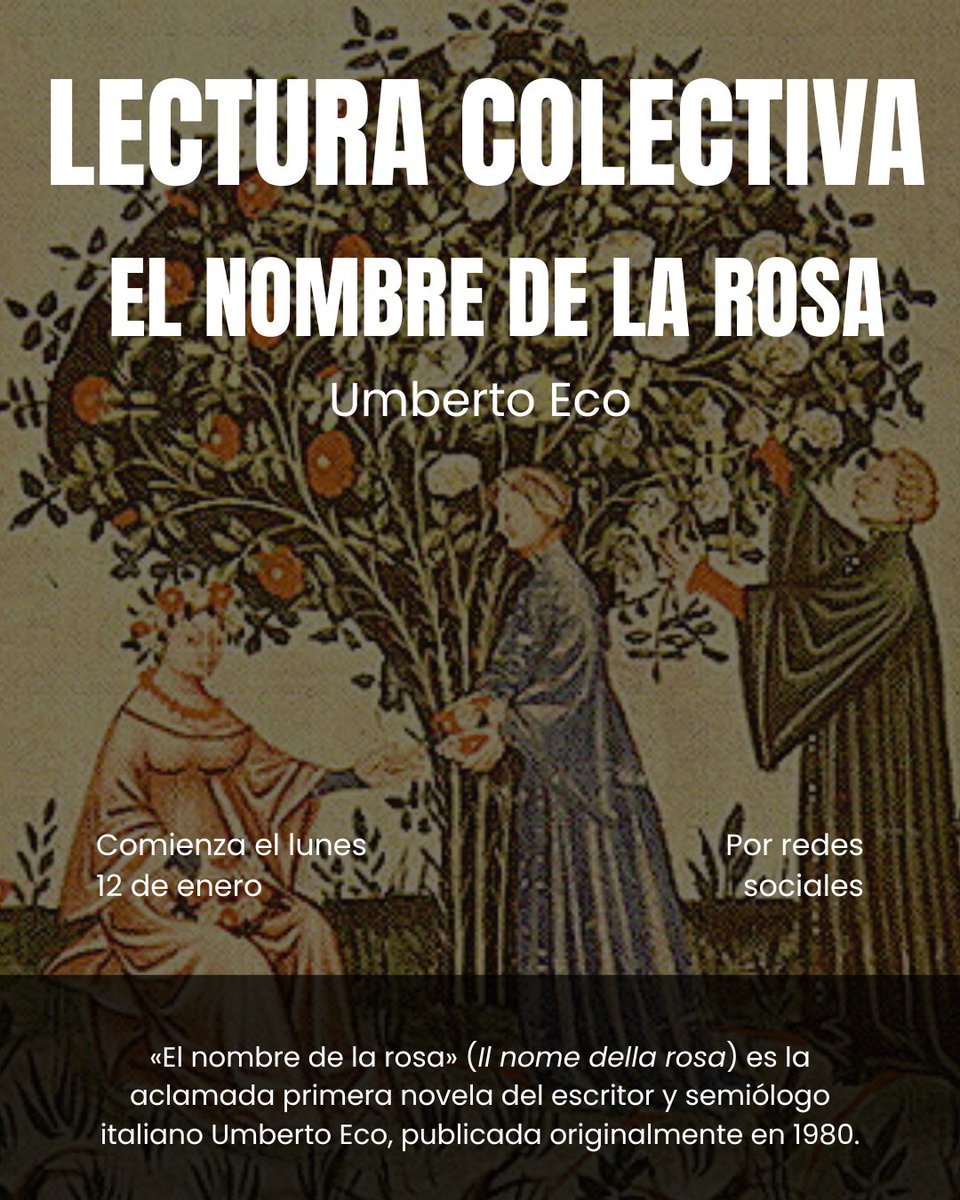
Lectura colectiva
A partir del 12 de enero leeremos: “El nombre de la rosa” de Umberto Eco.
El nombre de la rosa es la aclamada primera novela del semiólogo y escritor italiano Umberto Eco, publicada originalmente en 1980.
#UmbertoEco2026
¿Hay buenas personas en la derecha? Después de los insultos que he recibido estos días, pienso que no. Se han burlado de mis problemas de salud y los de mi mujer, han celebrado que no hayamos podido tener hijos, han escupido que estoy solo por culpa de mis ideas (por cierto, mi vida social es bastante intensa), han insultado a mis seres queridos, se han mofado de mi amor a los animales, me han deseado toda clase de sufrimientos, me han acusado de envidiar el éxito de Juan del Val, "príncipe de los ingenios", han cuestionado mi competencia como profesor de filosofía (perdón por decirlo, pero aprobé las oposiciones de instituto con el nº1) y han manifestado que mis libros no valen ni como papel higiénico.
Empiezo a pensar que hoy en día ser de derechas solo es una forma de perversidad moral, que incluye prejuicios tan inmundos como la aporofobia, el machismo, el racismo, la xenofobia, la homofobia y el especismo. No deseo que les suceda nada malo a esta clase de invididuos (bastante tienen con el odio que llevan dentro), pero solo pido que estén lo más lejos posible de mí y que dejen de hacer daño a los más vulnerables. Gracias a esta legión de indeseables, cada día estamos más cerca del autoritarismo y la desigualdad extrema.
En 1780 la RAE publicó una edición ilustrada de «Don Quijote» en la que intervinieron los dibujantes y grabadores más importantes de la época. La colección de láminas utilizadas para su ilustración se conserva en el Archivo: https://t.co/nBm22OFyRq.
Gymnasium omnium optimum apud nos est Schola Franco-Finlandensis in urbe Helsinki sita, In serie autem scholarum minorum primum locum habet Gymnasium Tuusniemi, quod in Savonia invenitur. Hoc patet ex investigatione nuperrime facta.
Pax vobiscum omnibus! Haec prima salutatio est Christi, Boni Pastoris, post Resurrectionem. Ipse salutatio haec velim cor vestrum ingrediatur et familias vestra omnesque homines, ubicumque sint, cunctosque populos et universum terrarum orbem attingat.
Inter Indiam et Pakistaniam conflictus militaris ortus est, quo plus 40 homines vitam amiserunt. Rerum condicio eo gravior est, quod utraque civitas arma nuclearia habet, quorum ope ingentem perniciem non solum inter se, sed etiam populis vicinis parare possunt.
A proud moment for Bharat’s civilisational heritage.
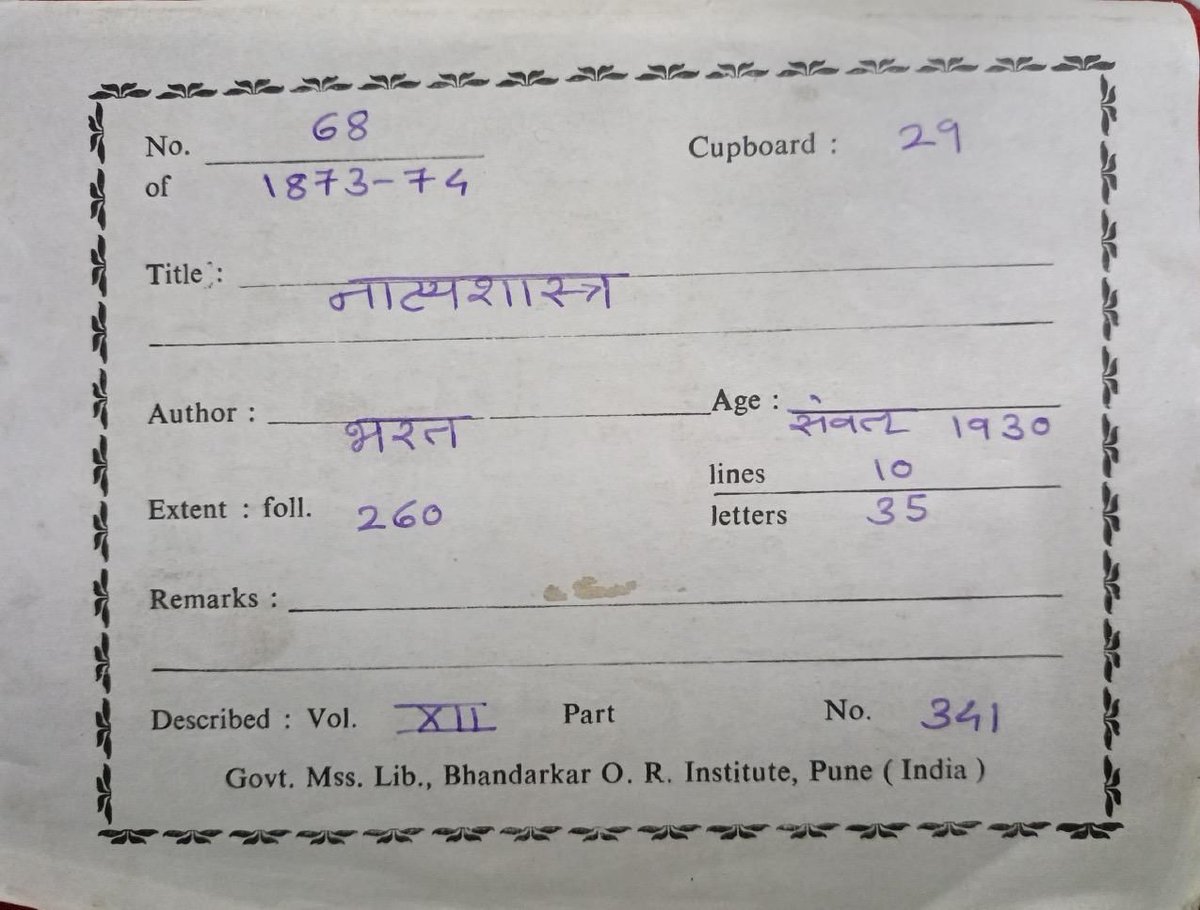
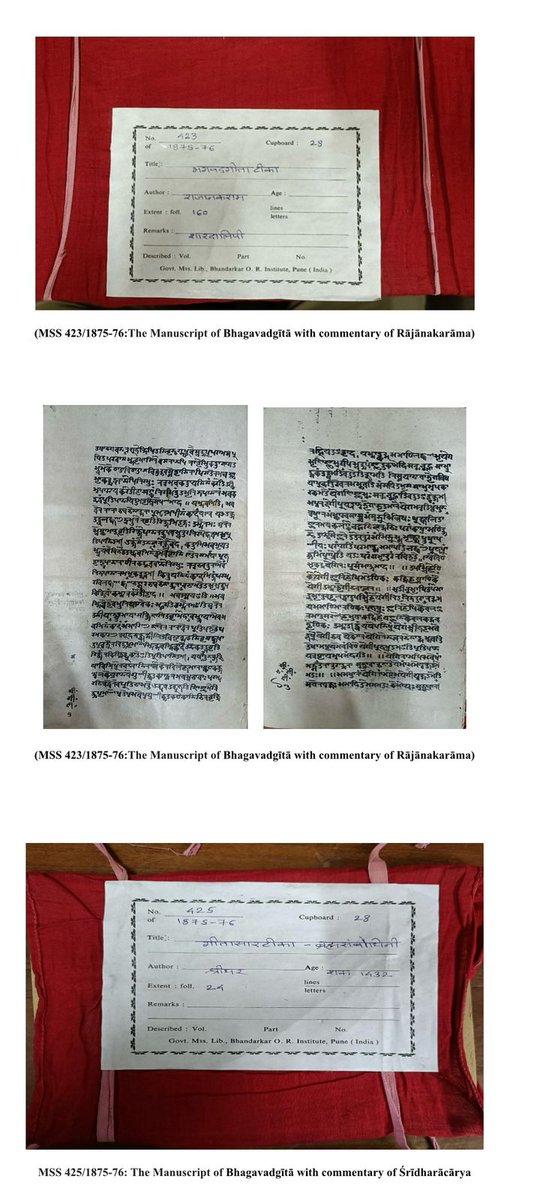
The Shrimad Bhagavad Gita & Natyashastra have been newly inscribed in UNESCO’s Memory of the World Register, taking India’s total entries to 14—including Rigveda, Ramcharitmanas, Panchatantra & Abhinavagupta’s works.
A global honour for our timeless wisdom & cultural brilliance.
Comic moments do not escape the Sanskrit poet's attention. Here is a verse from MAgha's Shishupalavadha -
Since his wife occupied the whole bed, the husband had to spend the night without a wink of sleep by adjusting himself in the narrow space that was available.