IL15 increases the expansion of CAR T cells and induces antitumor responses in patients with GPC3+ solid tumors (i.e. liver cancer).
https://t.co/ybNobLrQvy
I am very pleased to announce the work I did as a graduate student in the labs of Crystal Mackall and Everett Meyer has been published in Nature Communications, open access! https://t.co/E79Xyrp761
Columbia welcomes CAR-T pioneer Michel Sadelain, MD, PhD, as the inaugural director of the new Columbia Initiative for Cell Engineering and Therapy and director of the Cancer Cell Therapy Initiative at the Herbert Irving Comprehensive Cancer Center.
➡️https://t.co/g8OhtIBMxG
Recruiting faculty to the Dept of Molecular and Cellular Biology at Baylor College of Medicine in Houston, TX! Recruiting broadly in cancer and cell biology. Submit by October 1, 2024, for full review. #cellbio@BCMhouston
https://t.co/4sLzKsOxzD
https://t.co/4Q9xpXvcbI
Preprint alert 🚨
Up to 90% CAR knock-in rates in primary human T cells - without drug enhancers? 🧐
Single-stranded HDR templates with truncated Cas12a binding sequences improve knock-in efficiencies in primary human T cells
https://t.co/76xEoKTGsr
🧵👇
My department (MIT Biological Engineering) is hiring at the Assistant Professor level! We are looking for someone in immunology/immunotherapy/immune engineering, broadly defined. https://t.co/F5fyVKSsTs
Great step forward in humanized mouse models. Using iPSC-derived CD34+ iHSC which engraft and produce human multi-lineage progeny in immunodeficient NBSGW mice
https://t.co/eJ7QpSkW3P
An interesting POC of T cell therapy in CNS injury models: autoreactive MOG-specific T cells infiltrate the lesion and suppress tissue damage, counter-intuitively in part via IFNg secretion. But you have to act fast.
https://t.co/t4ARJc7TtB
@jaehyukchoimd Yeah CD5 is known to internalize quickly upon binding to an antibody, which was used in the 90s with ADC. But CD5 internalization speed/extent depends on the targeted epitope and may not work with all CARs. Also CD7 and other Ag don't behave the same way
T cells express a ton of CD5, so why CD5 CAR T cells don't kill each other? Turns out, they completely degrade CD5 protein and thus evade fratricide. Unique mechanism unveiled in a mechanistic study - and PhD thesis work - by Royce Ma:
https://t.co/MgxE1qNDB1
Congrats to the now Dr. @_ruchipatel
for the publication of her PhD thesis in @SciImmunology. We show here that CD5 deletion enhances CART immunotherapy in multiple solid and liquid cancer models. @PennMedicine@RuellaLab https://t.co/7AaIl4GSYN
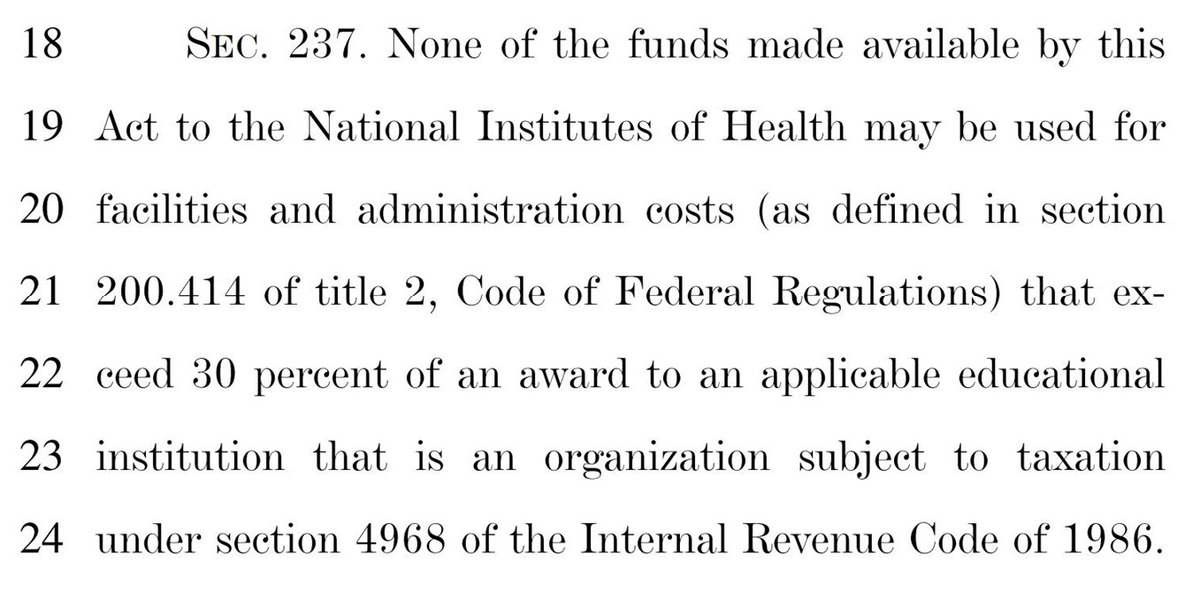
Paragraph tucked into House NIH funding bill to limit indirects makes research $ go further and attacks administrative bloat at wealthy colleges. Proposal caps indirects at 30% rather than reimbursing at a school's actual overhead rate. Current policy encourages wasteful spending at universities; this bill creates a powerful incentive to control costs.
via @stuartbuck1