Dusting off this tweet from April because this gap in shared understanding of LLM capability is *widening*. It's now less "two groups of people speaking past each other" and more a sharp funnel.
- Napkin math somewhere around 6B people (~75% of the population) have barely come in contact with LLMs at all.
- Around 1-2B (~20%) are casual and infrequent users of free-tier ChatGPT-like products. This group sees derpy chatbots and treats them a bit like a better Google search, a writing aid, or etc. Maybe an agent tries to book you a flight. I have non-tech friends who (reasonably, imo) say they have not much use for it at all. Even many professionals outside of math&code are in this tier. For example, execs and many other functions spend a lot of their time talking to other people, so while they understand what is happening intellectually, it is still second-hand and a bit abstract.
- Now we get to professional use of frontier-grade LLMs in math&code. Somewhere around 20M people (0.2%) see first-hand that large, complex projects that used to take them weeks/months can now be completed by agents with a prompt. Building apps, copying apps, translating apps, decompiling apps from binaries... This has all happened very quickly and recently - less than 1 year ago, I was writing code manually by hand, typing memorized computer code commands into a code editor character by character, occasionally pressing Tab to autocomplete a little chunk of code.
- And finally we get to the ~5,000 people (~0.00006%) with access to frontier-grade systems internally. The external world has seen the preview. It looks like swarms of thousands of agents collaborating over weeks on software mega projects: minting zero days, running cyber attacks and defenses at machine speeds, discovering new science, advancing the frontier of mathematics. Things that would have taken top professionals in the industry years of work. Meanwhile, human review and comprehension are starting to fall behind. For example, people are still involved in the "archeology" of the OpenAI-HF incident from many months ago. Mathematicians may be poring over the 722 manuscripts on frontier mathematics for a while.
The funnel is driven by a combination of factors:
1. The impact scales with ambition, problem size, and horizon. A question with a paragraph answer barely stresses the system. You need a reservoir of big, difficult problems that you really care about. This aspect drives the consumer / professional dimension of the funnel.
2. The jaggedness of the system (which I have written about a lot separately). Capability peaks in domains that are digital, verifiable and economically valuable. This is because LLM capability emerges from reinforcement learning on verifiable rewards on a curated environment mixture driven by revenue potential. This aspect primarily drives the area (e.g. math&code) dimension of the funnel.
3. Access. Free-tier, paid-tier, internal.
So this is the weirdness of the moment. The general public has mostly not interacted with these systems. When they have, it looks like a derpy chatbot. The majority of professionals still see only a modest uplift. And a small sliver of professionals are experiencing the vertigo of the curve going vertical. And it is all happening at the same time.
Perché due Paesi con stesse fabbriche e stesse ore di lavoro producono quantità diverse?
La risposta: produttività totale dei fattori (PTF), il residuo che misura quanto bene usiamo capitale e lavoro.
In 100 secondi 👇 (video e voce IA)
#PTF#Produttività#Economia#Crescita
We'll be spending a lot more time trying to understand the outputs of language models. A few thoughts, tips & tricks:
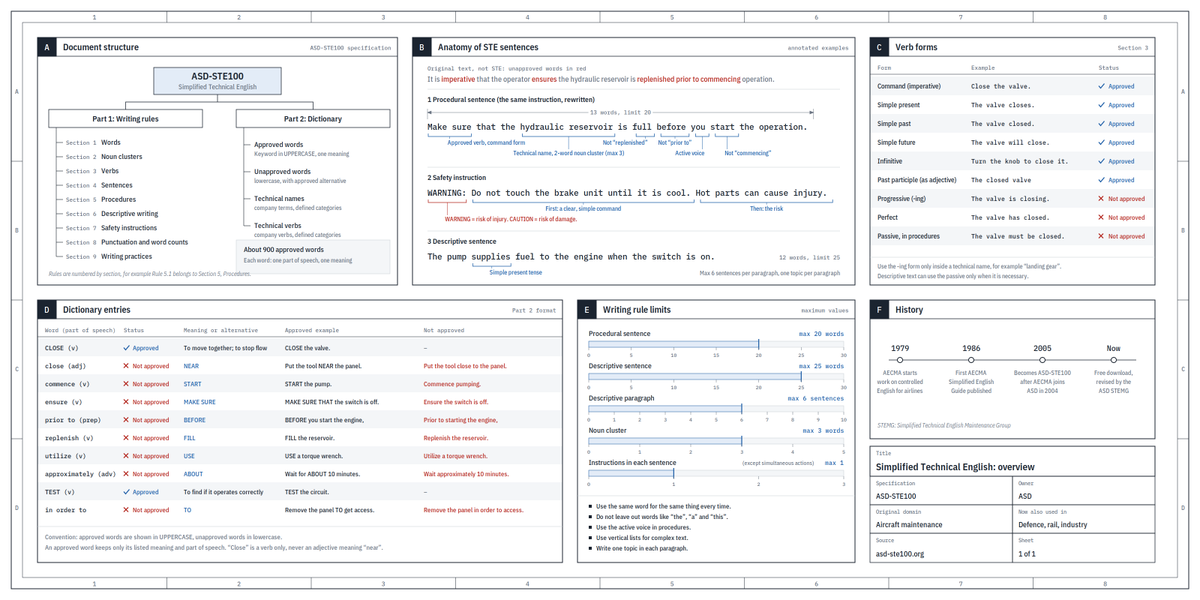
Writing. Something I've had success with: Ask your LLM to explain something in ASD-STE100, it's a controlled language specification originally developed for aerospace maintenance documentation. LLMs well-versed in this language and it comes with heavy constraints on clean writing style that I often find a lot more readable. Sometimes I've tried to soften it a bit e.g. ask for "80% of the way to ASD-STE100" because the spec is quite stringent. But even better:
Diagrams / images. Instead of writing, ask your LLM to create a diagram. These can be a lot easier to process, parse, and understand. But even better:
Web pages. Ask for output "in HTML" to get a beautiful, interactive webpage. LLMs are getting really good at frontend and can create beautiful experiences, animations, etc. But even better:
Explainer videos. The output format I am most bullish on is fully custom / bespoke explainer videos generated on any arbitrary topic. Experiment with things like "Create a 3b1b style video explainer on X. Use my ElevenLabs API key for audio narration". (you'd need an API key for the latter or you can ask your LLM to find you decent free alternatives that use your local compute). This is actually starting to work!
In summary:
- As LLMs get better, they will do more and more of the legwork autonomously, and a lot more of our work will rise up the abstractions into oversight and understanding.
- Luckily, LLMs can help here too because as intelligence and code are increasingly abundant, you can ask for large, custom, discardable software artifacts (e.g. web apps, video explainers) that would have never made sense to create before. Push the boundaries here and you'll be surprised.
🇺🇸 America's "Declaration of In-Dependence": 42% of US adults still lean on their parents financially.
72% of Gen Z. 53% of Millennials. 33% of Gen X.
And the average age people expect to finally stand on their own? 37.
https://t.co/1xBdpEDLli
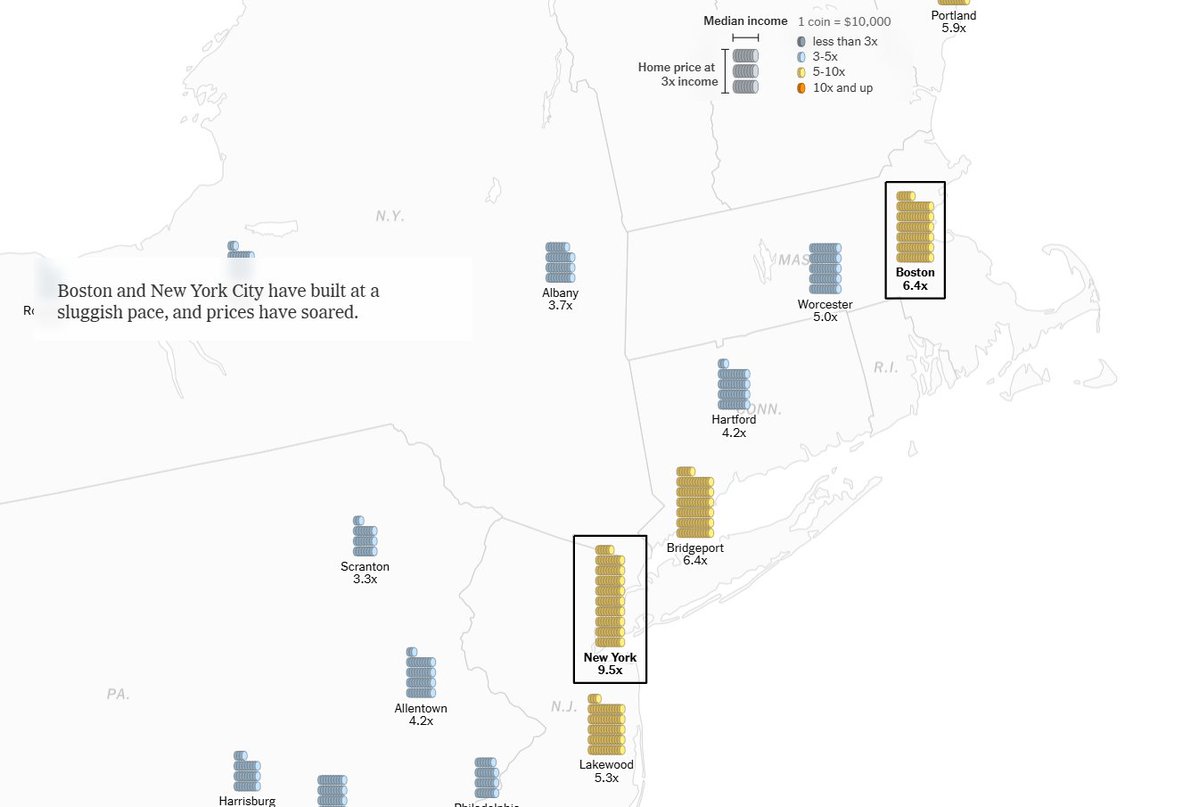
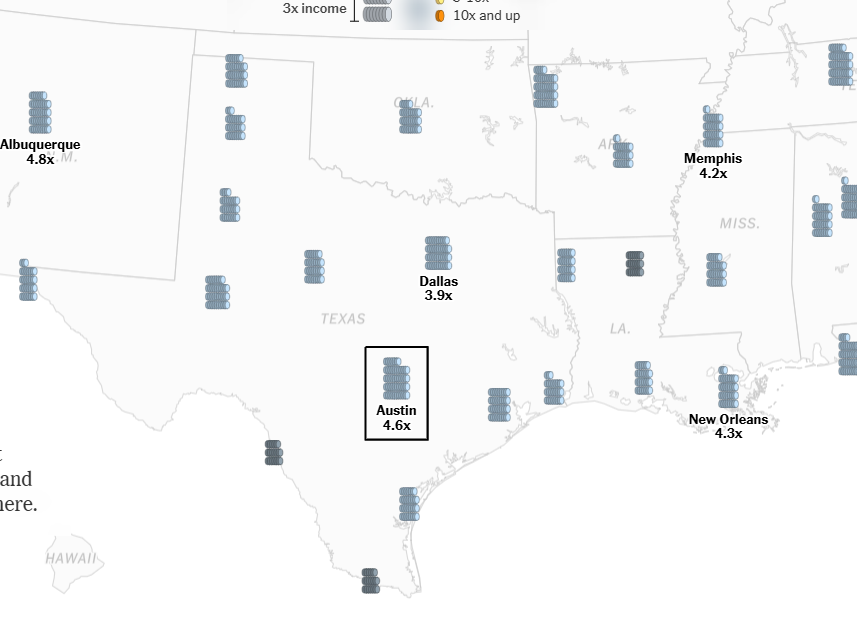
El editorial principal del NYT sobre la vivienda confirma con datos el principio económico más básico: donde se construye, los precios bajan; donde no, suben.
Dos ejemplos de los datos: San Francisco: solo 22 viviendas nuevas por cada 1.000 hogares en la última década, precio mediano 12 veces la renta mediana. Austin, que sí construyó (140 viviendas por 1.000 hogares): el precio mediano es 4,6 veces los ingresos.
El editorial señala que las zonas costeras caras, votantes demócratas y autodenominadas progresistas, han usado la normativa urbanística para maximizar el precio de la vivienda a costa de todos los demás. Muchos en Madrid (¡las cocheras de Atocha!) o en Pozuelo, o Barcelona deberían leerlo dos veces.
El NYT recomienda reducir las barreras burocráticas donde construir es legal pero imposible en la práctica.
Que en España todavía se discuta algo tan elemental dice más de nuestro debate público que de la economía de la vivienda. Sin construir más, no resolveremos el problema.
https://t.co/36PbNuYq25
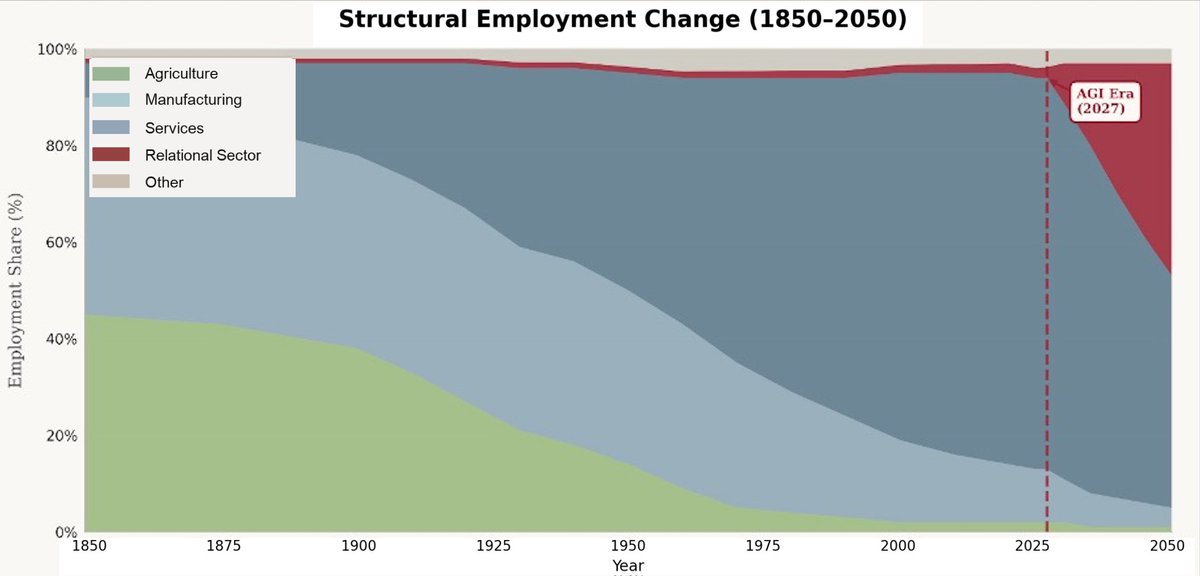
New essay on the economics of structural change and the post-commodity future of work.
1. Almost any question about the impact of advanced AI on the economy needs to start at the same place: what is still scarce? Answer that, and the analysis becomes pretty straightforward. This essay explores what becomes scarce if AI really can replicate most of what humans do in production, and what this mean for the future of jobs.
2. My conjecture, working through the economics: labor reallocates across sectors, and the sector it reallocates to has properties that keep labor a meaningful share of the economy. Ultimately this is about the structure of demand itself. For this, we have to go back to Girard, Augustine and Rousseau: once people's base needs are met, their preferences shift to comparative motives (e.g., status, exclusivity, social desirability). This motive is inherently non-satiated.
4. The key paper is Comin, Lashkari, and Mestieri (Econometrica 2021). As people get richer, they don't buy proportionally more of everything. They shift spending toward sectors with higher income elasticity. They estimate income effects account for 75%+ of observed structural change.
5. The ironic consequence: the sector that gets automated becomes a smaller share of the economy, not a larger one. Agriculture got massively more productive and its share of employment collapsed. Manufacturing too. The "stagnant" sectors absorb the spending and the jobs.
6. So the question is: which sectors have high income elasticity in a post-AGI world? I argue it's what I call the relational sector. Categories where the human isn't just an input into production, it is part of the value.
7. Why does the relational sector have high income elasticity? Because human desire has a mimetic, relational dimension. We don't just want things for their intrinsic properties. We want what others want, and we want it more when others can't have it. Girard, Rousseau, Augustine, and Hobbes all saw this.
8. In work with Kristóf Madarász, we showed this experimentally: WTP roughly doubles when a random subset of others is excluded from the good. And in new work with Graelin Mandel, AI involvement kills the premium. Human-made art gains 44% from exclusivity; AI-made art only 21%.
9. This all comes together for the core argument. The sector that absorbs spending as AI makes commodity production cheap is one where human provenance is part of the value, and demand for it grows faster than income. Exactly the profile that keeps labor meaningful.
10. To be clear about the claim: I'm NOT saying aggregate labor share must rise. It may fall. The claim is about sectoral composition, i.e., where expenditure and employment go once commodities get cheap, and the fact that the sector that will absorb reallocated labor maps to a substantial component of human preferences and desire.
11. If you're interested in the formal model, a linked companion technical note works out all the economics.
Read the essay here: https://t.co/NcjVgn2o8g
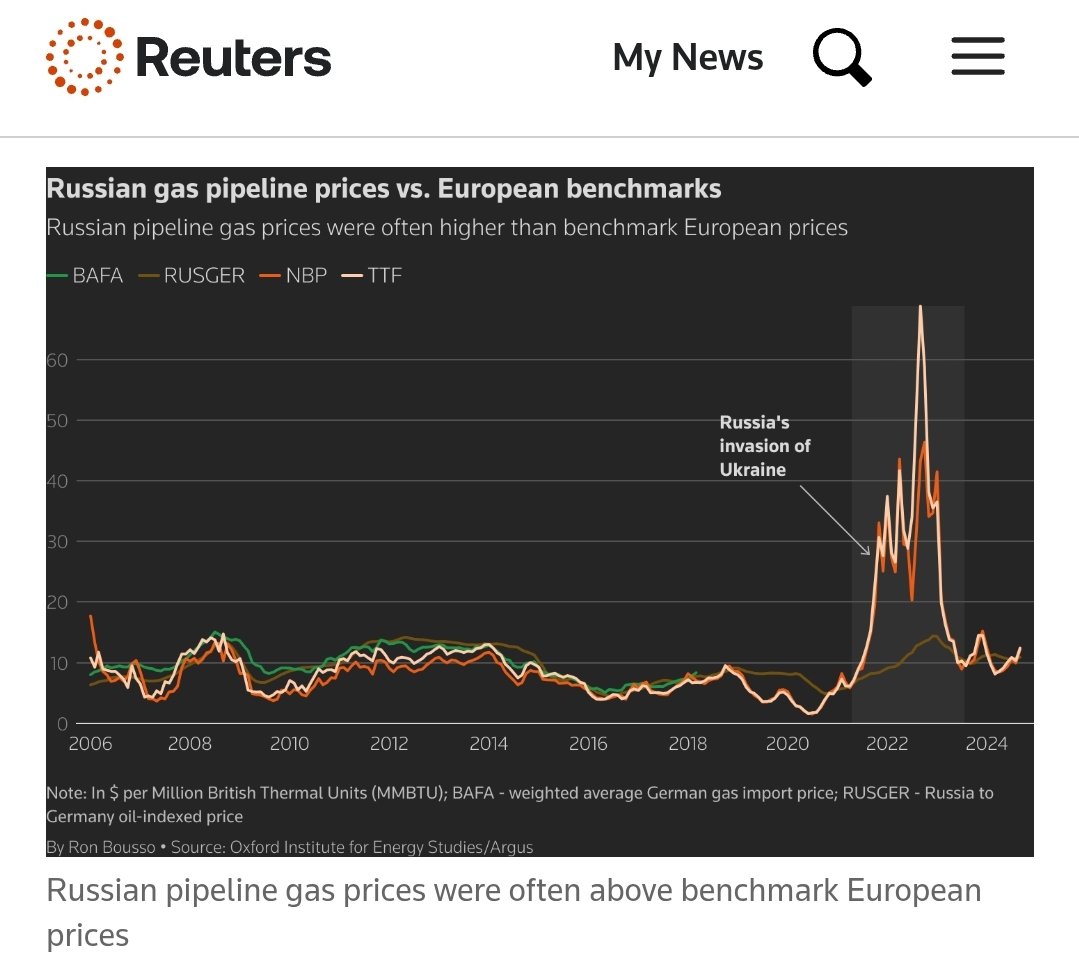
🧵 Gas russo for dummies
"I russi ci vendevano gas a buon prezzo, ora lo compriamo dagli americani a 4 volte tanto".
"Con il gas russo le bollette si abbassano".
Le cazzate russe sul gas si sprecano. È arrivato il momento di smontarle una per una.
1/➡️
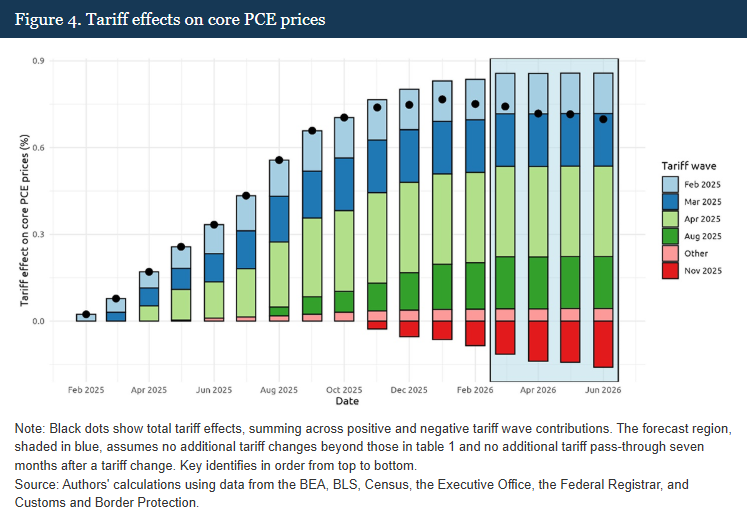
The authors estimate that the tariffs implemented through November of 2025 can explain the entirety of excess inflation in the core goods category and contributed to a 0.8 percent boost in core PCE prices through February 2026. https://t.co/bVGHP3qhhK #FEDSNote
BREAKING: Bruce Springsteen just announced that his band will be doing a tour in effort to fight back against Donald Trump's authoritarian overreach. The Boss is back!
No, the white collar jobs are not going away in 18 months!
I was furious with the populist-baiting language (in line with @DarioAmodei 's and @sama's also preferred apocalyptic usage) that Microsoft's @mustafasuleyman used in his FT interview, threatening everyone's jobs: “White-collar work, where you’re sitting down at a computer, either being a lawyer or an accountant or a project manager or a marketing person — most of those tasks will be fully automated by an AI within the next 12 to 18 months.”
Not only do I not see the point of this backlash inducing language, I also believe it shows no understanding of the way the labour market and organizations actually works and what people do all day. (My book on this with Jin Li and Yanhui Wu will be out soon.).
Don't get me wrong: I believe AI is a huge deal, and will radically change the world. But many white collar jobs are Messy jobs, as our book (and the post linked below) will explain: automating the automatable tasks within them is not near to automating the job.
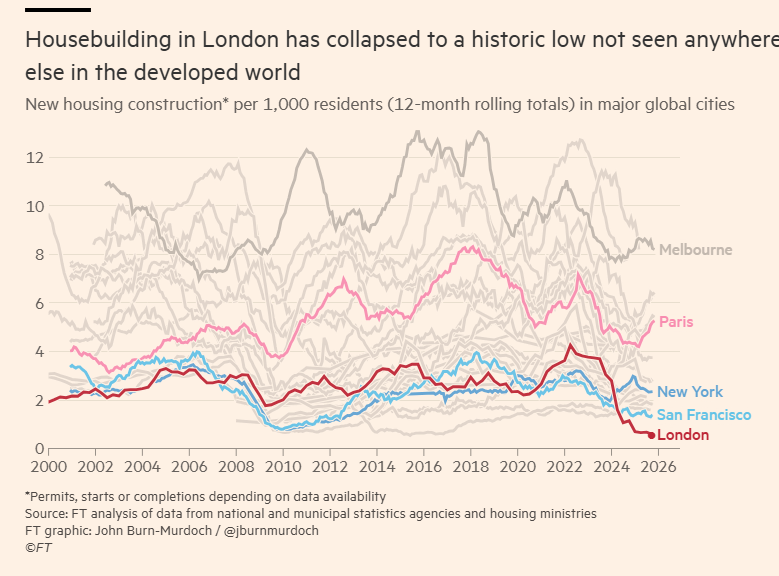
Let me make the point with the attached @jburnmurdoch graph on London.
London needs 88,000 new homes per year. In the first nine months of 2025, just 3,248 private homes started construction. Twenty-three of London's thirty-three boroughs recorded zero new housing starts in the first quarter of 2025. Planning permissions have fallen to their lowest level since records began in 2006. Construction of new rental homes fell by 80 percent in a single year. All this is after Starmer declared his government wants to "build, baby, build."
Does anyone think AI will fix this?
All the technology to design a building exists, and existed pre-AI. The bottleneck in London housing is human. What stops homes from being built in London are environmental and land use regulations and neighbors that weponize them.
AI can draft the review, but that is a trivial bit. It cannot convince the environmental group to drop its lawsuit or persuade politicians or negotiate with the neighbors.
These obstacles employ people. Suleyman and Amodei imagine that project managers spend their days doing Gantt charts, call their job "sitting down at a computer" and dream of automating them. But the job of the planning guys is not to fill in forms, but to negotiate and coordinate developers, residents, environmental groups, heritage bodies, and elected politicians who all have incompatible interests.
At other levels and in other jobs the same is true- radiologists spend only 1/3 of their time reading scans (see this great piece https://t.co/CQoK77OqxQ). Their job was supposed to be gone in 2017; in fact, the demand for radiologists is booming (employment and wages are sharply up). Many consultants try to elicit the tacit, local, knowledge of what is actually going on in a firm in order to make a recommendation. Yes, if you spend your day just doing PPTs, you will be replaced. But how many people do just that?
Organisations/managers resolve conflicts and deal with exceptions. Making a decision stick requires authority: being a person who can be blamed, sued, or fired. The manager resolves disputes about the rules, not just within them. Think of your last renovation in your house. The contractor trying to to get the guy installing the windows and the guys from the floor to show up and do a good job, a mess right? No algorithm does that.
AI will make white-collar workers more productive. Some single-task, automatable roles will shrink (doing taxes is an expert system, drafting contracts too), many tasks will be automated. Also, the disruption of career ladders is a real concern. But "most tasks fully automated in 18 months" is not a prediction. It is marketing, designed to sell enterprise subscriptions and justify capital expenditure.
The real world is messy. The mess is not a bug. It is what happens when human beings with competing interests try to get things done together.
For more on "Messy Jobs", here is my New Years post: https://t.co/vMjQUY8aTI. A book out soon.
🌟 Dive into the Davos discussions on AI's Job Paradox at Whalesbook, where optimism clashes with scepticism on the impact of AI in the job market. Explore the future of workforce automation and job creation here: https://t.co/Erac1SF4qq #AI#Automation#JobMarket
🚀 Exploring the Real Impact of AI on Jobs. Dive into how AI could create as many jobs as it displaces, streamlining processes across industries and boosting productivity. Learn more here: https://t.co/1g4UAZr2kr #AI#FutureOfWork
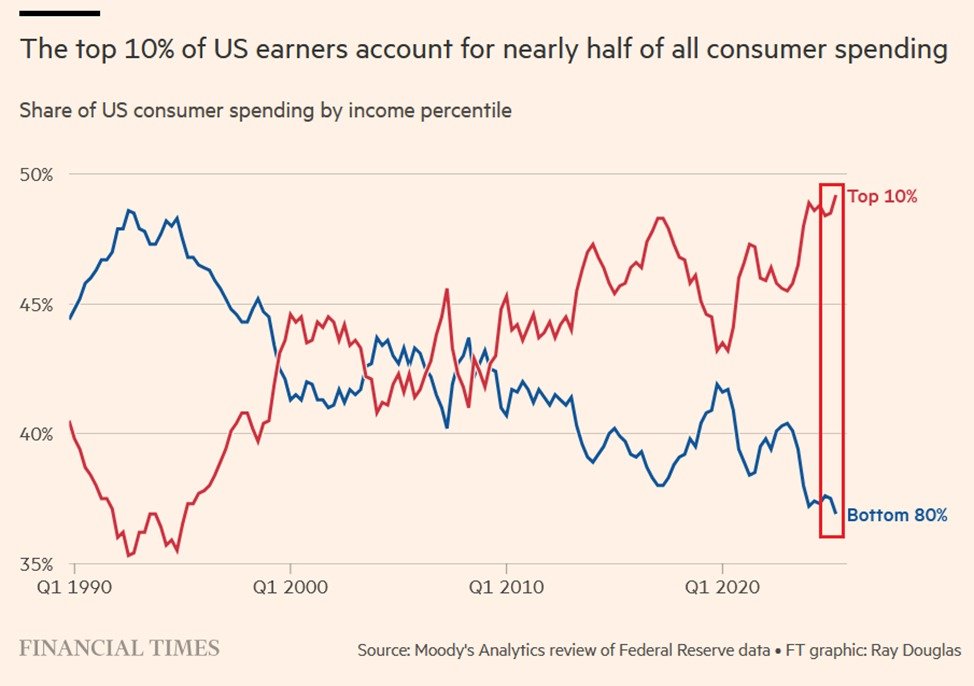
Shocking stat of the day:
The top 10% of US earners now reflect a record 49% of all consumer spending.
This percentage has risen +13 points over the last 30 years, marking a dramatic shift in spending power.
At the same time, the bottom 80% of earners represent just ~37% of total consumer expenditures, down -11 percentage points since 1995.
This means the top 10% account for a record 33% of US GDP, as personal consumer expenditures account for 68% of total economic output.
Meanwhile, the bottom 80% account for just 25% of the US economy.
Asset owners are the only winners in this economy.
🚀 Exciting update! @Gartner_inc reveals the top future of work trends for CHROs in 2026, emphasising digital workspaces, employee experience platforms, and DEI initiatives. Stay ahead of the curve to lead with impact. #FutureOfWork#CHRO
Check out here: https://t.co/KBnWzYsgQE
‼️The Great AI Disillusionment.
Discover why AI sometimes falls short on the factory floor and the key factors behind AI failures in manufacturing. Understand the importance of realistic expectations for successful AI integration.
https://t.co/UhdcuifRop
#AI#Manufacturing#Tech
Exciting read on integrating agentic AI into credit evaluation in finance! Discover how this strategic blueprint enhances decision-making efficiency. Learn more at: https://t.co/uqOrzNxkzl #AI#Fintech#CreditEvaluation
What if AI isn't stealing jobs, but arriving just as millions leave? 2025: Peak boomer retirements begin. 16M exit by 2035. The real story isn't automation vs. workers. It's automation vs. empty chairs.
https://t.co/peo9vhcaTH