1/ What is the structure of the Research Space?
(the network connecting fields that share authors).
The research space doesn't have a center. It is shaped like a ring connecting the life sciences and engineering through two paths.
Inventions that revolutionized human civilization
🔨 Stone Tools — c. 2.6 Mya
🔥 Control of Fire — c. 800,000 BC
🌾 Agriculture — c. 10,000 BC
⚒️ Metallurgy — c. 6,000 BC
🛞 The Wheel — c. 3500 BC
✍️ Writing — c. 3400 BC
🏛️ Concrete — c. 300 BC
📜 Paper — c. 105 AD
💥 Gunpowder — c. 9th Century
🧭 The Compass — c. 11th Century
👓 Optical Lenses — c. 1280
⏰ Mechanical Clock — c. 1300
🖨️ Printing Press — 1440
🚽 Flush Toilet — 1596
🚂 Steam Engine — 1712 / 1769
💉 Vaccines — 1796
❄️ Refrigeration — 1834
📡 Telegraph — 1837
🩺 Anesthesia — 1846
☎️ Telephone — 1876
⚙️ Internal Combustion Engine — 1876
💡 Light Bulb — 1879
📻 Radio — 1895
✈️ Airplane — 1903
🧴 Plastics — 1907
💻 The Computer — 1941
🔌 The Transistor — 1947
💊 Antibiotics — 1928
🖧 Internet — 1969
🌐 World Wide Web — 1989
📱 Smartphones — 1994 - 2007
🖇️ Sources: Britannica, Smithsonian Magazine, National Geographic
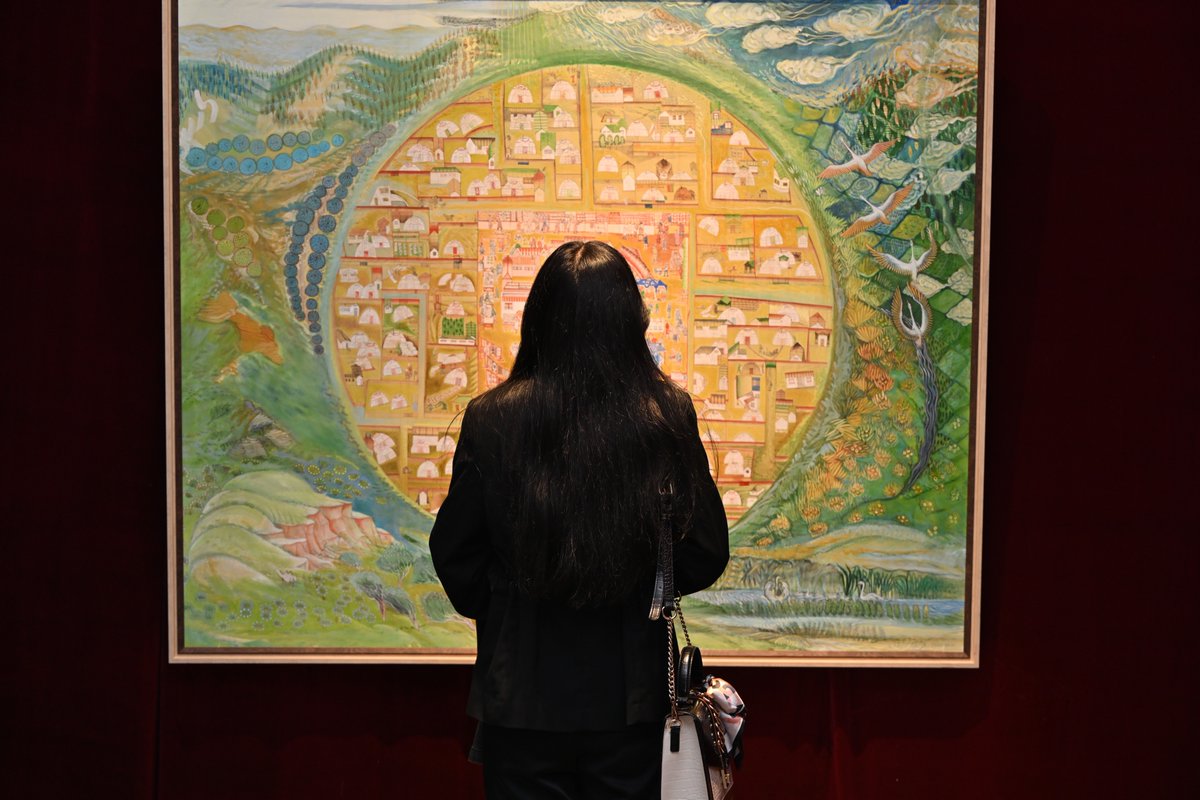
After #Hangzhou, #Venice, #Istanbul and #NewDelhi, #TheWindMakesTheSky continues its journey along the footsteps of #MarcoPolo with #WhereSplendidHorsesRun – the fifth chapter of the #BiennaleArchivio Special Project celebrating #MarcoPolo700. At The Fine Arts Zanabazar Museum in #Ulaanbaatar, the exhibition brings together works by @BaatarzorigB and #DolgorSerOd, activating a dialogue across languages, cultures and temporalities. Until 20 July 2026, within the museum’s galleries, visual narratives intertwine, bringing tradition and contemporaneity, East and West, into relation within a symbolic landscape traversed by an idea of freedom, also evoked in a verse by #DashdorjiinNatsagdorj from which the Project takes its title → https://t.co/9SO4vIVpvb
College students use AI to do most of their writing. An increasing number of professors secretly use it for grading. In the limit case, AIs do all the work, and all the humans do is transmit what they create. A good compiler would recognize this as dead code and remove it.
This is the best book I’ve read this year. It is also an important book. In a world obsessed with AI, Max Bennett (@maxsbennett ) approaches intelligence from a key point of view: biology.
A Brief History of Intelligence assembles the many mechanisms that contribute to intelligence in chronological order. This is not just clever structure. By explaining the problem each mechanism solves you get a deep understanding of why intelligence emerged and how it differs among species.
In this theory, intelligence emerges in animals because, unlike plants who can produce their own food, or fungi who eat what is already dead, animals roam the environment in search for something to kill and eat. In some ways, animals developed intelligence because we started in the worse ecological niche and were forced to innovate to survive.
These innovations start with the problem of deciding a common direction of motion in a multicellular organism. One of the things I found extremely refreshing, is that Bennet explains these mechanisms by summarizing experiments on c. elegans, a microscopic worm with about 300 or so neurons, that can be used to understand a primitive dopamine system and even emotions.
Do you ever feel like running away when you are in an uncomfortable situation? Do you like dancing when things go your way? Well, so does this little worm.
The book is filled with clever experiments that help separate the intelligence of worms, fish, and us, while showing that we still have much in common. When do we start recognizing patterns, and why? Why do the mechanisms that allow us to learn can lead to addiction? Why is imagination a key to intelligence?
From the basics of sensory input, valence, and motility Bennet takes us into neurochemistry, reinforcement learning, and credit assignment problems, showing that what we consider cutting edge research in machine learning is often something that evolution solved over one hundred million years ago. A truly refreshing read that humbles the field of AI while putting it into a broader perspective.
I would recommend this book to everyone interested in AI. After all, it is about something more general. About the I, no matter if it comes with an A or not. It is about the common problems that lead to the development of that I, and how these are shared by biological and artificial systems.
5 stars!!
Now you can turn Claude Code into a full academic research team with this
- Deep Research: 13 agents, 8 modes
- Academic Paper: 12 agents, 11 modes
- Academic Paper Reviewer: 7 agents
- Academic Pipeline: 10-stage orchestrator with citation verification
- Benchmark Report Schema
Check here
https://t.co/oDYrVGhJSI
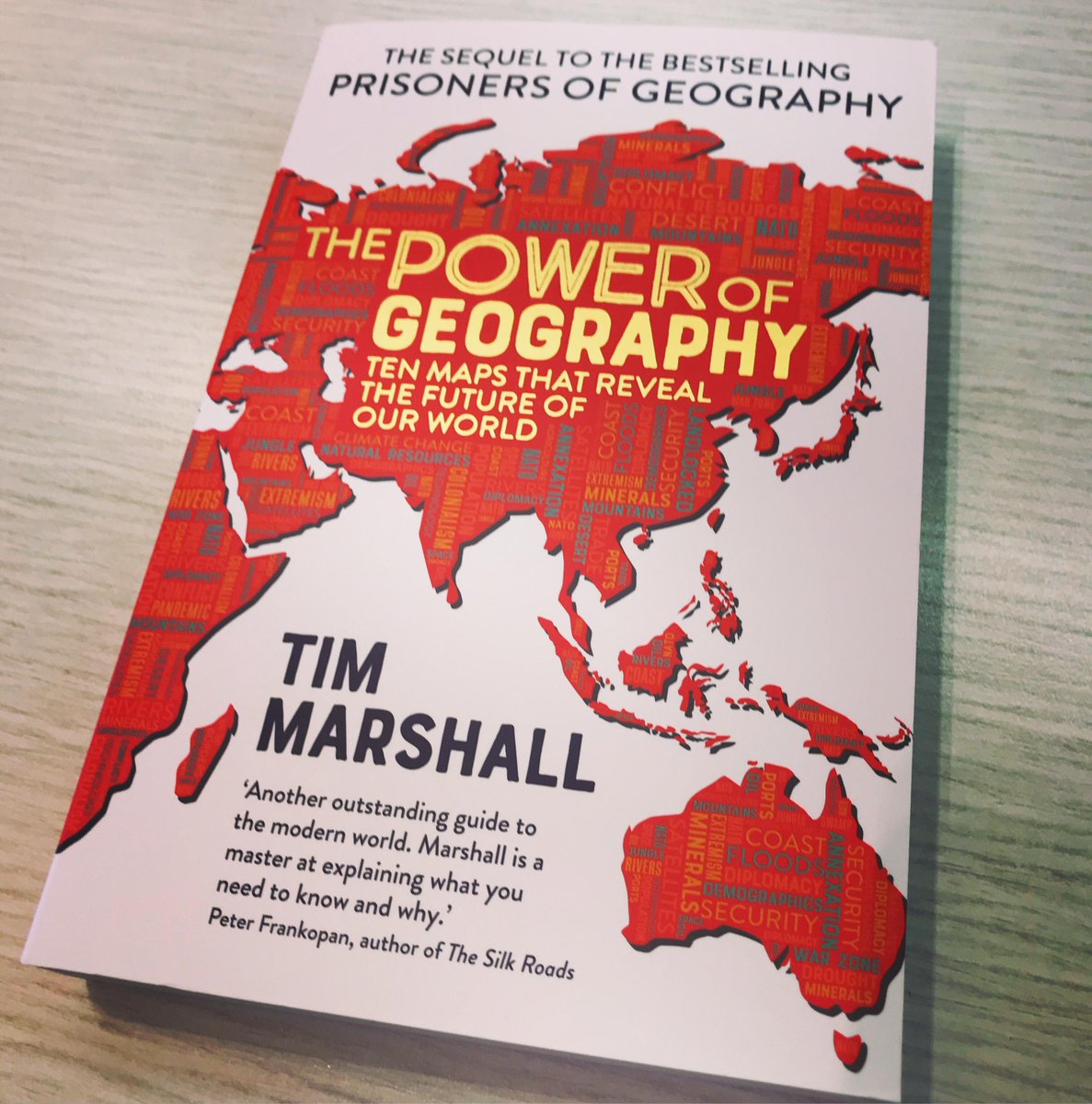
The Power of Geography: Ten Maps That Reveal The Future Of The World by Tim Marshall. Kama wewe ni mfuatiliaji wa geopolitics na mienendo ya siasa za kimataifa hupaswi kupitwa na kitabu hichi. Ni mwendelezo wa kitabu chake cha awali cha The Prisoners of Geography. #Geopolitics
🎶 Happy #WorldMusicDay!
Between c. 1700 and 1950, Western classical music evolved alongside profound political, social, and technological change, moving through four broad stylistic phases: Baroque, Classicism, Romanticism, and Modernism.
✍🏾 Infographic by Simeon Netchev.
Visual of the Week 🥇
Ireland rose from 14th to 2nd since 2000—and nine of the world’s 15 richest countries in 2026 are European.
https://t.co/0Lj0FEWe5A
🎤 🎶👩❤️👨 Top 16 best pop duets of all time
1. “Endless Love” – 🇺🇸 Diana Ross & 🇺🇸 Lionel Richie
2. “Say Say Say” – 🇬🇧 Paul McCartney & 🇺🇸 Michael Jackson
3. “Don’t Go Breaking My Heart” – 🇬🇧 Elton John & 🇬🇧 Kiki Dee
4. “The Boy Is Mine” – 🇺🇸 Brandy & 🇺🇸 Monica
5. “You’re the One That I Want” – 🇺🇸 John Travolta & 🇦🇺 Olivia Newton-John
6. “When You Believe” – 🇺🇸 Whitney Houston & 🇺🇸 Mariah Carey
7. “Ain’t No Mountain High Enough” – 🇺🇸 Marvin Gaye & 🇺🇸 Tammi Terrell
8. “Shallow” – 🇺🇸 Lady Gaga & 🇺🇸 Bradley Cooper
9. “I Knew You Were Waiting (For Me)” – 🇺🇸 Aretha Franklin & 🇬🇧 George Michael
10. “Ebony and Ivory” – 🇬🇧 Paul McCartney & 🇺🇸 Stevie Wonder
11. “I Got You Babe” – 🇺🇸 Sonny & 🇺🇸 Cher
12. “Up Where We Belong” – 🇬🇧 Joe Cocker & 🇺🇸 Jennifer Warnes
13. “No More Tears (Enough Is Enough)” – 🇺🇸 Barbra Streisand & 🇺🇸 Donna Summer
14. “Just Give Me a Reason” – 🇺🇸 P!nk & 🇺🇸 Nate Ruess
15. “Señorita” – 🇨🇦 Shawn Mendes & 🇨🇺 Camila Cabello
16. “Don’t Give Up” – 🇬🇧 Peter Gabriel & 🇬🇧 Kate Bush
16 unforgettable collaborations that marked generations with chemistry, impact, and timeless songs.
🎸 Top 16 Best Spanish Rock Songs
1. De música ligera — 🇦🇷 Soda Stereo The eternal closing of Latin rock.
2. Persiana americana — 🇦🇷 Soda Stereo Elegance, desire and new wave.
3. La célula que explota — 🇲🇽 Caifanes Dark poetry turned anthem.
4. Entre dos tierras — 🇪🇸 Héroes del Silencio Drama, power and monumental voice.
5. Lamento boliviano — 🇦🇷 Enanitos Verdes The anthem that everyone sings.
6. Matador — 🇦🇷 Los Fabulosos Cadillacs Rock, ska and Latin rebellion.
7. El baile y el salón — 🇲🇽 Café Tacvba Alternative romance turned cult.
8. En la ciudad de la furia — 🇦🇷 Soda Stereo The night turned into song.
9. Trátame suavemente — 🇦🇷 Soda Stereo Perfect and delicate melancholy.
10. Maldito duende — 🇪🇸 Héroes del Silencio Spanish mysticism in flames.
11. Devuélveme a mi chica — 🇪🇸 Hombres G Unforgettable youthful pop rock.
12. Oye mi amor — 🇲🇽 Maná Radio, romance and giant chorus.
13. Tren al sur — 🇨🇱 Los Prisioneros Chilean nostalgia on the rails.
14. Flaca — 🇦🇷 Andrés Calamaro Bohemia, desire and hangover.
15. Chica de ayer — 🇪🇸 Nacha Pop Definitive Spanish nostalgia.
16. Mariposa tecnicolor — 🇦🇷 Fito Páez Color, memory and emotion.
🖇️ Source: Billboard, Rolling Stone and editorial selection based on cultural impact, legacy and historical popularity.
Create a storyboard, feed it into Seedance 2.0, and let an LLM analyze the storyboard to generate better prompts.
A practical way to turn visual planning into more controlled and consistent video generation.
To try this workflow, link below 👇
This past Google I/O we created a multi-agent social simulation built using the Google Antigravity SDK. Virtual avatars of attendees interact autonomously inside a simulated space station.