🌊🎉 #argofloat network just hit a monumental milestone with its 3,000,000th profile!
Celebrating 20 years of in-situ, real-time, global, multi-disciplinary and free-access ocean data that has been revolutionizing modern oceanography for 20 years! #OceanScience#Argo3Million
Educators from across the country and the world are coming together at the @UW this week to learn about cutting-edge research and data from the GO-BGC array of profiling floats in the @MBARI_News EARTH workshop for educators.
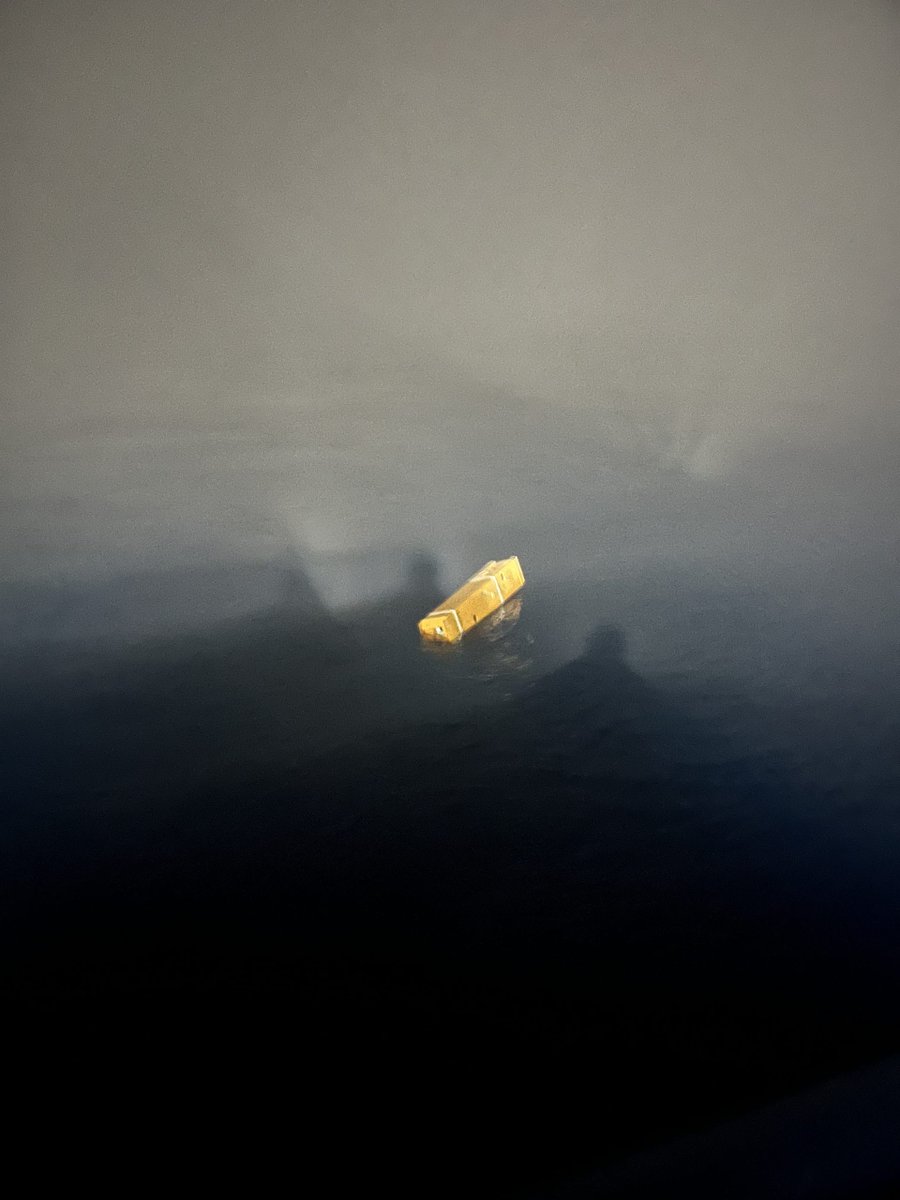
The team on the R/V Atlantis deployed the first @Scripps_Ocean SOLO float in dark & foggy conditions. The biology class from UT University Academy that adopted it gave it the perfect name, Aqua Serenity.
Expedition blog: https://t.co/bMuW8cmUto @melissatruth @bgc_argo
Robotic floats enable real-time observations of global ocean biogeochemistry. Together SOCCOM, @GO_BGC, @bgc_argo are enabling scientists to measure ocean health🌡️🩺
Check out the new interactive map showing both GO-BGC & SOCCOM floats around the world:
https://t.co/OUGRDdt6yF
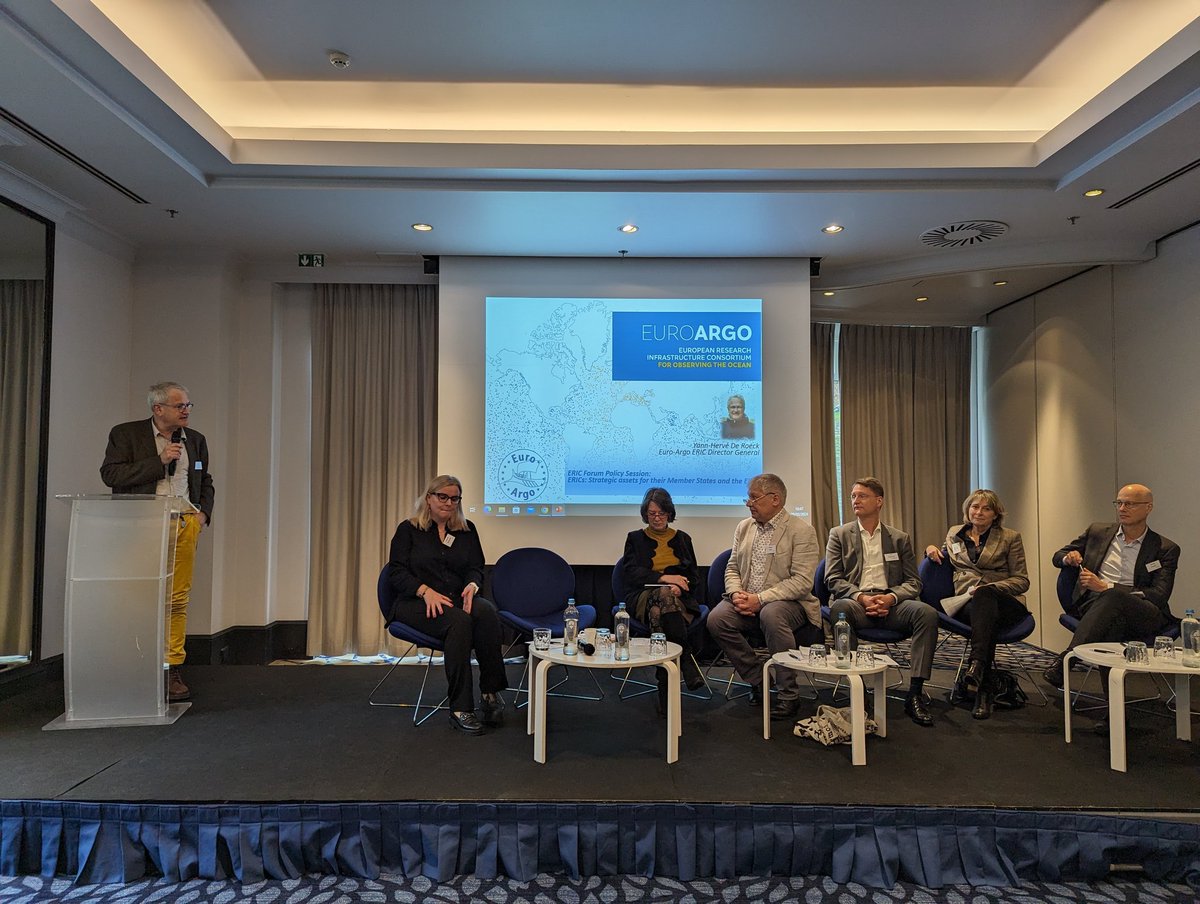
Yann-Hervé De Roeck, Director General of @EuroArgoERIC, shows the huge in-situ ocean observing network EuroArgo has set up and maintained over years to provide detailed data for climate models.
Pleased to be in Brussels🇧🇪 with 27 other ERICs and ERICs-to-be for the #ERICForum Annual Meeting ! @EuroArgoERIC is actively participating in Eric Forum 2 to strengthen the coordination of the #ERIC community and enhance its collaborations 🤝
How do scientists 'predict' the complex natural climate phenomenon that is #ElNiño? ⛈️ Dan Rudnick—the director of the Instrument Development Group and a Scripps oceanographer—shares more about the Spray2 glider and how these gliders support ocean observations. ⬇️
We are at #OSM24, booth 436 (3pm Mon-1pm Thu)! We look forward to meeting you and sharing Argovis’ latest features. An expert can help you get started with accessing and colocating data on the web interface or via a Python notebook on the browser. #NSFfunded#CUBoulderATOC
Join us at #OSM24 for the GO-BGC/ @SOCCOMProject Town Hall next week. You'll even get a FREE LUNCH!
Learn how you can use the publicly available, high-quality, real-time data observed by our global array of ocean profiling floats: https://t.co/GaRcemkQhd
✨New project released!🌊
🌡️I created novel data visualizations for sharing #Argo data on ocean warming in this collaboration with scientists Sarah Purkey and @MeganScanderbeg from @Scripps_Ocean. This animation debuted on Oceans day at the UN Climate Change Conference @COP28_UAE
This year, several compelling studies—made possible with Argo float data—made it clear that the Earth's carbon pump is slowing.
These findings made @ScienceMagazine's Breakthrough of the year runners up list: https://t.co/2mcSt9onZN
The #MOi Special Envoy at #COP28, Dr. von Schuckmann celebrated “Ocean Actions” on a dedicated day last week.
She presented at a variety of events, like “Observing the Changing Global Ocean: Heating, Salinity Changes, Carbonization, Acidification, Deoxygenation, and Greening”.
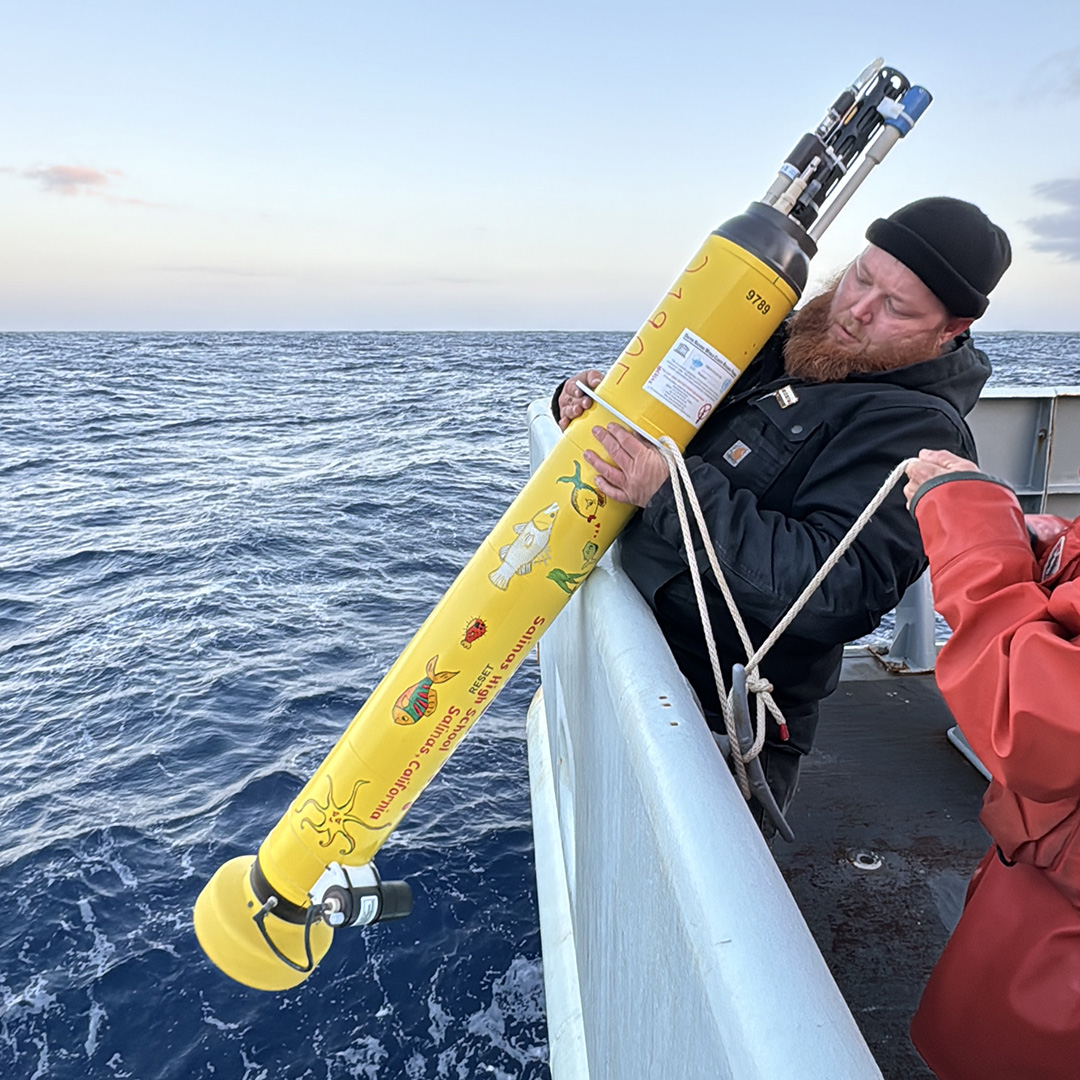
Benjamin Taylor, a fourth-year PhD student at Scripps Oceanography who studies patterns of warming and carbon transport in the Southern Ocean, recently returned home from a research cruise aboard R/V Roger Revelle from Cape Town, South Africa to Valparaiso, Chile. 🚢
On the cruise, he deployed floats for the @nsfgov-funded Southern Ocean Carbon and Climate Observations and Modeling (@SOCCOMProject) project. The floats will be used to unlock the mysteries of the Southern Ocean and help determine its influence on climate. #NSFFunded
📖 'Observing the full ocean volume using Deep Argo floats', a new article involving NOC's Dr Brian King and @bodc's Kamila Walicka, has now been published in @FrontMarineSci!
Read now 👉 https://t.co/RwTkVongJh
#deepargo#argo#argofloats