@Vorlage09 Der Mann hat noch keine 90min am Stück gespielt, landet aber in jeder hipster 433 Startelf auf X.
Ich glaub das ist das Phänomen, dass Fans die Vorstellung des Potenzials mehr lieben als die Realität. Man darf jetzt auch mal loslassen, wir haben genügend bessere spieler.
@gemuellert@FritzCohausz Auch wenn ich dir Recht gebe, gibt es gerade als Politiker einen entscheidenden Unterschied zwischen der Linken und der AfD.
Die Linke hat bereits bewiesen, dass sie staatsverantwortlich handelt, wenn sie gebraucht wird. Nur so wurde Merz zum Kanzler gewählt.
@kone_Bmg@VxnomV2 Da trügt bisschen die Erinnerung. Kroos war durchgängig Stammspieler und war genau wie Müller immer schon ein „Vielspieler“. Er hat dadurch übrigens 2013-2015 mehr Einsätze als Schweinsteiger und Martinez zusammen.
George Galloway posted this photo today with the caption "What if this was your Dad? #Gaza."
This man is not in Gaza and he is not Palestinian. He is Syrian, like me.
His name is Mohammed Mohiedin Anis, known as Abu Omar. AFP photographer Joseph Eid took this photo in March 2017, in the ruins of Abu Omar's bedroom in al-Shaar, eastern Aleppo, the neighborhood devastated in the regime's 2016 offensive to retake the city. Abu Omar was a collector of antiques and vintage cars. The war took his home and most of his collection. He came back anyway, sat on his bed in the rubble, lit his pipe and played a record. The whole world knew this picture as the face of Aleppo's destruction.
And Galloway knows exactly who destroyed Aleppo, because he was on their payroll.
In 2012, Galloway began hosting a show on Al Mayadeen, the Beirut channel that has never disclosed its backers and is widely seen as the voice of Iran's "Axis of Resistance." He was reportedly paid around £3,000 an episode. He also presented on Iran's state channel Press TV, and spent nearly a decade on Putin's RT.
The Axis: the Islamic Republic of Iran, Hezbollah, the Iraqi militias, the Houthis and, until December 2024, the Assad regime. For over 13 years after the 2011 uprising, Assad survived only because the IRGC, Hezbollah and Russia fought his war for him. When the regime finally collapsed, he fled to Moscow and was granted "humanitarian" asylum. The same humanity he denied every Syrian he bombed.
Who doesn't remember the barrel bombs on bakeries and markets? The sarin in Ghouta and Khan Sheikhoun? The chlorine in Douma?
Galloway remembers. On his show he called Assad "the last bastion of Arab dignity." When Assad gassed Douma in 2018, Galloway pushed the "staged attack" conspiracy, even though the OPCW confirmed chlorine was used.
None of this is new. This is the man who stood before Saddam Hussein in 1994 and saluted his "courage" and "indefatigability." He was suspended from the House of Commons after an inquiry found strong circumstantial evidence that Saddam's regime, with his connivance, used the Oil-for-Food program, meant to feed starving Iraqi children, to fund his Mariam Appeal campaign.
In 2014 he declared Bradford an "Israel-free zone": no Israeli goods, no Israeli academics, not even Israeli tourists. Police logged it as a hate incident.
Last year he flew to Tehran to accept an award named after Hamas leader Ismail Haniyeh, called him a "martyr," and boasted that his most treasured possession is Haniyeh's personal passport. Then he flew straight to Moscow to applaud Putin's Victory Day parade.
Today, the self-proclaimed anti-imperialist lives in what he calls "exile," broadcasting from Russia and China, lecturing the West about freedom.
This is not an honest mistake. It is the method of Galloway and his camp, and it is what they mean by "by any means necessary." When the truth doesn't serve the cause, you invent a new one. A Syrian father, ruined by Assad and his Iranian and Russian patrons, becomes a Gazan victim of Israel. The real killers get erased, and the propagandist who defended them on their payroll gets applause from a Western audience that never bothers to check.
Syrians remember who bombed Aleppo. They remember who went on TV to defend it.
Abu Omar is not your propaganda, shameless George.
@georgegalloway
@BeierStan09 Sabitzer will only leave if his contract is terminated. Realistic candidates for departure are Reggiani and Chukwuemeka. According to Book, a departure is required for an arrival.
@ainyrockstar Das tolle am Fußball ist ja, dass kein Unterschied gemacht wird, ob du aus bürgerlichem Hause oder armutsbetroffen bist, oder welche Hautfarbe du hast. Was zählt ist auf dem Platz. In der Kabine sind wir alle gleich. Das ist der Geist des Sports.
@Sky_Inge Gerade Klopp hat bewiesen, dass er mit der ganzen Bandbreite der Spielerqualität (2. Bundesliga bis Weltklasse) erfolgreich sein kann.
Wer Klopp kennt, weiß dass der Erfolg nur eine Frage der Zeit ist.
🇩🇪 I will keep making the case that there isn’t anything intrinsically anti-entrepreneurial in German culture, or in European culture for that matter:
• Germany is a surplus country specialized in manufacturing. It wants to export more goods than it imports.
• To do this means repressing wages and consumption to maintain competitiveness. The relatively weak euro, shared with indebted Southern European countries, helps to some extent, but much of the wage repression is the direct result of the 2004 Hartz reforms.
• This means there isn’t a compelling case for investing more in Germany. Because of wage repression, the domestic market is stagnant, with the situation made even worse by weak demographics, which means there is little need for additional investment to serve that market.
• This is compounded by two things. First, wage repression means that most savings end up trapped in corporate balance sheets and are therefore paid to shareholders, most of them US asset managers, rather than reinvested at home.
• Second, the government itself doesn’t invest because of its religious (and constitutional) commitment to balanced budgets. This helps explain the deplorable state of German infrastructure, which in turn makes the country even less investable. Why would you put money into a country where the trains are never on time?
• If you can’t invest domestic savings at home, those savings are invested abroad, notably in the US.
• And if the direction of capital flows is generally outward rather than inward, it means two things. First, whatever domestic capital is invested at home goes primarily into the safest assets, not VC or startups.
• Second, because Germany sends most of its own capital abroad, there isn’t a pull effect whereby foreign investors would be compelled to invest more in Germany. There is simply no relatively attractive yield, whether in VC or in any other asset class, and domestic capital is more than enough to cover what investment there is anyway. As a result, viewed from abroad, Germany is not even on the map as an investment destination, let alone as a place to allocate VC.
• Which is why a German version of Zuckerberg or Musk can’t scale their company at home: there simply isn’t enough capital, whether domestic or foreign, willing to fund the whole journey.
• The corollary is that those who really want to scale emigrate to the US and succeed because the US, being a deficit country, is the opposite of Germany: it is a magnet for capital! They then look back at Germany and say, in a condescending manner, “Oh, but it’s German culture and a lack of ambition.”
Germans want to build companies as much as any other people. The problem is that Germany has built an economy that sends the capital needed to build them elsewhere, betting the whole house on manufacturing and exports rather than startups.
And then China enters the room…
Cc @HMangesius@michaelxpettis@humanandtheloop@patrickc@SineadOS1@lugaricano@robin_j_brooks@daveg@christianmiele@kofinas
@schieritz Die Incentivierung für Konzerne orientiert sich nicht an dem tatsächlichen Wohnbedarf der Bevölkerung sondern an Profit. So gibt es vergleichsweise zu viele Gewerbe- und Büroflächen in Innenstädten. Sehr gute Erfahrungen hat man mit Wohnungsbaugenossenschaften gemacht.
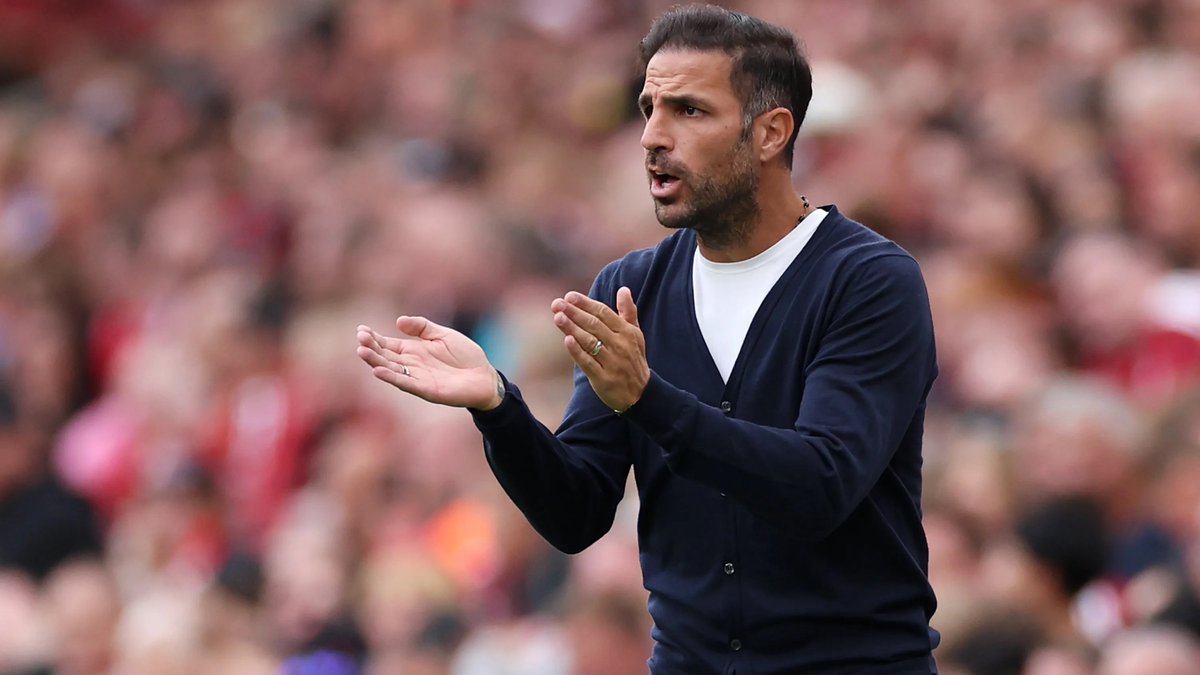
“I do not reason in dogmas. I have to teach my players to take autonomous responsibility. I cannot lock them in a tactical and mental cage.”
Cesc Fabregas
@Benny_BVB_09@ReeceEdwardsX@schwarzundgelb1 Die Spieler von Elversberg können das. Das ist ein Indiz dafür dass die Mannschaft qualitativ dem Trainer entwachsen ist und er überfordert. Er hat erfolgreich stabilisiert, den nächsten Schritt wird er nicht gehen können.