@MRrbzCT @NotJustTheNorm So sorry to hear about your parents. Not sure what your situation is now. We experienced a similar situation with our mother. Please take a look at our website - we are offering a different experience with patients who need memory care.
"Just when you thought life would get easier."
Elder Care:
Base Rent: $5,000
Level of Care: $5,000
1 on 1 Care: $13,000
Total: $23,000/month
Long term care insurance covers $6,000. Out of pocket $17,000.
This is a real (extreme) situation.
Depressing.
@dowellml I feel your pain. I had no choice (I feel awful for saying that) but to put my parents in memory care last year. The cost is astronomical. If only that money were being used to pay workers more, but it’s not. It’s all about profit and it’s 💔 and criminal.
Her family says Carol has been the primary caregiver for her husband, who has dementia and lives in a memory care facility. The cost of his care has strained their finances. Now, they’ve launched a GoFundMe to help cover recovery and housing expenses. https://t.co/u3BSrHp9nl
What happens to your assets if you are put in memory Care?
Google AI: When someone enters memory care, their assets are typically used to pay for the cost of care. If the resident's assets are insufficient, they may need to consider Medicaid to help cover the expenses. Medicaid, however, has requirements regarding asset limits and income, and also has a "look-back" period to ensure individuals haven't given away assets to become eligible.
Here's a more detailed breakdown:
Using Assets for Care:
The resident's assets, such as savings, investments, and real estate, are used to pay for the cost of memory care.
Medicaid Eligibility:
If the resident's assets and income are insufficient to cover the cost of care, they may qualify for Medicaid. Medicaid has specific eligibility requirements, including asset limits and a "look-back" period, to prevent individuals from strategically transferring assets to become eligible.
Asset Protection:
There are legal strategies that can be employed to protect assets from being used up for care costs, such as using a trust or planning ahead of the Medicaid look-back period.
Estate Recovery:
In many states, Medicaid has the right to recover the costs of care from a resident's estate after they pass away.
Spousal Protections:
In cases where a couple is married, spousal protections may allow the non-impaired spouse to keep certain assets, like a home, within specific limits.
Long-term Care Costs:
Memory care can be expensive, and it's important to understand how assets will be used and what options are available for covering costs, including Medicaid, according to Aging Care and the https://t.co/ABS87ZdFHt forum.
Along with the increase in rates, it means more money is spent on care.
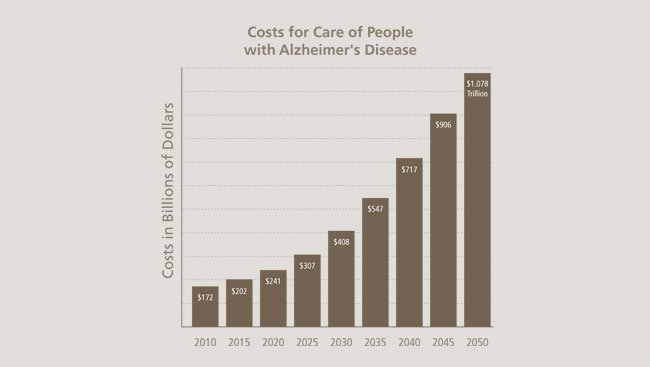
Have you seen what long-term assisted living and memory care facilities cost?
An incredible amount each month.
Just look at this chart
We shouldn’t have to go bankrupt to care for our loved ones—I nearly did.
You may not understand the positive impact that Kamala Harris’s plan to expand Medicare to cover in-home care would have, but as someone who has been a loved one’s caregiver, I can tell you that this isn’t just helpful; it’s necessary.
Caring for a spouse, a step-parent with Alzheimer’s, having a parent with pancreatic cancer, and having a parent who needed to be in an assisted living facility and skilled nursing home are all incredibly demanding and expensive. An assisted living facility for memory care for my step-dad cost us approximately $75,000 for just one year.
Regardless of how much you love and care for someone, it’s next to impossible to be their sole care-provider 24/7 while also raising children. It will emotionally, mentally, and physically deplete you.
Having an in-home care provider would have been life-changing, we simply couldn’t afford it long term.
I’m not a single-issue voter, but one of the biggest reasons I voted for Harris and Democrats down the ballot this election was because of this. I understand that everyone going through this needs help and that the majority of us, at some point in our lives, will need this.
Caring for a parent or spouse can financially tap you out, leave you struggling to find affordable care, and sometimes leave you feeling hopeless.
Vote for the party that wants to help you, not leave you flailing when times are the hardest.
#DemsWillDeliverHomeCare
#DemCast #HealthcareForAll #ProudBlue #YesWeKam
Winners & Highly Commended for @CareTalkMag’s Dementia Care Awards 2025 announced! 👏 https://t.co/8tCn4KwuHN
Celebrating excellence & paying tribute to the exceptional workforce & inspirational people living with dementia
#DementiaCareAwards
We hosted our Brain Health Roundtable with @RepBera Thank you Rep. Bera for leading an important conversation & for challenging us to come together as one community to reimagine the future of dementia care. Thank you, too, to our partner organizations and volunteers. #ENDALZ
Dementia, a condition that affects millions worldwide, has become a challenge of significant concern as the global population ages. Traditionally, care for dementia has relied heavily on medication, therapy, and the support of family and caregivers. However, now, the approach to dementia care is beginning to evolve in unexpected ways, writes @GeethaSrimathi
https://t.co/eAfsjhdlWw