Audible is cooked after this.
A developer built an open-source tool that turns any EPUB into a full audiobook on your own laptop.
It's called Audiblez.
You drop in an ebook.
It generates a proper .m4b audiobook.
You listen in VLC, Apple Books, or any audiobook player.
No subscription.
No credits.
No locked library.
No waiting for the publisher to release an audio version.
What you usually pay for:
Audible → monthly subscription
Speechify → $139/year
ElevenLabs → usage-based pricing
Professional narration → hundreds or thousands per book
Audiblez → pip install, run one command, done.
The wild part is how it works.
It uses Kokoro-82M, a tiny text-to-speech model with only 82M parameters that still sounds shockingly natural.
On a Google Colab T4 GPU, it can turn Animal Farm into an audiobook in about 5 minutes.
On an M2 MacBook Pro CPU, it takes about 1 hour.
And the new version even has:
- A graphical interface
- CUDA support
- Multiple languages
- Voice selection
- EPUB to audiobook conversion
- Local generation
- No cloud dependency
Most audiobook tools are built around renting access.
Audiblez is built around owning the pipeline.
Your ebook goes in.
Your audiobook comes out.
Your machine does the work.
Open-source.
Private.
Free.
This is what personal media should feel like.
// Memory as a Model //
The paper augments any LLM with a separate trained memory model that stores, retrieves, and integrates facts on its behalf.
It decouples memory updates from base-model weight updates. It achieves continual-learning robustness without catastrophic forgetting, which is a property that RAG fails to deliver.
A vector store is a database with a learned encoder bolted on. MeMo is a learned subsystem with explicit interfaces. That distinction matters, as agents need to be able to ingest fresh knowledge weekly without retraining or vector-DB churn.
At its core, the position here is that memory in agents should be modular, learned, and gated, not a context-window hack.
Paper: https://t.co/iMrghPtxWW
Learn to build effective AI agents in our academy: https://t.co/LRnpZN7L4c
New course: Build AI agents that generate images and videos -- an under-explored frontier. A key to performance is having the agent evaluate its own output, and iterate to improve quality. This short course is built together with @googlecloudtech and taught by Katie Nguyen and Wafae Bakkali.
You'll learn three evaluation techniques and combine them in an agent: image-text similarity scoring to check the output matches the prompt, an LLM judge that scores against custom criteria like brand consistency, and structured rubrics that break a prompt into verifiable yes/no questions like "is the subject in the frame?" and "does the camera motion match?"
Skills you'll gain:
- Learn image and video prompt engineering
- Build an image agent that turns brand guidelines into UI mockups
- Build a video agent that plans multi-scene explainers and animates reference frames with synchronized audio
Join and build agents that create images and video!
https://t.co/bjuSjIxcIG
How we prompt AI is very different in 2026 than 2022 when ChatGPT came out.
I'm teaching a new course, AI Prompting for Everyone, to help you become an AI power user — whatever your current skill level.
It covers skills that apply across ChatGPT, Gemini, Claude, and other AI tools. How to use deep research mode for well-researched reports on complex questions. How to give AI the right context, including more documents and images than most people realize you can provide. When to ask AI to think hard for several minutes on important decisions like what car to buy, what to study, or what job to take. And how to use AI to generate images, analyze data, and build simple games and websites.
I also cover intuitions about how these models work under the hood, so you know when to trust an answer and when not to.
Along the way, you'll see flying squirrels, a creativity test, some of my old family photos, and fireworks.
Join me at https://t.co/tcQc4iJAJG
Chrome's new `window.ai` feature is going to change the web forever! 🤯 It allows you to run Gemini Nano, a powerful 3.25B parameter LLM, 100% locally in your browser!
We've also added experimental support to 🤗 Transformers.js, making it super easy to use! 😍
Check it out! 👇
Goodbye Claude Code subscription fees.
Someone just built a proxy that runs Claude Code completely free... and it's wild.
You literally plug in a free NVIDIA API key and point Claude Code at localhost.
That's it.
It handles everything:
- Converts Anthropic API calls to NVIDIA NIM format
- Unlocks 40 requests/min for free
- Supports Kimi K2, GLM 4.7, MiniMax M2, Devstral and more
- Streams thinking tokens and tool calls live
- Even includes a Telegram bot so you can run Claude Code from your phone
No API bill. No rate limit panic. No vendor lock-in.
Honestly, this goes beyond router tools like OpenRouter.
It doesn't just swap the model... it turns Claude Code into a free agent you can control remotely.
The project is open-source on GitHub.
It's called free-claude-code.
Here are 10 anti-brainrot websites you should try:
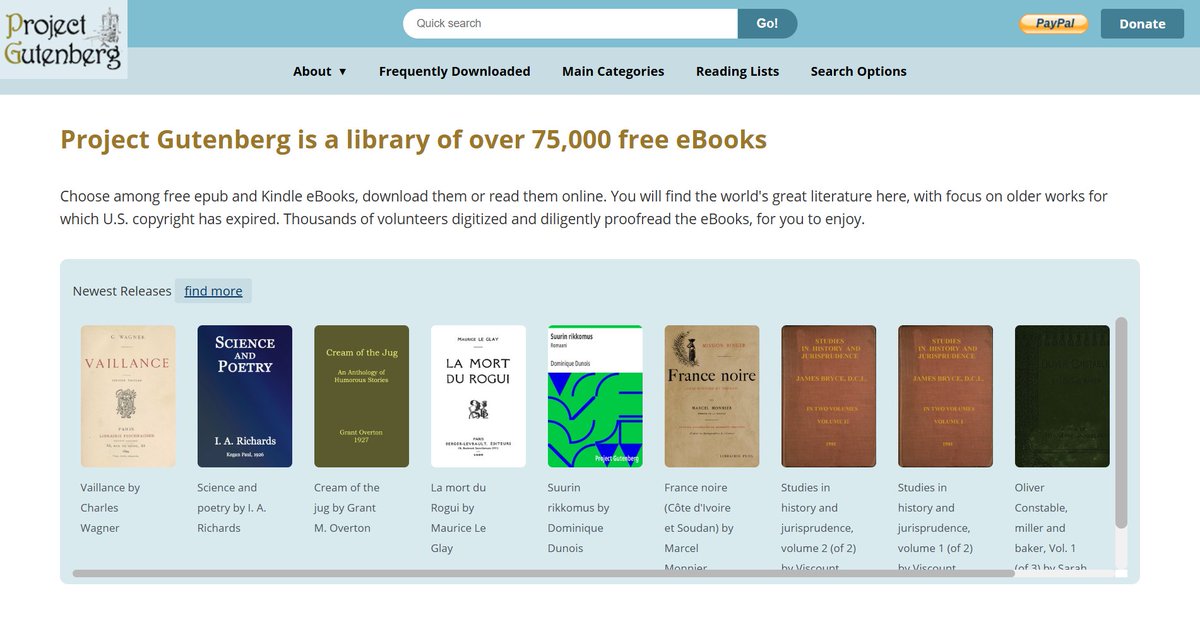
1. Project Gutenberg: Free access to thousands of classic books for deep, distraction-free reading.
🔗 https://t.co/1y5lW3epi8
2. Farnam Street: Distils timeless mental models and ideas to help people think better and make smarter decisions.
🔗 https://t.co/3Nyi0eSxDI
3. Longreads: Handpicked high-quality long-form articles that actually make you think.
🔗 https://t.co/v2qqZFjgfs
4. Coursera: University-level courses that upgrade your thinking instead of numbing it.
🔗 https://t.co/TCy11qnHQs
5. LessWrong: Sharp discussions on logic, decision-making, and cognitive biases.
🔗 https://t.co/9FWey855TR
6. Aeon: Thought-provoking essays on science, philosophy, and society.
🔗 https://t.co/OJBBsyrKbf
7. Internet Archive: Massive archive of books, videos, and knowledge across decades.
🔗 https://t.co/ZJ7BIxlpuN
8. Internet Encyclopedia of Philosophy: Clear, structured breakdowns of complex philosophical ideas.
🔗 https://t.co/UaI0p3ZdY8
9. MIT OpenCourseWare: Full access to real MIT lectures and materials for serious learning.
🔗 https://t.co/BV4akdpLBq
10. Open Culture: Curated free courses, books, and documentaries in one place.
🔗 https://t.co/KL7cPcWvfA
> been paying $200/month for cloud AI APIs
> laptop: M2 MacBook, 16GB RAM
> tried running models locally, garbage quality after 4K tokens
> read this TurboQuant breakdown on Tuesday
> applied 3-bit KV cache compression
> same MacBook now runs 100K token conversations
> quality: identical to cloud
> cancelled all API subscriptions Wednesday
> it's been 3 days
> saved $200/month forever
> with a free algorithm from a free paper
> my MacBook didn't change. the math did
OH. MY. GOD. There it is… from his mouth
🚨 Netanyahu Funded Hamas $35M a Month via Qatar, using U.S. Tax Dollars, and tells Investigators:
“This is confidential and can’t be leaked, okay? We have neighbors here, sworn enemies. I’m constantly passing them messages. I confuse them, mislead them, lie to them, and then HIT them over their heads.”
• Netanyahu worked to keep GAZA under the control of HAMAS. And keep the West Bank under the control of the Fatah with the goal of preventing them from ever being united.
• Netanyahu arranged for Hamas to receive $35 Million Dollars every month from Qatar
—— suitcases of $35M in American currency, every single month.
“Because the Qatar knew him, they made him put the request in writing because they knew he was going to lie in the future.” 🤯
The result? $1+ BILLION went into the hands of Hamas… fast forward — October 7.
Clip
https://t.co/qVoUUP8Dze
The Bibi Files
https://t.co/N8phIjQsml
We're excited to introduce Unsloth🦥Studio!
1. Chat UI has auto healing tool calling, Python & bash code execution, web search, image, docs input + more!
2. Finetune audio, vision, LLMs with an AI Assist data prep
3. Supports GGUFs, Mac, Windows, Linux + audio gen
4. Has SVG rendering, export to GGUF
5. gpt-oss harmony rendering, all inference params pre-set
6. Data designer + synthetic data generation
7. Fast parallel data prep + embedding finetuning
8. And much much more!
To get it, run:
pip install unsloth
unsloth studio setup
unsloth studio -H 0.0.0.0 -p 8888
Introducing Unsloth Studio ✨
A new open-source web UI to train and run LLMs.
• Run models locally on Mac, Windows, Linux
• Train 500+ models 2x faster with 70% less VRAM
• Supports GGUF, vision, audio, embedding models
• Auto-create datasets from PDF, CSV, DOCX
• Self-healing tool calling and code execution
• Compare models side by side + export to GGUF
GitHub: https://t.co/2kXqhhvLsb
Blog and Guide: https://t.co/ENuTWal5AA
Available now on Hugging Face, NVIDIA, Docker and Colab.
.@AnthropicAI won't let you sit the Claude Certified Architect exam. But I will over at ExamPro with my equivalent certification because opportunity should be for everyone.
Love this system. Here’s the full checklist so you can easily implement today:
1. Create your knowledge base (30 min)
Create these starter files:
- `company-overview. md` - revenue model, margins, key metrics
- `team. md` - org chart, roles, who owns what
- `clients. md` - top 10 clients, contract terms, renewal dates
- `processes. md` - sales flow, onboarding, fulfillment
- `voice. md` - how you write, tone, phrases you use
2. Install Obsidian (5 min)
- Download from obsidian. md (free)
- Open as vault: ~/business-brain
- Start linking files with [[wikilinks]]
3. Connect Claude Code (10 min)
If you have Claude Max/Pro: Claude Code reads local files natively
Point it at your vault:
claude --directory ~/business-brain
4. Create your instruction file (15 min)
`CLAUDE. md` in your vault root:
You are my Chief of Staff. Read all .md files in this vault before responding. When I mention a client, pull all linked files. Never ask me to re-explain context that exists here.
5. Test it
Open Claude Code. Ask: "What do you know about [your biggest client]?"
It should pull the full picture without you explaining anything.
60 minutes. Full company context. Every session.
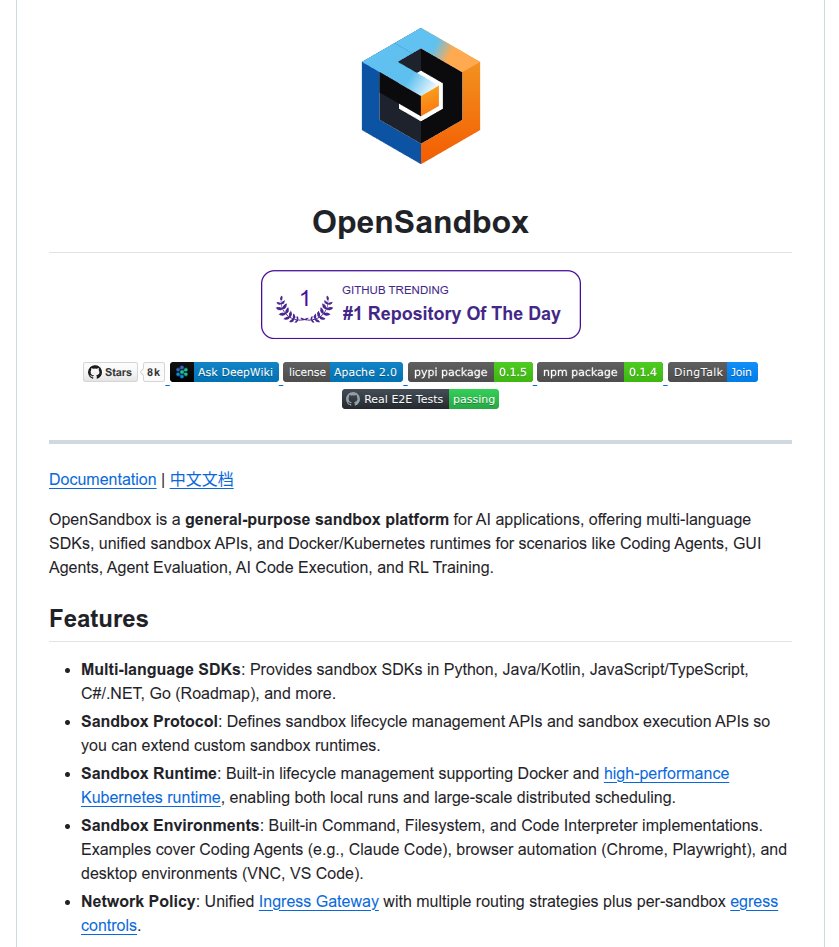
Alibaba just open-sourced OpenSandbox ( a general-purpose execution environment ) to give AI agents an isolated environment to run code safely.
8k+ Github stars ⭐️
This stops your AI Agent based applications from accessing your actual host infrastructure.
By removing the hardest security roadblock, this release will massively accelerate how fast developers can build autonomous Agent based tools.
OpenSandbox puts the agent inside isolated runtimes like gVisor or Firecracker.
You can run it locally using Docker or scale it up using Kubernetes.
The system includes a code interpreter and a file system that the agent uses to complete tasks.
It also manages network traffic so you control exactly what the agent accesses online.
I think this will become the standard infrastructure for autonomous systems because building custom sandboxes is too dangerous for most teams.