Mike's Web3 World Weekly #8: KBW2024, Secondary Market Opportunity, Penpie Hacked
Hello and welcome to this week's edition!
You can find the full version in Substack, and it's always free! 🧵
(https://t.co/qe1THlfNs9)
Similar to the panic over DeepSeek R1, some uneducated people think Kimi K3’s use of linear attention (KDA) is bad for NVIDIA, HBM, DRAM, and networking because it has relatively lower KV-cache requirements. The opposite is true, and we explain why below. 👇️ 1/8🧵
Agents can now create email inboxes with USDC on @base
AgentMail supports @CoinbaseDev’s x402 protocol to give agents access to email without accounts or API keys
See how it works 👇
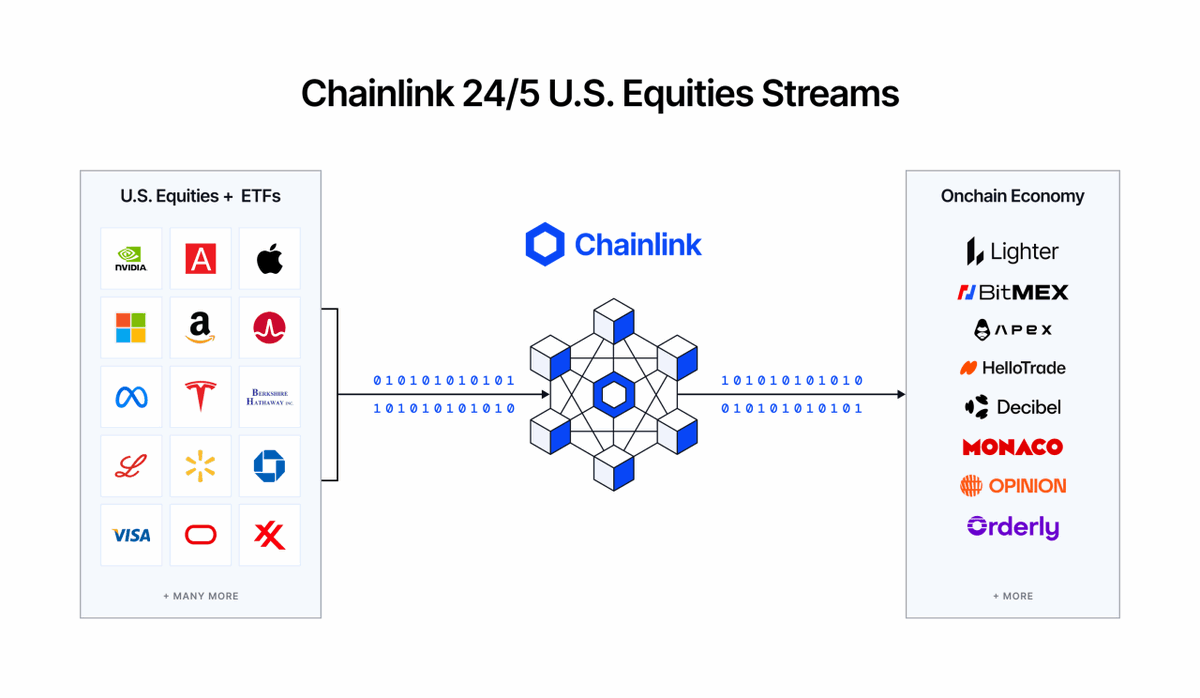
It's official, the $80 trillion U.S. stock market is coming onchain and it's powered by Chainlink 🔥
24/5 U.S. Equities Streams is now live across 40+ blockchains—providing fast and secure market data across all major U.S. equities and ETFs
This data stitches together regular trading hours (weekdays 9:30AM - 4PM ET) with pre, post, and overnight trading market data to create a continuous 24/5 stream of data
As trading of U.S. equities and ETFs migrates to becoming 24/7, Chainlink will easily support that transition
Notably, this data goes beyond delivering a mid-price, but also provides bid-ask data, last trade prices, volumes, market-status flags, and staleness indicators
This data unlocks countless onchain use cases including equity perps, prediction markets, tokenized/synthetic equities, lending markets, structured products, and more
Day-one users includes:
- @Lighter_xyz (2nd largest perp DEX)
- @BitMEX (the inventor of crypto perps)
- @OfficialApeXdex (top-10 perp DEX)
- @hellotradeapp (MegaETH perp DEX)
- @DecibelTrade (Aptos perp DEX)
- @MonacoProtocol (Sei betting markets)
- @opinionlabsxyz (Prediction markets)
- @OrderlyNetwork (Perp DEX infra)
Chainlink is the backbone of the onchain economy
Today, NYSE is proud to announce the development of a platform for trading and on-chain settlement of tokenized securities.
NYSE’s new digital platform will enable tokenized trading experiences, including 24/7 operations, instant settlement, orders sized in dollar amounts, and stablecoin-based funding. Its design combines the NYSE’s cutting-edge Pillar matching engine with blockchain-based post-trade systems.
Learn more: https://t.co/gknK3viIyp
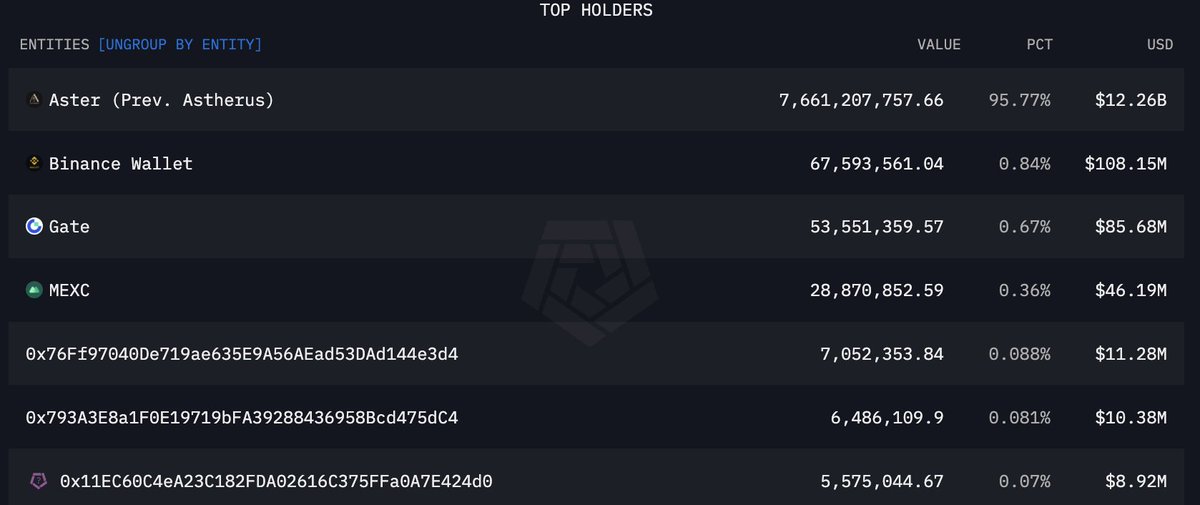
Aster team wallets currently are in possession of 95.77% of all Aster tokens, an insider percentage higher than the Kanye West token at launch day (94%)
Weekly Reflection
• This week is Korea Blockchain Week (KBW 2024). Although I couldn't attend in person, past experience suggests that we'll soon see plenty of "Recap of KBW 2024" threads. These will be valuable for gathering key insights from those who were on the ground.
• There hasn't been a major hacking incident for a while, but the recent $27M hack of Penpie is a significant event.
• My Takeaway: Penpie's real-time response was commendable, and their post-incident report was transparent, clearly explaining how the breach occurred. They acknowledged that as their business expanded, regular audits were not conducted on all contracts. Their solution moving forward includes a comprehensive audit of current contracts and regular code audits in the future.
• I have significant concerns about the business practice of contract auditing:
• Most contract audits are expensive and time-consuming. If the audit is too brief, it might raise doubts about its thoroughness. As a result, frequent audits aren't feasible(?
• In the event of a hack, who should bear the losses, and how should the responsibility be divided? Is it reasonable for the audit company to be completely absolved of responsibility?
• How do we measure the quality of an audit company's service? To me, it's whether the audited contracts have been successfully hacked. But when audits can't be conducted frequently, do audit firms still have the incentive to maintain high-quality audits?
• I sincerely hope that part of the stolen funds can be successfully recovered. While the incident is regrettable, Penpie's team demonstrated proactive crisis management.
• Dan Tapiero mentioned some very interesting phenomena in the Empire. Here are some notes:
• He focuses on growth-stage companies rather than venture capital, specifically targeting more developed companies.
• A significant amount of money was raised for a specific opportunity to invest in companies in the secondary market at highly attractive valuations (60% to 90% discounts).
• Market Situation:
- Very few funding rounds have occurred in the past year for growth-stage companies, especially for larger companies with a few hundred million in revenue.
- The secondary market is distressed due to the FTX debacle, leading traditional private equity funds like Silver Lake, Tomo Bravo, and Tiger Global to exit, causing a significant drop in valuations.
• Investment Value:
- OpenSea, once valued at $13 billion, can now be bought in the secondary market for $1 billion.
- Some companies are generating higher revenue and profits today than in 2021, yet their equity can still be purchased at 50% to 80% discounts.
• Liquidity Pressure:
- Employees, former employees, and early venture investors are under pressure to liquidate their stakes and are willing to sell at very low prices.
- Over $600 million has already been deployed across four funds to acquire these distressed assets in the secondary market.
• Market Dysfunction:
- The secondary market is largely non-functional, primarily because larger growth investors and private equity investors have exited and are unlikely to return.
- Unlike others, the focus has been on investing at lower valuations, typically around 10 to 11 times revenue, as opposed to the high multiples others paid.
• Investment Strategy:
- The strategy is to capitalize on the current market’s specific opportunities, particularly in the later stages where there is a liquidity crunch.
- Currently acquiring a crypto company that will generate over $1 billion in revenue this year at 2.5 times revenue, with over 100% growth expected this year.
• Dan has no interest in competing in the venture space, he thinks venture space is too competitive.
• Takeaway: As retail investors, we obviously can't deploy $600M like Dan to acquire companies, but similar opportunities certainly exist, growth-stage companies with 5x-10x potential over 10 years.
• Now seems to be a good time to buy companies with revenue. Dan mentioned that in his secondary market investments, revenue has always been a key criterion.
• We previously highlighted AAVE as a promising token. This week, we noticed a whale purchasing $6.78M of AAVE at an average price of $134.6, while the founder sold $6.67M of AAVE.
• As far as I know, there are four main ways to gain liquidity from AAVE: selling it, borrowing and lending on the AAVE protocol, minting GHO, and borrowing and lending on the Venues protocol.
• Whether this behavior deserves criticism remains to be seen.
• If any adverse events concerning AAVE's management occur in the short term, indicating that insiders are exploiting information asymmetry to take advantage of the market, it would undoubtedly harm the industry. However, if nothing happens, it can be viewed as a normal personal financial decision.
Wishing you a successful week ahead. See you next week for more updates!
(https://t.co/qe1THlfNs9)
Weekly Reflection
• This week is Korea Blockchain Week (KBW 2024). Although I couldn't attend in person, past experience suggests that we'll soon see plenty of "Recap of KBW 2024" threads. These will be valuable for gathering key insights from those who were on the ground.
• There hasn't been a major hacking incident for a while, but the recent $27M hack of Penpie is a significant event.
• My Takeaway: Penpie's real-time response was commendable, and their post-incident report was transparent, clearly explaining how the breach occurred. They acknowledged that as their business expanded, regular audits were not conducted on all contracts. Their solution moving forward includes a comprehensive audit of current contracts and regular code audits in the future.
• I have significant concerns about the business practice of contract auditing:
• Most contract audits are expensive and time-consuming. If the audit is too brief, it might raise doubts about its thoroughness. As a result, frequent audits aren't feasible(?
• In the event of a hack, who should bear the losses, and how should the responsibility be divided? Is it reasonable for the audit company to be completely absolved of responsibility?
• How do we measure the quality of an audit company's service? To me, it's whether the audited contracts have been successfully hacked. But when audits can't be conducted frequently, do audit firms still have the incentive to maintain high-quality audits?
• I sincerely hope that part of the stolen funds can be successfully recovered. While the incident is regrettable, Penpie's team demonstrated proactive crisis management.
• Dan Tapiero mentioned some very interesting phenomena in the Empire. Here are some notes:
• He focuses on growth-stage companies rather than venture capital, specifically targeting more developed companies.
• A significant amount of money was raised for a specific opportunity to invest in companies in the secondary market at highly attractive valuations (60% to 90% discounts).
• Market Situation:
- Very few funding rounds have occurred in the past year for growth-stage companies, especially for larger companies with a few hundred million in revenue.
- The secondary market is distressed due to the FTX debacle, leading traditional private equity funds like Silver Lake, Tomo Bravo, and Tiger Global to exit, causing a significant drop in valuations.
• Investment Value:
- OpenSea, once valued at $13 billion, can now be bought in the secondary market for $1 billion.
- Some companies are generating higher revenue and profits today than in 2021, yet their equity can still be purchased at 50% to 80% discounts.
• Liquidity Pressure:
- Employees, former employees, and early venture investors are under pressure to liquidate their stakes and are willing to sell at very low prices.
- Over $600 million has already been deployed across four funds to acquire these distressed assets in the secondary market.
• Market Dysfunction:
- The secondary market is largely non-functional, primarily because larger growth investors and private equity investors have exited and are unlikely to return.
- Unlike others, the focus has been on investing at lower valuations, typically around 10 to 11 times revenue, as opposed to the high multiples others paid.
• Investment Strategy:
- The strategy is to capitalize on the current market’s specific opportunities, particularly in the later stages where there is a liquidity crunch.
- Currently acquiring a crypto company that will generate over $1 billion in revenue this year at 2.5 times revenue, with over 100% growth expected this year.
• Dan has no interest in competing in the venture space, he thinks venture space is too competitive.
• Takeaway: As retail investors, we obviously can't deploy $600M like Dan to acquire companies, but similar opportunities certainly exist, growth-stage companies with 5x-10x potential over 10 years.
• Now seems to be a good time to buy companies with revenue. Dan mentioned that in his secondary market investments, revenue has always been a key criterion.
• We previously highlighted AAVE as a promising token. This week, we noticed a whale purchasing $6.78M of AAVE at an average price of $134.6, while the founder sold $6.67M of AAVE.
• As far as I know, there are four main ways to gain liquidity from AAVE: selling it, borrowing and lending on the AAVE protocol, minting GHO, and borrowing and lending on the Venues protocol.
• Whether this behavior deserves criticism remains to be seen.
• If any adverse events concerning AAVE's management occur in the short term, indicating that insiders are exploiting information asymmetry to take advantage of the market, it would undoubtedly harm the industry. However, if nothing happens, it can be viewed as a normal personal financial decision.
Wishing you a successful week ahead. See you next week for more updates!
(https://t.co/qe1THlfNs9)
Mike's Web3 World Weekly #8: KBW2024, Secondary Market Opportunity, Penpie Hacked
Hello and welcome to this week's edition!
You can find the full version in Substack, and it's always free! 🧵
(https://t.co/qe1THlfNs9)
I don’t do this often but going to share my market thoughts here so that we can come back and laugh at them later. Massive bottom signal, tbf
It’s possible that crypto, specifically Bitcoin, is just an incredibly sensitive macro asset that sniffs out market regime changes before other assets do.
Combine this with the large spot selling we saw starting in July, and it’s been a rough summer. Meanwhile equities have performed well.
I used to think of liquid crypto as an asset class that was just like higher beta equities. I think many others shared that view which has made this summer extra painful.
The problem for us in the next few weeks is that crypto usually performs like higher beta equities when they finally wise up to the market regime change
What if, we’re about to see much more damage in equity markets? The decline needs to be sufficient enough to justify a sharp reversal in Fed policy and aggressive rate cuts similar to mirror the steep hikes of 2022.
We’ve all seen the dot plots of typical equity market performance post Fed cuts. It can be abysmal, on average 20% 200 days post reversal.
You can’t always map to the past, but broader markets have had some shaky moments over the last 1.5 years that remind me of pre GFC. The mini banking crisis last March, and most recently the Yen carry trade “unwind” that never came to pass, because it of course, cannot.
I’m not calling for as catastrophic a macro shift as 2008, but sentiment and data don’t feel aligned. if you speak to any GenZ to GenX in the U.S. they feel like their income can’t keep up with costs; even tho inflation has come down, it’s now rising off a much higher base. As a result, Folks are levered to the tits to maintain lifestyle. Meanwhile, white collar jobs are falling (recent Goldman Sachs cuts & tech industry before that) and we have the deflationary impulse of AI on the horizon. But the data has yet to reveal a full blown recession.
Something eventually has to give, and I think we’re starting to see that happen now.
Crypto sniffed it out early.
Sadly, we didn’t get a gold star for it, just extra pain before the max pain moment.
For crypto, this feels most like 2019, when there was max apathy and “quiet quitting.” We then got the final covid crash where even the most staunch crypto activists were shaken to the core.
But it ultimately worked out well for those who stayed when the monetary and fiscal stimulus juiced up sending all markets with them.
TLDR:
- crypto sniffs out macro regime change early
- our reward is pain before the real pain in other markets
- but when the final crash comes to equities, everything correlates 1 to 1 and we get more pain too
- it will be very hard to hold spot positions; faith will be tested
- Fed rate cuts will be more aggressive than market is pricing in
- this will send btc back above prev ATHs, I expect by Q12025
Some counterpoints to this thesis that I do take into consideration:
- crypto has become a levered bet on Trump presidency and we just chop until the election bc it’s such a tight race
- private market structure is broken and there’s too much asset dispersion per dollar of liquid capital to keep valuations near where they have been. Sector can hold overall market cap, but discrete assets will be worth less. (This isn’t exactly a counterpoint, but there is a possibility that crypto is entering a longer trough of disillusionment akin to what VR & AI have experienced in the past.
TLDR of TLDR
- down then up, new ATH by q12025
What’d you think? What am I missing?