Short Answer is excited to host a webinar with @MikePerkins502 and @lfurze on Thursday, October 10th: "Assessing writing in the age of AI: The case for assessment scales". Learn more and register here:
https://t.co/1GQIsrmxKG
JUST PUBLISHED!
Simple techniques to bypass #GenAI text detectors: implications for inclusive education
https://t.co/NYOWQBhiEb
By @MikePerkins502 Jasper Roe, Binh H. Vu, Darius Postma, Don Hickerson, James McGaughran & Huy Q. Khuat
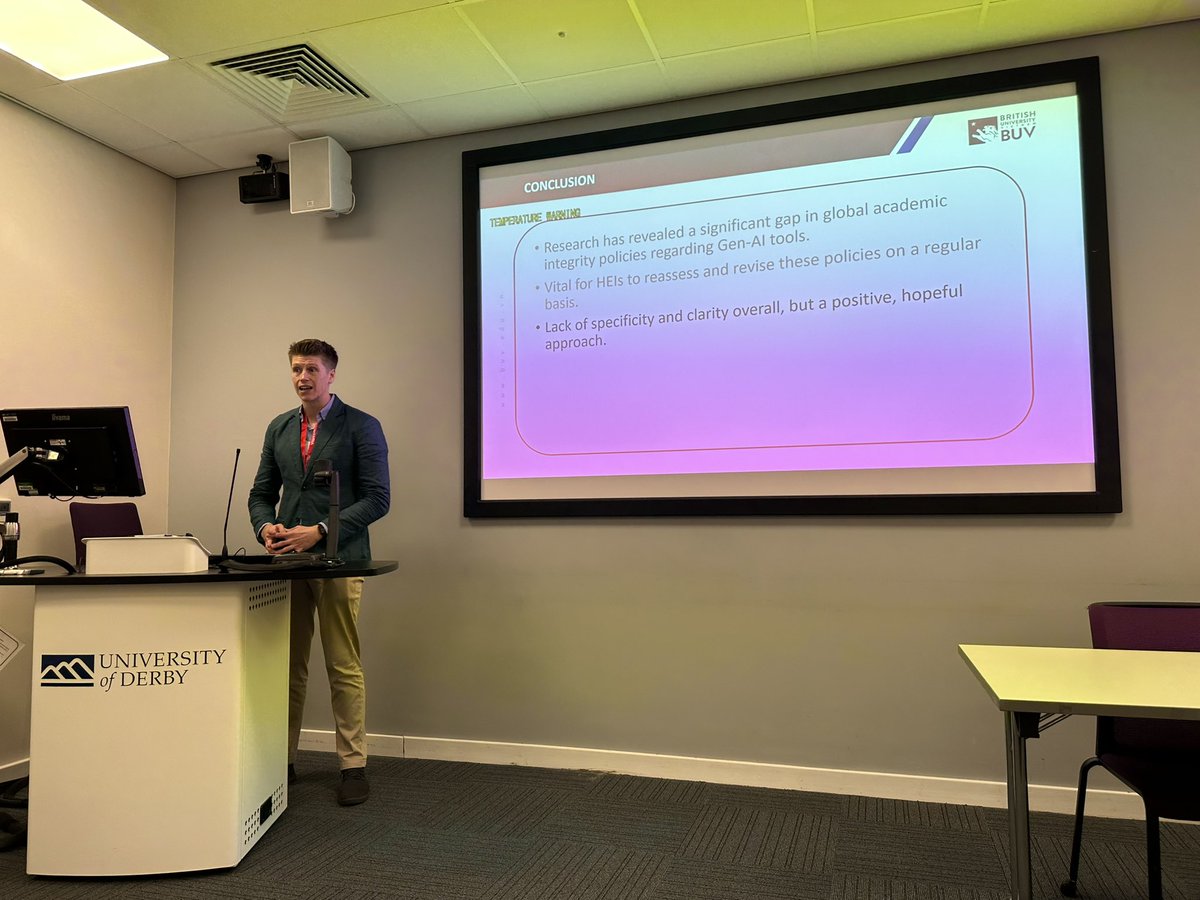
More fantastic research on #academicintegrity policies from Mike Perkins. Too much to tweet, but brilliant to see acceptance in the field of a broader set of research methods. Mike notes that there’s still a gap in policy documents relating to #artificialintelligence#ECEIA2023
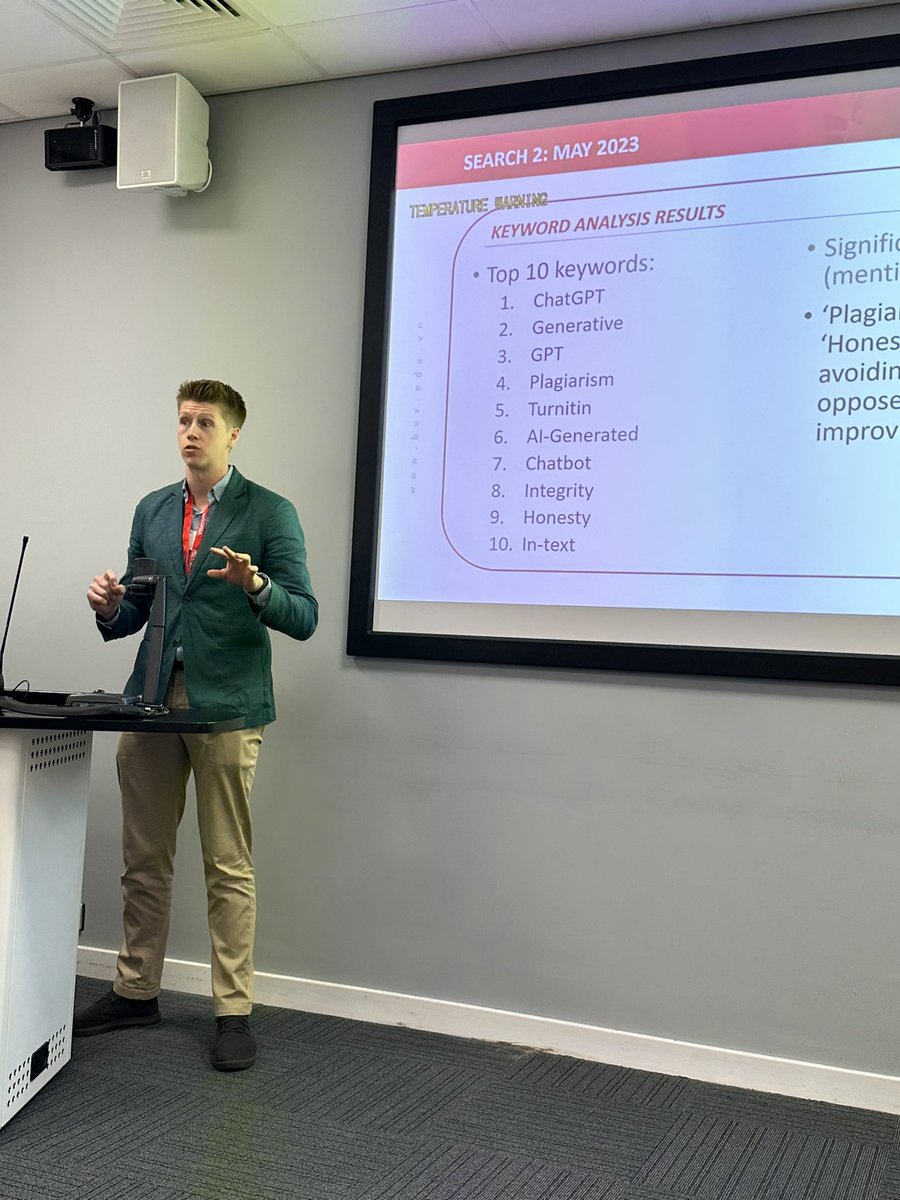
May 2023 simple keyword search of university guidance relating to #artificialintelligence by Mike Perkins shows a focus on #ChatGPT and negative terms but a deeper analysis finds the policies primarily embrace new technology #ECEIA2023#academicintegrity
Rounding off the session, Mike Perkins has been using some innovative research techniques to investigate international #academicintegrity policies. He acknowledges that he uses #ChatGPT to write papers and prepare slides (prior to editing) #ECEIA2023
Some of my thoughts on the implications that Large Language models such as ChatGPT have for maintaining academic integrity published in JULTP recently.
@MikePerkins502 discusses the implications of #ChatGPT, #AI, and large language models on higher education academic integrity in the latest JUTLP Special Issue on digital writing. What's your stance on ChatGPT in class? https://t.co/vsxk7Shisd
@MikePerkins502 discusses the implications of #ChatGPT, #AI, and large language models on higher education academic integrity in the latest JUTLP Special Issue on digital writing. What's your stance on ChatGPT in class? https://t.co/vsxk7Shisd
Great to see mine and Jasper's latest journal paper published in IJEI. Some thoughts in here (open access) on how we can move forward when students can access automated paraphrasing tools so easily https://t.co/KMz733MA1W
Latest IJEI article is out: “What are Automated Paraphrasing Tools and how do we address them? A review of a growing threat to #AcademicIntegrity” by Jasper Roe and Mike Perkins https://t.co/RmMrVDD8iy
@OpenProctor 3. Contract cheating is something plagiarism software can’t help with. That’s why we train faculty to try and spot this. Humans can be a lot better then a program for detecting this problem, but also there’s no magic bullet. Takes a combined approach of all tools.
@OpenProctor 2. Not sure what you mean about the confounding factors. Humans are not good at detecting “basic” plagiarism. That’s where text matching software is helpful to show where there might be concerns, but it’s an academic decision if something is plagiarism.
@OpenProctor 1. By showing them what we consider plagiarism to be, this helps students learn what is and isn’t acceptable. Text matching software like Turnitin is just about good enough that with the right settings you can resist “gaming” of the system.
@OpenProctor Thanks for sharing! Training is effective but it’s only one tool to help with issues of academic misconduct. Plagiarism software is also really important, especially when you allow students to use this in advance of submission to help them check their work for issues.
Very happy to see this article find a home in IJEI. We demonstrate in this long-term study how dedicated courses on academic misconduct and English language taining result in lower levels of plagiarism (37.01% reduction) across the student body (n=12,937).
New #OPENACCESS article published in the International Journal for Educational Integrity on reducing #plagiarism through academic misconduct education. Check it out here: https://t.co/fvGXHEzU44. #AcademicMisconduct#EAPintervention