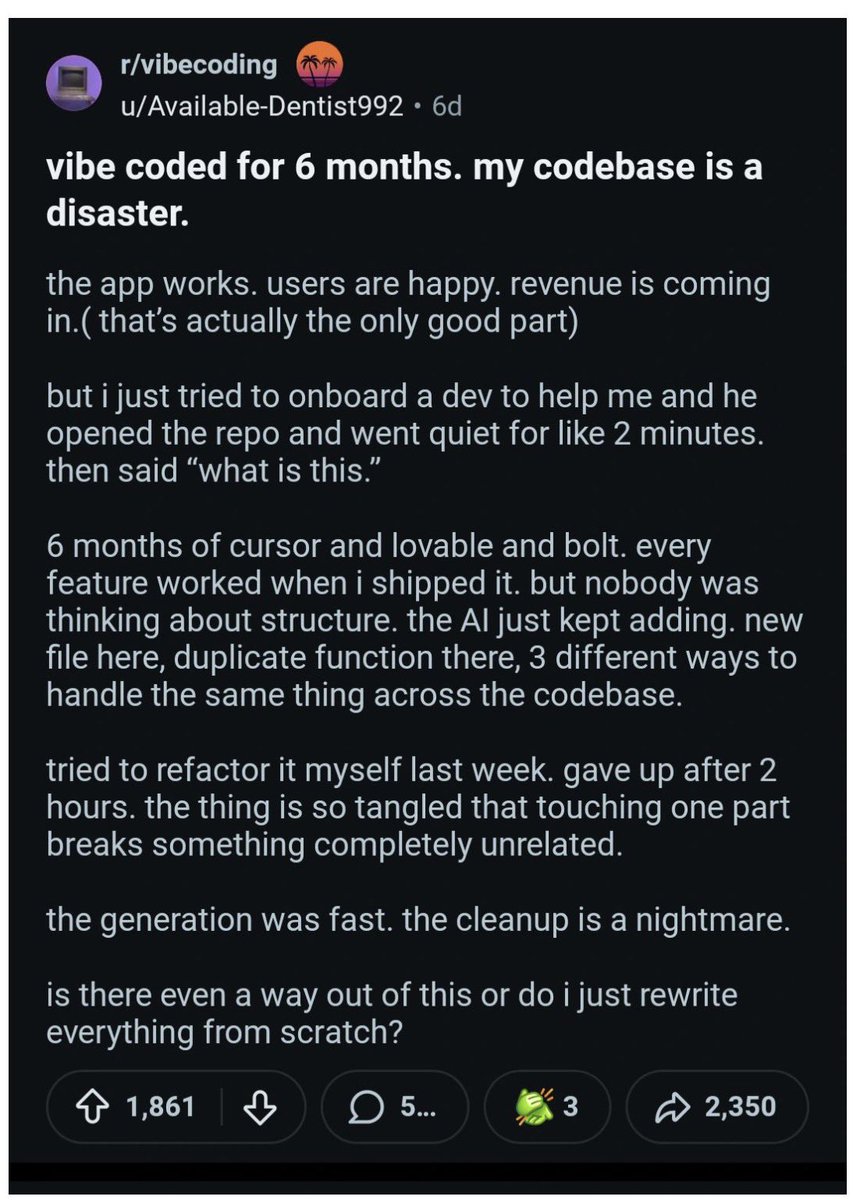
Love to see when the status page is probably just a heath check to see if the FE is serving a webpage, not actually checking to see if the service is working correctly. #cloud
@cdm813@tbonier I'm sorry. I mispoke. If there is a null or empty value, SQL server automatically defaults the row value to 1/1/1900
https://t.co/WrY42k8mRU
What I was assuming is that in the last 16 years, almost every single developer that writes into DBs has validation logic.
AWS Inferentia is awesome, and it would make sense that AWS would push more customers towards it. Then, why are there almost 0 specialist SAs able to help XL customers with #inferentia. Oh yeah, I remember why:
https://t.co/sMsjLtX0H6
Uber’s COO has said that it’s getting “harder to justify” its AI costs because there was no way to show a link between AI spend and any meaningful increase in useful features. This is the first time I’ve seen a company say this directly.
https://t.co/xUhZvtpwah
Personal update: I've joined Anthropic. I think the next few years at the frontier of LLMs will be especially formative. I am very excited to join the team here and get back to R&D. I remain deeply passionate about education and plan to resume my work on it in time.
Today is a hard day. I shared this note with the @linear team today: We’ve made the difficult decision to increase our workforce. This is not a cost-cutting exercise or a reflection of anyone’s performance. We’re simply reimagining every role for the agentic AI era. We’re hiring. We’re sorry about that.
Chevron used to sell natural gas to chemical plants. Now they're building a 5-gigawatt gas power plant for Microsoft. A BTU burned for AI compute is worth more than a BTU cracked into ethylene. Google signed with Crusoe for 933 megawatts of gas power in North Texas. Meta expanded its Louisiana data center to 7.46 gigawatts with seven new gas plants. Devon Energy and Coterra merged for $58B to lock up gas feeding the AI Corridor. The US chemical industry runs on natural gas. Ethane cracked from gas is the feedstock for polyethylene and hundreds of downstream products. Cheap gas gave American chemical makers a cost advantage over every other country. Now chemical plants and data centers bid for the same BTUs. Gas turbine prices are up 195% since 2019, with six-year delivery backlogs. Natural gas prices are projected to rise 33% by end of 2027. We build chemical plants. Transformer prices are up 80% over the last four years. Our process turbine prices went up 4x last year because data centers got there first. Now they're coming for the gas.
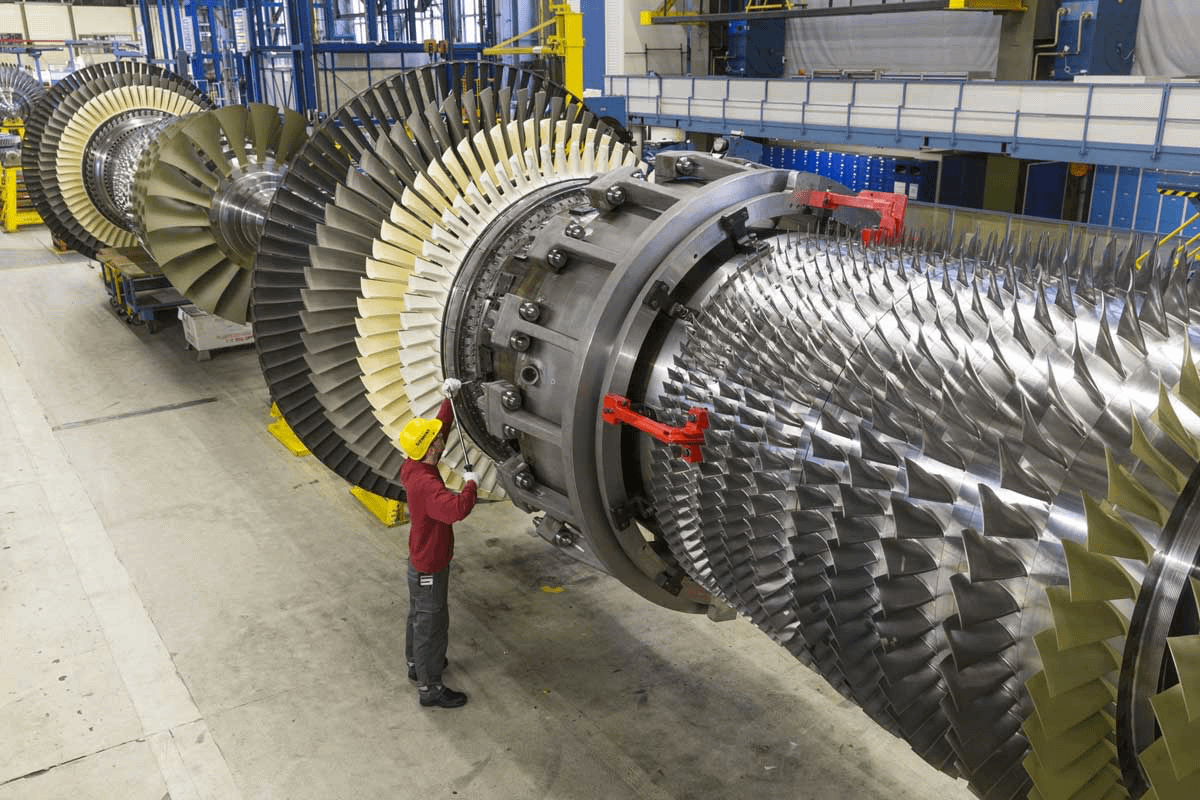
You cannot buy a new gas turbine until 2030. Order books at GE, Siemens, and Mitsubishi stretch to 2029. Turbine prices have nearly tripled since 2019. Every AI data center needs power and every gas plant needs a turbine. And every turbine has one part that bottlenecks the entire industry: The blade. It has to survive in gas 500°C above the melting point of the metal it's made from and spin at up to 20,000 RPM under 10,000 g of centrifugal force. Each blade is grown as a single crystal of nickel superalloy, pulled through a vacuum furnace at 3 mm per minute. A set of blades costs $600,000 and takes 90 weeks to grow. The same metallurgy powers modern jet engines. Only 3 companies on Earth can build one. China spent $42 billion trying to catch up. They bought a Russian fighter engine, took it apart, and copied every part. Their copy ran 30 hours between overhauls versus 400 for the original. Modern Western engines run 4,000. You can reverse engineer the shape of a turbine blade. You cannot reverse engineer 60 years of metallurgy.