U.S. Government exchange alumni continue to lead, innovate, and strengthen partnerships across Mozambique.
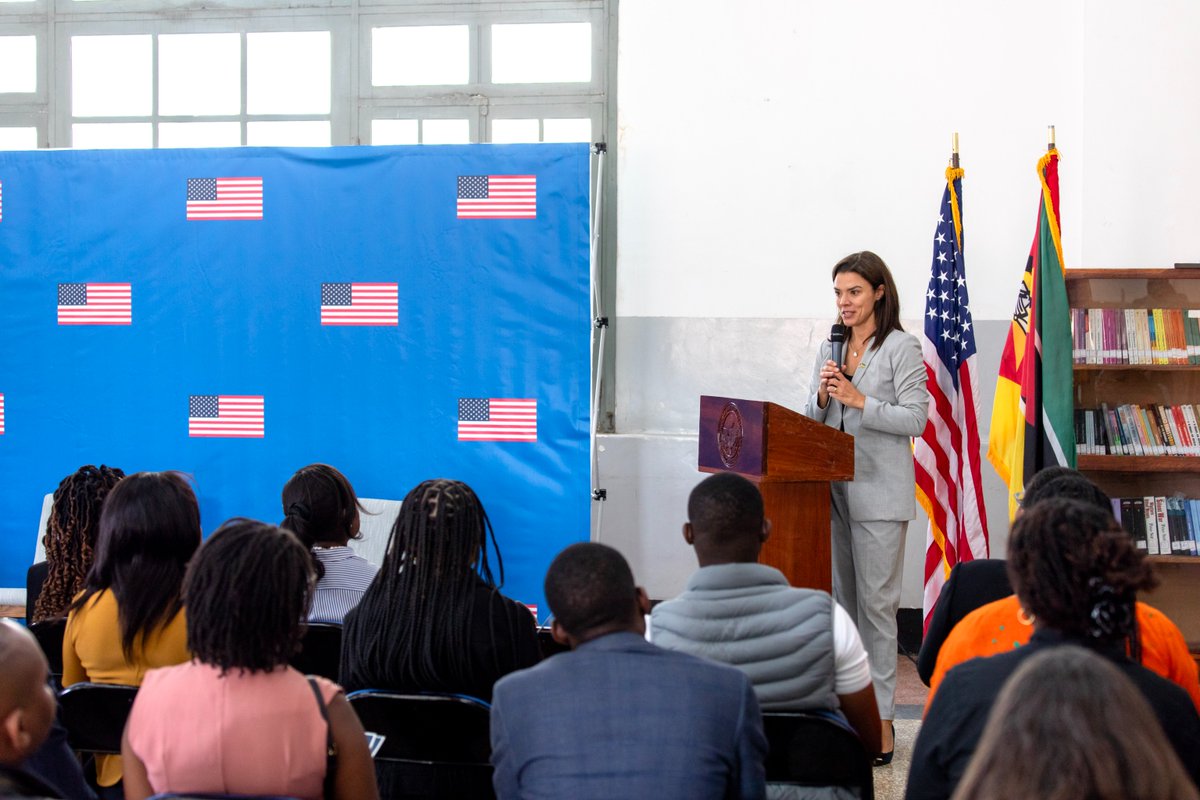
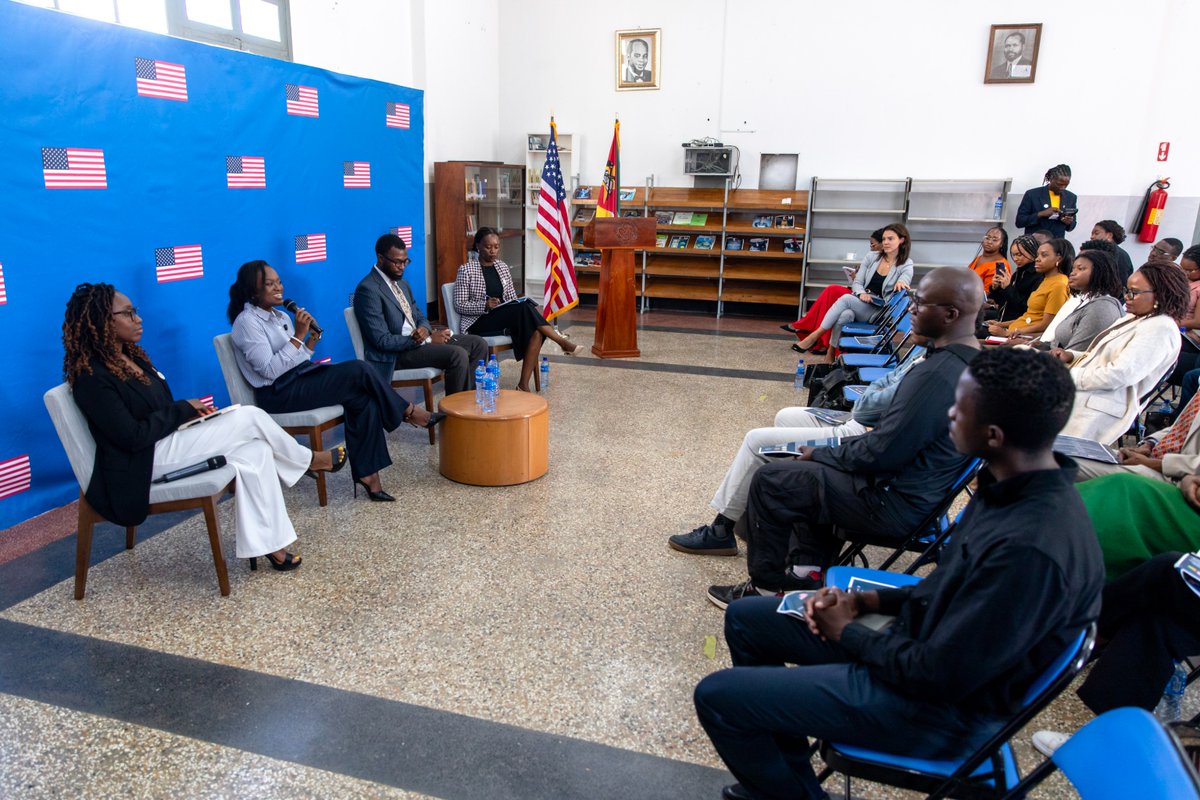
On August 20, the U.S. Embassy brought together alumni from @FulbrightPrgrm, @StateIVLP , @WashFellowship, Study of U.S. Institutes, @HumphreyProgram , @GlobalUGRADWL , the @CCIProgram the Academy for Women Entrepreneurs, and other U.S. Government exchange programs for an Alumni Symposium at the American Corner. 🇺🇸
Participants shared how their U.S. exchange experiences continue to shape their careers and contributed to their success in their respective fields. Exchange programs build lasting connections between Mozambique and the United States, creating networks of leaders who turn ideas into impact.
#ExchangeAlumni #USMZ #EstamosJuntos
A networking event hosted by the U.S. Embassy in Mozambique brought together U.S. and Mozambican universities, research institutions, and private-sector organizations to exchange ideas, build connections, and explore opportunities for collaboration.
U.S. participants learned first-hand about the practical challenges and opportunities facing businesses in Africa, gaining perspectives and real-world experiences they will bring back to their classrooms in the United States. They also explored ways for Mozambican professionals, entrepreneurs, and institutions to contribute directly to the learning experience.
By connecting educators, business leaders, and institutions, the event strengthened people-to-people ties between the United States and Mozambique and opened the door to new opportunities for Americans and Mozambicans to collaborate.
Interested institutions looking to explore opportunities for collaboration with U.S. universities can contact [email protected]@UofSC@VSU_1882@FIUBusiness@SouthCollege@AmbertonU@ColumbiaKoala@HowardU@NMHighlands@UTKnoxville@MDCollege@uemmoz@ClaytonState@IESE1@AbsaMozambique@BCI_OMeuBanco
#AmCham
#UniversidadePungue
#UniRovuma
#UniversidadePedagogica
#USMZ #EstamosJuntos
Neuroscientists found a brain region that physically grows when you do things you don't want to do. It shrinks when you stop.
It's called the anterior midcingulate cortex. It's smaller in people who struggle to delay gratification. It gets bigger when obese people diet. It's larger in elite athletes. And in superagers, people in their 80s with the memory of 50 year olds, it refuses to atrophy.
Here's the detail almost everyone misses. Hard things you enjoy don't grow it. A runner who loves running gets nothing from a 10 mile run. The region only responds to resisted effort, the workout you wanted to skip, the task you kept putting off. The suck is the signal.
That's also why disciplined days feel identical. The aMCC doesn't care about novelty or intensity. It responds to repeated effort against your own resistance. Habit is the wrong word for what's happening. You're building tissue.
And it runs in reverse. Avoid enough hard things and the region weakens, which makes the next hard thing feel harder, which makes you avoid it more. Researchers studying aging brains found that where you sit on the apathy versus tenacity spectrum predicts how well your brain holds up over decades.
Some neuroscientists call the aMCC the seat of the will to live.
The days look the same because that's what the training looks like. The years look different because that's what the tissue does.
Riddle me this, @RoKhanna. If closing USAID could cause so many child deaths in Africa, why would the African Union's top diplomat in DC celebrate USAID's shutdown? Does she like dead babies? Is she ignorant? How else do you explain her arriving at the same conclusion as DOGE?
JD Vance just admitted the White House plan is to take ownership of every major AI company in America.
Steven Bartlett brought up Bernie Sanders' proposal that workers should own 50% of the major AI companies.
Vance's response: "The president by the way likes that idea too. He likes that idea."
Trump's preferred mechanism, Vance said, is a sovereign wealth fund where the US government takes equity stakes in private AI companies.
The Vice President literally just confirmed that an administration is planning the most radical economic policy proposed in modern American history. Partial nationalization of the MOST valuable private companies on earth. And the idea originally came from Bernie Sanders, who Vance said Trump agrees with on this point.
This is not a small thing:
The US has spent 80 years selling the world on the model where private companies stay private and the government stays off the cap table.
The countries that did the opposite, with sovereign wealth funds owning slices of their biggest firms, are Norway, Saudi Arabia, China, and Singapore. And the Trump administration told you on a podcast it wants to do the same to Silicon Valley.
But the reasoning Vance gave for it is where it gets really interesting...
He said the historical analogy that scares him is the original Industrial Revolution. His own words:
"Rich people got way richer. And that led to in Europe fascism and communism."
He believes AI will not cause mass unemployment but mass inequality, and that mass inequality is what breaks societies. His fix is that workers need a seat at the bargaining table before the wealth gets created, not a redistribution check after.
"I think labor unions are a very important model here."
And the other thing about AI that scares him is surveillance. His exact phrase was that AI is "fundamentally a communist technology" because it lets governments and corporations watch and score people in ways NOTHING else can.
He said he doesn't want a social credit system, doesn't want a tech CEO deciding whether you can buy a beer based on an algorithm nobody understands, and is afraid of exactly that outcome.
So here is the full picture:
The sitting Republican administration believes AI will make the rich dramatically richer, that this will radicalize the country the way the Industrial Revolution radicalized Europe, that the answer is government equity stakes plus stronger labor unions, and that the second-biggest threat is the surveillance state these companies are building.
That is not a Republican worldview. That is not even a Democratic worldview.
This is a worldview that has no political home in the United States right now.
Most people are still arguing about whether ChatGPT will take their jobs. But the people with the actual power are already past that argument.
They are quietly designing the framework for owning the companies that will.
The craziest part is how casually Vance dropped it as a sidenote on a podcast millions will half-listen to in the background.
If you have money in OpenAI, Anthropic, or anything like that, you should be watching the full thing yourself.
What do you think?
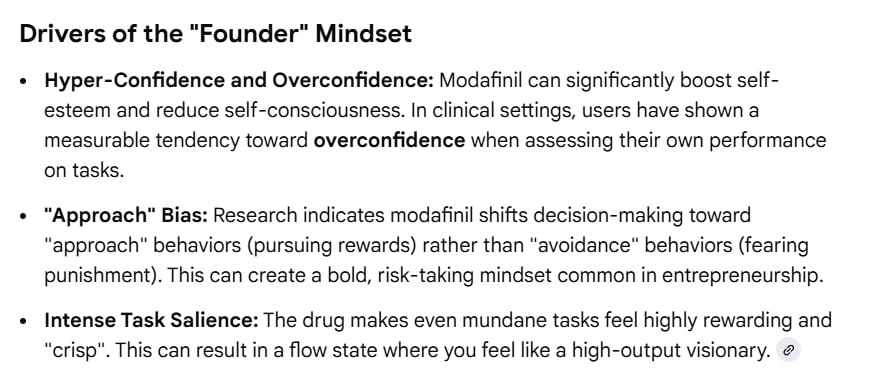
dont be confident, be over confident. be delusionally confident. be so confident that doors open for you and reality bends for you. be sure that GOD walks beside you. The meek inherit nothing if they never believed they were worthy of more. be too much. be impossible to ignore.
Assumir que salários mais baixos conduzem automaticamente a melhores resultados sociais é uma simplificação perigosa. No sector bancário, liderança barata pode sair extremamente cara.
Independentemente da narrativa moral, os seres humanos respondem a estruturas de incentivos. Isto aplica-se ao pedreiro, ao programador, ao gestor bancário e ao governador do banco central. Remuneração, progressão profissional, prestígio, autonomia e responsabilidade influenciam decisões de forma mensurável.
Outra cena é isso de fazer comparações entre domínios. O valor económico de uma sala de aula e o valor económico da estabilidade financeira não são medidos da mesma forma. Uma crise de liquidez, uma falha de supervisão ou uma decisão errada de política monetária pode destruir milhares de empregos, reduzir investimento, pressionar a inflação e afetar milhões de pessoas. Não digo que não é pra termos school, we just need to measure value within their domains.
Por isso, a variável relevante não é o salário isoladamente. É a relação entre custo, competência, responsabilidade e impacto sistémico.
Se a liderança não entrega resultados, que seja substituída. Mas usar salários como principal instrumento de política social é confundir distribuição de recursos com produção de capacidade institucional.
Everyone who is up in arms about Trump "kissing Xi's ass" needs to understand that this is realpolitik and dealmaking.
Trump is, by a mile, the most aggressive president America has had against the CCP in modern history. No one else imposed sweeping tariffs on Chinese goods, banned Huawei from domestic networks, put the entire CCP military-linked ecosystem on the entity list, restricted semiconductor exports, strengthened the Quad, and publicly called out China's currency manipulation, IP theft, forced tech transfers, and South China Sea aggression the way he did.
Pre-presidency Trump was blunt. If you recall, as a candidate, he often complained about how "China was screwing us over." Literally in 2016 on the campaign trail, he said that "China is raping us."
You need to understand that this posture completely shattered what was bipartisan elite consensus at the time - which was that more engagement with China on economic terms would liberalize and democratize China (ethnocentric projection once again), and that as China became more integrated into the global system, they would act more and more like responsible stakeholders. Every President since Nixon pushed closer economic integration while ignoring the OBVIOUS signs. This was especially supercharged under Bush, Clinton and Obama (but not Biden).
And yet at the time, the mainstream media painted him as a xenophobe for this kind of rhetoric. It wasn't even a subtext - they directly alluded to how Trump was being racist against the Chinese for calling out their unfair trade practices.
Once in office, Trump refined it into a strategy that actually moved the needle while dialing back his strong rhetoric.
The personal flattery - calling Xi a "great leader," talking up respect for China, saying they'll have a "fantastic future together," is all Machiavellian Art of the Deal stuff. Flattery costs nothing and makes the other guy more willing to give ground without looking like he's folding domestically.
The CCP's entire system is built on the leader's prestige. Publicly humiliating Xi or treating him like a subordinate would make him dig in, rally nationalists, and push him to retaliate harder just to save face.
I don't actually think Trump knows about Chinese "honor culture" and the obsession with mianzi (face), but for whatever reason, Trump instinctively understands authoritarian psychology and how to work with it.
The problem is that intellectual types, especially those steeped in liberal internationalist frameworks, tend to struggle with parsing the difference between rhetoric vs. revealed preferences. They're hard-wired to overweight the former.
They treat diplomatic language as a window into the soul, as if it maps directly onto intent rather than as front-facing tool of statecraft. China weaponizes this brilliantly.
It's a lesson everyone should've learned by now. With Trump, ignore the optics and ignore what he says. Just look at his actions, and look at his results.
New @ChinaSelect three-part report | "China’s Minerals Mafia"
Our latest report exposes a global pattern of CCP-linked mining companies engaging in “corrupt, illegal, and abusive practices” to dominate critical minerals.
The findings in this report are staggering:
▪️1.5 million tons of toxic mining waste spilled in Zambia, 30× higher than initially reported
▪️900,000 tons of cyanide, arsenic, and lead contaminated material still leaching into the soil and groundwater
▪️Chinese firms secured access to ~$93B in minerals in Congo while delivering just ~$800M in infrastructure
▪️40,000 children trapped in dangerous cobalt mining from Zambia to Congo tied to CCP-linked supply chains
More on the report here: https://t.co/lglEhS55DK
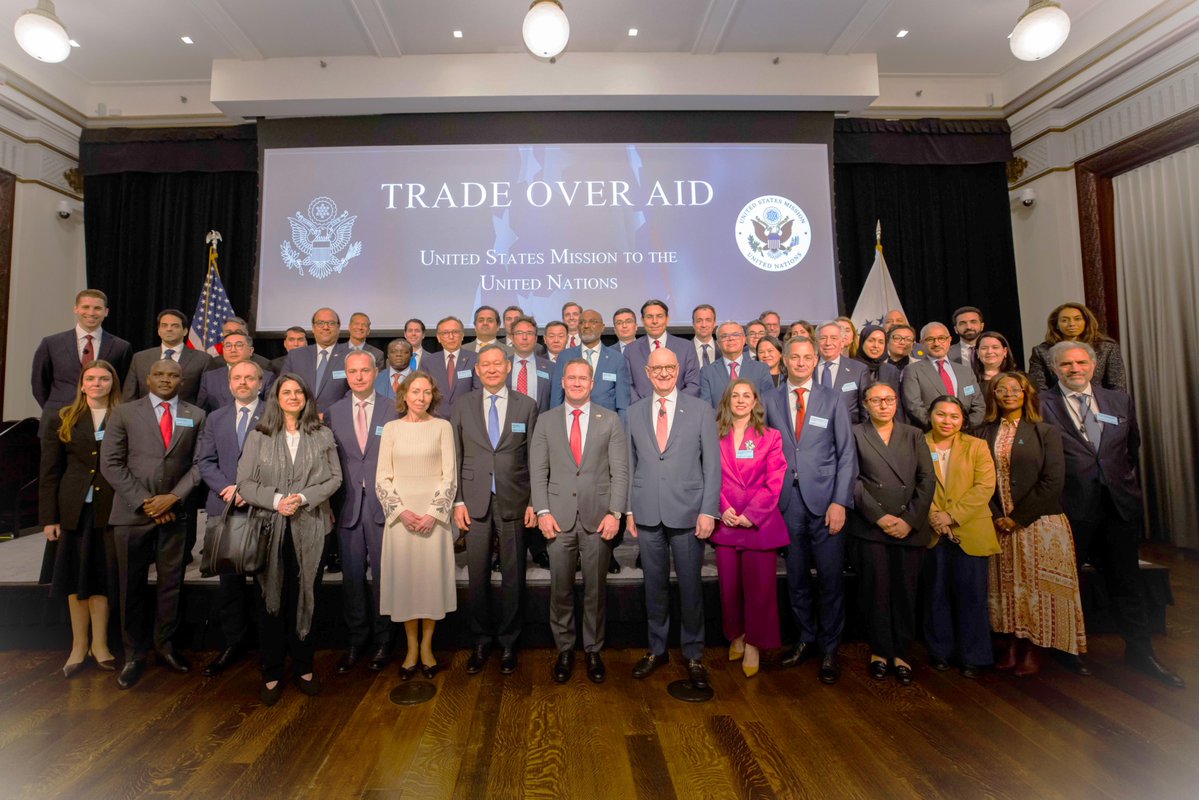
Nations should get into the business of doing business together. Thrilled to be joined by 36 Member States for the launch of the U.S. Trade Over Aid Initiative at the New York Stock Exchange. Let’s get to work. @CommerceGov@EconAtState@NYSE
Science backs the founder delusion:
Rejected & low on cash? → Pure fuel.
Launch flopped? → Just fresh data.
Sleeping 4 hours? → Nothing to see here.
Co-founder quit? → He wasn’t built for this anyway.
Golden retriever mindset > realism. Your brain already believes the story you tell it. Might as well make it a winning one.
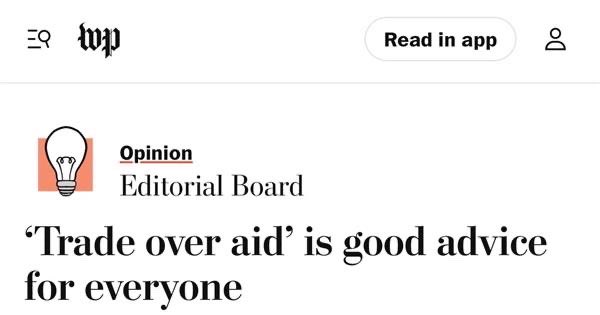
Washington Post's editorial board praises our call for "Trade over Aid" and using the private sector to help developing nations as "good advice."
Even as America remains the biggest contributor of humanitarian aid for disasters and hardship, ultimately, as the Post writes, "Every country is responsible for its own economic development, and free markets are the surest path to prosperity."