New paper published in Substance Use & Misuse! Focusing on young children’s daily consumption of caffeinated soda🥤,
1) we first suggest a potential relationship between this behavior and low WM & high impulsivity,
2) also, higher likelihood of trying alcohol within a year🍻
New study finds 9-to-10-year-olds who drink caffeinated soda daily are more likely to try alcohol 🍷 within a year
@SeoulNatlUni researchers find high impulsivity and low working memory were significantly associated with daily caffeinated soda consumption
https://t.co/vYK0nPOXzY
also advertising for my friends :D
@HayoungSong5's aha moments in narratives (NANO56.13), @jadynspark's arousal-enhanced memory (NANO56.11), @AnnaCorriveau's audio-visual attention (NANO22.04), @zzwziwei's surprise model (PSTR093.07), @Mina_Kwon_'s alcohol craving (NANO28.06)
We revealed neuropsychosocial measures linked to problematic gaming in developing youth, both cross-sectionally and longitudinally using the ABCD Study and machine learning! Please join my talk on tomorrow (May 11th) at 3pm at #SOBP2024. @SOBP@wooyoungahn
Deti,ktoré denne pijú kofeínovy nápoj, majú tendenciu byť impulzívnejšie, mať horšiu pracovnú pamäť a začať s konzumáciou alkoholu vo mladšom veku. Studia: https://t.co/rcwZQB17Do
New paper published in Substance Use & Misuse! Focusing on young children’s daily consumption of caffeinated soda🥤,
1) we first suggest a potential relationship between this behavior and low WM & high impulsivity,
2) also, higher likelihood of trying alcohol within a year🍻
New study finds 9-to-10-year-olds who drink caffeinated soda daily are more likely to try alcohol 🍷 within a year
@SeoulNatlUni researchers find high impulsivity and low working memory were significantly associated with daily caffeinated soda consumption
https://t.co/vYK0nPOXzY
#ADO-based daily EMA data are the most effective predictors for smoking cessation outcomes although baseline fMRI and facial expression measures (under stress) contribute as well. Plz come and hear why!
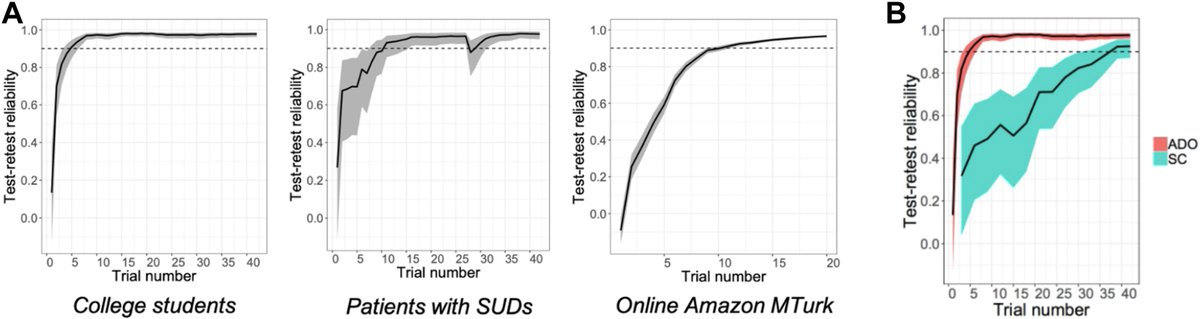
Very exciting work from our lab - with ADO, we dramatically shorten DM tasks and lowered the burden to participants. Importantly, the findings suggest we can collect such ADO computational markers just for one week to predict treatment outcomes in 5-6 weeks!
Come to our poster (QQ20) on Wednesday afternoon and say goodbye to #SfN2023! Our longitudinal EMA data including ADO-driven (robust & rapid) computational markers predict daily tobacco use w/ time-lagged analysis and treatment outcome after 5-6 weeks.
Quitting smoking is hard but some do. Curious who can quit smoking? Join us in room 147B on the final day of #SfN2023! We used neural, computational, facial expression, and EMA markers, and #EMA markers are the strongest predictors!
@SfNtweets
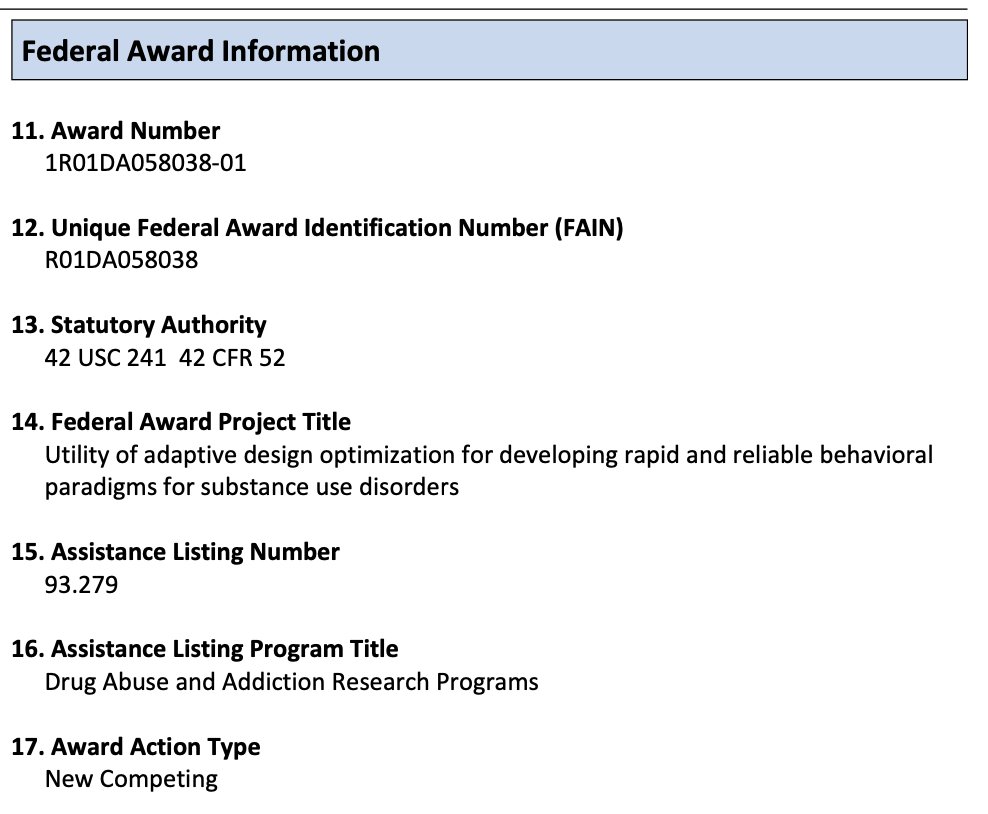
Excited to share that my team and I have received $2.65M 5-year 𝗥𝟬𝟭 grant from @NIH/@NIDAnews!! - MPIs Jasmin Vassileva @VCU and myself. We aim to develop rapid and reliable behavioral paradigms for substance use disorders with adaptive design optimization (ADO). Check it out!
Excited to share a new paper out in @NTR_Journal! Do smokers recognize 'smoking'- better than neutral objects from associated contexts, when stressed out? Check out https://t.co/BGAm1AqgJ8. With @SanghoonKang5 , @sang_ah_lee, @Silvia_U_Maier, @ev_goldfarb, and @wooyoungahn 1/4
Excited to share our review in Biol. Psychiatry CNNI (https://t.co/KcPOpxxhEC) on adaptive design optimization (#ADO). With ADO, we can develop rapid and reliable computational fingerprints in #computational#psychiatry, so check it out! Thanks to @Mina_Kwon_ and Sangho Lee :)
"IBM computer scientist Guillermo Cecchi came to appreciate just how important language is in medicine. IBM is one of several groups now developing #machinelearning algorithms to analyze patient language." https://t.co/6IkMQUoquA
Altogether, our findings suggest that daily caffeinated soda intake in childhood (1) is associated with impaired neurocognitive functioning, and (2) may work as a predictor for alcohol initiation, which has significant implications for public health recommendations!
6/6
Daily caffeinated soda intake in children predicts higher risks of future alcohol use!
https://t.co/QiHXMjvJlS
Using the follow-up year 1 data from #ABCDstudy, we further examined whether daily caffeinated soda intake in childhood could predict alcohol sipping in 12 months 1/n
Excited to share this new preprint https://t.co/5D0fNDC1DD
Is #caffeinated#soda bad for children's #brain development? If so, which specific intellectual capacity is affected? It is a question that many parents and caregivers are asking daily but there is no clear guideline 1/n
The selected best mediation model out of 405 possible ones showed that daily intake of caffeinated soda, as well as family risk factors, mediated the relationship between the neurocognitive risk factors and future alcohol sipping 5/n