We revealed neuropsychosocial measures linked to problematic gaming in developing youth, both cross-sectionally and longitudinally using the ABCD Study and machine learning! Please join my talk on tomorrow (May 11th) at 3pm at #SOBP2024. @SOBP@wooyoungahn
Honored to have been selected to present our work in a Flash talk for the first time at the Society of Affective Science 2024 conference!! Grateful for this opportunity to connect with amazing scientists across the world. Deep thanks to my PIs, Jutta Joormann and @RobbRutledge!
Come to our poster (QQ20) on Wednesday afternoon and say goodbye to #SfN2023! Our longitudinal EMA data including ADO-driven (robust & rapid) computational markers predict daily tobacco use w/ time-lagged analysis and treatment outcome after 5-6 weeks.
Quitting smoking is hard but some do. Curious who can quit smoking? Join us in room 147B on the final day of #SfN2023! We used neural, computational, facial expression, and EMA markers, and #EMA markers are the strongest predictors!
@SfNtweets
Excited to share a new paper out in @NTR_Journal! Do smokers recognize 'smoking'- better than neutral objects from associated contexts, when stressed out? Check out https://t.co/BGAm1AqgJ8. With @SanghoonKang5 , @sang_ah_lee, @Silvia_U_Maier, @ev_goldfarb, and @wooyoungahn 1/4
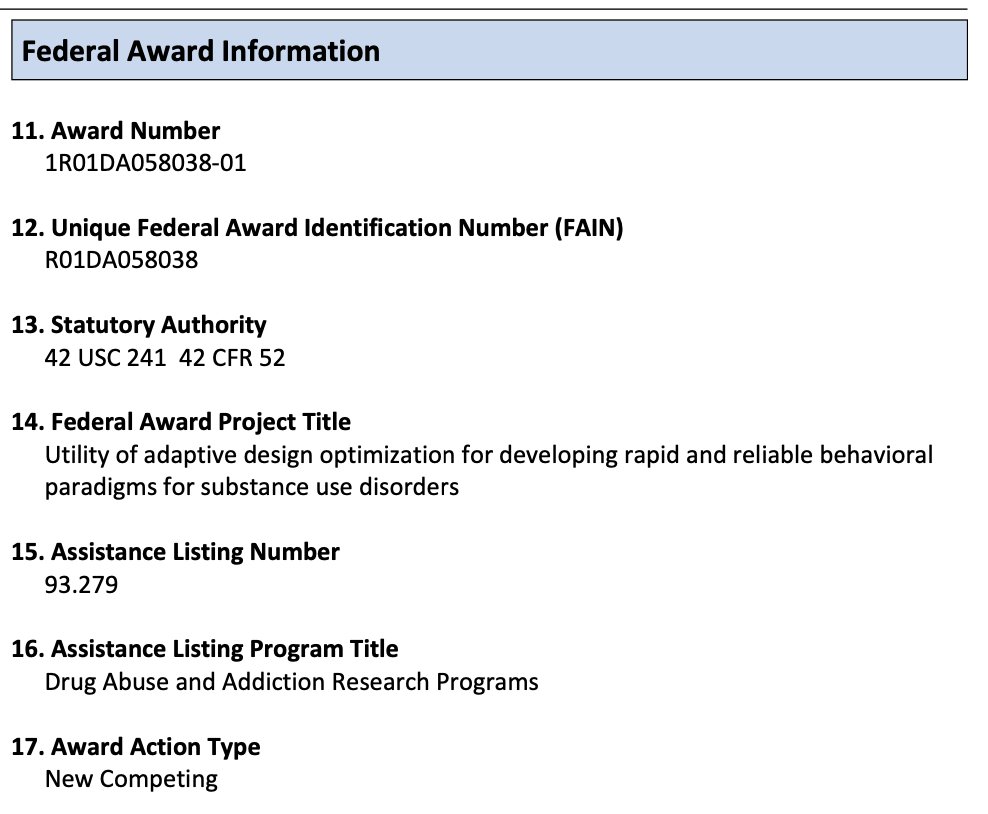
Excited to share that my team and I have received $2.65M 5-year 𝗥𝟬𝟭 grant from @NIH/@NIDAnews!! - MPIs Jasmin Vassileva @VCU and myself. We aim to develop rapid and reliable behavioral paradigms for substance use disorders with adaptive design optimization (ADO). Check it out!
👩🔬Researchers👨🔬 The ABCD Data Release 5.0 is now available. The #ABCDStudy is the largest long-term study of brain development and child health in the United States. Access the release here: https://t.co/I1vmArL6No (1/2)
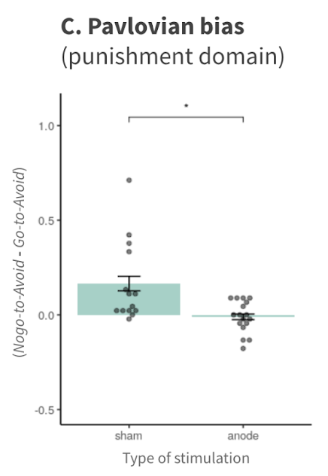
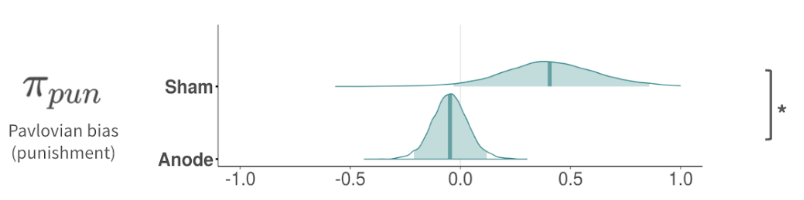
These results suggest a causal role of the dlPFC in modulating Pavlovian bias and may have practical/clinical implications for related psychopathology. 5/n
A combination of behavioral analysis and computational modeling revealed that the anodal group had a lower Pavlovian bias than the sham group in the punishment domain. 4/n
In this double-blind and sham-controlled study, we tested whether upregulating dlPFC using anodal tDCS would reduce Pavlovian bias in the orthogonalized go/nogo task. 3/n