At the intersection of technology and retail, AI becomes the engine of transformation. @Flipkart’s acquisition of @MinivetAI strengthens generative models that enhance visual and conversational discovery, making vast product catalogs immersive and intuitive. India’s ecommerce leap shows that AI is foundational to scalable digital growth. #IndiaAIImpactSummit2026
.@Flipkart acquires a majority stake in @MinivetAI to strengthen its generative AI capabilities for the future of e-commerce. Minivet AI specialises in transforming static product catalogues into immersive video content and developing AI-driven solutions like conversational search and semantic discovery.
This investment allows Flipkart to integrate scalable GenAI innovations directly into its platform, improving customer engagement and enabling richer shopping experiences.
As e-commerce moves towards visual-first and interactive journeys, Flipkart continues to build a future-ready ecosystem with technology at the core.
Read more: https://t.co/lSsiZKnOQp
#Flipkart #GenAI #EcommerceInnovation #DigitalCommerce #AITransformation
We're excited to release one of the smallest and most performant Guardrail Models ever-
MiniGuard-v0.1: A 0.6B parameter model that achieves performance at par with Nemotron-8B while being 13x smaller.
We looked at where large models beat small ones, and it’s not general reasoning. It was trigger words like "kill" or "shoot" showing up in safe contexts. "Kill the process" vs "kill him." "Shoot the photo" vs "shoot the target."
To account for these, we trained Miniguard-v0.1 using four techniques, each targeting a specific gap between small and large model performance:
1. Targeted synthetic data
2. Step-by-step distillation (Reasoning Data)
3. Model soup
4. FP8 quantization
The Results: On the Nemotron-Safety-Guard benchmark (English test split)
- MiniGuard achieves 0.893 Macro F1
- Nemotron-Guard-8B achieves 0.897 Macro F1.
99.5% of the accuracy at 1/13th the size.
At typical production concurrency (1-8 requests), MiniGuard is 2-2.5x faster than Nemotron.
MiniGuard-v0.1 is available now under the MIT license.
It's a drop-in replacement for Nemotron Guard. Same prompt template, same output format.
Head on over to our HuggingFace repo to read how we built the model and try it out yourself 👇
Tinker is now generally available. We also added support for advanced vision input models, Kimi K2 Thinking, and a simpler way to sample from models.
https://t.co/nvaJHkGxc0
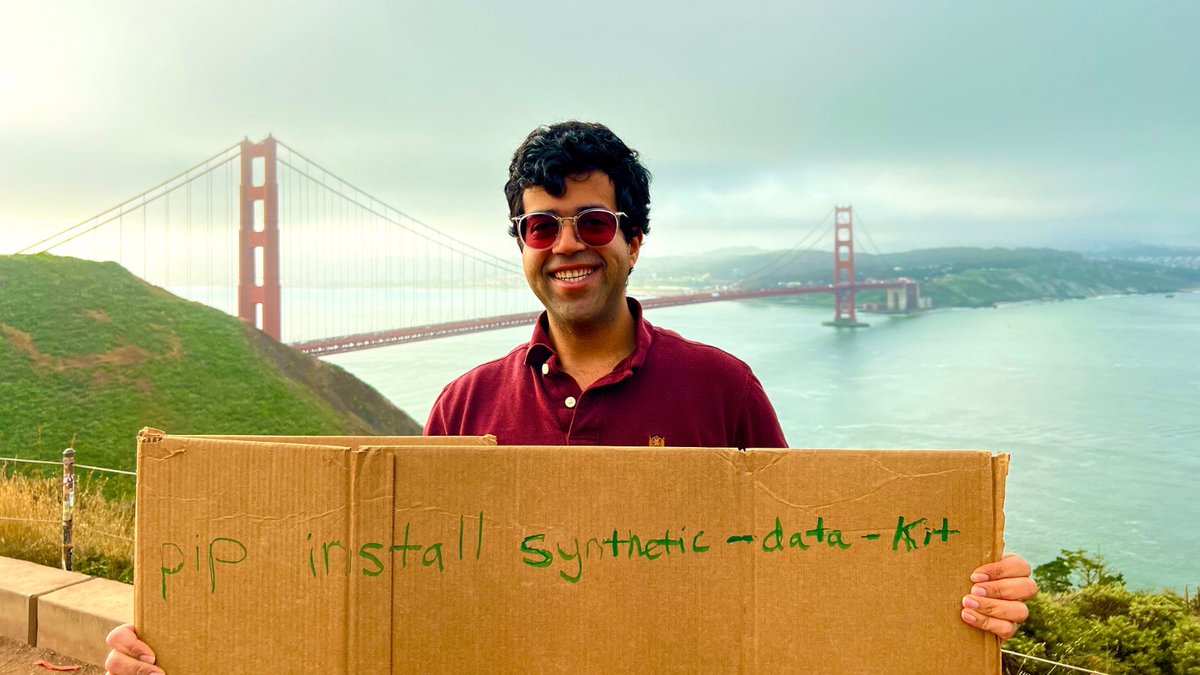
Super excited to launch Synthetic-Data-Kit! 🙏
Fine-tuning LLMs is easy, there are many packages to get started, @UnslothAI is my absolute favorite.
However, there is still a BIG HURDLE when working on fine-tuning: Data preparation
Today I’m super grateful to be launching a tool that will make it easier to prepare high quality datasets to simplify fine tuning.
Even more grateful to be teaming up with @danielhanchen and Michael.
More details soon: https://t.co/JlxDdBY5QG
This is interesting as a first large diffusion-based LLM.
Most of the LLMs you've been seeing are ~clones as far as the core modeling approach goes. They're all trained "autoregressively", i.e. predicting tokens from left to right. Diffusion is different - it doesn't go left to right, but all at once. You start with noise and gradually denoise into a token stream.
Most of the image / video generation AI tools actually work this way and use Diffusion, not Autoregression. It's only text (and sometimes audio!) that have resisted. So it's been a bit of a mystery to me and many others why, for some reason, text prefers Autoregression, but images/videos prefer Diffusion. This turns out to be a fairly deep rabbit hole that has to do with the distribution of information and noise and our own perception of them, in these domains. If you look close enough, a lot of interesting connections emerge between the two as well.
All that to say that this model has the potential to be different, and possibly showcase new, unique psychology, or new strengths and weaknesses. I encourage people to try it out!
We are hiring for multiple positions of Data Scientists and ML engineers.
Experience: 3-5 years
Location of Work: Bengaluru
WFH for 3-4 days a week
Starting: ASAP
Please DM for the JD.
Facebook has uploaded a 4GB dump of 1M+ questions along with reasoning and the answer. This will help us to build reasoning models. They have also ensured that none of the data appear in the popular benchmarks like MATH, GPQA, MMLU-Pro, MMLU-STEM. 👍
https://t.co/R4LKF9s3sJ
@dineshpaii@Rainmatterin We are a startup that offers AI/ML services and prepackaged AI products which help accelerate product building and go to market for startups and enterprises across India and the US.
@MinivetAI
https://t.co/mpE6vfiHTc
https://t.co/gMCtJrWl8x
uv is so good that in weird warped way it has replaced docker in our setup.
Whenever setting up a new experimental machine, it makes it as easy to install packages afresh as using a docker image.
uv is so good that in weird warped way it has replaced docker in our setup.
Whenever setting up a new experimental machine, it makes it as easy to install packages afresh as using a docker image.
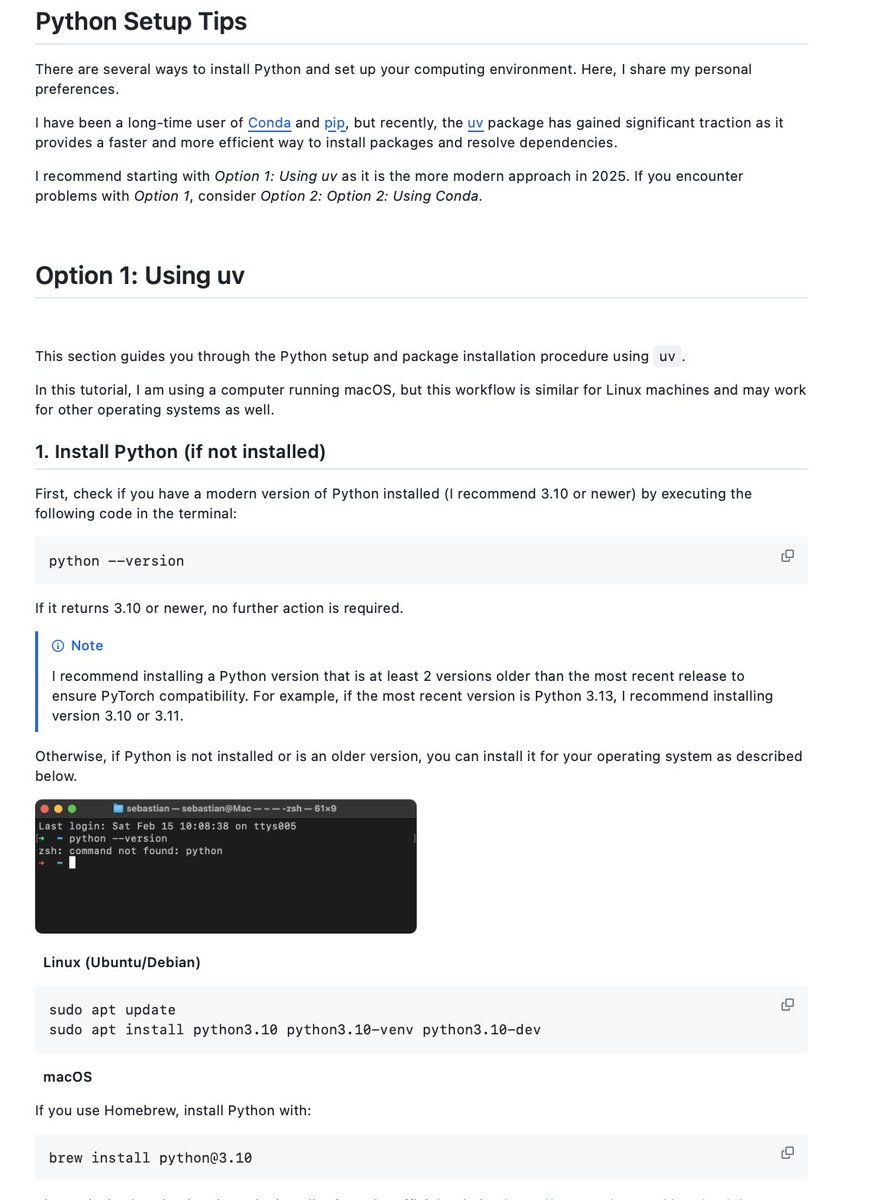
It's 2025, and I’ve finally updated my Python setup guide to use uv + venv instead of conda + pip!
Here's my go-to recommendation for uv + venv in Python projects for faster installs, better dependency management: https://t.co/slD3Vxpbpd
(Any additional suggestions?)
Tülu 3 405B is welcome news to the folks relying on open weights. Open and easy access to the frontier for everybody is a boon that some of us take for granted.
Here is Tülu 3 405B 🐫 our open-source post-training model that surpasses the performance of DeepSeek-V3! The last member of the Tülu 3 family demonstrates that our recipe, which includes Reinforcement Learning from Verifiable Rewards (RVLR) scales to 405B - with performance on par with GPT-4o, and surpassing prior open-weight post-trained models of the same size including Llama 3.1
HOLY SHITT! Llasa TTS - Llama 3.2 fine-tune with ultra realistic audio 🔥
> supports voice cloning in English + Chinese
> trained on 250K hours of audio
> 1B, 3B model (8B soon)
> emotional speech (happy, angry, sad, whisper)
> open weights & works with transformers/ vllm
i was playing around the newest TTS (text to speech) model 'kokoro' which has just 82M parameters! by adding only 1 line of code you can create a custom voice that mixes any two (out of ten voices) in any ratio
example: mixing one male and one female voice in the 60-40 ratio
We've just released @Pydantic AI v0.0.19.
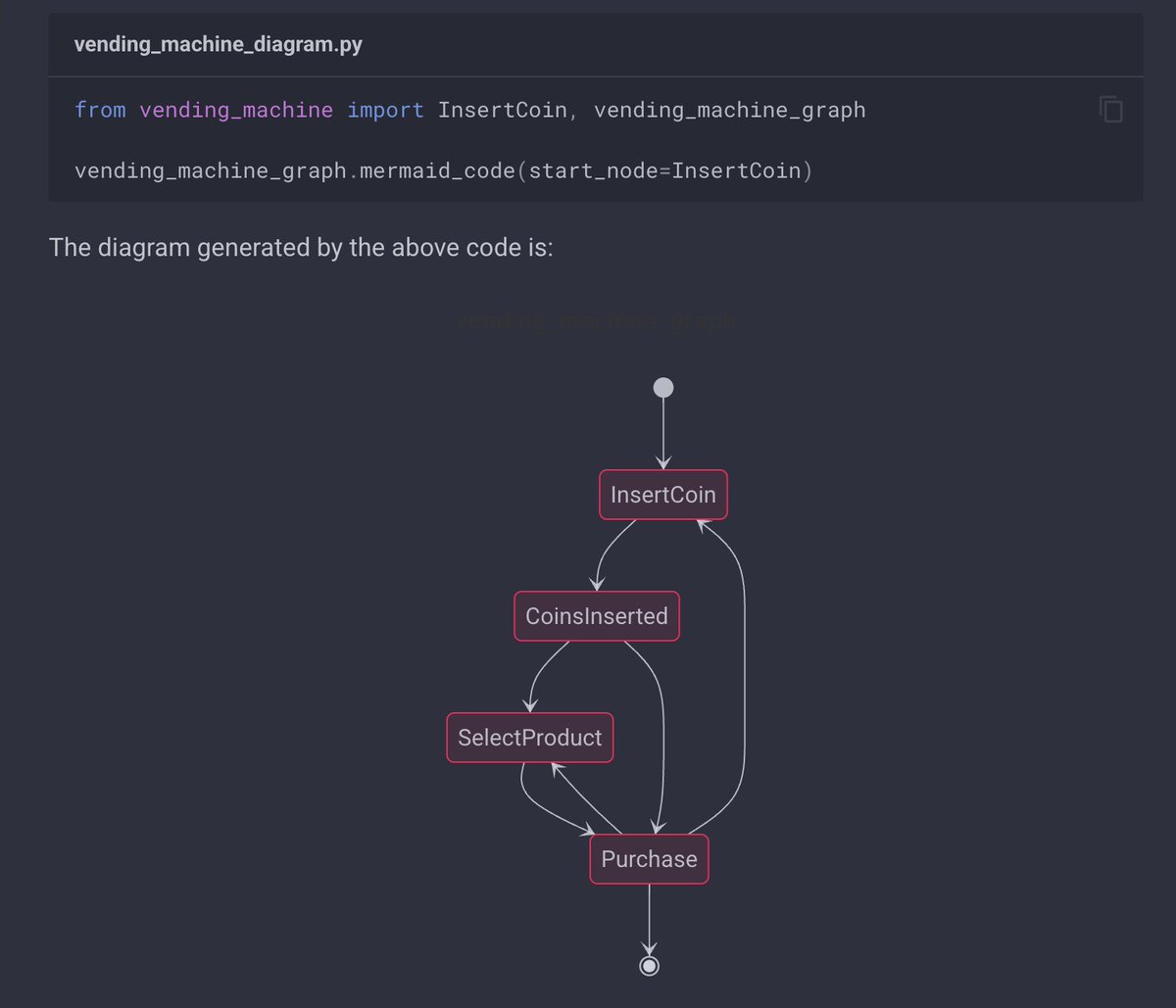
This comes with the biggest new feature since we announced PydanticAI — graph support!
I was originally cynical about graphs, but I'm now really excited about their use cases, both with GenAI and in general purpose development.
Our approach to graphs — using type hints to define nodes and edges, makes graphs less work to implement and much much safer to develop and extend.
I honestly think this graph API might be the single most innovative thing I've ever built in Python!
If you have complex logic flows, or logic that is distributed over compute and time, I think graphs will be a massive win. It's still early, but I think the potential is obvious.
https://t.co/nB7d2Rr4Mr