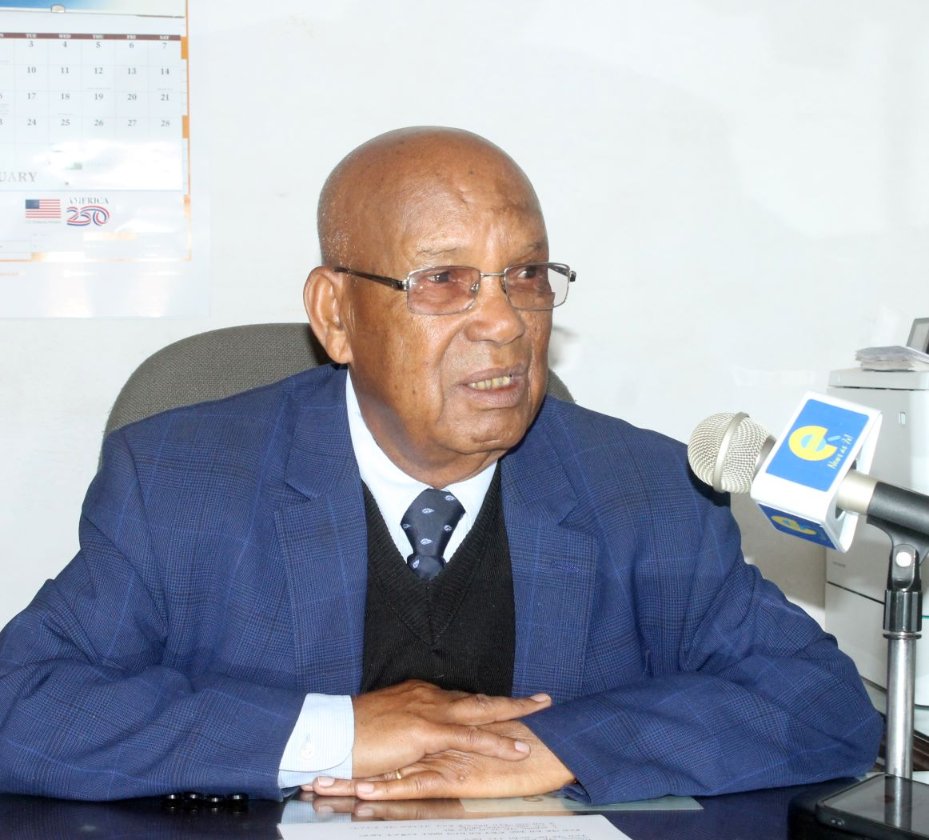
Profile Q & A - Eritrea: A Model of a Primary Health Care System; Professor Mohamed Yakub Janabi, WHO Regional Director for Africa
Senior Officials (visiting and resident) of UN Development Agencies in Eritrea invariably portray a balanced, nuanced, and positive account of the development challenges and prospects as the interview (link below) illustrates.
*"...Eritrea’s model of largely free or highly subsidized health care is rooted in very strong principles of health equity. It is a notable achievement. However, any free or highly subsidized program usually faces financial, structural, and system-level challenges. To sustain it, the government must work on expanding physical infrastructure and domestic financing. If you want to maintain it, you have to sustain it, and to sustain it, you need a very stable financing process – whether through tax collection and subsidizing the health budget, or by increasing the health budget directly".
*"...I think that with more investment in health – and health has never been a cost; it is an investment that pays back quickly – if you have a healthy community and a healthy population, your people will be more productive. I was very impressed with this initial stage. Eritrea has 98% immunization coverage – you see that level in developed countries. Thus, investment in health is not a cost; in the long run, it contributes to the economic development of any country".
https://t.co/eGYncXoPSU
Ambassador designate of #Botswana to Japan H.E. Prof. Boga Thura MANATSHA paid a cursory visit to our Embassy today. We exchanged views &opinions on common diplomatic efforts in Japan. It was an opportunity for me to learn Botswana’s history, wisdom & culture エリトリア #Erittea
Congratulations my dear sister @ahunnaeziakonwa on your well-deserved appointment as United Nations Special Advisor for #Africa. Your distinguished service as #UNDP Assistant Administrator and Regional Director for Africa since August 2018, where you have led UNDP’s support to 46 countries in advancing Agenda 2030 and the Sustainable Development Goals, reflects a legacy of visionary and results-driven leadership.
Your leadership and deep experience in supporting #Africa|s development pathways, particularly through pragmatic and people-centred approaches, have left a lasting impact. We are confident that you will bring the same vision, dedication, and results-driven spirit to this new responsibility.
Wishing you continued success and every strength as you take on this important mandate. Your office wil continue to have #Eritrea|s cooperation and support.
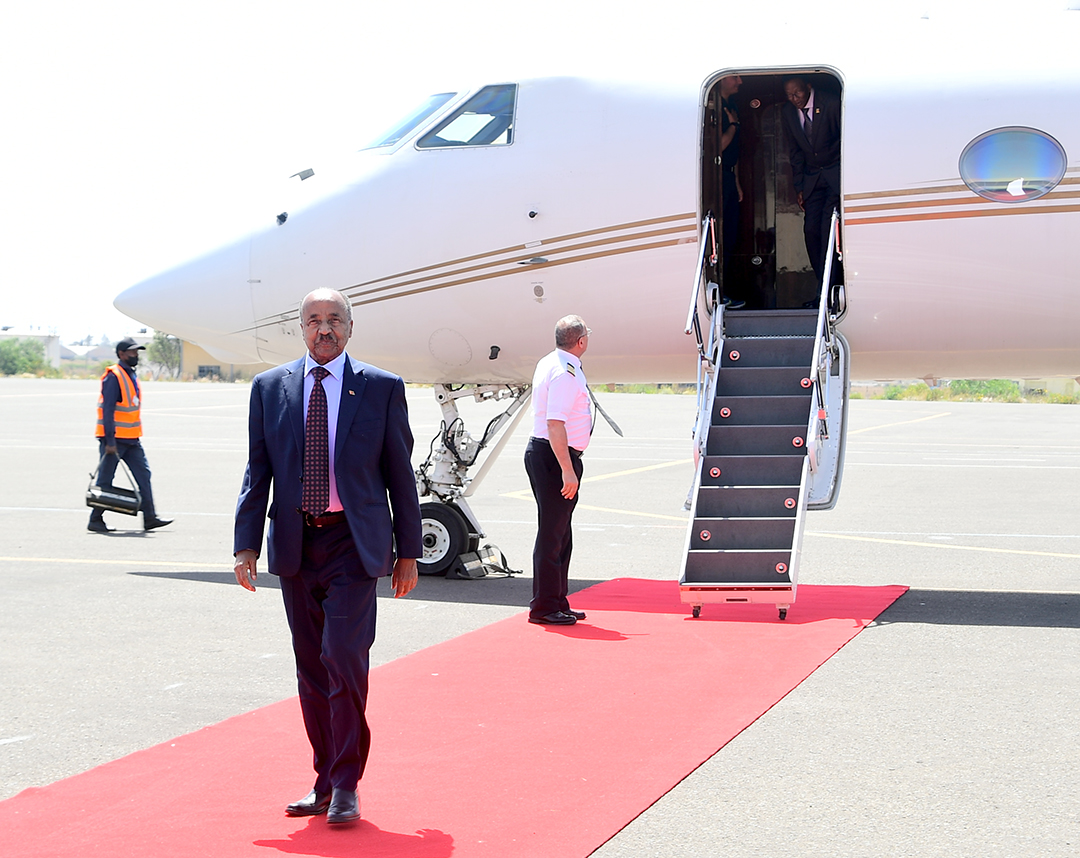
President Isaias Afwerki and his delegation returned home in late morning hours today after a fruitful official visit to Egypt. Eritrea and Egypt have agreed to enhance their economic cooperation on several sectors as well as coordinate, through periodic consultations, their respective positions on vital regional and international issues of mutual interest.
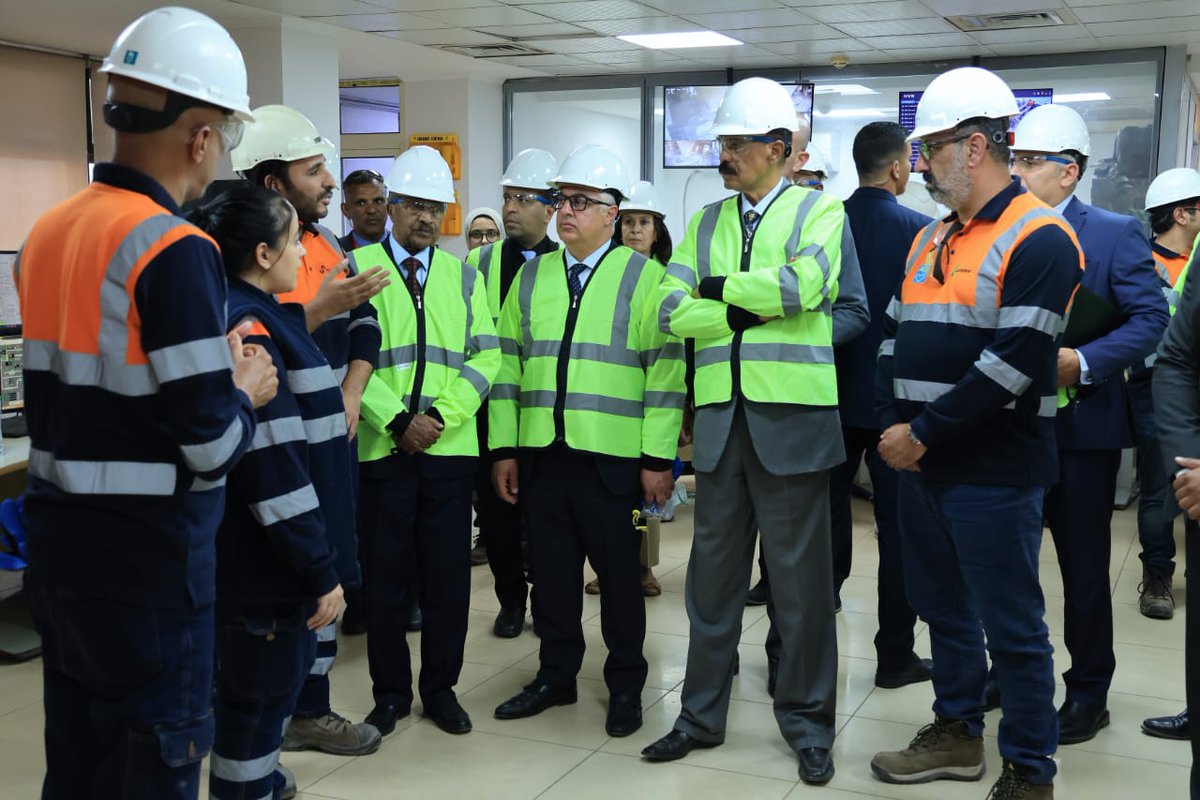
President Isaias Afwerki and his delegation visited yesterday a number of industrial plants and logistics facilities in the Greater Cairo and Suez Canal Zones to discuss and explore prospects of capacity building and technology transfer with the various entities. These include: Gyto Pharma, Suez Canal Industrial Zone, Cement and Steel Factory, Egypt Basic Industrial Corporation, and Ain Asokhina Port New Terminal.
Press Statement
The Backdrop of Unwarranted Sanctions
Ministry of Information
Asmara, 6 May 2026
"There are reports these days that the illegal and unilateral US sanctions will soon be lifted. We earnestly hope that this act will indeed herald an enduring rectification of misguided policies to ensure justice, legality and fairness".
https://t.co/MBEsiS1lbc
Good Read: #Eritrean Beauty Engraved in Names
by Kidane Shimendi
"With its enchanting landscapes, warm hospitality, profound peace, sweeping coastal vistas dotted with remarkable islands, rich historical tapestry, and diverse cultural heritage, Eritrea presents a mosaic of splendor. These elements are genuinely interwoven to shape Eritrea’s unique identity. Nowhere is this beauty more quietly yet powerfully recorded than in the names carried by its places".
https://t.co/zvMq5tpCkb
Eritrea’s Future is Bright
May 28, 2026
By Michael Solomon, MD
@Redseabeacon
As we celebrate the 35th Eritrean Independence Day, it is useful to reflect on the country’s current position and future direction. However, before doing so, it is important to understand recent global developments, particularly those of the past few years and months. The world is experiencing significant shifts in political and economic power, shaped by changing alliances, trade tensions, and competition among major economies. These global dynamics influence international markets, security relationships, and domestic economic conditions, meaning that events especially between East and West have both direct and indirect effects in the horn of Africa and especially Eritrea.
Before we delve into historical context that have implications to current events, we need to establish that it is now widely believed that many global economic and geopolitical developments are connected to the rise of China, the country is increasingly viewed as an emerging superpower with growing economic, technological, and military influence. In response to this shift in global power, it is believed that recent international events reflect attempts to repeat historical strategies used against rising rivals. Over the last few months, comparisons have been drawn to two historical contexts: first, the use of economic pressure and trade restrictions similar to the tactics employed during the era leading up to the Opium War; and second, efforts to influence global energy supply routes and strategic alliances in ways reminiscent of past great-power rivals.
The Opium War:
The first historical context is that in the early 1800’s The Opium war started because of growing tensions between Britain and china over trade. Britain was buying large amounts of tea, silk, and porcelain from China but had little to sell in return, causing Britain to lose silver which was used to pay for the products it bought. To solve this trade imbalance, British traders began selling illegal opium, an addictive drug, to Chinese merchants. As opium addiction spread and harmed Chinese society and the economy, the Chinese government tried to stop the trade by seizing and destroying opium shipments. Britain which had military superiority reacted by sending military forces to protect its trade interests, which led to the start of the war in 1839.China was defeated, leading to unequal and unfair treaties that gave Britain greater control over trade and territory, including control of Hong Kong, known as the treaty of Nanjing and Tianjin (after the second opium war). China calls it the century of humiliation.
The New Opium War:
Over the last few years, the United States has been running a large trade deficit with China, which reached about $202.1 billion in 2025. Some experts compare this economic tension to the historical Opium war, when Britain attempted to address its trade imbalance with China through economic pressure and eventually military force. Today, however, China is a major global military and economic power, making direct military confrontation far less likely. Instead, the U.S. has relied mainly on economic measures such as The Trans Pacific Partnership, tariffs, trade restrictions, the South china Sea confrontation and efforts to reduce dependence on Chinese manufacturing. Because China’s economy depends heavily on imported energy, some geopolitical analysts argue that control over global oil flows and energy markets by the US
ReadMore @RedSeaBeacon@hawelti@Sudan #Djibouti #Somalia #Egypt #SaudiArabia #Turkey #Qatar #UAE
@EmbassyEritrea@hadnetkeleta@SirakBahlbi@EliasAmare@Ghidewon@Yehdavid@GhideonMusa@SharronYemane@PMEthiopia@MFAEthiopia@MOFAEGYPT@AfricanUnion@antonioguterres@cnni@AJEnglish@BBCWorld@Reuters@AFP@AlAhramWeekly@FT@latimes@nytimes@BBCWorld@AlJazeera@tberhan0437898@Shabait
https://t.co/zwMPKA22zF
Paving the Path to Social Justice: Eritrea’s Post-Independence Road Construction
May 27, 2026
By: Mussie Efriem (taken from https://t.co/HKun5Re3fN)
When Eritrea was liberated on May 24 1991 following a long armed struggle, it immediately faced the monumental task of reconstruction and nation building. To undertake this formidable task, the government has prioritized sustainable national development designed to secure a bright and prosperous future for generations to come. Central to this vision was a commitment to equitable growth across the entire country, ensuring equal opportunities and the inclusive provision of resources for the whole population.
To realize this inclusive goal, the government has committed itself to the core principle of social justice by allocating equal opportunities and essential public services to every citizen, regardless of their geographic location. This foundational principle transformed national recovery efforts into a structured campaign for civic well-being, ensuring that healthcare, education, and clean water are treated as basic human rights.
To ensure the successful realization of these nationwide goals, the Eritrean youth have been placed at the very center of the country’s development programs. Under national initiatives, thousands of young men and women regularly undergo technical and vocational training at centers across the country. Students acquire critical skills in essential fields such as technical drafting, heavy machinery operation, building technology, and infrastructural engineering. Armed with essential technical knowledge and skills, the empowered workforce has been crucial in transforming the country’s domestic transport network.
Transportation infrastructure is critical in ensuring access to essential human needs and opportunities within a society. Beyond its economic use, transportation bridges socioeconomic gaps, directly linking diverse communities to healthcare, quality education, employment centers, and civic spaces. Ultimately, investing in reliable roads, bridges, and public transportation systems is an investment in social justice and community resilience, transforming society through collective well-being.
ReadMore @RedSeaBeacon@hawelti@Sudan #Djibouti #Somalia #Egypt #SaudiArabia #Turkey #Qatar #UAE
@EmbassyEritrea@hadnetkeleta@SirakBahlbi@EliasAmare@Ghidewon@Yehdavid@GhideonMusa@SharronYemane@PMEthiopia@MFAEthiopia@MOFAEGYPT@AfricanUnion@antonioguterres@cnni@AJEnglish@BBCWorld@Reuters@AFP@AlAhramWeekly@FT@latimes@nytimes@BBCWorld@AlJazeera@tberhan0437898@shabait
https://t.co/na6X0h99aH
The Proceedings (Volume 1 & 2) of the International Conference on Eritrean Studies (ICES 2025) that was convened in Asmara from 3-7 January 2025 are now available on Amazon at the link below...
https://t.co/CIePCDyxHw #Amazon via @Amazon
Congrats: Another good day for #Eritreancycling. Monalisa Araya's maiden Podium Finish (3rd) in Vienna, Austria, can indeed be seen as a trail-blazing event. Best wishes for greater success in the period ahead to Monalisa/#Eritreancycling!
https://t.co/7uFUoRsqTs
Opinion and Analysis
#Eritrea at 35: Honouring Independence, Building Partnership
by Ms. Nahla Valji, UN Resident Coordinator in Eritrea
*"...This month, Eritreans across the country and around the world celebrate 35 years of independence. Marked this year under the theme 'Our Resilience: Our Guarantee", it is a milestone that resonates with particular force for a young independent state. Independence was not handed to Eritrea. It was won through a long struggle of three decades. Because this history is still recent, and within the lived experience of a generation, every family and every community continues to carry some memory of the struggle – and the cost of freedom".
*"...For the United Nations, this anniversary carries special meaning. Eritrea is one of the younger Member States of the United Nations – following its internationally observed referendum and formal independence, Eritrea joined the United Nations in May 1993 as the 182nd Member State. That moment placed Eritrea’s flag among the nations of the world and affirmed a principle at the heart of the UN Charter. Every nation, regardless of size or history, has an equal place in the international community".
*"...This principle matters. Eritrea is not simply a country where the United Nations works – it is a sovereign Member State of the United Nations, with its own voice and role. It contributes to global discussions as an equal member of the international community, bringing its perspectives and priorities, shaped by a firm belief in national ownership and regional leadership".
https://t.co/fpFhI3h2Mg
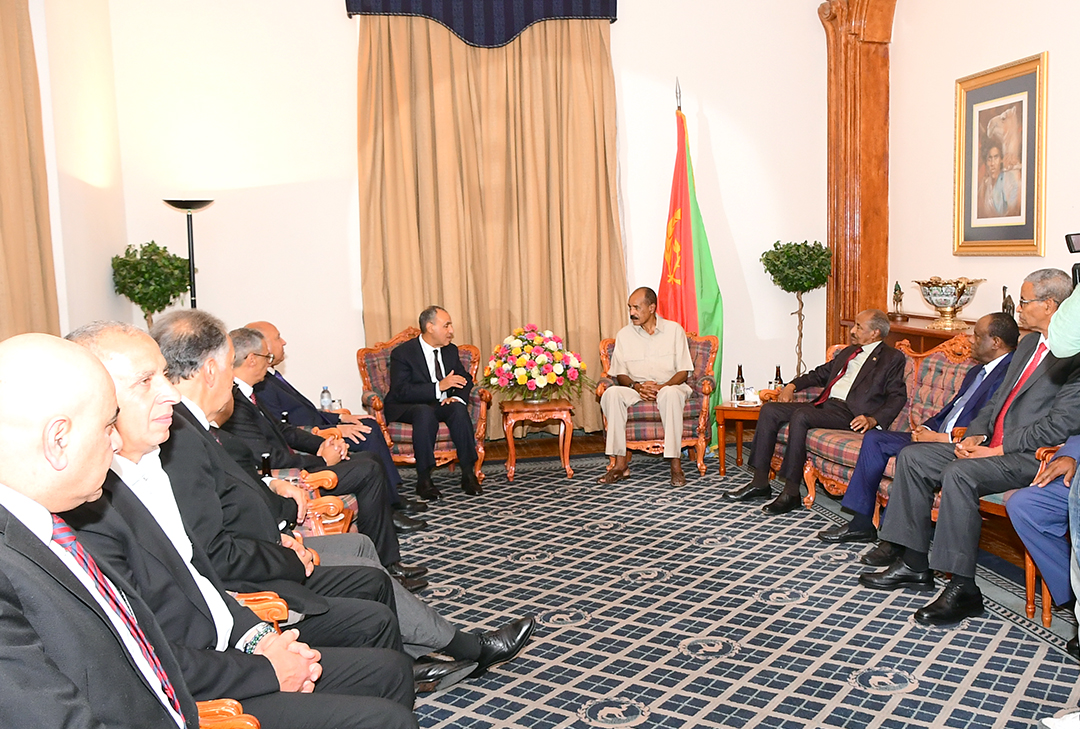
President Isaias Afwerki received, at the Denden Guest House in the late morning hours today, senior Egyptian delegation composed of Foreign Minister Dr. Badr Abdelatty; the Minister of Transportation, Lt. General Engineer Kamel Alwazir; and CEO's of several companies involved in the transport, energy and mining sectors.
The extensive discussions centered on further enhancement of all-rounded bilateral ties of cooperation as well as regional and international issues of mutual importance.
President Isaias underlined the significance of consolidating the all-rounded ties between Eritrea and Egypt to advance the mutual interests of the Eritrean and Egyptian peoples. In this respect, President Isaias expressed Eritrea's readiness to implement common projects in collaboration with Egyptian economic and trade companies.
Foreign Minister Badr Abdelatty, for his part, stated that the current visit was a manifestation and expression of the brotherly ties of friendship and cooperation that exist between the peoples of Eritrea and Egypt.
The principal purpose of the visit was to further consolidate economic and trade ties between the two countries in accordance with the guidelines charted out by President Isaias Afwerki and President Abdel Fattah el-Sisi, Dr. Badr noted.
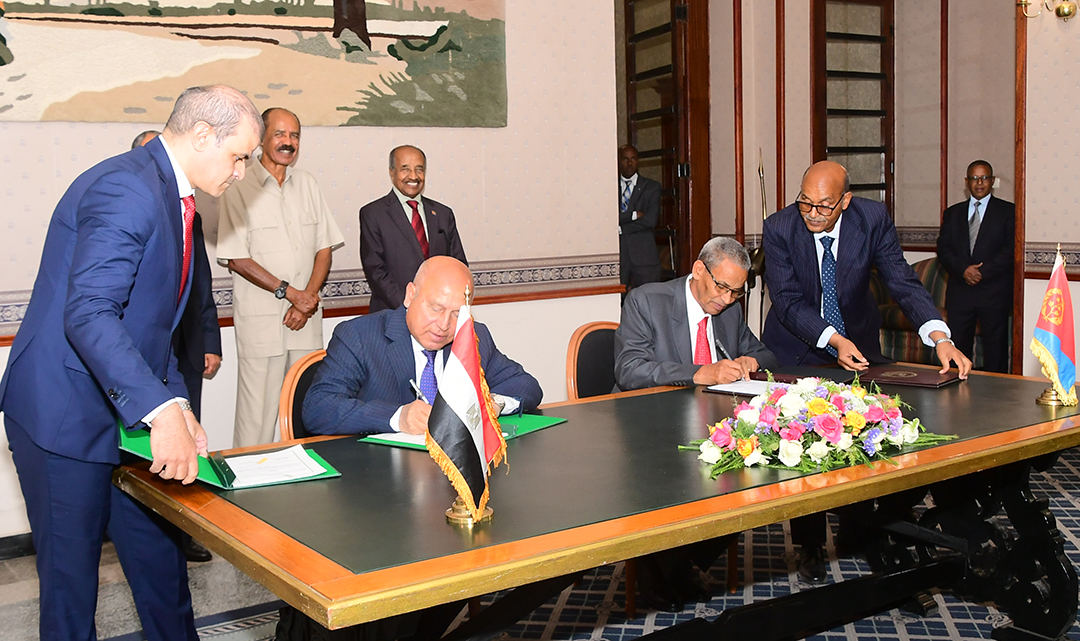
On the occasion, the two countries signed an Agreement on Marine Transport "for developing cooperation in the sector with a view to contributing to the development of international shipping on the basis of the principles of the freedom of navigation".
The Agreement was signed by Eritrea's Minister of Transport and Communications, Mr. Berhane Tesfaselassie, and Egyptian Minister of Transport, Lt. General Kamel Alwazir.
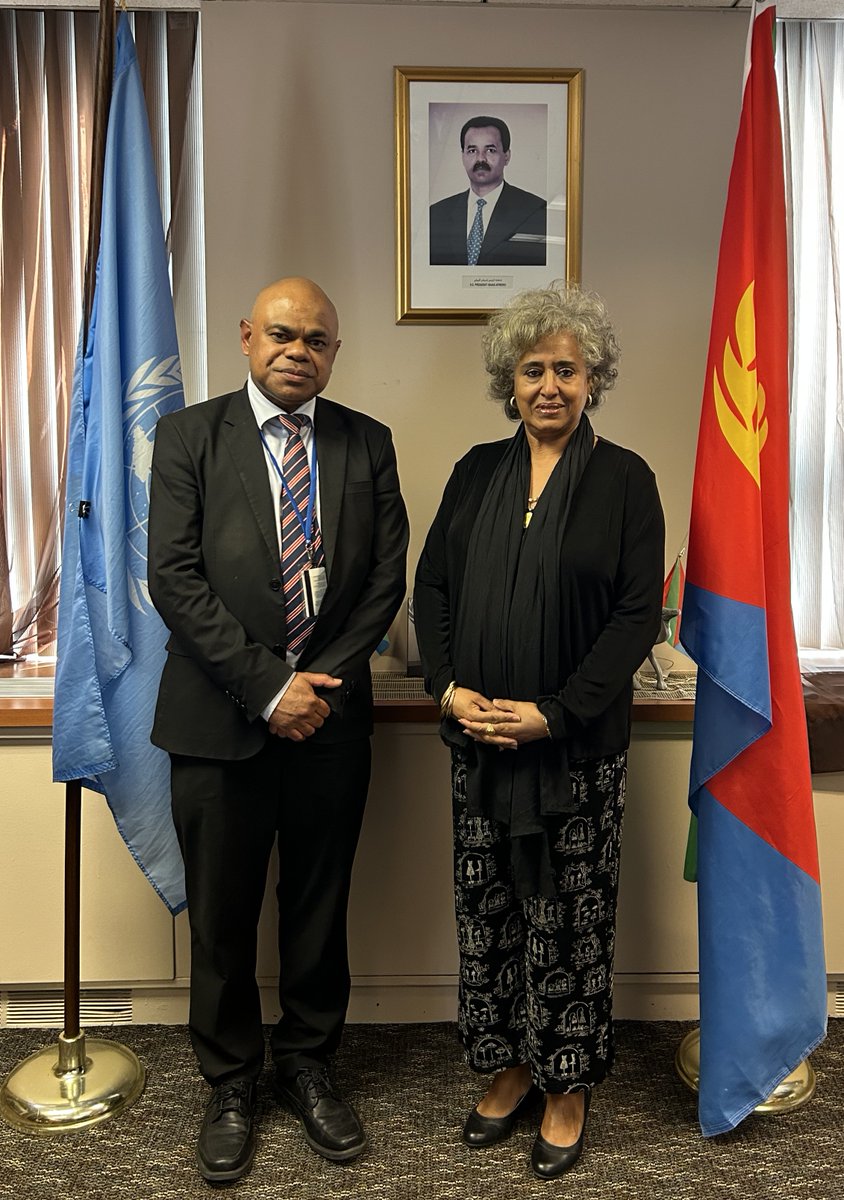
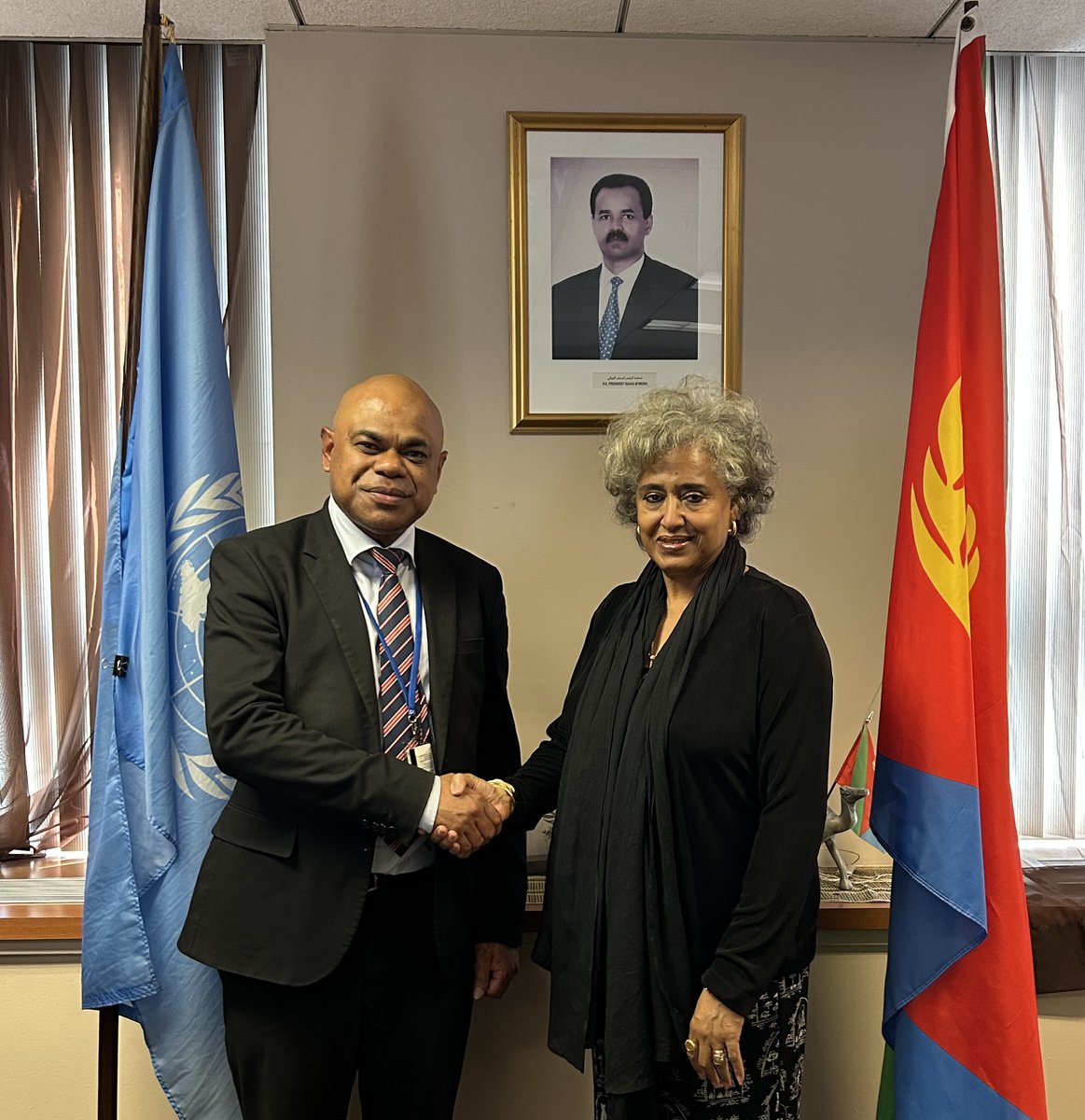
Welcomed H.E. Mr. Odo Tevi, PR of #Vanuatu to @Eritrea_UN and we discussed developments in our respective regions, ongoing processes @UN.
#Eritrea and #Vanuatu, though located in different regions of the world, share several common climate-related vulnerabilities as coastal and island-oriented developing countries. Both face the growing threat of sea-level rise, which endangers coastal communities, marine ecosystems, fisheries, and critical infrastructure. Island territories and coastal populations are increasingly exposed to erosion, flooding, and environmental degradation linked to climate change.
Both countries also face mounting challenges related to water security, food production, and climate resilience. #Eritrea experiences irregular rainfall, while #Vanuatu is highly vulnerable to cyclones and storm surges. In both cases, climate change places pressure on #agriculture, #fisheries, and rural livelihoods, while increasing the cost of protecting infrastructure and adapting to environmental shocks.
At the international level, #Eritrea and #Vanuatu share a common concern regarding climate justice. Despite contributing minimally to global greenhouse gas emissions, both countries face disproportionate climate impacts and therefore advocate for stronger international cooperation, climate finance, technology transfer, and support for adaptation and resilience...building within the multilateral system.
Will continue to engage and exchange information as we jointly address these and other issues of importance .
Eritrea’s Ambassador to Italy and non-resident Ambassador to Sweden, Ambassador Fesehatsion Petros, along with Mr. Mohammed-Ali Mohammed-Seid, Chargé d’Affaires of the Eritrean Embassy to the Scandinavian countries, held productive discussions with Mr. Dag Hartelius, State Secretary for Foreign Affairs of Sweden, and other senior officials at the Swedish Ministry for Foreign Affairs.
@sdriks@MCF_Sverige@svtnyheter@Polisen_Sverige@US_SrAdvisorAF
ኤርትራ
ጽንዓትና ዋሕስና Our Resilience: Our Guarantee
صمودنا . .ضماننا
ዘልኣለማዊ ዝኽሪ ንሰማእታትና !!
ዓወት ንሓፋሽ !
النصر للجماهير
#Eritrea #PFDJ #EDF #PIA #YPFDJ
#Eritrea #Sweden
President #Isaias is a leader dedicated to advancing and defending his country. His policies prioritize resilience and self-reliance. Notably, #Eritrea maintains its independence without needing financial assistance from the International Community. I wish more African leaders would follow his footsteps, as Eritrea's core principle emphasizes self-sufficiency, zero reliance on foreign aid and zero corruption.
Amb.Sophia Eritrea’s defense of sovereignty is not “insecurity”it is rooted in history,international law,&the sacrifices of a long liberation struggle
Sovereignty&territorial integrity are non-negotiable principles,especially in a region shaped by war,annexation&external pressure
Investment in Potable Water Supply at National Level
Eng. Mebrahtu Eyasu, Director General of the Water Department at the Ministry of Land, Water and Environment, reported that about 125 billion Nakfa has been invested to ensure potable water supply across the country, raising coverage to over 85%.
Eng. Mebrahtu went on to say that in 1991, potable water supply coverage was below 7% in villages and 30% in cities. By 2025/2026, coverage had increased to 80% in villages and 95% in cities, benefiting 85% of the total population of the country.
Eng. Mebrahtu also said that over 8,300 schools, health facilities, and public institutions have become beneficiaries of potable water supply.
Among the potable water projects, Eng. Mebrahtu said that 675 are operating with hand pumps, while 890 are operating with solar energy, generators, and electric power. He added that 2,775 km of water pipelines have been installed and 2,760 water distribution centers have been put in place.
Eng. Mebrahtu also said that regular follow-up is being carried out to ensure the safety and cleanliness of the potable water supply.