This year's @bankofengland Watchers Conference started today, hosted by @kingsbschool & @MMF_research. This is the 5th such conference for the BoE, following the example of the @ecb since 1999. The conference convenes leading voices from academia, policymaking institutions,
1/3
& private s-r to examine issues relevant to BoE policy decisions. Themes this year consider geopolitical risk, fiscal policy & bond markets, & the economy. Prof @MizenPaul opened (photo above) & the keynotes are given by Governor Chris Waller, @federalreserve (photo below),
2/3
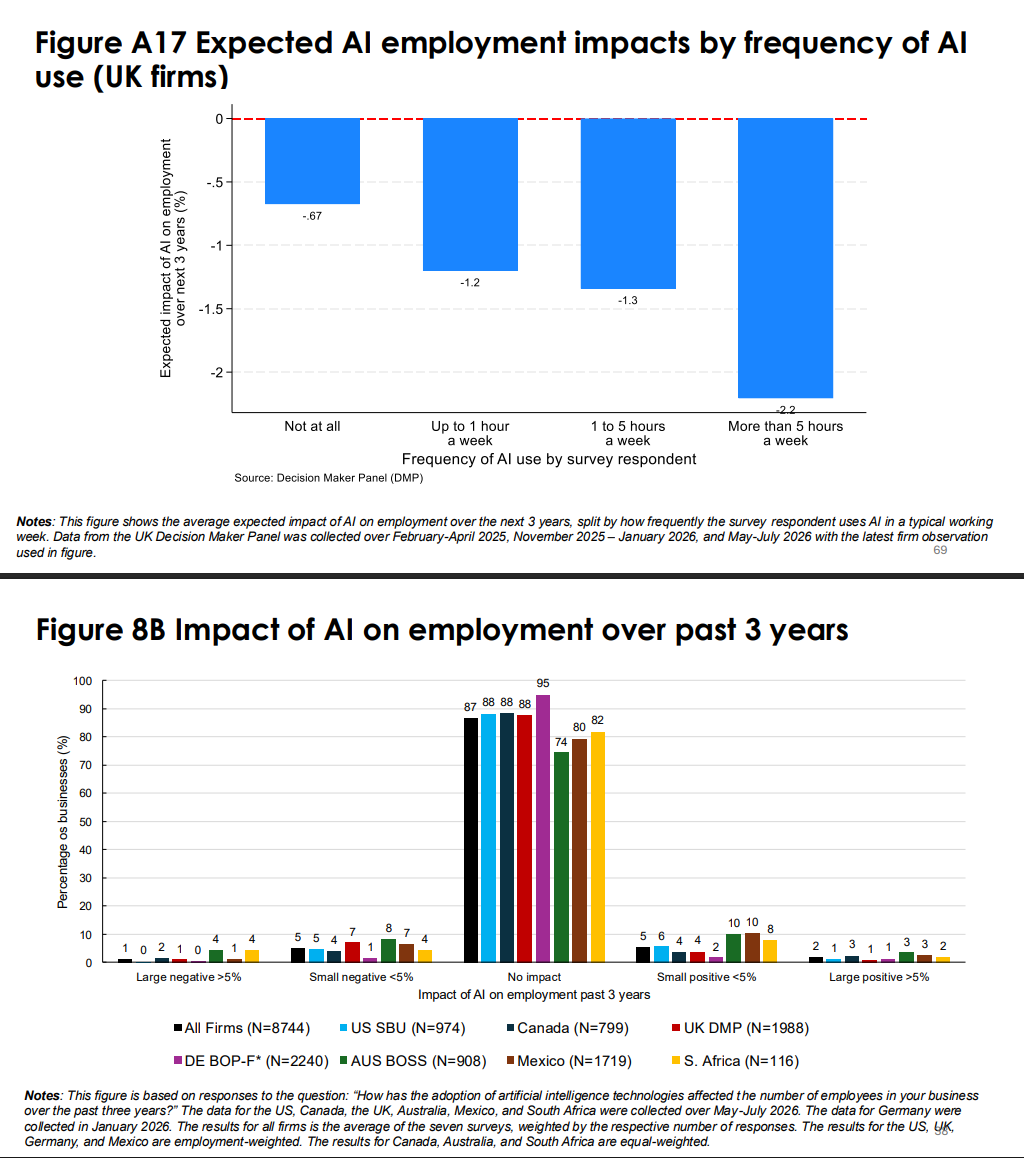
The more hours an executive personally spends using AI, the more jobs they expect it to cut. 💼
Executives using it more than 5 hours a week forecast headcount losses about three times larger than non-users (-2.2% over three years vs -0.7%). Obviously, this is a little bit circular, since the more AI is used, the more it's bound to impinge on human labor, but the magnitude of the difference is pretty huge.
A new @nberpubs working paper by Ivan Yotzov and colleagues pooled surveys of nearly 9,000 senior executives across seven countries, run through central bank and university panels, asking about AI use, spending, and expected effects on jobs and sales.
Meanwhile, the actual record so far: 87% of firms say AI has had zero effect on their headcount over the past three years. Worth noting that the no-effect figure is the executives' own read, not payroll data, so attributing changes specifically to AI is probably a bit shaky.
The correlation doesn't prove the executive's own LLM habit is driving the forecast... but it does mean layoff expectations track personal enthusiasm more closely than anything that's happened in the business so far.
If nothing else, all of this reminds us just how fragile any kind of predictions are. There's so much uncertainty around AI in the future that personal experiences might have a much larger influence on outcomes than previously.
---
Authors: @iyotzov, @Jose_MariaRD, @I_Am_NickBloom, Philip Bunn, Steven Davis, Kevin Foster, Aaron Jalca, Brent Meyer, @MizenPaul, Michael Navarrete, Pawel Smietanka, @GregoryThwaites, Ben Zhe Wang
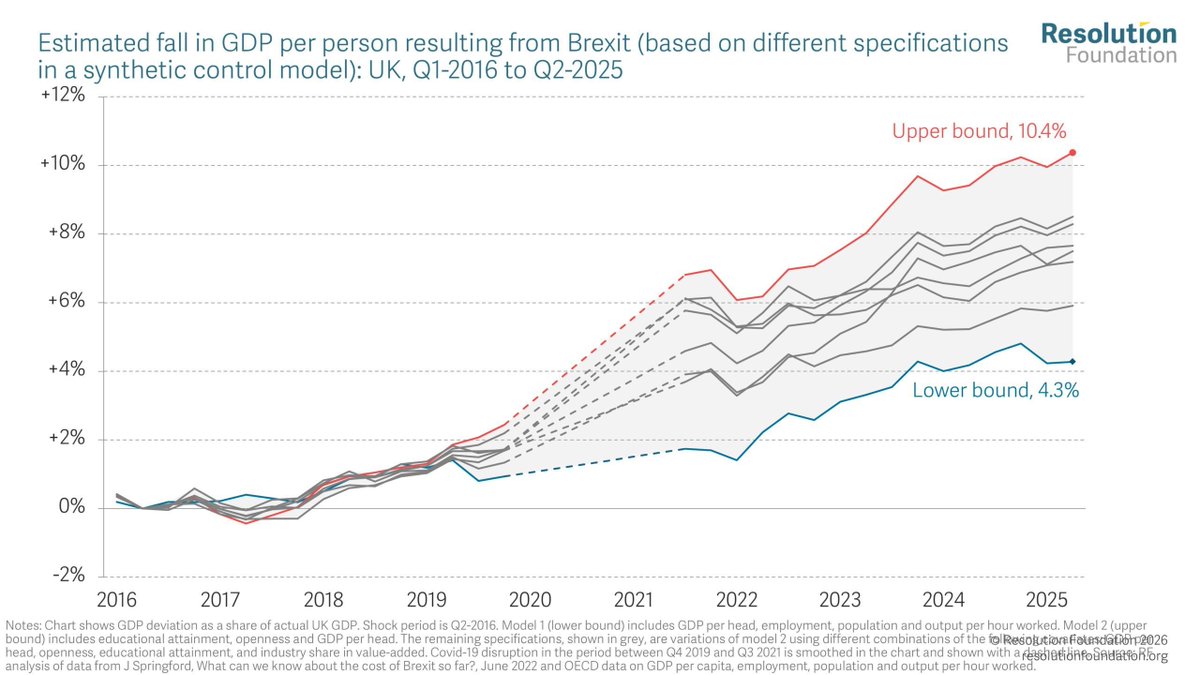
A study on Brexit economic impact by @I_Am_NickBloom and @bankofengland economists estimates that Brexit has reduced the size of the UK economy by around 6% with the impact split between post-referendum uncertainty & trade barriers introduced after 2021
https://t.co/c4mHY6E19x
When lockdowns emptied offices in 2020, why didn't economic output fall even further?
New ESCoE research explores the role of "potential capital" in helping millions continue working from home: https://t.co/ZDxqAZ0d7C
@MizenPaul@haskelecon
Fantastic to see work on the UK productivity slowdown by ESCoE/ @KingsCollegeLon PhD student @JoshMartin_econ featured in this @FT article by @martinwolf_
Read the full article: https://t.co/Gq8CEC1SvE
Explore Josh's ESCoE work: https://t.co/r339UBZsgF
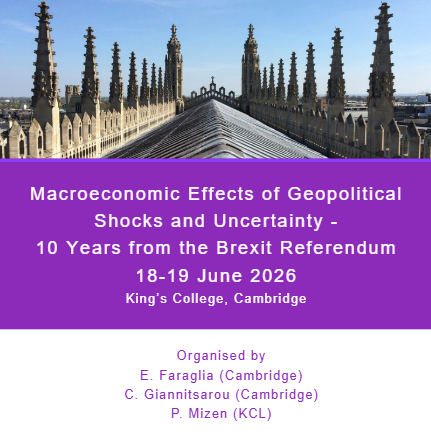
We're delighted to announce 'Macroeconomic Effects of Geopolitical Shocks & Uncertainty - 10 years from the Brexit Referendum' will be held from 18-19 June 2026 at King's College, Cambridge.
Find out about more here➡️https://t.co/Uw0DS1xp75
@CamEcon#econtwitter
Social science research is vital to understanding & driving economic growth. Watch our video where @Anne_E_Green, @CityREDI & @MizenPaul, @KingsCollegeLon share how social science research is strengthening the UK economy at regional & national scales. https://t.co/UR1RmuJcNk
New paper on remote work with @BeataJechorek@asdurso & @ChloeThurstonDC out in The Journal of Strategic Information Systems today 🤓
We show employees evaluate remote work in concordance with other workplace amenities when trading off pay.
Full text: https://t.co/dNllnHBn1r
Brexit has likely done more economic damage than feared.
Recent evidence suggests the economic cost of Brexit may be approaching twice the 4% impact assumed by the OBR.
The Chancellor has signalled a shift in approach to EU trade, but the effect will depend on how far the govt goes on alignement.
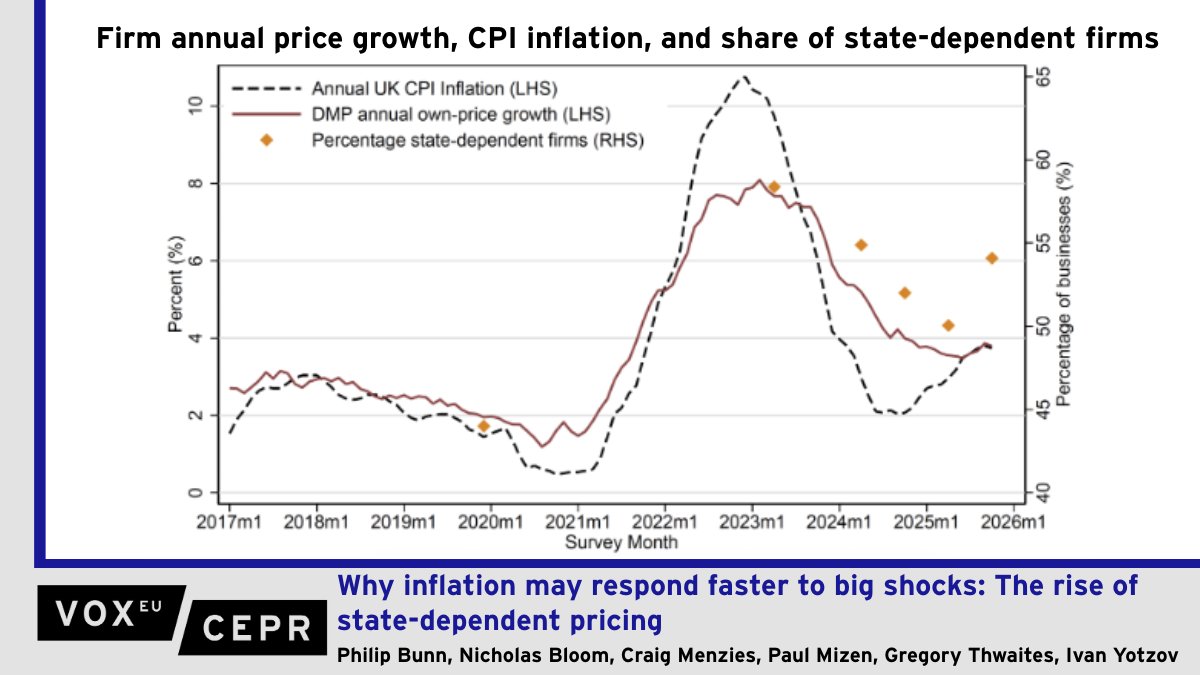
"Why inflation may respond faster to big shocks: The rise of state-dependent pricing"
Read the latest @voxeu column by Philip Bunn @I_Am_NickBloom Craig Menzies @MizenPaul Gregory Thwaites and Ivan Yotzov
https://t.co/7lirUiQ17F
The main objective is to provide advanced PhD economists, about to go on the job market, with an opportunity to present their research to their peers & leading researchers in the field in order to obtain feedback & practice the presentation of their key research ideas.
2/3
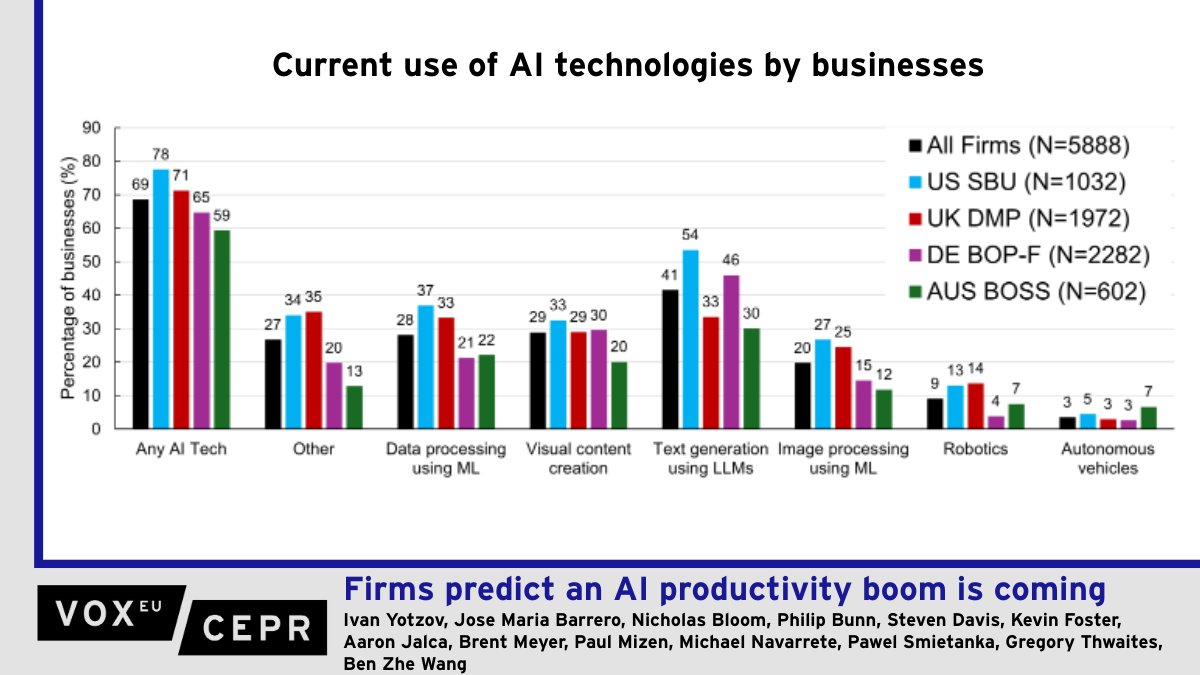
Data from over 5000 CFOs and CEOs in the UK, UK, Germany, and Australia predict AI will reduce their firms employment by almost 1 percent and raise productivity by 2 percent, from @iyotzov, Jose Maria Barrero, @I_Am_NickBloom, Philip Bunn, Steven J. Davis, Kevin M. Foster, Aaron Jalca, Brent H. Meyer, @mizenpaul, @mnavarrete42, Pawel Smietanka, @GregoryThwaites, and Ben Zhe Wang https://t.co/renoFDhoUT