🚨BREAKING: Trump signs an Executive Order to protect and expand Second Amendment rights for Americans. The order calls for the Attorney General to undo hostile changes made by the Biden administration and also make future recommendations to strengthen American's rights.
#DYK that data from @NASAHubble and Webb starts in black & white before being translated into color? Learn more from @SpaceTelescope experts in our @Instagram live — feat. colorblind content creator Natasha Caudill, who "translates" her black & white view: https://t.co/iqbQCVhF29
It’s a shine off! 🌌
This year’s Perseids meteor shower will have to contend with the full Moon’s brightness. Look up if you’re outside after midnight (local time) on Aug. 12 or 13, when it’ll be at its peak--you might be lucky and see the brightest ones. https://t.co/vFkqWhKOmi
Time to reinvent the wheel.
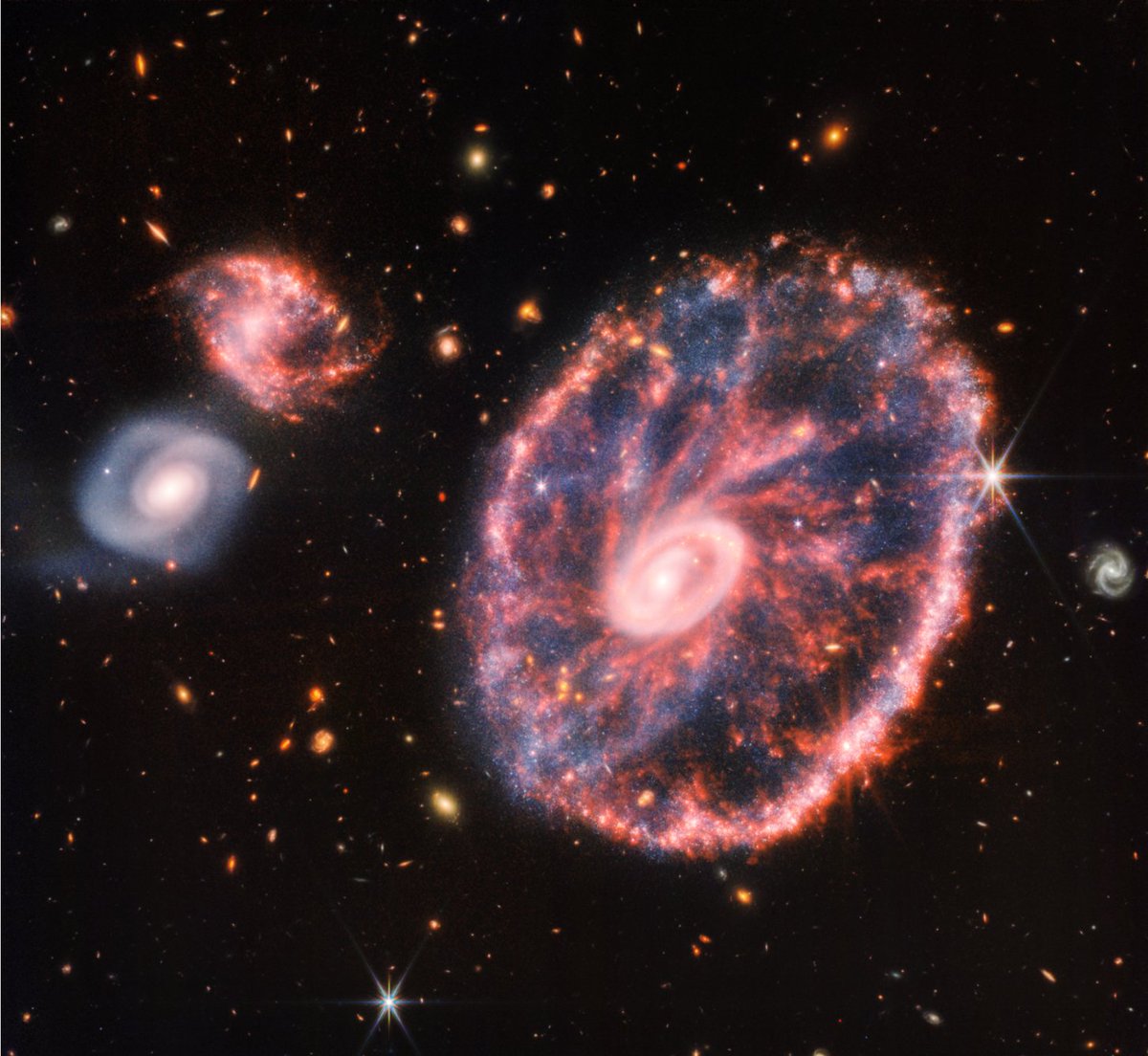
Here’s the Cartwheel Galaxy in a whole new light — as a composite image from 2 instruments on the Webb telescope. Webb uniquely offers not just a snapshot of the galaxy’s current state, but also a peek into its past & future: https://t.co/QdXPwAwwac
Believe it or not, this galaxy was probably your average spiral galaxy before it collided with a smaller galaxy over 400 million years ago. Now, it’s made up of 2 rings — a bright inner ring and a surrounding, colorful ring. Both expand outwards from the center like pond ripples.
Download full-resolution images of the Carina Nebula, as seen by @NASAHubble and by Webb!
👉 Hubble: https://t.co/ZI7O7LyTlJ
👉 Webb: https://t.co/zGUurobd5p
Want posters and zoomable versions of Webb's first images? Find them here: https://t.co/zEyLGKSnGj
How did we get the data for our first images? Through @NASA’s Deep Space Network! At one million miles away, it takes about five seconds for data to get from Webb to Earth, where it's then sent to our operations center. Right, @NASASCaN?
Learn more: https://t.co/UQgKryYX2A
I put together comparisons of what @NASAHubble sees VS what @NASAWebb sees, the results are astonishing. And just to think, these Webb images don’t have nearly the exposure times of Hubble, so much more is to come 😍 I’m incredibly wowed by #JWST!!! #nasa#Hubble
DID SOMEONE SAY SUPERMASSIVE BLACK HOLE?!
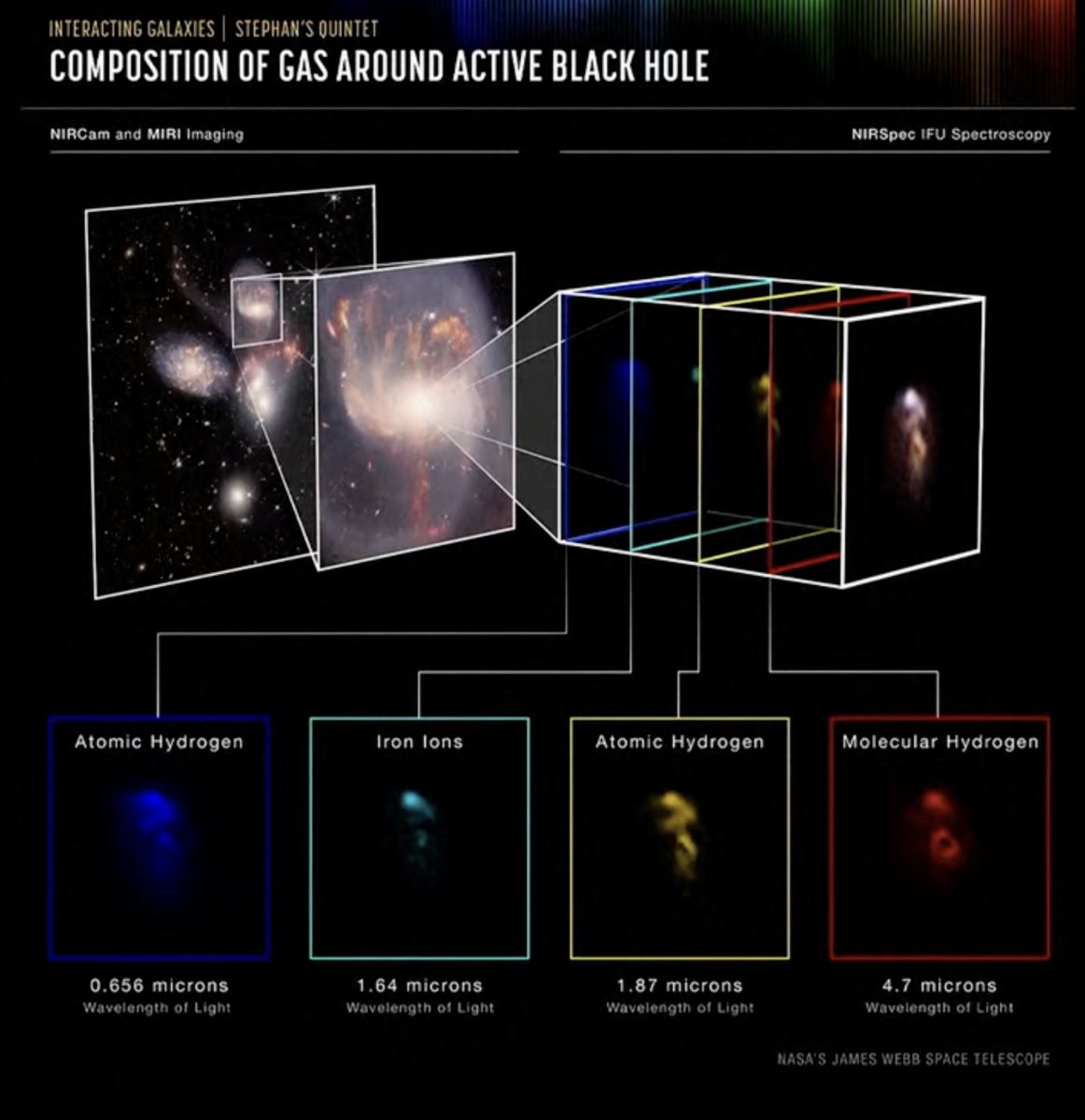
Unexpected and amazing! We can see the composition of the gas around a supermassive black hole 290 million light-years away with #JWST!!!
"We took that image before breakfast. The amazing thing about @NASAWebb is the speed at which we can churn out discoveries."
Astrophysicist Jane Rigby marvels at the capabilities of the world's most powerful telescope. https://t.co/63zxpNDi4I #UnfoldTheUniverse
✋🏼 Galactic high five!
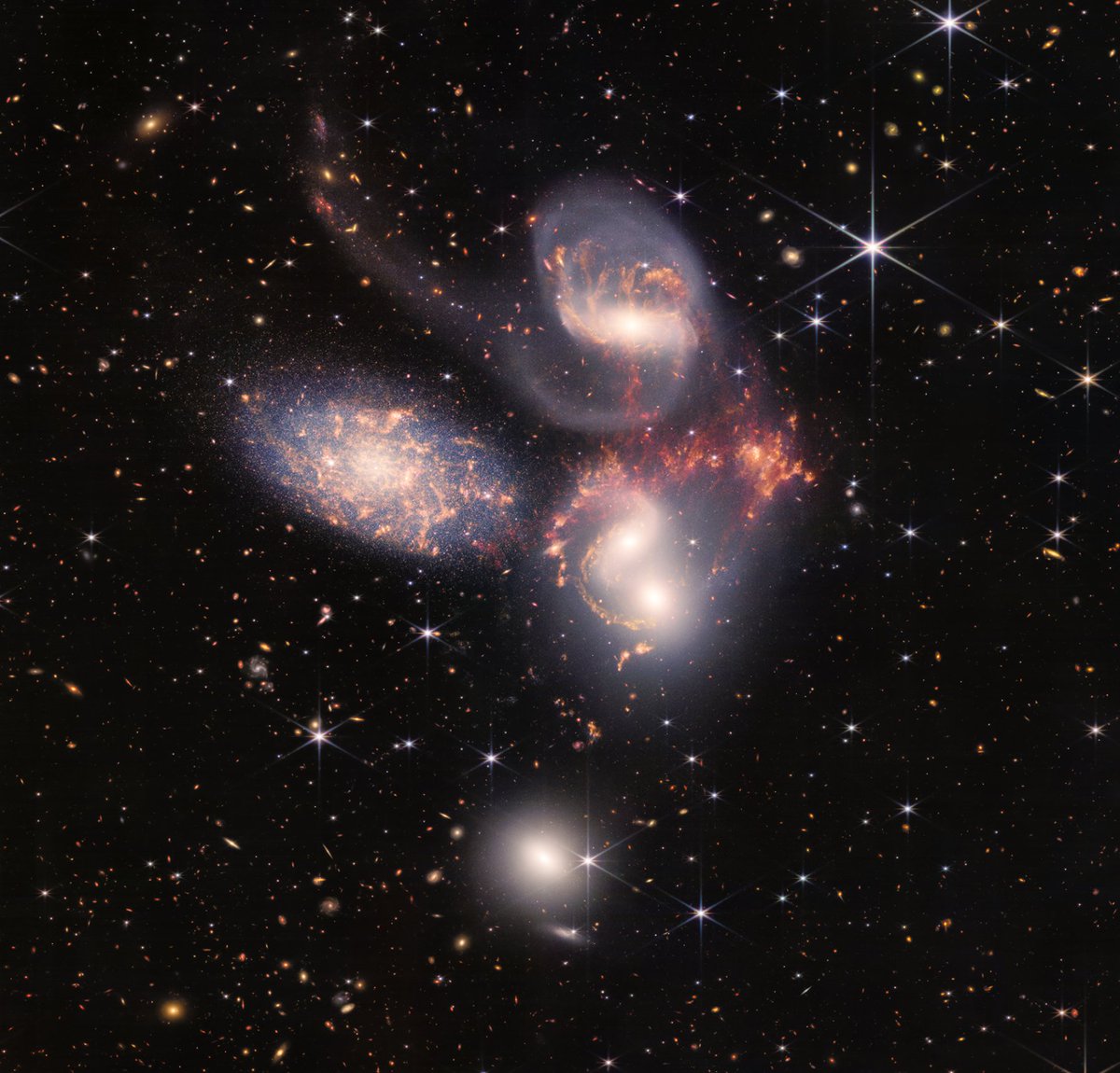
In Webb’s image of Stephan’s Quintet, we see 5 galaxies, 4 of which interact. (The left galaxy is in the foreground!) Webb will revolutionize our knowledge of star formation & gas interactions in these galaxies: https://t.co/tlougFWg8B #UnfoldTheUniverse
Galaxies collide in Stephan’s Quintet, pulling and stretching each other in a gravitational dance. In the mid-infrared view here, see how Webb pierces through dust, giving new insight into how interactions like these may have driven galaxy evolution in the early universe.
Two cameras are better than one, as seen in this combined view from Webb’s NIRCam & MIRI! In the near-infrared, we see hundreds of stars and background galaxies. Meanwhile, the mid-infrared shows us dusty planet-forming disks (in red and pink) around young stars.
"This is just one sliver of data that @NASAWebb is providing us."
Astrophysicist Knicole Colon explains the importance of using spectroscopy, and how we can use it to find exoplanets, and even gaze into their atmospheres. https://t.co/63zxpNDi4I #UnfoldTheUniverse