Monsoon 2026 Update
In view of emerging indications of a possible El Niño event over the Pacific and the concerns regarding the prospects for the 2026 monsoon season, I would like to highlight the following key points:
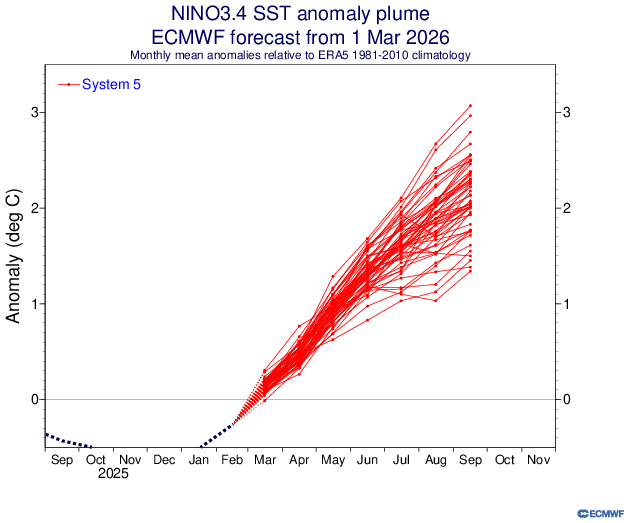
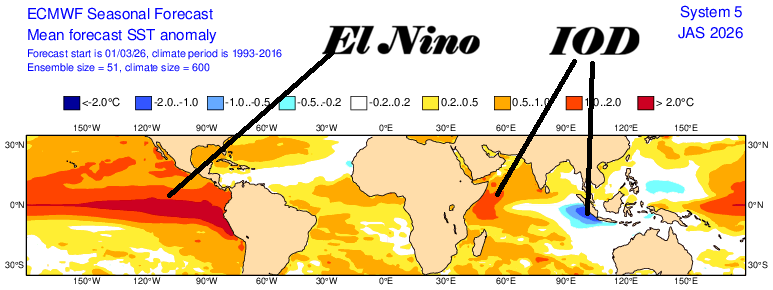
There is a high probability that an El Niño event will develop over the equatorial Pacific during the 2026 monsoon season. Seasonal forecasts from ECMWF and NCEP (USA) suggest that it could evolve into a strong El Niño event.
These models also indicate the possible development of a positive Indian Ocean Dipole (IOD) during the monsoon season.
While a strong El Niño is typically associated with deficient monsoon rainfall over India, a positive IOD generally tends to support normal or above-normal rainfall, partly offsetting the El Niño influence.
However, forecasts made at this time of the year carry significant uncertainty due to the so-called “spring predictability barrier.”
Historically, the simultaneous occurrence of a strong El Niño and a positive IOD has been observed in 1972, 1982, 1997, 2015, and 2023. Among these years, the Indian monsoon was normal in 1997 (100% of LPA) and near normal in 2023 (95% of LPA). The remaining years—1972, 1982, and 2015—experienced deficient monsoons.
Therefore, there is reason for cautious concern regarding the potential development of a strong El Niño event during the coming monsoon season.
Given the current uncertainties, clearer signals are likely to emerge by May 2026, when the evolution of El Niño and IOD conditions can be assessed with greater confidence.
At present, there is no reason for alarm. However, the government and relevant agencies should closely monitor the evolution of these climate drivers and begin considering strategic response measures that can be implemented once more reliable forecasts become available.
It is also important to consider the possible delayed impacts of this year’s El Niño, particularly on heat waves in 2027. There is a possibility of more frequent and intense heat waves next year, with an earlier onset potentially beginning as early as March.
India has strong scientific expertise and forecasting capability, and these strengths should be effectively leveraged to anticipate and manage the potential impacts on the monsoon and related climate extremes.
Summary:
At this stage, the message is not to panic, but to remain vigilant and begin thinking proactively about strategies to manage possible impacts.
I will continue to update this assessment as new information becomes available.
Please note that this is not an official seasonal forecast of the Indian monsoon. For the authoritative monsoon forecast, please refer to the India Meteorological Department (IMD).
@Indiametdept@PMOIndia@atriauniversity
Maharashtra tragedy- Six dead after SUV falls into 400-ft gorge in Tamhini Ghat in Raigad
Download the app now to stay updated in real time!
https://t.co/ni7PrFbcpK
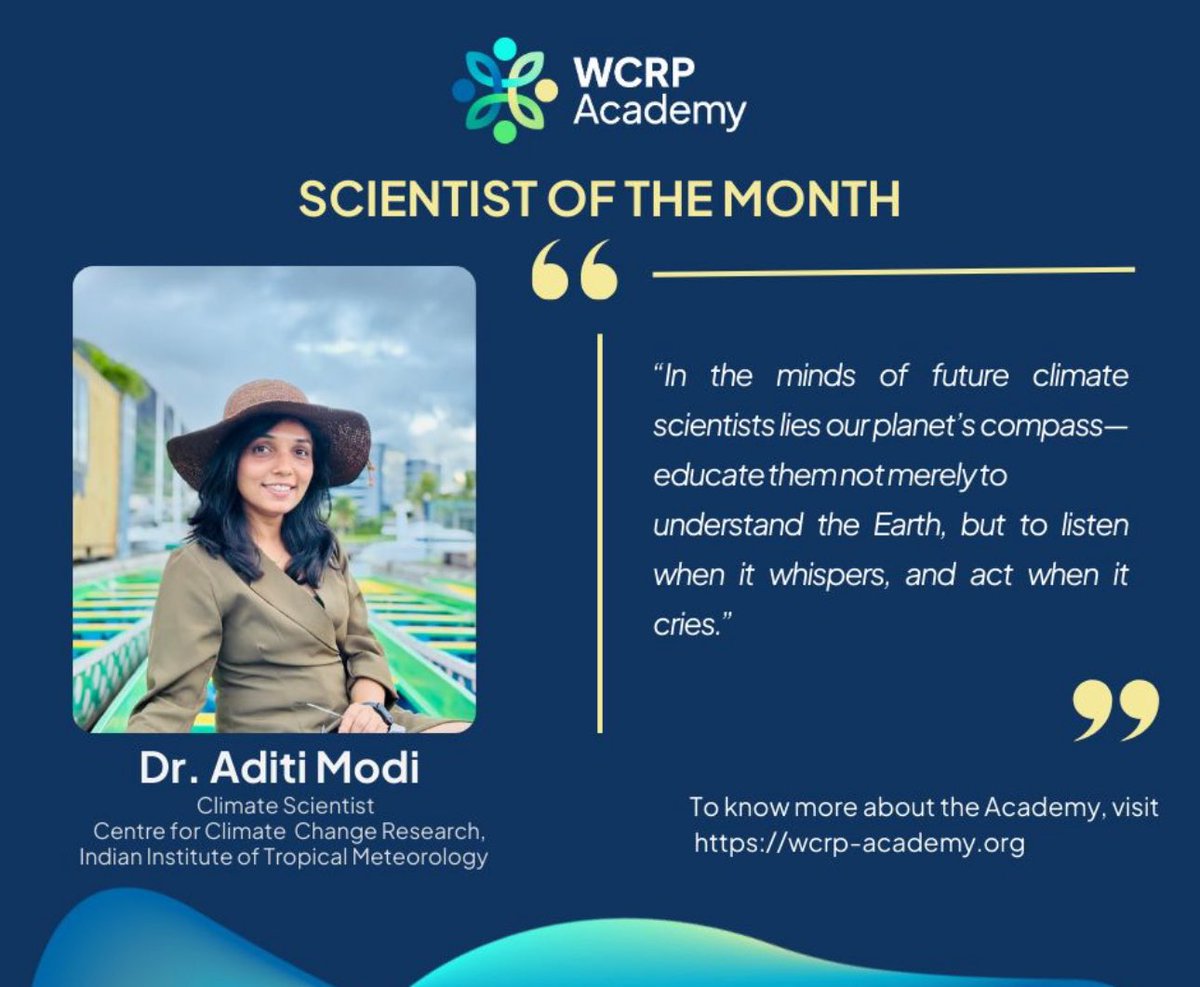
Dr. Aditi Modi, Scientist at the Centre for Climate Change Research, Indian Institute of Tropical Meteorology (IITM), Pune, has been featured as the ‘Scientist of the Month’ by the WCRP. she represents the “WCRP My Climate Risk Indo-Pacific Hub” at IITM.
Congratulations!
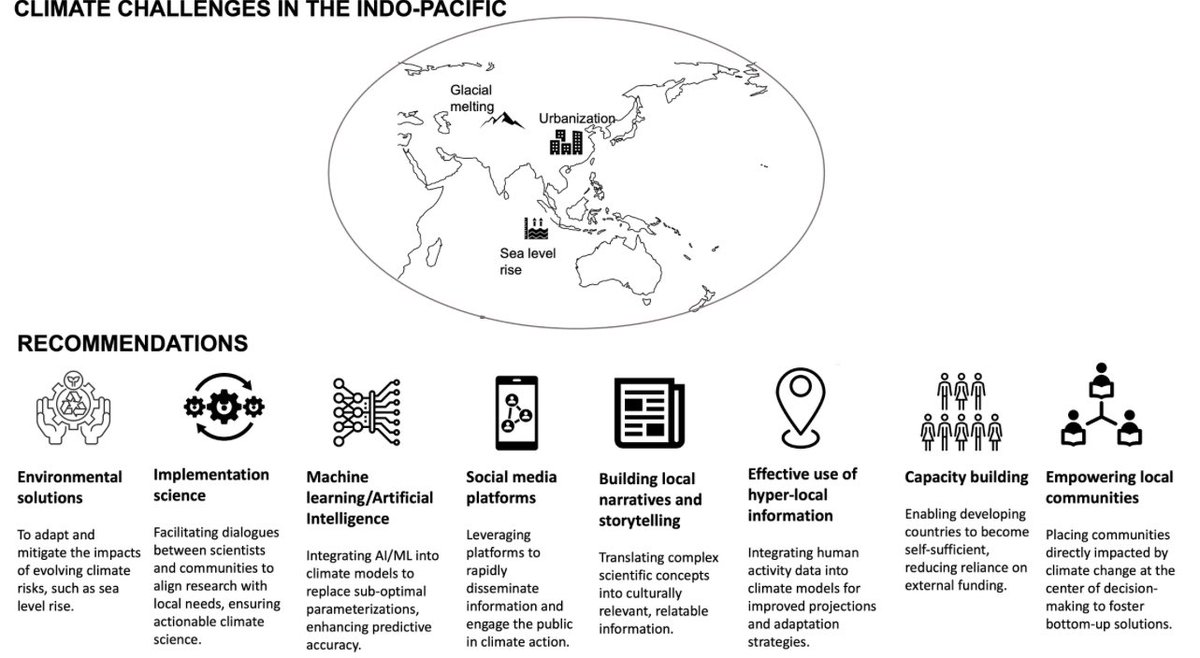
IITM New Study: Bridging climate science, policy, & communities: Collaborative pathways for climate resilience in Indo-Pacific
Frontiers in Climate,2025
Aditi Modi & @rocksea, Indo-Pacific Hub at @iitmpune
https://t.co/2DaOoW91ei
Bridging climate science, policy, and communities: collaborative pathways for climate resilience in the Indo-Pacific.
Read our new paper:
https://t.co/pNmPNFHdDq
Over 170 scientific positions are currently open at IITM, with more opportunities on the way. Join us in advancing research and development in Earth and climate sciences!
Link to IITM Careers:
https://t.co/BrEztIzWS9
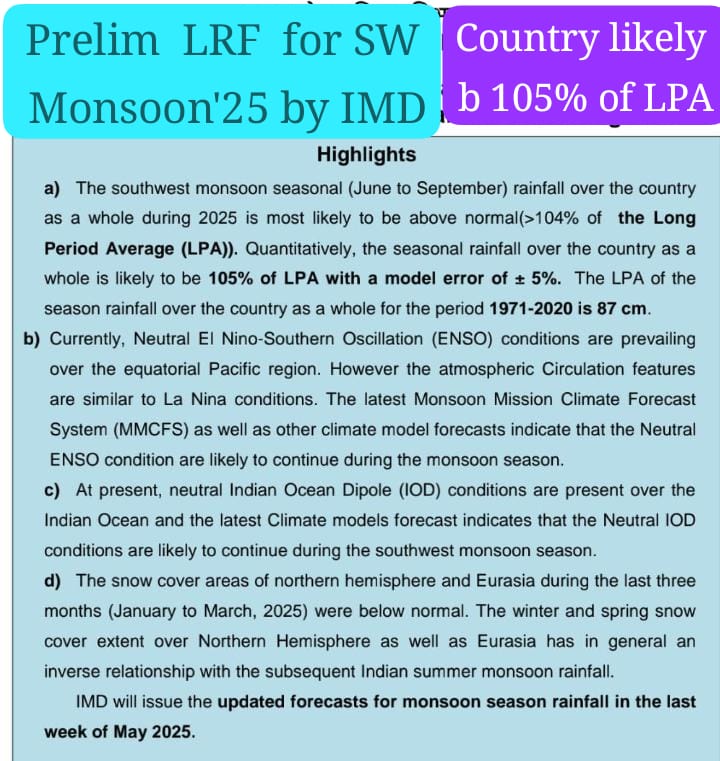
IMD's Long Range F/C indicates country's monsoon rain(June-Sept)likely b 105% of long period average:Major parts of country likely get above Normal rain except TN,NE -India& J&K,Ladakh.
Neutral ENSO,neutral IOD likely continue during monsoon.Hope for good kharif crops' production
IIIT-Delhi has raised its Ph.D. fellowship from Rs 37,000 to RS 60,000 per month, making it the highest in India. This move aims to attract top research talent and provide scholars with financial stability, surpassing UGC and DST standards.
https://t.co/2rsIAsiQnR
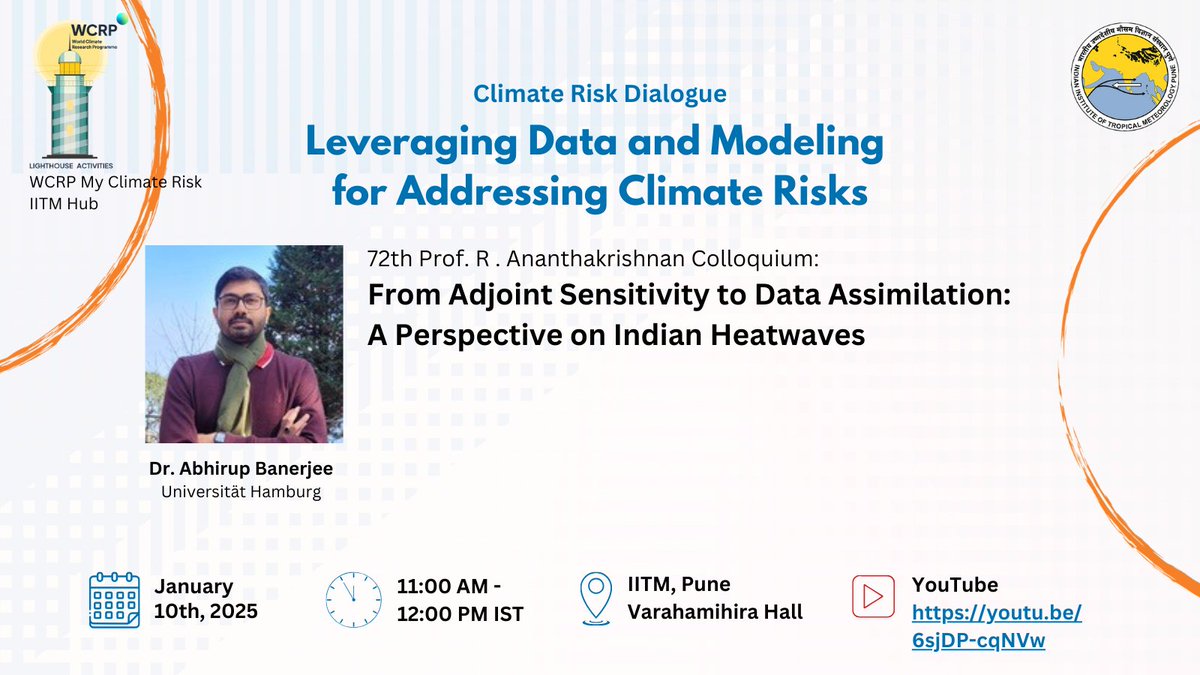
Climate Dialogue hosted by WCRP My Climate Risk (IITM)
Join us for the lecture by Abhirup Banerjee, U. Hamburg, "From Adjoint Sensitivity to Data Assimilation: A Perspective on Indian Heatwaves"
10th Jan, 11:00 AM IST @ Varahamihira Hall, IITM
YouTube:
https://t.co/R00g5xCdjR
@LukeCoutinho17 Also, is it the same as first boiling water and then bringing it to a lukewarm temperature as i would imagine the bacteria gets killed in boiling process.
@LukeCoutinho17 Hi luke, can you please shed some light on whether just heating the water from room temperature to a lukewarm temperature will activate bacteria in the water? And if yes, is it harmful?
You have to wonder what it will take for us to take air pollution more seriously. By the way, this data only covers until 2019, and things have only gotten worse in the last five years.
Maybe a property price discount for the quality of air and water is the solution. If economics accounted for this, maybe we would all figure this out. Essentially the air and water quality determines the rate for the property.
Also, this would probably turn a property owner into the owner of the place, and better odds of fixing it if working as a group. For example, if I went from owning a property in JP Nagar and caring for it to caring for my layout in JP Nagar and then the whole of JP Nagar, it could have a better outcome.
While Delhi is getting all the attention, the AQI (Air quality index) isn't good in most urban areas in the country. Mumbai, Chennai, Kolkata, Bengaluru, and others are included in areas with very poor air quality.
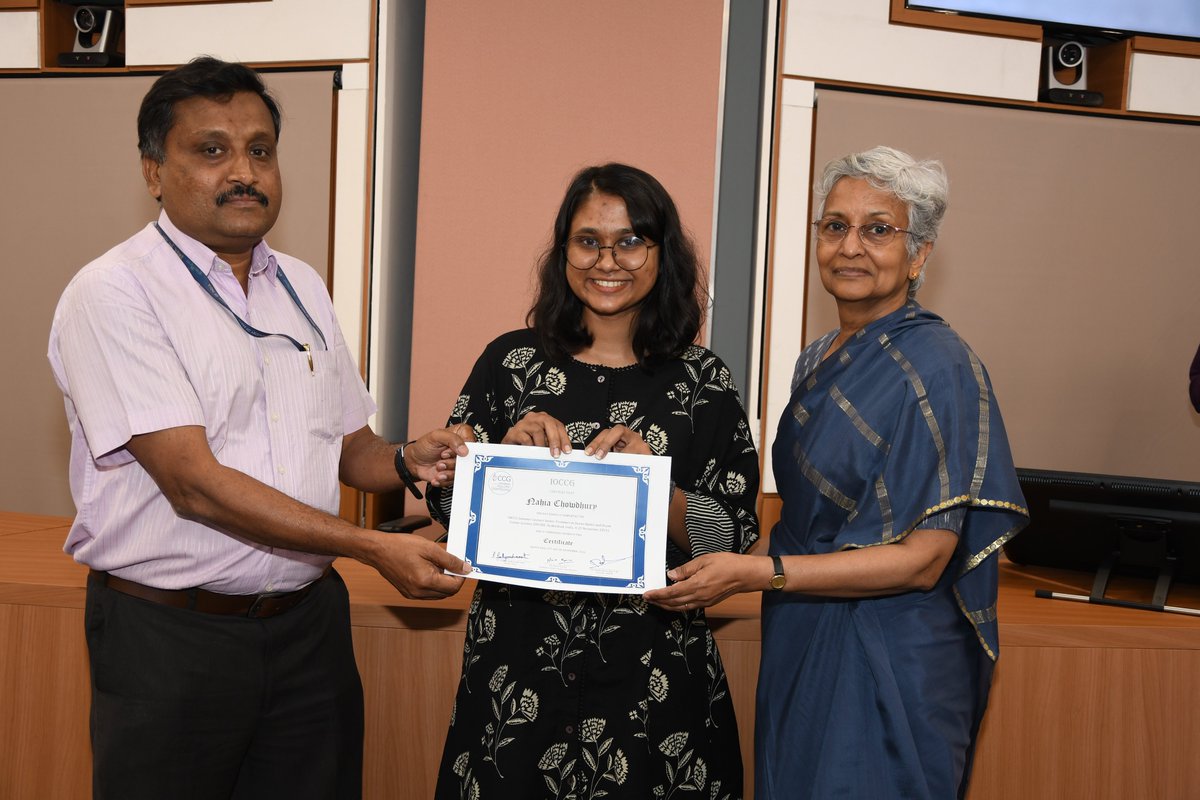
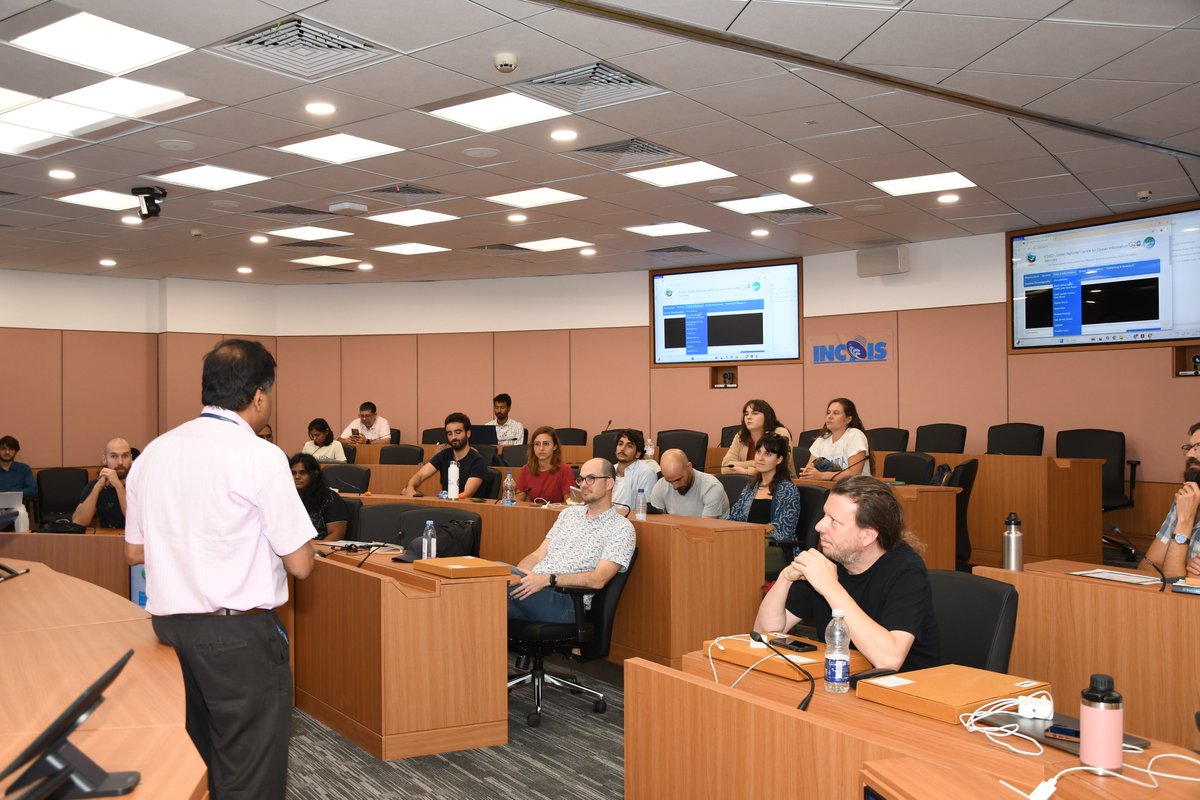
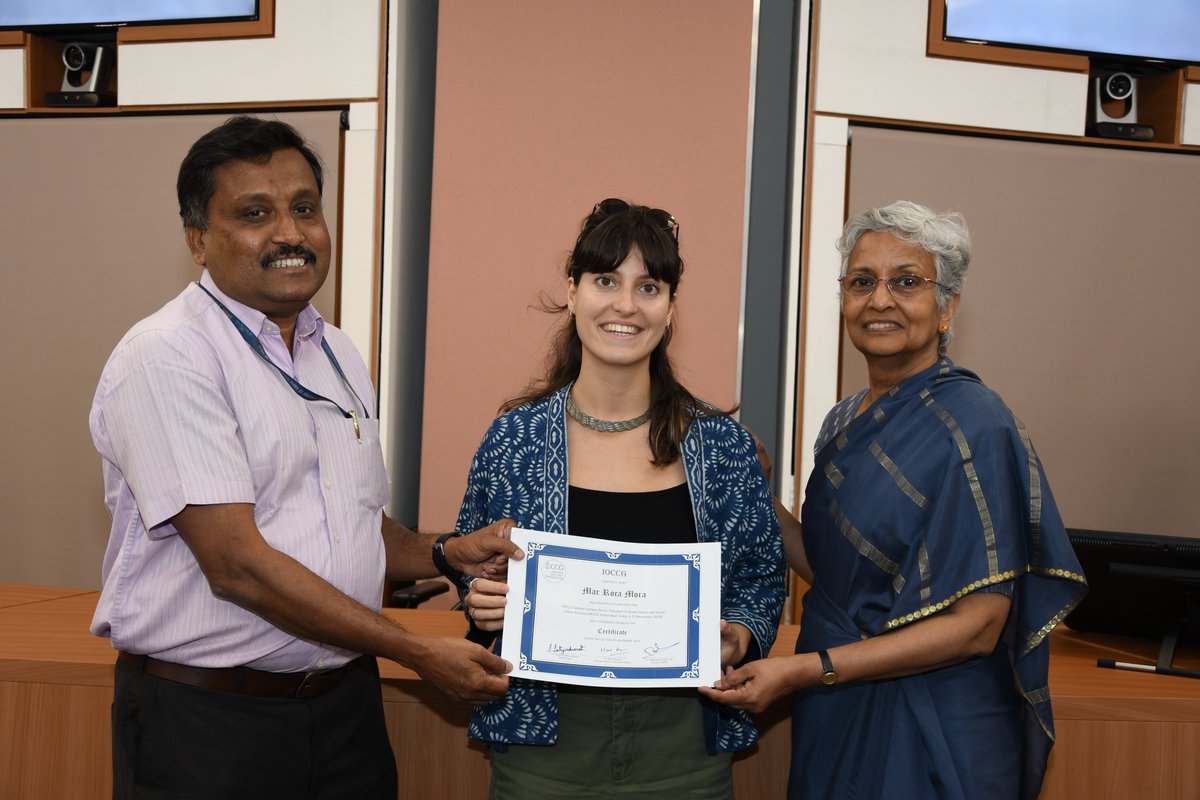
The two-week Summer Lecture Series on ‘Frontiers in Ocean Optics and Ocean Colour Science’ has successfully concluded today. This enriching training program covered essential topics like ocean optics, bio-optics and ocean colour remote sensing, where the participants gained valuable theoretical knowledge and hands-on experience.
Over the past two weeks, all the participants actively engaged and got involved in making this training session a grand success. In his concluding remarks Director, #INCOIS emphasized importance of ocean colour remote sensing in fulfilling blue economy objectives and invited participants & their institutions for collaborations with INCOIS in this field.
#IOCCG #MoES #OceanScience #OceanDecade #ITCOO #INCOIS
@moesgoi@DrJitendraSingh@OfficeofDrJS@ravi_moes@UNESCO@DCC_IOR@UNOceanDecade@iioe_ecsn@iioe_2@IOCCG@1nimitk@PIB_India
Check out the activities of the ongoing Summer Lecture Series on ‘Frontiers in Ocean Optics and Ocean Colour Science’ at #ITCOO, #INCOISHyderabad. Under this program, 30 participants from across the globe are diving deep into both theoretical insights and hands-on experience with ocean colour data products. The participants are actively engaging in the training showing enthusiasm and keen interest.
#IOCCG #MoES #OceanTraining #RemoteSensing #OceanLiteracy
@moesgoi@DrJitendraSingh@OfficeofDrJS@ravi_moes@UNESCO@DCC_IOR@UNOceanDecade@iioe_ecsn@iioe_2@IOCCG@1nimitk@PIB_India
The 3D artists at the weather channel deserve a raise for this insane visual
Now watch this, and then realize forecasts are now predicting up to 15 ft of storm surge in certain areas on the western coast of Florida