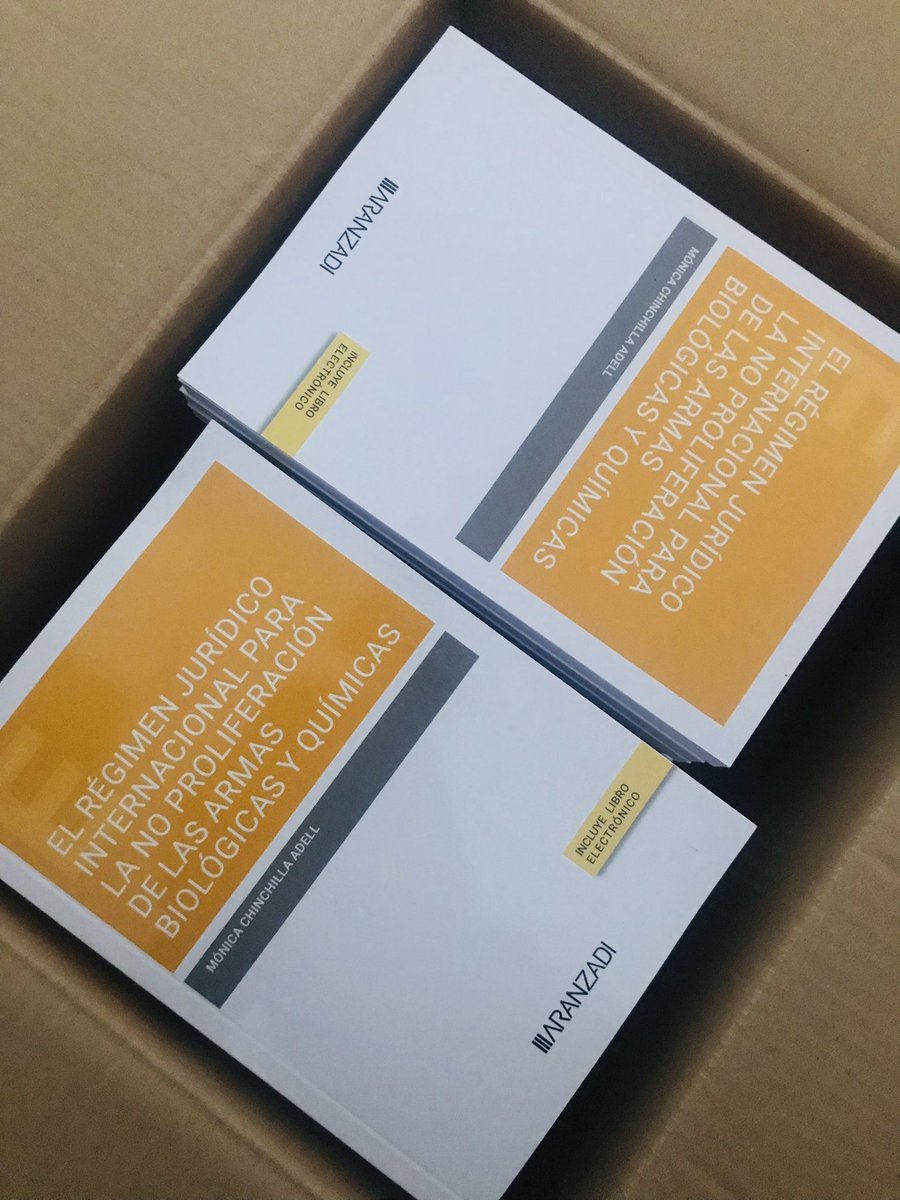
📚Ya disponible online. ¡No te quedes sin el tuyo!
“El régimen jurídico internacional para la no proliferación de las armas biológicas y químicas”.
https://t.co/qexlJulClu
📚Available online. Don’t miss out!
Comienza UNMUN 2025 en la @unav. 275 estudiantes practicarán sus dotes de diplomacia. La embajadora para el desarme ante la ONU, María Basolls Delgado, fue la encargada de inaugurar oficialmente el congreso, acompañada de la decana de @derecho_unav y @Moni_Chinchilla
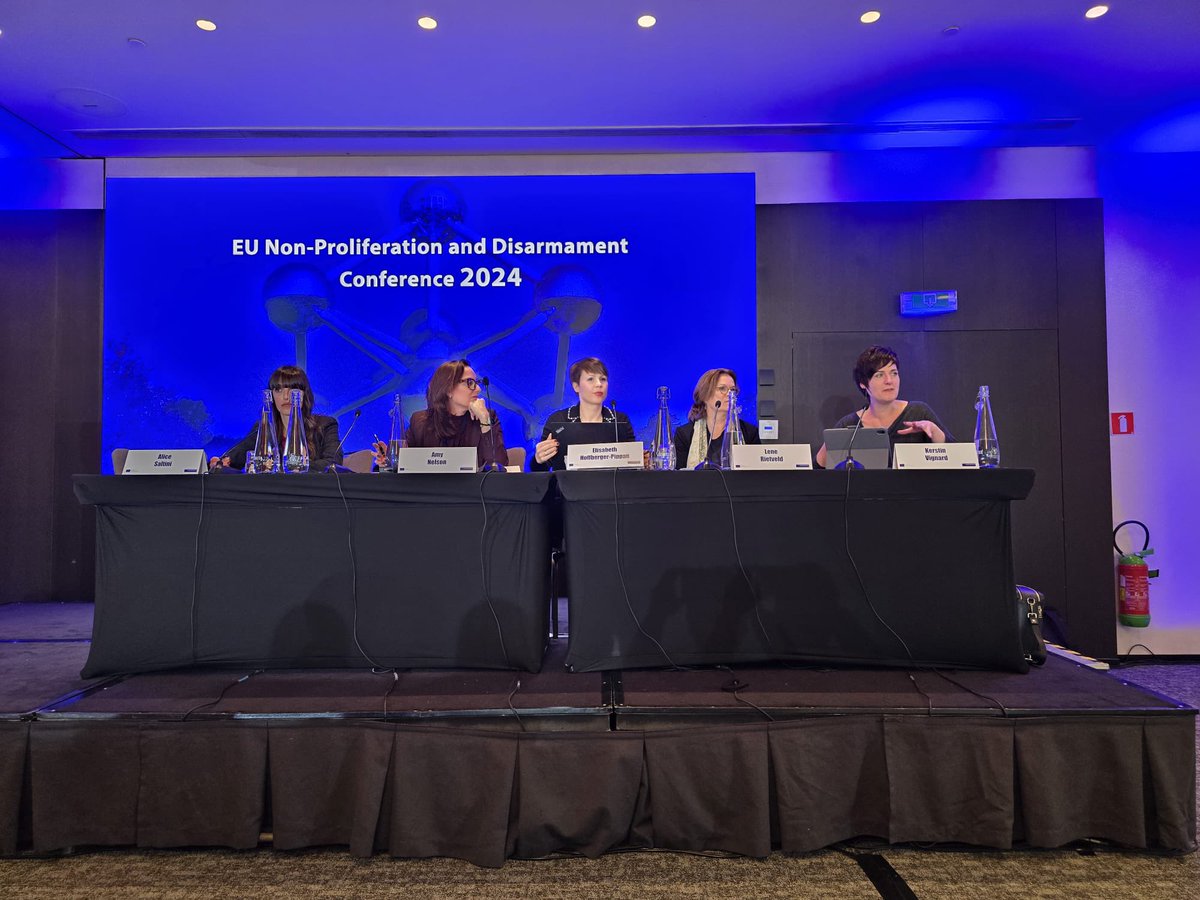
🇪🇺Thank you very much to the @EU_NonProlif for having me as the chair of the parallel session on ‘The future of #biologicalweapons’ with such an amazing panel of experts.
👏🏻And my kindest congratulations to the @IAIonline for organizing such an incredible event!
#EUNPDC2024
More parallel sessions taking place now at #EUNPDC2024!
We discuss:
🔹 challenges to conventional arms control
🔹 emerging technologies and arms control
🔹the future of biological weapons
#ChemicalWeapons#BiologicalWeapons#ExportControl
Challenges of the “#AustraliaGroup” in Preventing the Return of Chemical and Biological Weapons
https://t.co/6QDkgl9KqO
Nice to see a review of our publication on the future challenges facing the Australia Group @FRS_org with @Moni_Chinchilla, Esmée de Bruin and Élisande Nexon
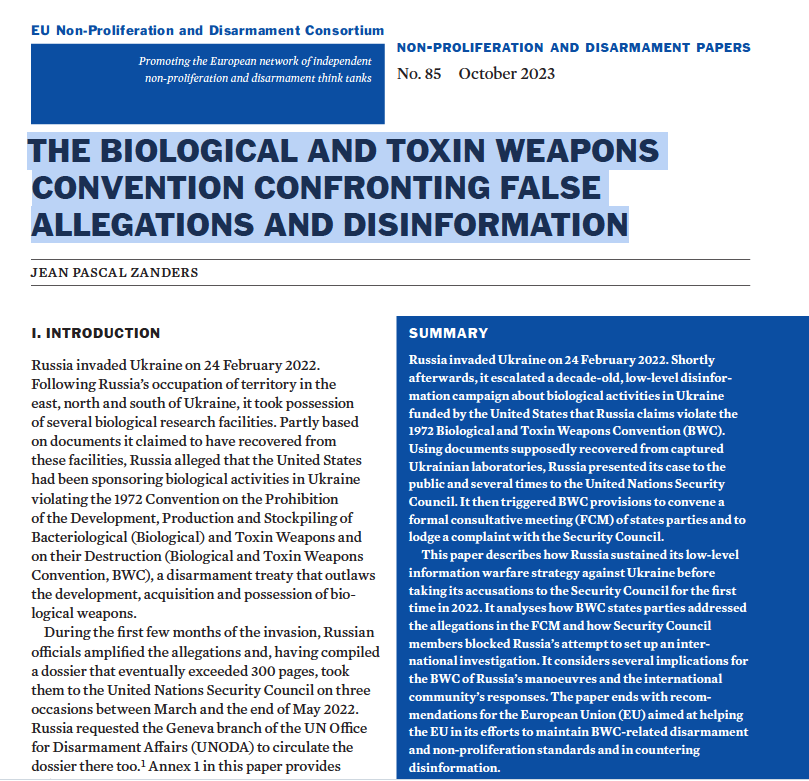
As international conflicts and wars intensify and technological and biological advancements become increasingly accessible worldwide, concerns have grown about the potential resurgence of chemical and biological weapons. This has sparked international debate over the effectiveness of controlling the export of dual-use technologies that could be related to the development and production of these weapons.
In this context, the role of the “Australia Group” emerges. This informal forum of countries seeks to harmonize export control measures to ensure that exports do not contribute to the development of chemical and biological weapons. It also helps align national control measures, enabling participants to meet their obligations under the Biological and Toxin Weapons Convention (BTWC) and the Chemical Weapons Convention (CWC).
The significance of the research paper by Jean Pascal Zanders and others, published by the Strategic Research Foundation in April 2024 (https://t.co/q7MnSw9wYy), lies in its evaluation of the opportunities and challenges facing the Australia Group in preventing the emergence of chemical and biological weapons. The paper examines the group’s future role in light of global geopolitical shifts and the evolving threats posed by emerging technologies. It also explores the possibility of developing formal international law and its relationship with informal arrangements in preventing the proliferation of these weapons.
[...]
#BiologicalWeapons#ArtificialInteligence
AI biosecurity concerns prompt call for national rules
https://t.co/7gkZBWLwYn
Biosecurity experts are calling on governments to set new guardrails in an effort to limit the risks posed by advanced AI models being applied to biology.
Why it matters: AI models trained on genetic sequences have double-edged potential to help scientists design new medicines and vaccines, but can also be used to create new or enhanced pathogens.
Where it stands: Experts from OpenAI and RAND, among other institutions, say today's large language models don't increase the risk of a bioweapon being created in part because there's not enough data to train them.
* There's an impression today that "producing biological weapons with all of the information that AI can provide is easy, straightforward," Sonia Ben Ouagrham-Gormley, deputy director of the Biodefense Graduate Program at George Mason University, said at a Center for New American Security event on Wednesday.
* But "producing biological weapons is very complex, very complicated."
Yes, but: Many researchers say it's only a matter of time before AI models improve and it becomes a possibility.
[...]
🌍🧬 Check out the latest CBWNet working paper by @Moni_Chinchilla, @EHoffbergerP, @SannimariVeini, and Barry de Vries, exploring why #biosecurity and #biosafety should be seen as intertwined rather than separate concepts. Available here: https://t.co/ZaKhPl79ps
#Publication 🔴⚪️Découvrez notre nouvelle publication : "The Australia Group and the prevention of the re-emergence of chemical and biological weapons – Ongoing challenges", par @JPZanders, Élisande Nexon, @Moni_Chinchilla & Esmée de Bruin.
➡️ https://t.co/6nuWdVTqdN
It is my pleasure to share the following video series as a result of the workshop "Strengthening the Chemical Weapons Convention" organized by @SIPRIorg, where I had the privilege of sharing enriching discussions with experienced researchers and practitioners.
Enjoy!
📺 New video series on promoting chemical security, featuring Kumaresh Misra, @RevillJames, Mónica Chincilla, and Andrea Leisewitz.
Watch here ➡️ https://t.co/tn8nFw7s8f
Find out more ➡️ https://t.co/NX6dxC0LYs
50 years after its creation, the BWC still faces a critical gap in treaty compliance verification. Our new working paper by @DrAlexKelle and @EvaSiegmann analyses great power involvement in several areas of regime implementation. Read the paper here: https://t.co/ZaKhPl79ps
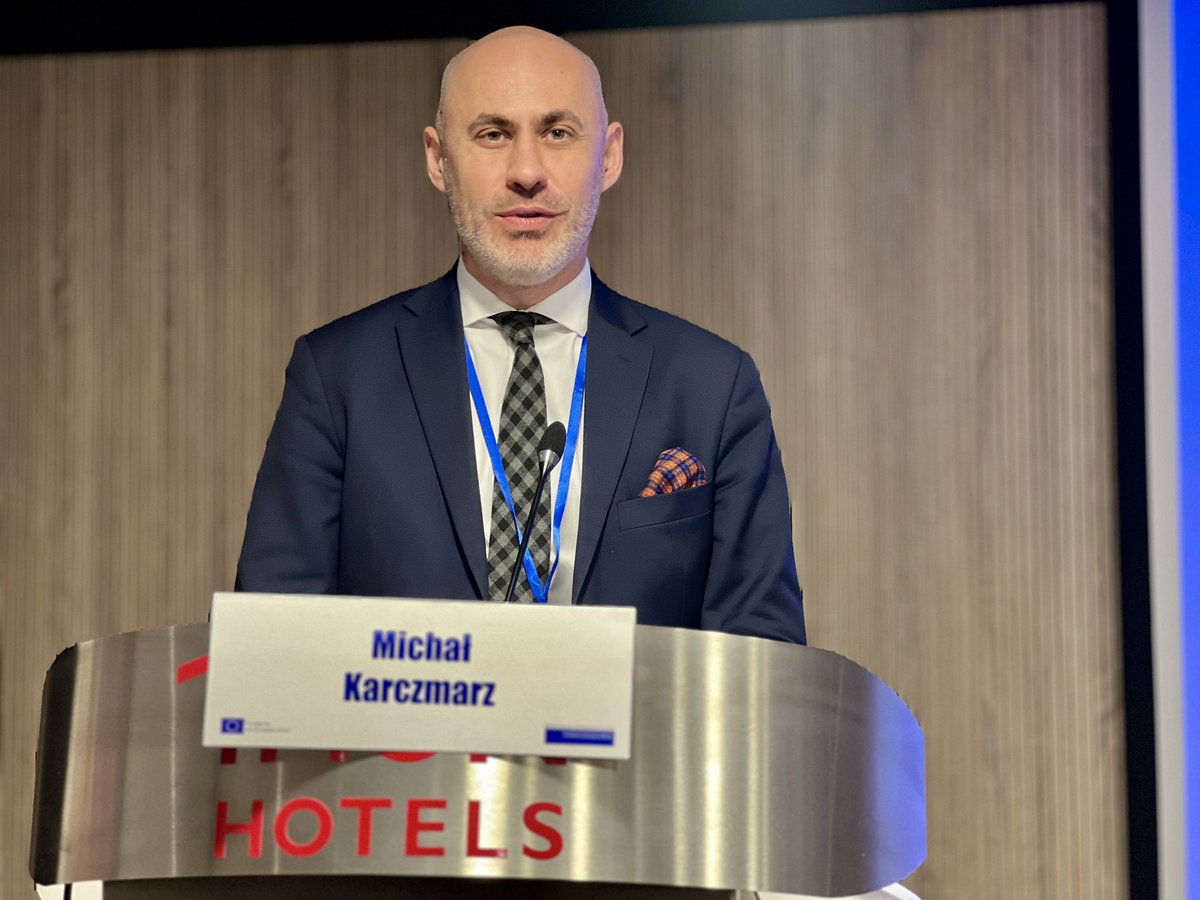
I had the privilege to present my research on blockchain technologies and chemical weapons export controls at the @EU_NonProlif#NextGeneration Workshop. A great opportunity and so many enriching discussions on CBRN issues. Thank you very much to @IAIonline for organizing!
The @EU_NonProlif#NextGeneration Workshop preceding this afternoon's #EUNPD Conference just ended! An enriching morning of insightful discussions on conflict dynamics & security in East Asia, nuclear proliferation & the future of NPT, and new emerging technologies & arms control
☢ Sobre esta cuestión publico en @Conversation_E para ahondar en la realidad que viven los hibakusha o los downwinders, entre otras poblaciones, que todavía hoy sufren los efectos de la radiación y la contaminación nuclear.
https://t.co/YxOo2nLHtC
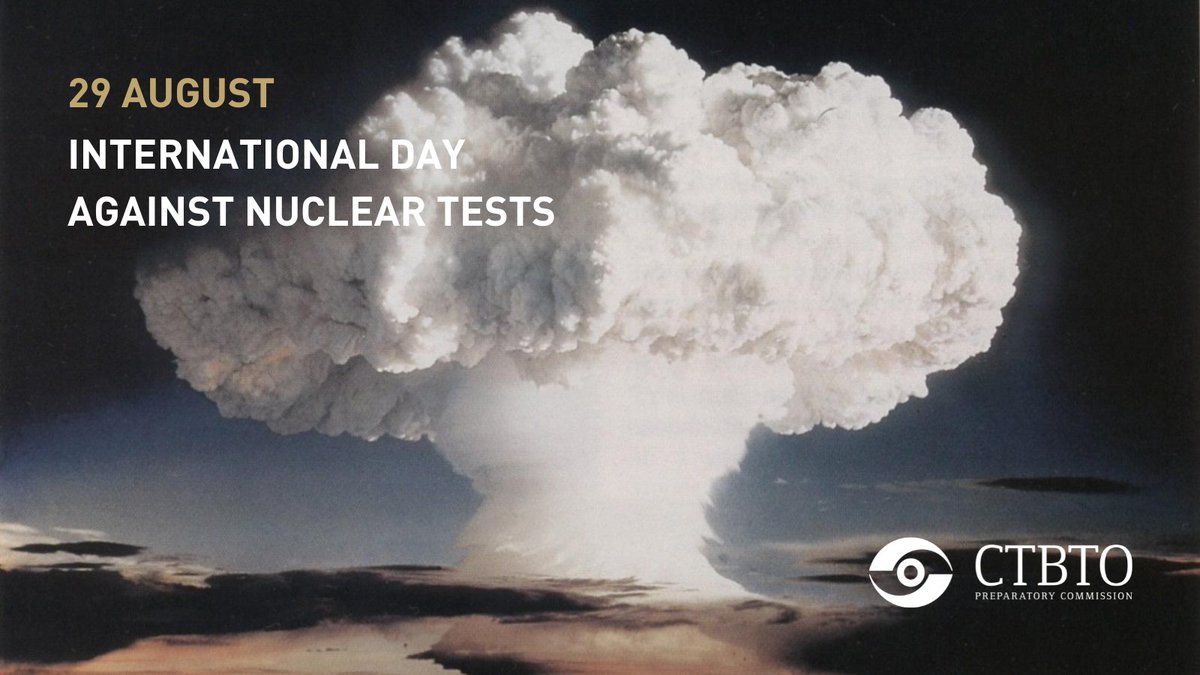
☢ Como cada 29 de agosto desde 2009, hoy se celebra el Día Internacional contra los Ensayos Nucleares. La comunidad internacional aúna fuerzas con el objetivo de visibilizar el daño humano y medioambiental producido por las más de 2.000 pruebas nucleares.
🕊️ 29 August is the International Day against Nuclear Tests, #IDANT. Join #CTBTO as we work to end this threat to global peace and security and raise awareness about the danger that nuclear weapons testing poses to current and future generations. 📹https://t.co/w2k6hR2Xgp
The Chemical Weapons Convention (@OPCW) aims to eliminate usage of #chemicalweapons. Read all about what was at stake and why no consensus was reached in this year’s conference in the newest #PRIFblog by @AlAlbluwi & @KrisBurck
https://t.co/EyQc388A8S
#ChemicalWeapons Attacks under the Convention against Torture: A New Possible Avenue?
https://t.co/1zGBGzyKL8
On 8/0623, #Canada and #Netherlands initiated proceedings at the #ICJ against #Syria ...

















![JPZanders's tweet photo. #ChemicalWeapons #BiologicalWeapons #ExportControl
Challenges of the “#AustraliaGroup” in Preventing the Return of Chemical and Biological Weapons
https://t.co/6QDkgl9KqO
Nice to see a review of our publication on the future challenges facing the Australia Group @FRS_org with @Moni_Chinchilla, Esmée de Bruin and Élisande Nexon
As international conflicts and wars intensify and technological and biological advancements become increasingly accessible worldwide, concerns have grown about the potential resurgence of chemical and biological weapons. This has sparked international debate over the effectiveness of controlling the export of dual-use technologies that could be related to the development and production of these weapons.
In this context, the role of the “Australia Group” emerges. This informal forum of countries seeks to harmonize export control measures to ensure that exports do not contribute to the development of chemical and biological weapons. It also helps align national control measures, enabling participants to meet their obligations under the Biological and Toxin Weapons Convention (BTWC) and the Chemical Weapons Convention (CWC).
The significance of the research paper by Jean Pascal Zanders and others, published by the Strategic Research Foundation in April 2024 (https://t.co/q7MnSw9wYy), lies in its evaluation of the opportunities and challenges facing the Australia Group in preventing the emergence of chemical and biological weapons. The paper examines the group’s future role in light of global geopolitical shifts and the evolving threats posed by emerging technologies. It also explores the possibility of developing formal international law and its relationship with informal arrangements in preventing the proliferation of these weapons.
[...]](https://pbs.twimg.com/media/GWw7Wj4XQAAq17H.jpg)