How do we enable behaviour change? These authors synthesised findings from 147 meta-analyses to identify which determinants of behaviour are most impactful & which should be targeted for change interventions. Many of the studies focus on large-scale, health-related, environmental or consumer behaviours but the conclusions are also worth reflecting on for organisational change.
What leaders of change should do:
1) Remove barriers & make desired behaviour easy: Focus on changing the environment & systems so that the desirable behaviour is simple, convenient, & supported; e.g, provide direct access to resources, streamline processes & foster social support.
2) Build social structure: Facilitate a culture where positive behaviours are the norm. Engage peers & create opportunities for team encouragement & collective participation.
3) Enable habits & provide ongoing support: Support repeated practice & help people make the new behaviour part of their routine. Reinforce changes with reminders, prompts, & positive reinforcement.
4) Prioritise practical changes over persuasion: Rather than trying to shift attitudes or beliefs, invest in changes that directly enable & reinforce the desired actions.
What leaders of change should NOT do:
1) Don’t rely solely on information or education: Simply telling people what to do, increasing knowledge or launching awareness campaigns has limited impact on actual behaviour.
2) Avoid focusing mainly on changing attitudes or beliefs: Programmes that target broad mindset change, general skills or even trustworthiness are less effective than those that address practical barriers.
3) Don’t overlook structural support: Failing to provide the physical, social, or material support needed for people to act makes adoption less likely, even if people know it’s important.
The article reinforces the importance of creating the conditions for change: making the “right thing to do” the easy, supported, default option, across multiple dimensions: https://t.co/D7HgPB9Dzn
Original manuscript version: https://t.co/g8qfgWtRa4. By Dolores Albarracin (@socialactionlab) & colleagues.
I accessed this article via @ReubenRusk who also created the graphic.
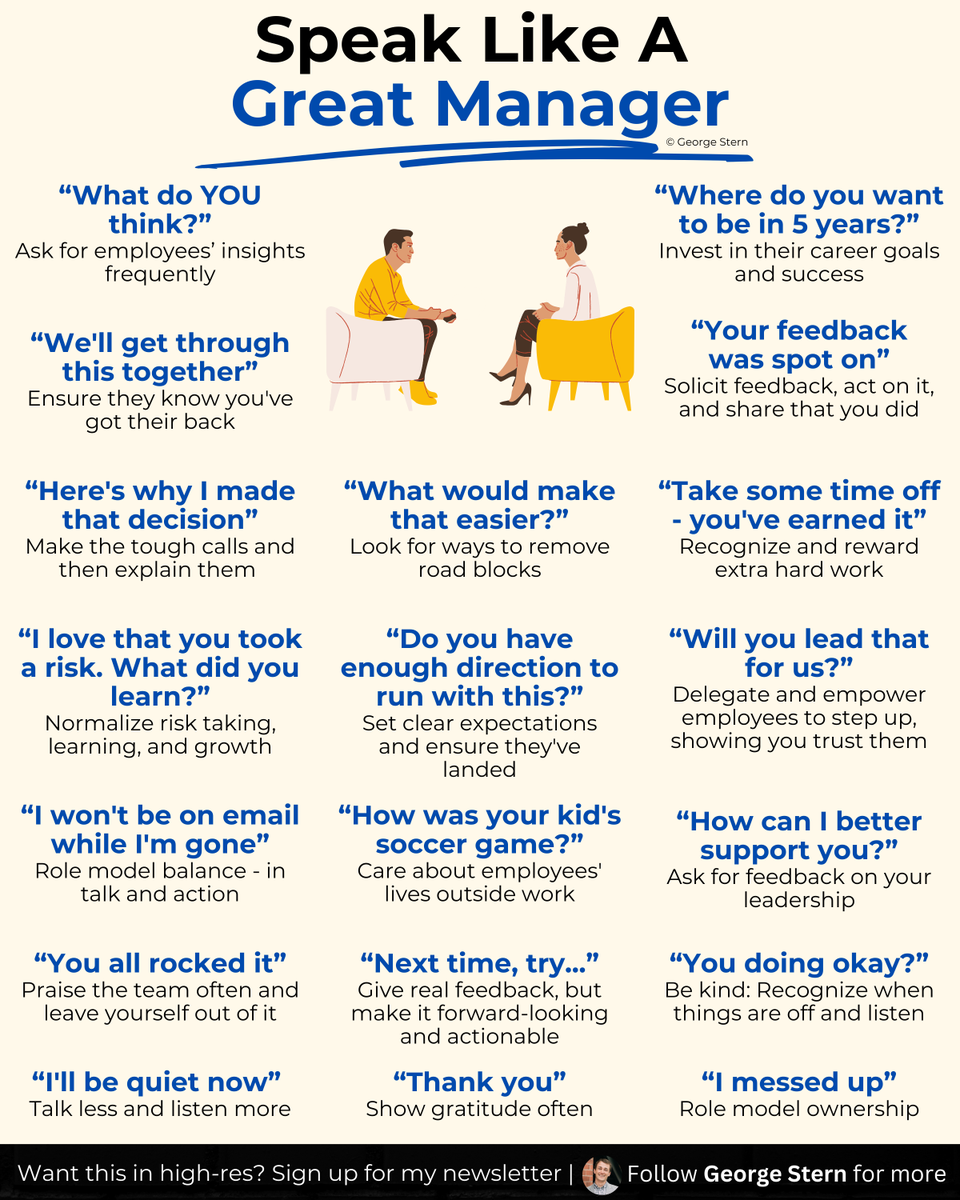
How to be a great manager is not a mystery.
It's a learnable skill.
But lots of management advice is about what NOT to do:
Don't micromanage, don't blame, don't pick favorites.
Sometimes, it's helpful to talk about what TO do:
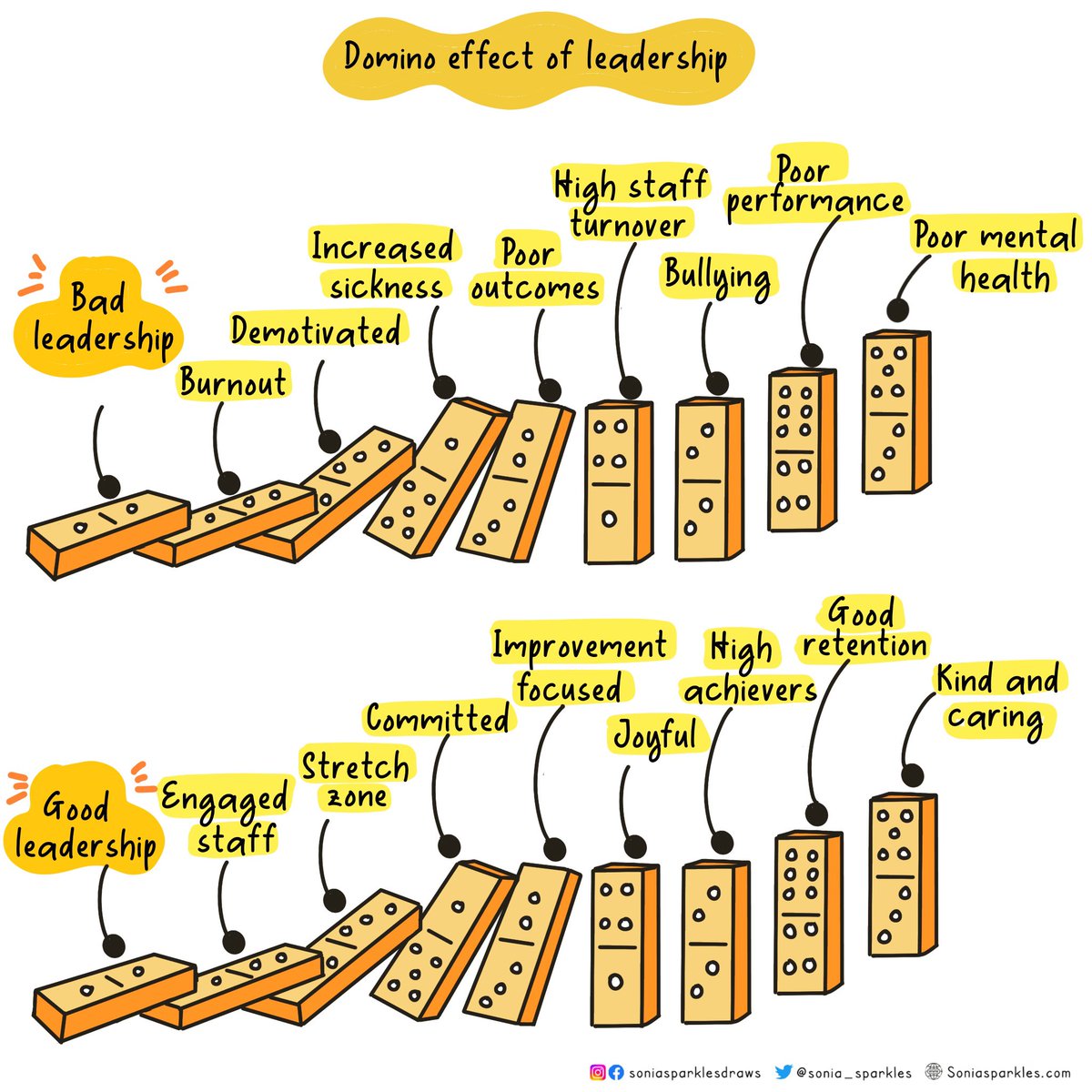
Losing a good employee is not just a setback.
It's costly in more ways than one.
Value what you have before it's too late.
Follow me & join my free newsletter!
Please repost to help others out there! ♻️
Nobody talks about the angry stage of healing. The rage you feel when you realize how much and how long you were taken advantage of. The absolute disgust you feel towards those people that misled you. It comes in waves. Sometimes you’ll feel healed and then it suddenly hits you.
Being able to ask the right questions is a key capability for leaders facing situations of increasing urgency & uncertainty. Advances in AI are creating a seismic shift from a world in which answers were crucial to one in which questions are. But most leaders are not formally trained on what kinds of questions to ask when approaching a problem. This article offer five kinds of questions that should be part of our "questioning mix" for strategic decision making:
1) Investigative: What's known?
2) Speculative: What if?
3) Productive: What now?
4) Interpretive: So, what…?
5) Subjective: What's unsaid?
It includes a useful set of questions to reflect on under each of the five question types: https://t.co/OyrPrgM2c1. Via @AMChevallier